


Nordhavn Atlantic Rally (NAR)
The Nordhavn Atlantic Rally comes to a dramatic conclusion as the fleet arrives in Gibraltar after a rough passage through the Straits
After months of planning, organizing and nervous anticipation, the 18 trawlers that set sail from Ft. Lauderdale on Sunday, May 16th and Monday, May 17th arrived safely in Gibraltar on the morning of June 27th. The final 24-hours were some of the roughest of the entire 3,800-mile voyage, as easterly winds blew in excess of 35 knots against the strong current of the Straits of Gibraltar.
The nasty weather added to a stressful night of dodging commercial shipping traffic, as the captains and crewmembers struggled against violently pitching seas and the confusing scene of freighters coming and going.
Fortunately, the winds and seas finally calmed down as the fleet neared its final destination, and eventually all 18 trawlers were safely tied up at Marina Bay. A well-deserved champagne celebration was organized by the NAR organizing committee.
Congratulations to all participants and a huge thank you to the Nordhavn staff or making such an historic voyage possible.
A little background
The fleet’s first stop was right on schedule with an arrival in Bermuda on Saturday, May 22nd. Traveling together in two groups ( a “fast” and a “slow” fleet) these rugged passagemakers participated in the Nordhavn Atlantic Rally – the first event of its kind for powerboats. The 3800-mile ocean voyage took the fleet to Bermuda and the Azores, where it spent a week preparing for its final leg to Gibraltar. After celebrating their crossing in Gibraltar, each boat will go its own way, exploring European waters. Some owners plan to spend more than a year in the Mediterranean and then return home on their own. Some are planning to team up and explore together.
Daily tracking positions of the ocean crossing was available by clicking on Underway/Tracking where the data supplied by SkyMate was displayed. Both fleets arrived on schedule in Bermuda early Saturday morning, May 22nd. After a week of festivities and preparation, the 18 passagemakers left Bermuda on June 2nd in blustery 30-knot winds, reminiscent of their very bumpy Ft. Lauderdale departure.
The 1800 mile passage from Bermuda to the Azores was not without incident, so you’ll want to read all the exciting commentary by clicking on www.nordhavn.com/rally/underway/commentary. Be sure to check out the heroics of young James Leishman and Justin Zumwalt. What fine representatives of P.A.E.’s “next generation” of talent.
After some very rough conditions during the last couple days of leg 2, the fleet arrived in the Azores on Thursday, June 10th and Friday, June 11th. The fleet’s smallest vessel, the Nordhavn 40 “Uno Mas” received a welcome applause from a crowd gathered along the docks. A job well done!
The week in the Azores was a combination of social activities, touring the island(s), and maintenance chores. None of the participating vessels experienced serious problems, although about half of the fleet experienced active stabilizer problems of one kind or another. Boats utilizing passive stabilizers, or the non-mechanical, non-electrical variety, reported the least number of problems.
For more details of the event and many insightful observations by a number of participants, click on www.nordhavn.com/rally/underway/commentary
Read All About It !
For the journalist’s point-of-view don’t miss what Yachting & MotorBoating’s editors and writers have reported on www.yachtingnet.com and www.motorboating.com. Each magazine has covered the event in detail, and they’ll be publishing their wrap-up stories during the next issues. You’ll also be able to read about this incredible journey in Soundings, Southern Boating, PassageMaker, Lakeland Boating, Power Cruising and SEA magazines. So if you couldn’t join us this year, you’ll certainly have plenty of opportunities of being an “armchair sailor.”
Let’s wish our adventurers a heartfelt congratulations. They are an inspiration to all of us!
Voyage Highlights
To make the Nordhavn Atlantic Rally as safe and enjoyable as possible, P.A.E. plans to provide a high-level of support not only at the stopovers, but also during every mile of the trip. Though details of this support are being finalized, P.A.E. plans to staff a number of specially selected Nordhavns that will serve as escort vessels to lead and follow the groups and will provide assistance to the fleet that may include:
- Mechanical and technical support with mechanics on lead and chase vessels for en-route repair;
- Emergency fuel reserves with boat-to-boat transfer capabilities;
- Limited towing capability;
- Diver for underwater repairs;
- Daily roll calls;
- 24-hour monitoring of designated VHF and SSB frequencies;
- Daily weather briefings;
- Physician for medical emergencies;
- Shoreside staff in Hamilton, Bermuda, Horta, Azores, and Gibraltar to assist owners with government formalities, provisioning, fuel and shoreside group activities;
- Special group rates for transatlantic return aboard Specialty Yacht Carriers.
Rally participants will also benefit from having other vessels in close proximity. The fleet will travel in two groups dictated by the vessel’s speed capability and the owner’s preference. Larger vessels may elect to travel up to 9 knots while the smaller vessels will run slower, particularly on the mid-Atlantic passage. The two groups will stay together with their respective escort vessels. During the day, vessels may run close together, sometimes closing to within 100 yards. During the night, in reduced visibility, or during periods of rough weather, greater clearance will be maintained. In no case should the fleet open up to more than 7 or 8 miles from the lead to trailing vessels, ensuring complete VHF radio coverage. The two groups may separate to two or three days running time, but will maintain SSB communication at least twice a day. Transoceanic passage-making is serious business and safety is paramount. P.A.E. will do all that we can to ensure a pleasant voyage, but it is up to each captain to be responsible for the safety and conduct of his vessel and crew

 For many yachtsmen, Bermuda represents the first step in true voyaging. Situated roughly 600 miles off the Carolinas, it’s an island with a true mystique for passagemakers.For the landsman, Bermuda conjures up images of pastel cottages, pink-sand beaches and British traditions like cricket matches and afternoon tea spring, not to mention businessmen going about their business in jackets, ties, Bermuda shorts and high socks.
Most visitors to Bermuda come from North America for short stays, and many consider the island to be quaintly British; the Brits, on the other hand, come in much smaller numbers but tend to consider the island highly Americanized. Of course, Bermuda has a leg in each country, but it is uniquely Bermudian – a product of nearly four centuries of British colonial history and an equally long reliance on American trade.
| Full country name: | Bermuda |
| Area: | 21 sq miles |
| Population: | 62,997 |
| Capital city: | Hamilton (pop 15,000) |
| People: | 61% African descent, 38% Caucasian descent, a small minority of American Indian descent |
| Language: | English |
| Religion: | Christian (28% Anglican, 15% Roman Catholic) |
| Government: | Self-governing British dependency |
| Premier: | Jennifer Smith |
| Head of State: | Queen Elizabeth II; represented by Governor Sir John Vereker |
| GDP: | US$1.98 billion |
| GDP per head: | US$30,000 |
| Inflation: | 2.1% |
| Major industries: | Tourism, finance, insurance, structural concrete products, paints, perfumes, pharmaceuticals, ship repairing |
| Major trading partners: | USA, Canada & UK |
Late May and early June are especially busy for dockage in Bermuda, and transient dockage in Bermuda is difficult at best.
Dockage for the rally will be at the Royal Bermuda Yacht Club in downtown Hamilton. The rally fee covers dockage, electricity and water at RBYC for the duration of the visit to Bermuda.
The club’s docks are in the center of Hamilton. The seawall extends almost 1,000 feet forming a rectangle and enclosing 110 floating docks for members’ boats. Facilities for transient yachts on the outside of the seawall allow 30 – 100 amp, 120 – 240 volt, 60 Hz., single and three-phase electrical service at every slip and water at every slip.
RBYC members’ boats take all the space inside the seawall, and rally yachts will be accommodated outside the protected basin. Most rally yachts will be Med-moored on the outside of the breakwater, not a perfect situation due to the sometimes blustery winds and usual light chop in the harbor. This is not an ideal docking situation.. During Milt and Judy’s advance visit in mid-May 2004, winds were often 15 to 20 knots, sometimes gusting to 30 knots, and some of the dockage is beam to the wind. However, the bottom line is that there is no terrific dockage for transient yachts in Bermuda at any price, especially in the springtime when transatlantic yachts in Bermuda are everywhere.
Med-mooring at RBYC involves passing a bow line through an eye on a mooring buoy, then backing down to the breakwater, keeping a stain on the bow line to hold the bow up. RYBC promises to have small boats in the water to help rally yachts get bow lines through the mooring buoys.
Rallly officials have a dock plan showing the transient slip area, complete with measurements and available power at each slip/power pedastal. About 20 – 22 rally yachts can be accommodated on the outside of the breakwater.
Use of passerelles will be required. RBYC has many long planks which can be used, but Rallly captains are advised to be prepared with workable passarelles.
Water is at every slip, and standard U.S. hose fittings are used.
Pier Master Allison Macintyre (441-295-2214 or cell 441-799-5290 – VHF channel 16) is the contact.
 |

 Host club for the Rally in Bermuda is the Royal Bermuda Yacht Club right in downtown Hamilton, just a few minutes’ walk from the shops and restaurants of Hamilton.
Rally captains and crew are invited to use the RBYC’s facilities, including the patio restaurant and the bar. Rally participants may use credit cards at the club or may charge on their temporary membership cards. All bills charged on membership cards should be settled prior to departure. Two Rally social events will also be held at the club.
The Royal Bermuda Yacht Club is a private Club and is the third oldest club holding a Royal Warrant outside the British Isles. The club was established on the 1st November, 1844. There are now approximately 850 resident and non-resident members.
Early in 1845, the Prince HRH Prince Albert, the first Duke of Edinburgh, graciously consented to become Patron of the Club. His Royal Highness, Prince Albert gave permission for the Bermuda Yacht Club to style themselves the “ROYAL BERMUDA YACHT CLUB”.
After almost 60 years occupation of No.52 Front Street, the RBYC in 1933 acquired a fine water site at Albuoy’s Point, Hamilton, built a large Club House on their new property and moved into their new quarters on the 16th December, 1933.
The RBYC’s major event is the biannual Newport Bermuda Race, which the club co-hosts with the Cruising Club of America. The conclusion of this race sees RYBC lined with dozens of sailing yachts. During this event, the club hosts social events for thousands of sailors. The 2004 Newport Bermuda Race will conclude in Bermuda about three weeks after the rally yachts depart for the Azores.
Commodore of the RBYC at the time of our visit will be Jane Correia, and Vice Commodore will be Andrew Cox. The club’s general manager is Vernon Pemberton, and the club’s secretary is Hilary Roberts.
|
 The Fairmont Hamilton Princess Hotel, an easy 10-minute walk or 5-minute dinghy ride from RBYC, offers special rates for groups. If the Rally can guarantee a certain number of people, Simon Boden at the Princess will reportedly offer very attractive rate reductions.
The Princess is one of Bermuda’s oldest hotels. Reservations 1-800-441-1414, www.fairmont.com/hamilton, hamilton@fairmont.com. Rack rate for a double: $379 to $539/night.
A bit downscale, Rosemont Apartments, 1/4 mile up a hill beyond the Princess but without the harbor view, offers neat, clean, air conditioned basic rooms with kitchens at $170 to $200/night plus service charge ($8.00) and tax.
|
Currency
The Bermuda dollar is on par with U.S. dollar. U.S. dollars are accepted everywhere, though change may be given in Bermudian currency. Credit cards are widely accepted, American Express and Diners Club less than Visa and Master Card. ATMs are widely available.
One recommendation: towards the end of your stay, ask for your change in U.S. currency. Bermuda dollars are accepted at few places away from Bermuda.
|
Transportation
Under Bermuda law, no self-drive automobile rentals are permitted for visitors. Taxis readily available but expensive, and the public transportation system–frequent busses and ferries–provides convenient and reasonable transportation. In May 2003, a one-day pass, good for unlimited rides on busses and ferries, was $11.00.
Rental motor scooters for one and two people available. Mike Smatt of the Smatt’s Cycle Livery Ltd., 74 Pitts Bay Road, Hamilton, 441-295-1180 (msmatt@northrock.bm) offers a Rally participants 20% discount on rental of motor scooters. Smatt’s Cycle Livery is a five minute walk from RBYC.
Remember that Bermudians drive on the left side of the road, which makes driving motor scooters somewhat hazardous for Americans.
|
Provisioning
Provisioning in Bermuda will not be a problem, but paying for it might. You’ll find a terrific selection, many familiar brands, and prices that are typically 50% to 100% higher than in Fort Lauderdale, though some U.K. items such as Irish butter are actually less than in the U.S..
A five-minute walk (and five-minute dinghy ride) away from RBYC is Miles Market, The Waterfront, Pitts Bay Road at Waterloo Lane, Hamilton, 441-295-1234. This is a pricey but extremely popular specialty market with everything you need from avacados to zuccini, including fresh King salmon, Haagen-Daaz, and a coffee bar–the closest thing to Starbucks we found on the island. To quote their advertising: “Miles-aged beef, including special ‘dry-aged’ beef, free range chicken, turkey and lamb, hand-selected fresh fish, ‘fresh local catch’ and more.” They also have a fine selection of imported cheeses, smoked salmon. Miles offers a good selection of fresh produce, wines from around the world (few under $20.00), beer and liquor, a complete selection of fresh bread and other baked goods from their own bakery, Cuban cigars, and a delicious selection of take-out prepared foods. For substantial orders, Miles will deliver to the boat. Just give the yacht’s Rally number (visible from the pier) to Miles Market, and they will deliver right to the slip.
A 15-minute walk from RBYC is The Marketplace, on the north side of Church Street between Burnaby and Parliament Street. This is a more conventional supermarket, the largest supermarket on the island, and prices are perhaps 20 to 25 percent less than Miles Market. This well-stocked supermarket is almost identical to the U.S. variety, featuring a massive fresh produce department, fresh fish, meats, cheeses, milk and other dairy products, a bakery, and a good selection of ice cream. It also has a very large selection of prepared foods. Beer, wine and liquor. The wine selection is much larger than Miles and many of the wines are less than $20.
We suggest that Rally chefs and serious foodies check out both markets!
|
Restaurants
Rally participants are invited to use RBYC’s restaurant and bar facilities and may use either credit cards or temporary member cards, with temporary accounts to be settled prior to departure.
In addition, Bermuda offers over 150 restaurants, ranging from plain to very fancy and expensive. From chic international cuisine at posh dining rooms to conch stew at a roadside cafe, there’s a taste to please every palate and budget. You’ll find Italian, Indian, Greek, Chinese, English, French, and Mexican restaurants throughout the Island. Wahoo steak, mussel pie, Hoppin’ John (black-eyed peas and rice), cassava pie, codfish and potatoes for Sunday brunch, and guinea-chick (spiny lobster) are just a few of the Bermudian delights available.
RBYC Rear Commodore Andrew Cox especially recommends Coconuts on the Beach at the Reefs Hotel on the South Shore as a great romantic Bermuda dining experience; four-course dinner about $88; reservations required–www.thereefs.com, South Shore, Southampton–about a $20.00 cab ride from RBYC. Coconuts: 441-238-0222. The Reefs is generally acknowledged as the island’s finest resort and has won many awards.
Check out restaurants at the Bermuda tourism website: www.bermudatourism.com.
|
Laundry
The RBYC offers a coin laundry–two machines which take U.S. and Bermudian quarters.
Quickie Lickie Laundry, 74 Serpentine Rd., Hamilton, 441-295-6097, offers free pickup and delivery and wash, dry and fold service, but pricing is reported to be high by U.S. standards. RBYC General Manager Vernon Pemberton can arrange a pickup point at RBYC for Rally yachts upon request.
|
Communications and Internet
It’s easy to stay in touch while you’re in Bermuda. Bermuda’s area code is 441, and calling to or from Bermuda is just like making a call to another state in the U.S. To call Bermuda from the U.S. press 1-441 and the seven-digit Bermuda number. Likewise, calling the U.S. requires pressing 1 plus the area code and seven-digit U.S. number.
If you have AT&T cellular service, you can make arrangements with AT&T to have your service activated in Bermuda–see AT&T below. Cell phones are available for rent in Bermuda, and Internet access points are available in many locations in downtown Hamilton and at the Dockyard. Internet service on the island is typically 56K or slower, though some companies claim to have DSL and T1 lines.
Cable & Wireless, 20 Church St., Hamilton, open 9 am – 5 pm M-S, offers international calls, telex and fax, but no Internet.
RBYC sells phone cards which offer long distance service for about $0.30/minute and can be used from any phone in Bermuda.
AT&T Bermuda cellular service: call AT&T Customer Service from the U.S., have the Bermuda plan activated for $2.99 per month, and your cellular service will be extended to Bermuda for $1.49 per minute, not including long distance. Verizon has no service in Bermuda. Cellular One does have service in Bermuda which can be activated through Cellular One customer service in the U.S. No other U.S. cellular companies found in Bermuda.
Bermuda Cell Rental, 441-232-2355, rents cell phones for both short-term and long-term rentals–additional information including prices available at www.bermudacellrental.com. Or contact Cellular One in Bermuda at 441-296-4010.
Internet service is available at many locations around Hamilton. Generally, Internet connections in Bermuda are not fast, averaging about the same speed as a dialup connection in the U.S. Some locations claim to have ISDN, DSL or T-1 service, and such locations may be a little faster than dialup.
Internet Lane, upstairs at The Walkway, 55 Front Street, Hamilton, tel. 441-296-9972, is a 10-minute walk from RBYC and offers “fast Internet service” on their computers or yours at rates of 50 minutes for $10, 100 minutes for $19.50 using a magnetic card which allows you to split your time over several visits.
Twice Told Tales, 34 Parliament Street across from the Magistrate Court, 441-296-1995 is a dusty second-hand bookstore and cyber cafe near the RBYC offering inexpensive Internet service–15 minutes for $3, 30 minutes for $5.00.
You can make an appointment for 30 minutes per person per day of free Internet service at Bermuda Library just beyond the Perot Post Office (open 7 days a week) at the intersection of Queen & Reid Streets, a 10-minute walk from the RBYC.
At the Dockyard, Swiss Connection (441-234-6480) offers DSL Internet connection for $5.00/30 minutes–nice modern equipment and large bright screens. These were the fastest Internet connections Milt and Judy found in May 2003.
|
Consular Information Sheet
U.S. Department of State Bureau of Consular Affairs Washington, DC 20520
This information is current as of Aug 7, 2003
COUNTRY DESCRIPTION: Bermuda is a highly developed British overseas territory with a stable democracy and modern economy. Tourist facilities are widely available.
ENTRY REQUIREMENTS: U.S. citizens entering Bermuda must present a U.S. passport or a certified U.S. birth certificate, and photo identification. The Consulate strongly recommends that visitors travel with a valid passport at all times. A U.S. driver’s license or a voter registration card is not sufficient for entry into Bermuda. For additional information on entry requirements, travelers may contact the British Embassy at 3100 Massachusetts Avenue, N.W, Washington, D.C. 20008, telephone (202) 462-1340, or the British consulate in Atlanta, Boston, Chicago, Dallas, Los Angeles, New York or San Francisco; Internet: http://www.britain-info.org or the Bermuda Department of Immigration.
In an effort to prevent international child abduction, many governments have initiated procedures at entry/exit points. These often include requiring documentary evidence of relationship and permission for the child’s travel from the parent(s) or legal guardian if not present. Having such documentation on hand, even if not required, may facilitate entry/departure.
CRIME: Bermuda has a low to moderate crime rate. Incidents of serious violent crime are infrequent, but petty thefts and assaults do occur. Valuables left in hotel rooms (occupied and unoccupied) or left unattended on beaches are vulnerable to theft. Criminals often target transportation systems and popular tourist attractions. Examples of common crimes include pickpocketing, theft of unattended baggage and items from rental motorbikes, and purse snatchings (often perpetrated against pedestrians by thieves riding motorbikes).
Travelers should exercise caution when walking after dark or visiting out-of-the-way places on the island, as they can be vulnerable to crime, and because narrow and dark roadways can contribute to accidents. There have been incidents of sexual assault and acquaintance rape, and the use of “date rape” drugs such as Rohypnol has been reported in the media and confirmed by local authorities.
There has been an increase in criminal activity at St. George’s, a popular cruise ship destination and World Heritage Site. Incidents of verbal, and sometimes physical, assault against both locals and tourists have been reported. Petty drug use is frequent and open. Gang activity, including assaults and arson, has been reported in the area as well. There have been several assaults and thefts in the area of Pitts Bay Road from the Hamilton Princess Hotel into the town of Hamilton, and the back roads of Hamilton are often the setting for assaults, particularly after the bars close.
The loss or theft abroad of a U.S. passport should be reported immediately to the local police and the nearest U.S. embassy or consulate. U.S. citizens can refer to the Department of State’s pamphlet, A Safe Trip Abroad, for ways to promote a more trouble-free journey. This publication and others, such as Tips for Travelers to the Caribbean, are available by mail from the Superintendent of Documents, U.S. Government Printing Office, Washington, D.C. 20402, or via the Bureau of Consular Affairs.
MEDICAL FACILITIES: Good medical care is available. The hospital performs general surgery and has intensive care units. Serious or complex medical problems will likely require medical evacuation to the United States.
MEDICAL INSURANCE: The Department of State strongly urges Americans to consult with their medical insurance company prior to traveling abroad to confirm whether their policy applies overseas and if it will cover emergency expenses such as a medical evacuation. U.S. medical insurance plans seldom cover health costs incurred outside the United States unless supplemental coverage is purchased. Further, U.S. Medicare and Medicaid programs do not provide payment for medical services outside the United States. However, many travel agents and private companies offer insurance plans that will cover health care expenses incurred overseas, including emergency services such as medical evacuations.
When making a decision regarding health insurance, Americans should consider that many foreign doctors and hospitals require payment in cash prior to providing service and that a medical evacuation to the United States may cost well in excess of $50,000. Uninsured travelers who require medical care overseas often face extreme difficulties. When consulting with your insurer prior to your trip, please ascertain whether payment will be made to the overseas healthcare provider or if you will be reimbursed later for expenses that you incur. Some insurance policies also include coverage for psychiatric treatment and for disposition of remains in the event of death.
Useful information on medical emergencies abroad, including overseas insurance programs, is provided in the Department of State’s Bureau of Consular Affairs brochure, Medical Information for Americans Traveling Abroad, available via the Bureau of Consular Affairs home page or autofax: (202) 647-3000.
OTHER HEALTH INFORMATION: Information on vaccinations and other health precautions may be obtained from the Centers for Disease Control and Prevention’s hotline for international travelers at 1-877-FYI-TRIP (1-877-394-8747); fax 1-888-CDC-FAXX (1-888-232-3299); or via the CDC’s Internet site.
TRAFFIC SAFETY AND ROAD CONDITIONS: While in a foreign country, U.S. citizens may encounter road conditions that differ significantly from those in the United States. The information below concerning Bermuda is provided for general reference only, and it may not be totally accurate in a particular location or circumstance.
Safety of Public Transportation: Excellent
Urban Road Conditions/Maintenance: Fair
Rural Road Conditions/Maintenance: Fair
Availability of Roadside Assistance: Poor
Driving in Bermuda is on the left side of the road. The maximum speed limit in Hamilton is 25 kph (15 mph); 35 kph (21 mph) on the rest of the island. Under Bermudian law, non-residents are not allowed to own, rent, or drive four-wheeled vehicles. Non-residents must rely on taxis, the excellent local bus system, or motor scooters. Traffic is moderate, and Bermudians generally follow the rules of the road. Licensing and registration are strictly enforced, as are driving and parking regulations. Because Bermuda does not allow the importation of used vehicles, most vehicles are in good condition.
Those unused to driving on the left are likely to find the roundabouts and regulations for yielding at junctions confusing and dangerous. In addition, vehicles often stop on the side of the road, blocking one lane of traffic. Main roads, while generally in good condition, are extremely narrow and tend to be bordered by heavy vegetation or low stone walls.
Pedestrian crosswalks marked by white lines are found on all roads. Vehicles must, and do, stop when a pedestrian is seen approaching a crosswalk. Horns are seldom used aggressively or as a warning. Instead, horn honking is used as a general form of greeting in Bermuda. As almost everyone knows everybody else, horns are heard honking at all times, which may be confusing to those visiting the island.
Rental motor scooters are readily available, and the required helmet is provided. While renting a scooter for daytime activities in good weather should be reasonably safe, visitors should carefully consider whether or not it is worth the risk to ride a scooter during rainy weather or at night. Motor scooters provide the greatest road peril in Bermuda; local operators tend to abuse the speed limit more than other drivers, and they will often pass on the left or right with no warning. Travelers who rent scooters should be aware that scooter accidents involving visitors are relatively common, and they can sometimes be fatal or involve serious injuries.
Taxis are readily available. The local bus system, which is excellent and relatively inexpensive, services the length of the island and stops close to most beaches, hotels, the downtown shopping area, and other points of interest. In addition, water ferry service to a variety of stops around the island is available seven days a week, and it is a very safe and enjoyable mode of transportation.
For additional general information about road safety, including links to foreign government sites, please see the Department of State’s Bureau of Consular Affairs home page. For specific information concerning Bermuda driver’s permits, vehicle inspection, road tax and mandatory insurance, please contact the Bermuda Department of Tourism offices at 310 Madison Avenue, Suite 201, New York, N.Y., telephone (212) 818-9800.
AVIATION SAFETY OVERSIGHT: The U.S. Federal Aviation Administration (FAA) has assessed the government of Bermuda’s Civil Aviation Authority as category 1 — in compliance with international aviation safety standards for oversight of Bermuda’s air carrier operations. For further information, travelers may contact the Department of Transportation within the United States at telephone 1-800-322-7873, or visit the FAA Internet web site.
The U.S. Department of Defense (DOD) separately assesses some foreign air carriers for suitability as official providers of air services. For information regarding the DOD policy on specific carriers, travelers may contact the DOD at telephone (618) 229-4801.
CUSTOMS REGULATIONS: U.S. citizens who are taking prescription medication must inform Bermuda customs officials at the point of entry. Medicines must be in labeled containers. Travelers should carry a copy of the written prescription and a letter from the physician or pharmacist confirming the reason the medicine is prescribed.
Bermuda customs authorities may enforce strict regulations concerning temporary importation into or export from Bermuda of items such as animals, arms, ammunition and explosives, building sand, crushed rock, gravel, peat and synthetic potting media, foodstuffs (animal origin), fumigating substances, gaming machines, historic articles (relating to Bermuda), lottery advertisements and material, motorcycles, motor vehicles, obscene publications, organotin anti-fouling paint, plants, plant material, fruits and vegetables (living or dead, including seeds), pesticides, prescription drugs, prohibited publications, seditious publications, soil, VHF radios, radar and citizens band (CB) radios. For additional information on temporary admission, export and customs regulations and tariffs, please contact Bermuda Customs at telephone 1-441-295-4816, or email customs@bdagov.bm, or visit the Bermuda Customs web site.
CRIMINAL PENALTIES: While in a foreign country, a U.S. citizen is subject to that country’s laws and regulations, which sometimes differ significantly from those in the United States and may not afford the protections available to the individual under U.S. law. Penalties for breaking the law can be more severe than in the United States for similar offenses. Persons violating Bermuda’s laws, even unknowingly, may be expelled, arrested or imprisoned. Penalties for possession, use, or trafficking in illegal drugs in Bermuda are strict, and convicted offenders can expect jail sentences and fines. If arrested for possession of even a small quantity of an illegal drug, offenders will be bound over for trial and not allowed to leave the island until sentencing is complete.
SPECIAL CIRCUMSTANCES: ATM machines are fairly widely available in Bermuda. No local banks accept checks drawn on a U.S. account, but some Front Street stores catering to the tourist trade do accept U.S. checks as payment. The local American Express office will cash U.S. checks up to $500.00 for a three-percent fee. Credit cards are widely accepted at all establishments.
DISASTER PREPAREDNESS: Bermuda is a hurricane-prone country. The worst of these storms generally skirt the island, however, and little or no property damage is incurred. Cruise ships regularly alter their schedules and courses to and from the United States due to hurricanes in the Atlantic. General information about natural disaster preparedness is available via the Internet from the U.S. Federal Emergency Management Agency (FEMA).
CHILDREN’S ISSUES: For information on international adoption of children and international parental child abduction, please refer to our Internet site at http://travel.state.gov/children’s_issues.html or telephone 1-888-407-4747. Bermuda is a signatory to the Hague Convention on the Civil Aspects of International Child Abduction. The Central Authority for international child custody issues in Bermuda is the Attorney General’s Chambers, telephone 1-441-292-2463.
REGISTRATION/CONSULATE LOCATION: U.S. citizens may register with the Consular Section of the U.S. Consulate General located at Crown Hill, 16 Middle Road, Devonshire DV03, telephone 1-441-295-1342, where they may also obtain updated information on travel and security in Bermuda. Office hours for American Citizens Services are 8:30 a.m.-11:30 a.m., Monday through Thursday, except Bermudian and U.S. holidays. American citizens in need of after-hours emergency assistance may call the duty officer at telephone 1-441-235-3828. * * *
This replaces the Consular Information Sheet dated April 30, 2001 to update sections on Entry Requirements, Crime, Medical Facilities, Medical Insurance, Other Health Information, Traffic Safety and Road Conditions, Customs Regulations, Criminal Penalties and Children’s Issues.
Preparation
- World Cruising Routes, Jimmy Cornell, (International Marine/Ragged Mountain Press, 1995)
- World Cruising Handbook, Jimmy Cornell, (International Marine/Ragged Mountain Press, 2001)
- The American Practical Navigator, Nathaniel Bowditch, (Paradise Cay Publications, 2002)
- Advanced First Aid Afloat, Peter Eastman, MD, & John M. Levinson, MD (Cornell Maritime Press, 2000)
- Boatowner’s Mechanical & Electrical Manual: How to Maintain, Repair, and Improve Your Boat’s Essential Systems, Nigel Calder & Charlie Wing, (International Marine/Ragged Mountain Press, 1995)
- Chapman Piloting: Seamanship & Small Boat Handling, Elbert S. Maloney, (Hearst Books, 1993)
- Seaworthiness: The Forgotten Factor, Czeslaw A. Marchaj, (Tiller Publishing, 1996)
- Voyaging Under Power, Robert Beebe, revised by James F. Leishman, (International Marine/Ragged Mountain Press, 1994)
- Ocean Passages for the World, (Hydrographer of the Navy)
- The Atlantic Crossing Guide, 4th Edition, Anne Hammick & Gavin McLaren, eds., (International Marine/Ragged Mountain Press, 1998)
Participants Who Plan to Cruise in the Mediterranean
- Mediterranean Cruising Handbook: Chart (Mediterranean Pilots and Charts, Rod Heikell, (Imray, Laurie, Norie & Wilson, 1998)
- Imray Mediterranean Almanac 2003-2004, Rod Heikell, editor, (Imray, Laurie, Norie & Wilson, 2003)
More Mediterranean cruising guides are available at:
- Bluewater Books & Charts – www.bluewaterweb.com
- Landfall Navigation – www.landfallnavigation.com
News
PRESS RELEASES
| Press Release Title | Release Date |
| Nordhavn Atlantic Rally Gets Underway As 18 Trawlers Set Sail For Gibraltar | May 19, 2004 |
| Ft. Lauderdale, FL – After months of preparation, organization and anticipation, the Nordhavn Atlantic Rally 2004 is underway. On Sunday, May 16,th, the first half of the fleet departed Port Everglades, Florida at precisely 4 pm. As scheduled, the second half of the fleet departed 24 hours later. A total of 18 trawlers, from 40 to 90 feet in length, are now in route to Bermuda, their first stop on their epic 3,800 mile Atlantic Ocean crossing. All vessels are expected to arrive in Bermuda on Saturday, May 22nd after this 600-mile first leg. The departure was not without incident, however, as the ICW was temporarily closed on Sunday afternoon due to a fire in the engine room of a small cruise ship. "After months of careful preparation and organization, it seemed that a last minute, bizarre incident was going to delay our departure," said Jim Leishman, Nordhavn's Vice President and captain of Atlantic Escort. Fortunately, the waterway was re-opened minutes before the fleet gathered in the harbor's turning basin before heading out to sea. The fleet consists of one Nordhavn 40, five Nordhavn 46s, one Nordhavn 47, two Nordhavn 50s, a Seaton 55, three Nordhavn 57s, a Krogen 58, three Nordhavn 62s and a Monk-McQueen 90. This is the first rally of its kind for powerboats and is designed to provide captains and crew with the added support of a group crossing. Three of the Nordhavns are serving as escort vessels and will be carrying emergency medical staff, technicians, extra fuel and spare parts. "Each boat must be self-sufficient and capable of making this crossing on their own," adds Leishman. "But it's comforting to know that we are traveling together, and that in an emergency we may be able to offer assistance." Atlantic Escort has been specially rigged for towing, and each boat has been fitted with a towing ring at its bow. To qualify for the Rally, the boats had to pass an inspection certifying they had the fuel range and overall seaworthiness to make the voyage. The captains and crew also had to complete at least one 600-mile or more offshore passage on their vessels. After arriving in Bermuda, the fleet will enjoy a week of de-briefing and social activities at the Royal Bermuda Yacht Club before departing on the second leg, an 1,800 mile crossing to the Azores. "This 600-mile voyage to Bermuda can be considered our 'shake-down' cruise," comments Nordhavn's President, Dan Streech. "We'll have the time and resources in Bermuda to fix, adjust and fine- tune things before heading for the Azores." Streech is aboard San Souci, one of the Nordhavn 62 escort vessels. During the Bon Voyage dinner Saturday evening, Streech and Leishman talked about the incredible support Nordhavn has received from its many sponsors. "The folks from Lugger engines, American Bow Thruster& Stabilizers, Furuno, SkyMate and others have been terrific in providing technical support to our participants," commented Streech. Several sponsors conducted seminars during the week before departure. Topics included engine maintenance, electronics and systems troubleshooting, navigation, and medical emergencies. Yachting and MotorBoating magazines hosted a send-off luncheon on Friday where Peter Janssen, Editorial Director of both publications, gave a keynote speech. "Peter's speech was poignant, powerful and emotional as he was able to capture in words the special moment in yachting history which was about to take place," added Dan Streech. Both magazines as well as other top boating publications have editors aboard each leg. On Saturday, both Dan Streech and Jim Leishman appeared live on the radio show, "World of Boating," heard coast-to-coast on the Sirius satellite network. The Rally has captured the attention of the media and promises to be written into the history books as a major yachting event. Creating history is not new to Nordhavn, as it set a record in 2001 for going around the world on its 40-foot model. Jim Leishman and other Nordhavn crewmembers took their 40-foot production boat 26,000 miles from California across the Pacific Ocean to Asia, through the Middle East and the Mediterranean, across the Atlantic and through the Panama Canal. Although experiencing typhoon conditions and gale force storms, the 25-week voyage was successfully completed without a major breakdown or mishap. Nordhavn designs and manufactures a complete line of trawler-styled yachts from 35 to 76 feet. Based in Dana Point, California, it has additional offices in Newport, Rhode Island and Stuart, Florida. This summer, it is opening its newest office in the U.K. For more information visit www.nordhavn.com. |
|
| More Sponsors Are Joining The Nordhavn Rally Bandwagon! | Febuary 2004 |
| Dana Point, Calif. – (February 10, 2004) – The Nordhavn Atlantic Rally continues to receive enthusiastic support from marine industry leaders, according to Pacific Asian Enterprises Vice President, Jim Leishman. “We couldn’t be more pleased by the support we’re getting from our sponsors and the press about this event, “ says Leishman. “Over two-dozen more companies have agreed to help with the Rally. Without their financial and logistical support, we couldn’t have attempted to manage a project of this magnitude.” Companies are contributing in a number of ways. Marine equipment companies have donated products or provided significant discounts for escort vessels and participants. Others are helping with technical support and are offering to train participants in the use of their products. Marinas and yacht clubs in Ft. Lauderdale, Bermuda, the Azores and Gibraltar are providing special services and reduced rates for all participating boats. “It’s apparent that many companies and organizations see the ‘big picture’ benefit of this event,” adds Leishman. “Hopefully, others will be inspired by our participants crossing the ocean on their own bottom and will want to buy a boat and do the same.” The latest sponsors to sign up are: All At Sea – Flag Fabrication Bermuda Customs – Customs Assistance Bermuda Tourism – Tourist Assistance Brookes & Gatehouse USA, Inc. – Marine Instruments CFX Marine Specialties – Marine Safety Systems Charles Industries/Heartsine Technologies – Portable Defibrillators Diamond/Sea-Glaze – Marine Windows, Doors & Hatches Faial Regional Directorate for Tourism – Tourist Assistance Forespar Products Corporation – Marine Hardware Gibraltar Tourist Board – Event Coordination Horta Marina – Azores Marina Jeddy’s Upholstery & Interiors – Interior Design Marina Bay Complex – Gibraltar Marina Maritime Trading Company–OCEANair USA – Custom Blinds Mid-Atlantic Yacht Services – Vessel Service & Support Outbound Yacht Services, Inc. – Certified Technicians Radisson Bahia Mar Beach Resort & Yachting Center – Ft. Lauderdale Marina & Hotel Royal Bermuda Yacht Club – Rally Assistance Shorepoint Insurance Services – Individual & Business Insurance Coverage TRAC/American Bow Thruster – Thrusters & Stabilizers Leishman also points to the terrific enthusiasm of the press. “It all began when Yachting and MotorBoating stepped up and offered to sponsor one of our escort vessels and host our Bon Voyage Party. They immediately saw this Rally as being of great interest to their readers and will be sending editors on every leg. We’re also thrilled that so many other magazines are either sending editors on one of the legs or are at least covering the event. Power Cruising, Soundings, Lakeland Boating, Southern Boating and the UK’s MotorBoat & Yachting will be aboard with a writer. SEA, Boating, Yachts International and Showboats International have agreed to cover the Rally. Since our event is open to non-Nordhavns, we had always hoped the press would see this as an effort to promote long distance cruising in general.” Besides Nordhavn, a Hatteras, Kadey-Krogen and a Monk designed 80-foot expedition yacht are among the participants. Sponsors who had signed up earlier include: Achilles Inflatable Craft – Inflatables Aegis Marine International, Inc. – Marine Equipment & Replacement Parts Alcom Marine Electronics – Electronics Design & Installation Beachcomber Fiberglass Technology, Inc. – Fiberglass Products Bellingham Chart Printers – Paper Charts Bluewater Books & Charts – Charts & Cruising Guides Boat Systems – Electrical & Mechanical Design C-Map – Electronic Charts & Navigation Software Caribe Inflatables – Yacht Tender Dimen Financial – Financial Services Dometic Corporation - Sanitation System – Marine Sanitations Furuno USA, Inc. – Marine Electronics Handcraft Mattress Company, Inc. – Marine Mattresses Honda Marine – Outboard Engines IMTRA Corporation – Marine Accessory Equipment MarQuipt – Davits, Cranes & Boarding Systems Maxwell Marine – Anchor Handling Equipment Prime Fabrication – Metal Fabrication & Powder Coating SkyMate – Satellite Communications STIDD Systems, Inc. – Helm Chair Tradewind Inflatables – Life Raft & Inflatable Dealer Village Marine Tec – Watermaker Winslow LifeRaft Company – Life Rafts Yachting & MotorBoating Magazines – Media & Special Events The Nordhavn Atlantic Rally is taking place this coming May, when a fleet of 33 seaworthy power vessels will leave Ft. Lauderdale, Florida and cross the Atlantic Ocean, arriving in Gibraltar in late June. The fleet of passage makers will be escorted by three Nordhavns which will provide technical and logistical support throughout the voyage. The fleet will stop in Bermuda and the Azores before completing the 3,500-mile voyage to Gibraltar. Pacific Asian Enterprises (P.A.E.) is the designer and developer of the Nordhavn line of oceangoing powerboats. It is currently building twelve models between the sizes of 35 and 76-feet. |
|
| You Can Purchase a Nordhavn in Time to Join The Nordhavn Atlantic Rally! | December 2003 |
| We know there are many of you who’ve been thinking about joining Nordhavn on the first-ever powerboat rally across the Atlantic Ocean, but without a boat, you’ve forced yourself to suppress the dream. It doesn’t have to be that way! There are several of our ocean-crossing capable Nordhavns currently on the market as well as some brand new boats that can be purchased now and delivered in time for the NAR departure next May from Fort Lauderdale. Take it from Doug Seaver, who months ago had signed up for the Rally, sent in his full fee, hired a captain and secured crew. And until this week, Doug had no boat to participate with. But just a few days ago, he purchased a 2001 Nordhavn 50 out of Nordhavn’s Rhode Island office and in a few weeks will bring the boat south to start preparing her for the Rally. Take a page out of Doug’s book and don’t let the need for a passage making boat stand in your way of embarking on one of the most enjoyable powerboating adventures of a lifetime! Click on any of the boats below to learn about each one’s specifications and perhaps you’ll discover your perfect vessel to see the world in. (For more details, contact the listing salesman referenced in the specifications.) Hull Number Year Name Location Nordhavn 40 2001 Susan J Michigan City, IN Nordhavn 40#4 1998 Wilma Louise Florida Nordhavn 40#44 2003 New construction Dana Point, CA Nordhavn 47 2002 Journey Dana Point, CA Nordhavn 50#4 1998 Ocean Bear Stuart, FL Nordhavn 57#19 2001 Bali Stuart, FL Nordhavn 62#14 1999 Mighty Mouse Stuart, FL |
|
| Sponsors Are Signing Up In Support of Nordhavn Atlantic Rally | December 2003 |
| Dana Point, Calif.—(December 1, 2003)— The Nordhavn Atlantic Rally is receiving enthusiastic support from marine industry leaders, according to Pacific Asian Enterprises Vice President, Jim Leishman. “We’re thrilled that so many companies are getting involved with this event,” comments Leishman. “Based on the interest the event is generating with our owners, the boating public and the marine press, we feel confident our sponsors will be receiving excellent value and wide media exposure for their support.” Over two-dozen companies have already committed to supporting the Rally by providing product, technical support, marketing support, cash contributions or a combination thereof. Achilles Inflatable Craft – Small Inflatable Sponsor Aegis Marine International, Inc. – Marine Equipment and Replacement Parts Sponsor Alcom Marine Electronics – Electronics Design and Installation Sponsor Beachcomber Fiberglass Technology, Inc. – Fiberglass Products Sponsor Bellingham Chart Printers – Paper Chart Sponsor Bluewater Books & Charts – Charts and Cruising Guide Sponsor Boat Systems – Electrical and Mechanical Design Sponsor C-Map – Electronic Charts and Navigation Software Sponsor Caribe Inflatables – Yacht Tender Sponsor Dimen Financial – Financial Services Sponsor Dometic Corporation - Sanitation System – Marine Sanitation Sponsor Furuno USA, Inc. – Marine Electronics Sponsor IMTRA – Marine Accessory Equipment Sponsor Handcraft Mattress Company, Inc. – Marine Mattress Sponsor Honda Marine – Marine Motor Sponsor MarQuipt – Davits, Cranes and Boarding Systems Sponsor Maxwell Marine – Anchor Handling Equipment Sponsor Prime Fabrication – Marine Fabrications Sponsor SkyMate – Satellite Communications Sponsor STIDD Systems, Inc. – Helm Chair Sponsor Trade Winds Inflatables – Life Raft Inflatable Dealer Sponsor Village Marine – Watermaker Sponsor Winslow Life Raft – Life Raft Sponsor Yachting & MotorBoating Magazines – Media & Special Event Sponsors The Nordhavn Atlantic Rally is taking place this coming May, when 35 Nordhavns and a number of other seaworthy power vessels will leave Ft. Lauderdale, Florida and cross the Atlantic Ocean, arriving in Gibraltar in late June. The fleet of passage makers will be escorted by two Nordhavns, which will provide technical and logistical support throughout the voyage. The fleet will stop in Bermuda and the Azores before completing the 3,500-mile voyage to Gibraltar. Pacific Asian Enterprises (P.A.E.) is the designer and developer of the Nordhavn line of oceangoing powerboats. It is currently building twelve models between the sizes of 35 and 76-feet. |
|
| NAR Sessions Held at Trawlerfests | October 2003 |
| As there are just over 6 months to go until the Nordhavn Atlantic Rally (NAR), interest is heating up over this first ever power boat convoy across the Atlantic Ocean. Most recently at the Solomons (MD) TralwerFest, a seminar and Q&A session was moderated by key members of the NAR Committee including veteran passagemaker Bruce Kessler; Milt Baker, who serves as the NAR Port Coordinator; Mike Martus, Operations and Procedures Director; and Jim Leishman, PAE’s vice president and the Committee’s chairman. Interested cruisers in the audience listened to the panel discuss the rally’s latest developments. More than 80 interested vessels had signed up to participate in the rally and last week, those qualifying applicants were sent official invitations to join the group next May. With 30 deposited vessel applications and a large pool of potential crew applications already submitted, the NAR committee is extremely pleased with the enthusiastic response to this marvelously conceived adventure. At the end of this month, a password protected NAR NAR information site will be uploaded to the nordhavn.com website so that registered participants can review crew applications and exchange information. Later this week, a similar presentation will be given by Jeff Merrill of PAE at the San Francisco (CA) TrawlerFest. Next week at the Fort Lauderdale Boat Show, NAR participants are invited to join an NAR discussion panel and dinner hosted by the Committee. This takes the place of the Rally-focused seminars that were to be part of the now canceled Passagemaking Symposium. The session in Solomons began with Jim Leishman reiterating the vessel requirements of a true ocean-crossing vessel as outlined by Robert Beebe in his classic text, ‘Voyaging Under Power’. A calm water range of 2500 miles is deemed necessary for the NAR giving a comfortable reserve for the longest leg between Bermuda and the Azores – approx. 1,800 miles. The May 2004 departure has been picked to optimize the most favorable seasonal weather conditions. Each participant is going to be required to test their own vessel prior to departure by doing some seatrials and measured runs in order to get an accurate measurement on their fuel consumption and range at various rpms. This data will be made available to the NAR organizers to assist with planning the trip. The plan is to divide the fleet into two divisions, with the smaller, slower boats departing first so that, in theory, the entire fleet will arrive at approximately the same time. Milt Baker traveled last May to the NAR destination ports in Bermuda, the Azores and Gibraltar with his wife Judy – one year prior to the anticipated NAR fleet arrival to get a better sense of the weather, conditions and resources available. Milt’s informative slide presentation certainly inspired the masses. He started with a description of the route which departs at Fort Lauderdale over the Bahamas and then on to Bermuda with a south island rounding before heading west over the top of Bermuda to the Hamilton harbor. The fleet will be guests of the Royal Bermuda Yacht Club and this leg should last no more than 5 days. Milt’s slide show was an overview of the information provided on the NAR section of the Nordhavn website – a fantastic tool for all participants – which covers basics such as visas, banking and reprovisioning markets. In addition, Milt also covered important aspects of trawler travel arrival such as internet access, taxi availability, type of electricity, restaurants, marine supplies, laundry, haul out facilities, etc. The NAR committee has already made arrangements at each port of call for fleet mooring, water and fuel. The second leg from Bermuda to the Azores is the longest portion of the trip; a distance of approximately 1800 miles – which will take an estimated 10 days depending upon the size and speed of each vessel. The fleet will be arriving at Faisal Island and landing at the port of Horta. Milt was pleased to report that some of the best cheese in the world can be found here. He also advised that Express Mail is the best way for friends and family to send care packages as Fed Ex and DHL are often routed through Portugal and can take much, much longer to arrive. Again, details such as trash and oil disposal, the fact that special fresh water hose attachments are required and other important considerations have been thoroughly explored and the organizers are obviously doing their best to anticipate needs and advise participants to make this as easy a trip as possible. Still, Rally Committee members stress that although an extensive effort is being undertaken to make this a pleasurable and safe adventure, the ultimate responsibility of each vessel relies with her owner/captain and each yacht should plan for worst case scenarios and have back up plans and contingencies – an attitude of self reliance will go very far to insure that each yacht and crew has a fantastic voyage. An extensive list of requirements is being finalized and each yacht planning to participate must qualify to participate. For example twin engines or a separate wing engine will be required so that a disabled yacht could still move along at minimum 4-knot speed. Also, vessels of a certain age will be required to have a thorough marine survey with the results submitted to the NAR committee. Look for this list of requirements to be posted on the Nordhavn website soon. After a rest in the mid-Atlantic, the fleet will then be on the home stretch to Gibraltar. A very small island with commercial air access only available through London. This leg is approximately 1,100 miles and should take the fleet no longer than 6 days. Arriving in the Med will require Med-mooring – where each yacht ties up stern to the shore bulkhead and where each boat will need to supply her own ‘gang plank’ or passerelle. Electrical requirements 50 vs. 60 cycle and various shore power attachments are part of the ‘fun’ of traveling in the Med. Mike Martus followed Milt with a great discussion about a new communications product called SkyMate. SkyMate will be a sponsor of the NAR and each vessel will have a unit installed onboard. This is a small box device with antenna that automatically sends an hourly signal to a satellite, which will report each vessels latitude, longitude, heading and speed. Powered by 12 volt the installation takes only an hour and you use your onboard laptop or windows based PC to run email through Microsoft Outlook. It is even possible to send a typed message which gets translated to a synthetic voice which can then dial a shore based number and leave a message for those at home who don’t have email capability. SkyMate should prove to be an invaluable tool to have on board. All of the vessels positions will be organized and submitted to the Nordhavn website so that at least daily a fleet position report will be posted so that everyone interested can follow along. Plans are also being developed to keep a running journal from interested yachts similar to the crew reports filed last year from the Nordhavn 40 during the ATW around the world trip. The trip will have escort vessels and there will be yacht mechanics, technicians and medical support always nearby with deployable tenders to render assistance. The event has a loose schedule of dates, but a grand finale celebration is scheduled to be held in Gibraltar on July 4th. After arriving, each yacht will be on her own to enjoy the summer. Plans are moving forward to obtain a group discount rate to ship vessels back to the states as on-deck cargo for those owners who don’t wish to explore the Med or need to get back home. |
|
| Yachting and Motor Boating Team Up To Sponsor Nordhavn Atlantic Rally 2004 | October 2003 |
| Dana Point, Calif. – (October 3, 2003) – Enthusiastic about the high interest in next year’s Nordhavn Atlantic Rally 2004, both Yachting and Motor Boating will help promote and support the event with targeted marketing programs and editorial coverage. The Nordhavn Atlantic Rally 2004 is bringing nearly 40 long-range trawler yachts together to make an epic voyage across the Atlantic Ocean. This invitational event is open to the owners of qualified oceangoing powerboats. To date, Nordhavn has received preliminary applications from more than 80 owners. While the majority of the applications are Nordhavns, owners of other qualified brands have been invited to participate. Leaving Ft. Lauderdale in mid-May of 2004, the 3,500 mile voyage will consist of three legs – Ft. Lauderdale to Bermuda, Bermuda to the Azores, and the Azores to Gibraltar. Allowing for scheduled stopovers, the fleet will arrive in Gibraltar at the end of June. Owners will then be on their own to cruise the Mediterranean before returning to the United States either on their own bottom or by transportation arranged by Nordhavn. One of the escort vessels, a factory Nordhavn 57, will fly the Yachting and Motor Boating banner and carry editors and photojournalists from the two publications. “We’re excited to be part of this event, as it exemplifies the adventurous spirit of today’s modern trawler owners,” comments John W. Young, President of the Time4 Marine Group. “We know the readers of both Yachting and Motor Boating will be keenly interested in the story of how ordinary people in modest sized powerboats will undertake such an extraordinary voyage.” The magazines will host a “Bon Voyage” event in Ft. Lauderdale on May 14, 2004 that will bring together the participants, their families and fellow sponsors of the Rally. Besides extensive editorial coverage, a special multi-page advertorial section will be published in both magazines at the conclusion of the event. This special section will spotlight the products and services of the key sponsors that have supported Nordhavn in making the event possible. “The Nordhavn Atlantic Rally 2004 advertorial section will be a powerful marketing tool for any company that wants to reach this growing trawler yacht market,” says Yachting and Motor Boating Publisher, Gary DeSanctis. Aboard the Nordhavn 57 escort vessel will be renowned circumnavigator and TV/film director Bruce Kessler who will be producing a documentary film of the voyage. Kessler and veteran TV producer Jo Swerling, Jr. hope to generate network interest in the documentary. “We are thrilled that Yachting and Motor Boating are so supportive of this event,” adds Jim Leishman, Vice President of Pacific Asian Enterprises, the developer and builder of Nordhavn trawlers. “Their editors did a terrific job covering our Nordhavn 40 Around The World Voyage last year, and we are looking forward to having them join us on our latest adventure.” Those interested in learning more about the Nordhavn Atlantic Rally 2004 and how to become a sponsor should visit www.nordhavn.com. |
|
| Nordhavn Atantic Rally chooses Ft. Lauderdale as departure port; Bahia Mar Yachting Center to host fleet | September 2003 |
| Dana Point, Calif.—(September 24, 2003)—Pacific Asian Enterprises has named Ft. Lauderdale as the official departure port for the Nordhavn Atlantic Rally 2004. The fleet will gather at the Bahia Mar Yachting Center during the week of May 10-16, 2004, before the smaller boats depart on May 17 and the larger boats on May 18 for Leg 1 to Bermuda. “Ft. Lauderdale is an ideal departure port,” said Jim Leishman, vice president of Pacific Asian Enterprises. “A complete range of supplies and services, as well as the airport, are all very close. The Bahia Mar Yachting Center offers a great deal in both amenities and event experience.” To date, P.A.E. has received inquiries from more than 80 boat owners who would like to participate in the event and will soon select the final participants. Rally participation will be limited in order to ensure that the fleet receives the most effective on-the-water support possible. Fleet will depart May 17 Weather permitting, dates for the event are: May 10-16. Fleet rendezvous, registration, preparation, seminars and social events May 17 Smaller boats depart for Bermuda. Approx. 900nm May 18 Larger boats depart for Bermuda May 22 All boats arrive Bermuda (Royal Bermuda Yacht Club, Hamilton) May 29 Smaller boats depart for Azores. Approx. 1800nm June 1 Larger boats depart for Azores June 10 All boats arrive Horta, Azores. (Horta Marina, Horta, Faial) June 19 Smaller boats depart for Gibraltar. Approx. 1100nm June 21 Larger boats depart for Gibraltar June 28 All boats arrive Gibraltar (Marina Bay) July 4 Rally concludes in Gibraltar Social events at each venue are being planned, including a grand finale/Fourth of July celebration in Gibraltar. |
|
| More than 70 boats apply to participate in Nordhavn Atlantic Rally; World's first transatlantic powerboat rally starts in Florida, May 17, 2004 | August 2003 |
| Pacific Asian Enterprises has received applications from more than 70 boatowners interested in participating in the Nordhavn Atlantic Rally-the first trans-Atlantic rally for oceangoing powerboats. "When we announced the rally we knew that interest would be high," said Jim Leishman, vice president of Pacific Asian Enterprises. "But we had no idea that it would be this high." P.A.E. has received 78 applications including 54 from Nordhavn owners and 24 from owners of vessels built by other manufacturers. Many have expressed an interest in using the rally as the first step for extended cruising in the Mediterranean and elsewhere. As the Nordhavn Atlantic Rally 2004 draws closer, Leishman said that he expects the number of prospective participants will decline a bit as schedules and situations change. But, for event organizers, the biggest hurdle now is to select boats that will participate in the invitational event. Rally participation will be limited in order to ensure that the fleet receives the most effective on-the-water support possible. "We designed the Nordhavn Atlantic Rally as a way for those who dream of ambitious passage making to clear the first hurdle safely and with the comfort of knowing that support is immediately at hand," said Leishman. "We'd like to take everyone, but we don't have the resources to be able to do so and still provide the level of support needed." Fleet will depart from Florida, May 16 The Nordhavn Atlantic Rally, a three-leg, 3800-mile cruising adventure, is slated to begin with a fleet rendezvous on May 9, 2004 at a marina to be determined in southern Florida. Originally, the rally was to have started in Newport, R.I.; but, a large number of the prospective participants preferred a Florida departure. P.A.E. will name a host marina soon. Weather permitting, dates for the event are: May 9-15 Fleet rendezvous, registration, preparation, seminars and social events May 16 Smaller boats depart for Bermuda. Approx. 900nm May 17 Larger boats depart for Bermuda May 22 All boats arrive Bermuda (Royal Bermuda Yacht Club, Hamilton) May 29 Smaller boats depart for Azores. Approx. 1800nm June 1 Larger boats depart for Azores June 10 All boats arrive Horta, Azores. (Horta Marina, Horta, Faial) June 19 Smaller boats depart for Gibraltar. Approx. 1100nm June 21 Larger boats depart for Gibraltar June 28 All boats arrive Gibraltar (Marina Bay) July 4 Rally concludes in Gibraltar Social events at each venue are being planned, including a grand finale/Fourth of July celebration in Gibraltar. Adventure of a lifetime On the heels of the record-breaking Nordhavn 40 Around the World Voyage, Pacific Asian Enterprises created the Nordhavn Atlantic Rally to offer others the opportunity to visit distant cruising grounds safely and comfortably. " Advancements in naval architecture and boat building technology have created a class of full-displacement vessels with remarkable sea-keeping abilities and incredible cruising ranges," said Leishman. "We build Nordhavns to make adventures possible and this event will help to introduce a whole new group of people to the thrills of trans-oceanic passage making." The Nordhavn Atlantic Rally 2004 is an invitational event. A key facet of this event will be support not only at the stopovers, but also during every mile of the trip. P.A.E. will staff a number of specially selected Nordhavns that will serve as escort vessels to lead and follow the groups and will provide assistance to the fleet including mechanical and technical support, weather routing, emergency fuel reserves, limited towing capacity, and medical support. P.A.E. will also provide shore-side logistical support and social events. While P.A.E. is eager to provide all the support possible, Leishman reminds all participants that the safety of the vessels and crews is the responsibility of each captain. "Transoceanic passage-making is serious business and safety is paramount," said Leishman. "While we will do all that we can to ensure a pleasant voyage, it is up to each captain to be responsible for the safety and conduct of his vessel and crew." Renowned circumnavigator and TV/film director Bruce Kessler will accompany the fleet to create a documentary film of the voyage. Kessler and TV producer Jo Swerling, Jr. hope to generate network interest in the documentary. The film will cover not only the transatlantic voyage, but also individual experiences of the participants. In addition, a group of journalists will be invited to participate in the event. |
|
| P.A.E to Host First Transatlantic Rally for Powerboats | Feb 14, 2003 |
| Dana Point, Calif.-(February 14, 2003)- For powerboat owners who dream of crossing the Atlantic to cruise the Mediterranean, Pacific Asian Enterprises offers the opportunity of a lifetime next summer as it hosts the Nordhavn Atlantic Rally 2004-a three leg, 3500-mile cruising adventure from Newport, R.I. to Gibraltar. P.A.E., the designer and developer of the Nordhavn line of oceangoing power vessels, recently demonstrated the long-range cruising capabilities of even small full-displacement powerboats with the successful completion of a global circumnavigation in less than six months aboard a production Nordhavn 40. "Advancements in naval architecture and boat building technology have created a class of full-displacement vessels with remarkable sea-keeping abilities and incredible cruising ranges," said Jim Leishman, vice president of P.A.E. and veteran circumnavigator. "We build Nordhavns to make adventures possible and this event will help to introduce a whole new group of people to the thrills of trans-oceanic passage making." The Nordhavn Atlantic Rally 2004 is an invitational event open to the owners of qualified oceangoing powerboats. The event will take the fleet from Newport R.I. to Gibraltar via Bermuda and the Azores. For those that don't wish to return on their own bottoms, P.A.E. will arrange for special discount rates to have boats shipped back to the United States once the rally is completed. The rally will begin with outfitting and inspections in Rhode Island. On May 20 (weather-permitting) the fleet will make the 600-mile voyage to the Royal Bermuda Yacht Club in Hamilton, Bermuda. P.A.E. staff will await arrival of the fleet and provide assistance with government formalities, provisioning and refueling. The fleet will travel in two groups dictated by the vessels' speed and capability and owner preference. After provisioning and time to enjoy Bermuda, the fleet will depart about June 3 to make the 1800-mile passage to Horta within the Azores Island group. This passage will be completed by the larger vessels in as little as 8 1/2 days while the smaller boats will take as long as 11 days. As in Bermuda, P.A.E. shore-side staff will be on hand to assist and welcome our fleet into port and to arrange for activities and fleet parties. On June 26 (weather permitting) the fleet will leave Horta for the last leg across the Atlantic into the Mediterranean and on to Gibraltar, a distance of 1100 miles. After completing the rally, each vessel will be in position to enjoy the Mediterranean individually or within groups. A key facet of this event will be support not only at the stopovers, but also during every mile of the trip. P.A.E. will staff specially selected Nordhavns that will serve as escort vessels to lead and follow the groups and will provide assistance to the fleet including: • Mechanical and technical support with mechanics on lead and chase vessels for en-route repair; • Emergency fuel reserves with boat-to-boat transfer capabilities; • Limited towing capability; • Diver for underwater repairs; • Daily roll calls; • 24-hour monitoring of designated VHF and SSB frequencies; • Daily weather briefings; • Physician for medical emergencies; • Shoreside staff in Hamilton, Bermuda; Horta, Azores; and Gibraltar to assist owners with government formalities, provisioning, fuel and shoreside group activities; • Special group rates for transatlantic return aboard Specialty Yacht Carriers. While P.A.E. is eager to provide all the support possible, Leishman reminds all participants that the safety of the vessels and crews is the responsibility of each captain. "Crossing the Atlantic Ocean in a small yacht is serious business, and it is not without risk," Leishman said. "We aim to reduce the risk in many ways, including traveling in convoy with escorts, using professional weather routing advice, and having doctors and mechanics onboard escort vessels. While we can reduce the risk of an ocean crossing significantly, we cannot eliminate it. All participants must be prepared for rough weather or other circumstances that would limit or even prevent assistance from P.A.E. escort vessels in the event of a mechanical failure or injury. If multiple boats require assistance simultaneously, PAE escort support could be overwhelmed. Ultimately, each captain bears the responsibility for the safety and well-being of his yacht and crew; each and every participant must understand the limits of PAE's support." In order to assure a successful event for all, P.A.E. will limit the number of participating vessels and require that each meet strict and rigorous qualifications. Renowned circumnavigating yachtsman and TV/film director Bruce Kessler will accompany the fleet to create a documentary film of the voyage. Kessler and TV producer Jo Swerling, Jr. hope to generate network interest in the documentary. The film will cover not only the transatlantic voyage, but also individual experiences of the participants. In addition, a group of journalists will be invited to participate in the event. "We are still in the planning phase of this event and some of what we envision may change," said Leishman. "But we expect to produce an exciting and rewarding experience for all who participate." Those interested in learning more about the Nordhavn Atlantic Rally 2004 should contact Pacific Asian Enterprises at 949/496-4848. Updates and additional information will be made available in the coming months. |
|
ARTICLES
| Title | Author |
| TWO DOWN ONE TO GO The author discovers the joy and rhythm of voyaging on leg one of the Nordhavn Transatlantic Rally | Scott Shane |
| I dwelled for weeks on how I'd fare. Although the first leg of the Nordhavn Atlantic Rally (NAR) was a relatively short hop from Port Everglades, Florida, to Hamilton, Bermuda, I always get seasick during the first 36 to 48 hours of a passage. In addition to seasickness, which I hate more than you can imagine, I didn't know what to expect from the Nordhavn 57 that I'd signed on as crew. Soft of bilge and slow, she'd be hard pressed to run from a nasty turn in the weather, unlike the high-speed sportfishing yachts that make up the bulk of my experience. So, yeah, I was a little afraid, too. If the crews of other boats on the docks the day we cast off shared my apprehensions, they didn't show it. Bevies of crew huddled near their boats engaged in lively conversations about the weather, personal wardrobes, watch schedules, roll calls, provisions and the absolute thrill of setting out on a weekslong journey. The NAR fleet totaled 18 vessels. The slow fleet (10 boats from 40 to 62 LOA and a cruising speed of 10 knots or slower began its crossing on a clear windy afternoon. I signed on board the Atlantic Escort, a new Nordhavn 57. Our captain was the extremely capable Jim Leishman, one of three PAE partnersthe builder of Nordhavns. We had assigned ourselves the task of shepherding the other nine boats in our group to Bermuda. As I'd feared, the first night greeted the fleet with seas of about 6 feet. I was a little slow to medicate, which, considering my susceptibility to seasickness, makes no sense, so I felt less than great until the medication that Dr. Kevin Ware provided kicked in. I started the regimen with a patch and pills. After a few days, I was able to wean myself off the pills. During the first 24 hours at sea, the crews and the equipment made peace with their lot in life. Everyone aboard our boat easily adapted to the watch schedule of two hours on and six hours off every eight hours. The first day's mechanical issues among the fleet of trawlers related to fuel and stabilizers. At approximately 1 p.m. on day two, after having enjoyed a fair current of 3 knots in the Gulf Stream, we adjusted our course to a more easterly direction. Our heading was now straight for Bermuda. We had received our course from the landbased team, which had calculated it after studying the weather and currents. One member of the fast fleet chose to cut the corner and head straight for Bermuda. He ended up behind the entire fleet, even though the course he'd plotted was shorter. Twice daily, at 0800 and 2000, the fleet took a roll call, which established a bond of security among the members of the rally. In the evening when the fleet spread out, watch commanders relied on the radar to keep tabs on the position of each yacht. Night also opened a floodgate of radio.chatter among the fleet. By day, the thread of radio transmissions switched to requests for parts to be sent ahead to Bermuda. Each watch checked the engineroom, monitored the gauges and radar. PAE's Justin Zumwalt, bless his foresight, had made arrows of blue tape on the instrument panel to show where the pointer on each gauge should be when the systems were running fine. A quick glance, night or day, told us all was well-or not. My finest day at sea actually started with dinner on day four. As darkness fell, the moonless night just glowed with more stars than I have ever seen in my life, and I stared skyward with my mouth wide open in awe. I took my sleeping bag to the flying bridge and slept topside. Dawn brought oily seas and calm winds, and the Atlantic Escort launched both its tenders by 7 a.m. We hoisted the 14foot Caribe off the boat deck abaft the flying bridge and the smaller Achilles from her perch in the cockpit. First, the photo crew set out to take running photos of our fleet. Later, we filled the water tanks aboard the Nordhavn 50 Four Across. Many of the crews began to see more and more marine life-turtles, whales and a free-swimming marlin among the species-because the slick surface revealed the slightest ripple. Aboard Atlantic Escort, Jim and I trolled lures in 17,000 feet of water and later took a break to troll Justin, an accomplished surfer, on his surfboard. As you may have guessed, tight quarters and tighter personalities led to some tensions among the rally fleet. The inevitable mix of by-the-bookers, jokesters, laid back-types and a few wannabe admirals spawned conflicts about ranges and courses and who was to lead the pack. In the same way that exchange students help differing cultures understand one another, though, exchange crews eased the taut ambience aboard some of the yachts. We transferred the crews via the tenders, and found them refreshed after the change of scene. Fishing was one of the best and most popular diversions among the fleet. Egret's owners are avid fishermen and that afternoon they hooked a very large fish and fought it hard until it sounded and parted the line. The next day, they battled an estimated 300-pound marlin, but ultimately lost the war to the Nordhavn's starboard stabilizer. Aboard the Escort James (Jim Leishman's son), Justin and photographer David Shuler caught dolphins of a respectable size. One 18-pounder was quickly dismantled into single-serving pieces that tasted wonderful grilled on the barbecue and served with rice and beans. By day six, the two fleets drew closer together and communication via VHF became possible. The airwaves buzzed as friends caught up with one another's tales of the passage. As we approached port, the relief of making a successful passage and the feeling of accomplishment that went with it fueled everyone's excitement. So did the preparations aboard each yacht. At 0400 as we raised Bermuda, we hoisted the flags and filled out customs documents. The Bermuda harbormaster made contact with our lead vessel and began the process of documenting our 18 vessels in a polite and timely manner. At the concrete dock of the Royal Bermuda Yacht Club, the full PAE support team greeted us. Milt Baker, part of the PAE advance team, did a super job of attending to every last detail. My time on the open ocean left me with a new appreciation for what recreational cruisers can do. It gave me time to reflect without the intrusions of day-to-day life-something that rarely happens, even on vacation. You don't have to cross the Atlantic to discover the joys of passagemaking, but there axe horizons farther than the town marina. |
|
| Part II- Leg two Bermuda to the Azores | Peter Swanson |
| As we went to press, our intrepid writer Peter Swanson was just climbing off the Nordhavn 57 in the Azores. It appears that all the weather and adventure was saved for this leg. The fleet hit a front several days out that tested the crews and boats. We've included an excerpt from Swanson's log. Stay tuned for his feature from leg two and a wrap-up of the last leg to Gibraltar in the September issue. George Sass Jr., managing editor for YACHTING, had been looking forward to joining the fleet on the Bermuda-Azores run, but the press of magazine business killed that notion. He called me a few days before departure and asked that I take his slot. I had spent 17 days on a Nordhavn 40 during a circumnavigation a couple years back. I expected this new event to be at least as good. Of course I'd go, I said. In Bermuda, the skippers learned that the fleet would not set a direct course for the Azores. Weather router Walt Hack had convinced Jim Leishman that the most prudent course would be due east, instead of a more northeasterly course for Faial, thus avoiding the ill effects of a front set to pass through the Bermuda region Monday and Tuesday. Once we'd outflanked this weather, we would aim the fleet directly toward the Azores, probably from a point near 55 degrees west longitude. Besides Leishman, Motor Boating magazine's managing editor John Wooldridge and myself, five others joined our happy ship-Dr. Kevin Ware, rally physician, and his wife Kari; photographer David Shuler; Nordhavn project manager Justin Zumwalt and Leishman's son, James. The weather leaving Bermuda did not match the forecast. Winds were nearly calm and the seas had settled into comfortable 6-foot swells. The skippers reported no major mechanical problems and high morale. For them, and us, the first day of the second leg had turned into an unexpected pleasure. June 11, 2004 "This is Autumn Wind, we've got a problem." Autumn Wind is the Slow Group's other escort. She'd stayed behind to provide a level of comfort to Uno Mas, a 40-footer that had lost the use of her stabilizers. Now Autumn Wind was calling to report that the Nordhavn 62 had caught a line on her prop. Autumn Wind had switched to its auxiliary engine, and was chugging along in heavy seas at 4.5 knots. At that speed, if we stayed alongside, we wouldn't pull into Horta until midnight. Zumwalt, who had made a tactical swim to Uno Mas yesterday, and James Leishman insisted that they be allowed to hack the line off Autumn Wind's prop. As Justin and James, clad in wetsuits, swam to Autumn Wind, Jim Leishman carefully instructed her crew to keep the vessel into the seas, using only the bow-thruster to hold her in place. After our swimmers determined that the culprit was a line wrapped several times around the prop, James waited for a period of relative stability to avoid being whacked on the head by the hull, then dove under the stern with a knife in his hand. He made three cuts before coming back up again. Jim Leishman then asked Autumn Wind to restart her main engine and give her a blast of reverse. When they shifted into forward gear, the vibration that the line had caused was gone. And that is why I can sit here writing this-in daylight with the cliffs on the southeastern side of Faial on our port side, and above them the green pastures divided by ancient hedgerows. The top of the island, a 3,400-foot-high peak, was obscured by a stationary cloud it wore like a crown. These are the moments that make up for all the monotony, seasickness and self-doubt. I think most voyagers would agree that riding a proud little ship into a foreign port for the first time is one the greatest feelings imaginable. For my colleague John Wooldridge and me, Horta is the end of the line. We fly out tomorrow. Atlantic Escort has been the happiest of ships, in part because each person was a professional mariner of one sort or another, and each person treated every other with respect and affection. When the fleet makes its next move, a 1,100-mile passage to Gibraltar, your writer will be YACHTING's Editorial Director Peter Janssen. I know he will be in good hands, and so will you. Till next time. |
|
| ON THE EDGE A trawler fleet braves uncertain circumstances in an attempt to make a historic crossing | Jeanne Craig |
| What happens when a fleet of trawlers attempts to make history by completing a 3,800-mile passage from Florida to Gibraltar, Spain? The answer is a true high-seas adventure. A group of 18 powerboats recently set out on an extraordinary passage when the first leg of the Nordhavn Atlantic Rally got under way. The fleet left Ft. Lauderdale last May en route to Bermuda, a distant 900 miles away. Day 1: Which way did they go? There were waves, shouts and even a few tears from the people gathered at the Bahia Mar Marina to watch the fleet depart on Monday, each boat heavy with fuel, water and supplies. On board, crews were experiencing the adrenaline rush of a lifetime; they had been preparing months for this moment and were both elated and anxious to be under way. The exit plan had been well-rehearsed in the captain's meetings. As a lead boat, Sans Souci was to set the course for the other trawlers in the group. But even the best-laid plans can go awry. Just as this 62-foot Nordhavn passed the breakwater, it was bombarded by eight-foot head seas and closely trailed by a swarm of helicopters carrying photographers. Those things, coupled with 20-knot winds, jangled some nerves among the crew, which explains why Sans Souci then steamed south. "The wrong way to Bermuda," says the boat's owner, Ken Williams. But this was an experienced crew--Williams and his wife, Roberta, have been boating in the States and abroad for years, although this was their first open-ocean passage--so the lead boat was soon back on course, guiding the fleet on a very bumpy ride. That first night was rough, particularly for Ken, who was surprised by the effort required to do the simplest things on a constantly bucking boat. But his wife helped him keep it in perspective. "I like adventure, so I dragged him along on this trip moaning and groaning," she says. "But I know he'll look back on this and say it was the best thing we ever did." Day 2: Nobody said it was going to be fun.The boats had departed Florida in two groups. The first one, dubbed the "slow" fleet, had cast off on Sunday, the day before the "fast" fleet with Sans Souci. If all went well, the fast boats would catch up to the slow ones on Friday and approach Bermuda together. By Tuesday, conditions were still rough. The 20-knot easterlies had not subsided, and the seas were running five to seven feet. The lumpy ocean kept Dr. Kevin Ware busy.He was aboard the 57-foot Nordhavn Atlantic Escort, and from its VHF, he dispatched professional advice to some of the seasick participants who were rolled up like charts on salon floors. As the escort boat for the rally fleet, Atlantic Escort was equipped and staffed to assist any person or any vessel in need. At this point, there had been just a few minor mechanical problems, including a glitch with a stabilizer. Fortunately, the boat's owner was able to pin the stabilizer down and run on just one. As the slow fleet headed straight on for Bermuda, about 640 miles to the east, all of the boats did their best to stay close together. Atlantic Escort kept tabs on the fleet, acquiring the position of each boat on its radar and then locking it into the plotting computer. Positions were confirmed during "roll calls" conducted over the VHF twice a day. "We were in the middle of the ocean," says Scott Shane from Atlantic Escort. "It felt more like a Power Squadron regatta parading down a Long Island Sound." Day 3: Getting their sea legs. The seas and wind had settled down. By this time, the crews were falling into a routine, although that's an odd word for the day-to-day activities these people were involved in. There were watches, for instance, which fatigue even the saltiest boaters. They were particularly challenging for the boats with smaller crews. On the 50-foot Four Across, Doug Seaver and his three companions had set up four-hour watches during the day and two-hour watches at night. Seaver and his brother-in-law Charles Metcalfe were cruising with two college students. "I was reluctant to have the kids at the helm on their own at night, but after a few days, they stood watch solo," Seaver says. "I'd sleep in the Pilothouse to be close by." An experience boater, Seaver had logged many miles cruising the East Coast, but he'd never done a big-water passage like this. "In the beginning, I was anxious about the lack of sleep and whether I would be rested and alert. But my body eventually adjusted. I learned to be tolerant until things settle down." With the rougher weather behind them, most people were busier on board. The were cleaning and doing maintenance, as they had been for days, but now they were fishing, too, and dragging chairs onto decks. The books Seaver had bought to pass the time were left untouched. "The boating activities absorbed us," he says. "No one wanted to escape by reading." Day 4: The sweet spot. Dawn brought blue skies and oil-slick seas. The glassy surface of what some people called "Lake Atlantic" energized the crews. Some were swimming, others trolled; the youngest were "wave surfing" behind tenders. It was your typical summer-camp-type fun...in 16,000 feet of water. "We were in that wonderful sweet spot of a passage.There was no sense of when do we get there; in a sense, we were there," says Dan Streech, the president of Pacific Asian Enterprises (PAE), the builder of Nordhavn boats and the rally's organizer. With 260 miles to go to Bermuda, the fast fleet was closing in on the slow. The crew on Sans Souci--which included Christian Fittipaldi, nephew of Emerson and a Formula 2 pro--joked about what they would do when the slow boats came into sight. The strategy was to put Fittipaldi at the wheel of the mighty trawler and blast by at 9.4 knots. There were two mechanical issues to deal with. First, Four Across had lost its water maker, and its tanks were almost dry. A refill was necessary. To make it happen, Atlantic Escort took the boat in tow, sent back 300 feet of garden hose and pumped 200 gallons. And on Que Linda, the playful crew reported a failed expresso machine. Fortunately, Phil Strable, the professional chef aboard Sans Souci, made up an order of lattes that was delivered by inflatable to the owners, who were roughing it in their hot tub. It was the perfect day, and it ended with the perfect night. The balmy air and shooting stars were so beautiful that even those who weren't scheduled for the 2 a.m. watch stayed up so as not to miss this once-in-a-lifetime experience. Day 5: You're all gonna make it after all. With Bermuda just 150 miles away, on board activities turned to preparations for the fleet's arrival the next morning. The talk on the radio was of the repairs that some of the crews would attend to once in port, where spare parts and service technicians were waiting. Fortunately, all of the repairs would be minor. There was also a sense of relief among the rally's organizers. Of all three legs, this one--the shakedown--had concerned them most. No one had ever cooridinated a passage like this before; there was the chance that the boats would get separated and that the radar wouldn't be effective. But to date, those concerns were unfounded. The one real surprise was the defection of Emeritus. The trawler had split off from the fleet early on to follow its own course. In the end, the long hours that the PAE staff had spent planning and worrying about the first leg of the Nordhavn Atlantic Rally were validated when the the whole fleet, along with Emeritus, came together. On Friday night, the fast boats picked up the slow boats on radar. Then, one by one, stern lights began to appear. The final roll call of the day was for all 18 boats. At midnight, there was an indistict glow on the horizon, the lights of Bermuda. |
|
| Leg 2 The longest leg of the crossing brought more drama than some of the participants had bargained for. | John Wooldridge |
| Standing on the dock at the Royal Bermuda Yacht Club, the sense of excitement was distinct. The first leg of the rally had gone better than many of the participants had anticipated, and now the fleet was ready to begin the next leg, which was also the longest: 1,865 miles from Bermuda to the Azores. I was along for this stretch of the crossing aboard Atlantic Escort. This 57-foot Nordhavn was my home for the 12 days. At the pre-departure meeting, rally manager, Milt Baker emphasized a new track for both the slow and fast boats that would take them south of the rhumb line. The weather systemss rolling across the Atlantic from North America were stronger and more active than average, and the new course was designed to make the ride more comfortable for the crews and to conserve fuel, which was a crucial consideration, particularly for the smaller boats in the fleet. This leg had its difficulties, and the bad weather didn't make things easier. Early on, Dr. Ware was transferred by a small inflatable in six-foot seas from his post on Atlantic Escort to Four Across, where a crewmember was in serious pain. Dr Ware diagnosed a kidney stone. Luckily, the patient's condition improved quickly. There were mechanical problems in the fleet, too. Satchmo, a 46-footer, briefly lost its main engine, but with tech support from the crew on Atlantic Escort, the owner was able to get the diesel started again. The most unnerving and dramatic situation occurred with just 14 hours to go to the Azores. In eight- to ten-foot seas, Uno Mas lost use of its active hydraulic stabilizers. The 40-footer, which was the smallest boat in the rally, was on the verge of a rock-and-roll disaster. Autumn Wind, the 62-foot escort vessle for the slow fleet, stayed close by to provide support, as did Atlantic Escort. We all watched with worry as the crew of this tough little cruiser worked feverishly in tremendous seas to restore stability. But in the end, it took a heroic swim and a dangerous open-ocean boarding by PAE staffer Justin Zumwalt to put Uno Mas back on an even keel. The heroics didn't end there. With Uno Mas up and running, Autumn Wind headed back on course, only to catch a line in her prop. Atlantic Escort recieved here distress call and turned back, traveling 28 miles in rolling seas to reach the other boat. By that time, the crew had switched on the auxilary engine, and the boat was making 4.5 knots. Zumwalt and 19-year-old James Leishman, son of PAE Vice President and rally leader Jim Leishman, donned wetsuits and dove into the cold Atlantic. Zumwalt climbed aboard the boat to evaluate the situation from abovedecks. Leishman remained in the water. In a demonstration of judgementand moxie under pressure, this young man--who as a lifeguard and surfer is comfortable in chaotic seas--dove under the boat with a serrated knife in hand to clear the fishing line. He was able to time his dive perfectly as the multi-ton yacht pitched up and down. He cleared the line from the prop, and Autumn Wind was able to proceed again on its main engine. There were nerve-racking moments on leg two, but fortunately, there were many enjoyable times. It was great to stand watch on moonlit nights, keeping tabs on the radar and gazing out the pilothouse windows at the lights of the fleet scattered a mile apart in all directions. There were days when the crew pitched in to cook omelets for breakfast and coq au vin (OK, it was beer, not wine) for dinner in a well-designed galley on a very active boat. And there was the afternoon that Atlantic Escort maneuvered carefully around a half dozen boats drifting about in the ocean at the halfway point of our leg. From the deck, I watched the crews swimming in the deep and celebrating their achievement. Blasting horns and energetic crowds greeted the arrival of the fleet into the marin at Horta on the island of Faial, boating capital of the Azores. The Nordhavn Atlantic Rally had arrived, and we were ready to party. Next stop: Gibraltar. Reprinted Motorboating Magazine August 2004 |
|
| The Call of the Sea Here's how one captain prepares his powerboat for a transaltlantic crossing. | Jeanne Craig |
| Motorboating - June 2004 "It's not going to be a fun trip," said Robert Greenbaum from the deck of his 50-foot Nordhavn, Sundog. "The actual crossing, barring a mishap, will involve a great deal of tedium, especially at night. Anyone who thinks otherwise is in for a surprise." This 67-year-old retired lawyer who keeps his boat in Aventura, Fla., doesn't mince words on any subject, including the one that other people are calling the most exciting powerboat event of the century. It's not that Greenbaum is a cynic. Call him a realist who believes that a practical point of view is a crucial thing to have on board an ordinary boat that is about to begin an extraordinary adventure. Greenbaum is one of two dozen captains preparing his boat for the Nordhavn Atlantic Rally. This ocean crossing from Ft. Lauderdale, Fla., to Gibralter at the entrance to the Mediterranean Sea is unique because it's the first to be attempted by a large fleet of production power boats (mostly trawlers) that will travel together for the durataion of the 3,800-mile voyage. It's the kind of adventure that many boat owners dream of but don't dare attempt, in large part because a passage of this caliber requires so much from a captain, his crew and his boat. Greenbaum had devoted more than five months to preparations for the Rally when we interviewed him last April, just five weeks prior to his departure. Yet his "to do" list was still substantial, and because he was so focused on the work at hand, he was more cautious than excited about his preparations. Yet for all his practicality, Greenbaum is a fan of the road less traveled. He's hunted cape buffalo in Zimbabwe, stalked caribou above the Arctic Circle and cast fly rigs in the quietest stretches of Alaska. But he's never crossed the Atlantic in his own boat before, even though he's been active in the sport for more than 20 years. His interest in an Atlantic crossing was piqued when he learned about the Rally, which will enable 24 recreational boats to travel together with the support of a Rally staff experienced in open ocean passages. The staff, many of whom are affiliated with Pacific Asian Enterprises (the Rally's organizer and the builder of Nordhavn boats), will offer their assistance from three escort vessels. Yet even with the promise of safety in numbers, Greenbaum knows he and his crew must be self-sufficient. So he's devoted much of his time and a large chunk of money to properly equipping Sundog and its 250-hp Lugger diesel engine for the voyage. Weeks earlier, he had the boat hauled for a pre-departure survey. The result was a substantial bill for work that included the installation of a new propshaft and seals on the stabilizers. Greenbaum had also made arrangements to relocate the autopilot pump in the lazarette; it was moved to increase the amount of available stowage space, which would be crucial for this trip. In addition to basics like food and safety gear, a boat crossing the Atlantic needs a mind-boggling number of spare parts. Greenbaum flipped through his comprehensive list of spares; it looked about 20 pages long. Sundog, which is the title of a Jim Harrison novel that this skipper has always liked, is serious by nature, a born passagemaker with a full displacement hull. Yet Greenbaum has enhanced its potential, and that's most obvious at the helm. There is proof of the maxim that says a capable ocean-going yacht has built-in redundancy. There are two radars, two fixed-mount VHF radios and two GPS units connected to a pair of onboard computers with chartplotting capabilities. If one system fails, the skipper can still complete the voyage. During the crossing, the fleet will communicate primarily by VHF-each boat will attempt to stay within five miles of an escort boat at all times. But if his boat travels out of VHF range, Greenbaum can rely on his single sideband. As we toured Greenbaum's boat, one of his crew came aboard with safety gear he had bought that morning, including a flare kit for use in European waters. It would complement the significant amount of equipment already stowed, including the life raft on the upper deck, which had been repacked and certified specifically for this trip. "A guy will be here tomorrow to measure the boat for storm windows," said Greenbaum, who had invested considerable time to locate the right person for the job. This was just one of the countless details he was managing. Earlier, he had hired an electrician to wire the boat for European power. "Prepping a boat for a trip like this is a great administrative task. It's a good thing I was a lawyer." One of the duties he tackled early on was insurance. Few companies offer coverage for this type of trip, so he had to shop around. He found a broker in Ft. Lauderdale who arranged coverage for the crossing, during the weeks Sundog will cruise the Mediterranean and for its return trip home on a freighter. Some of the best insurance a captain can have for an ocean crossing is the support of a qualified crew. Greenbaum has hired a team of professionals for the Rally. Each man has a captain's license; one has an engineering degree, and one has taken several boats across the Atlantic. The crew will also include Greenbaum's son, Adam, a New York-based writer who will come aboard for the first leg of the trip-a 900-mile run from Ft. Lauderdale to Bermuda. In the weeks to come, Greenbaum will finish stocking spares, practice Med mooring and have his fuel tanks thoroughly cleaned (contaminated fuel is a major cause of engine shutdowns). Then, he can get down to thinking about stuff like food. If he has time, Greenbaum may even prepare a few things in advance and freeze them for the trip. "A good meal is good morale for a crew," he said. This skipper is not at the point where he knows what's going to be on the table the day Sundog leaves the dock, but even the simplest dish will seem celebratory for Greenbaum, who is eager to get under way. "That's the cutoff date for preparation work," he said. "Then, I can devote my energies to moving Sundog from one port to another." |
|
| ACROSS THE GREAT DIVIDE A fleet of 28 Nordhavns and other trawlers prepares for an Atlantic crossing, relying on the experience of the original power voyager. | Jay Cole |
| Yachting - June 2004 There is something magical about crossing oceans in small craft. I was reminded of this as I plied the pages of Captain Robert P. Beebe's 1974 work Voyaging Under Power. Beebe's words convey a passion for passagemaking I believe all who love boats share but few act out. In this light, Nordhavn's Atlantic Rally will truly be a milestone in yachting history. In May, about 30 power yachts from 40 to 90 feet will set out across the Atlantic. Two groups, based on size (waterline length determines displacement-hull speed), will leave Ft. Lauderdale 24 hours apart. The vessels in each group will be separated by about 1 mile. They will coast with the Gulf Stream north while powering toward Bermuda. With luck, they then will traverse the calm waters within a Bermuda high to the Azores. Finally, they will power through the eastern edge of the high to Gibraltar. While the rally is open to other brands, most of the boats making the crossing are Nordhavns. (At this writing, a Krogen, Northern Marine, McQueen and Hatteras LRC are scheduled to participate.) This is not surprising, considering the marque was designed for such service. Since Beebe passed away in 1988, Jim Leishman, one of three Nordhavn partners, has been a prominent torchbearer for long-distance voyaging under power. Inspired by Beebe's achievement, Leishman revised and updated Voyaging Under Power. He and his partners, Joe Meglen and Dan Streech, along with Jim's brother Jeff Leishman, then created a boat (the Nordhavn 46) and a boat company based on Beebe's vision. "I believe, as Beebe did, that properly designed small power yachts are well suited for making ocean passages," Leishman said. A veteran bluewater cruiser, he has driven this point home time and again, most recently by completing a circumnavigation aboard a Nordhavn 40. This year's rally is Nordhavn's most ambitious effort to date. Aboard Atlantic Escort, a Nordhavn 57, Leishman will shepherd a mixed bag of experienced cruisers and novices 3,854 (give or take) miles across the Atlantic. Two additional Nordhavns will serve as escorts, and the rally team will include five mechanics, three doctors and an assortment of offshore-cruising experts. A film crew managed by well-known circumnavigator Bruce Kessler will document the passage. Beebe, a Naval Academy graduate, served as navigator of the USS Saratoga in World War II and devoted much of his life to the subject of voyaging under power. He cruised three-quarters of the way around the world aboard the 50 foot Passagemaker, built to his design and launched in 1963. "We knew we had something in Passagernaker," Beebe wrote after completing her 6,000-mile shakedown cruise from Singapore to Greece at an average of 7.5 knots. That was an understatement, according to Leishman. "Until Beebe proved his powered design successful," he said, "serious voyaging offshore was a young man's sport. Sailing required strength and stamina. Beebe achieved his goal with relative ease and comfort." Beebe penned a stout, round-bilge, full-displacement design. She was heavily built of wood and powered with a six cylinder Ford diesel. Nordhavn's fiberglass scantlings are hearty, as well, and the hull designs by naval architect Jeff Leishman follow the basic principles Beebe believed in. The round-bilge, full-displacement forms have full keels to protect the running gear and enough reserve buoyancy in the forward sections to keep the decks relatively dry. A roll period of 6 to 8 seconds was targeted; the Leishmans feel it is the best balance of safety and comfort at sea. The original Passagemaker was Spartan by today's standards. She had no auxiliary power and thus no air-conditioning or refrigeration-cooking was done on a kerosene stove. Those participating in the Nordhavn rally, on the other hand, will travel in much greater comfort. While Beebe carried a ration of warm beer, one Nordhavn I inspected was fitted with temperature-controlled wine stowage. Beebe had a radio receiver, a direction finder, a sounder and an autopilot. Navigation was accomplished longhand, and daily position and course information was posted on the helm console, which served as a chalkboard. Vessels participating in the rally must be equipped with a long list of electronics, including two VHF radios, a GPS and an SSB or a satcom. Also required is radar, of particular importance in a closely packed fleet such as this. (Radar reflectors will be fitted.) A radar refresher course will be offered prior to departure. Keeping things simple and reliable was Beebe's mantra, and though the boats participating in the rally are far more complicated than Passagemaker, Leishman feels Beebe would approve. "He understood and appreciated technology and used it to his advantage," Leishman said, pointing out that without the modern marine diesel, Beebe's achievement would not have been possible. Beebe knew stabilization was critical to his success, as the unchecked motion of a powerboat at sea could cause unacceptable crew discomfort and fatigue. He was probably the first to use passive paravanes on a yacht, a system Leishman still recommends for today's smaller boats (under 47 feet LOAD. "While they can be challenging to deploy and retrieve," he said, "they are reliable and almost as effective as active stabilizers." All boats participating in the rally are equipped with at least one of these systems. Mechanical failure 1,500 miles from shore can be life threatening if the skipper and crew do not have the proper spare parts and the ability to utilize them. Rally participants must qualify in this regard. In addition, rally rules require each vessel to have an auxiliary propulsion system capable of maintaining steerage and 4.5 knots headway in calm water. Wing engines with folding props have long been a popular option on Nordhavns. Beebe carried only canvas and, fortunately, he never relied on it-he suggested that choosing a course under sail was not an option aboard Passagemaker. Leishman hopes for the best and has planned for the worst. Atlantic Escort is fitted with a properly positioned tow bit (ahead of the rudder post), and each vessel in the rally will be fitted with a towing eye at the stem. He will also be capable of transferring a limited amount of fuel given reasonable seas. Participants are required to carry a full list of offshore safety gear, including a liferaft and a 406 MHz epirb. Beebe carried only a wooden tender and life jackets. "While we cannot eliminate the risk, we feel confident that we have effectively managed it," Leishman said, and emphasized each skipper is responsible for the safety of his vessel and crew. In addition to proper equipment, each skipper and vessel must have made an offshore passage of at least 600 miles in the past 12 months, a primer of sorts for what will certainly be the adventure of a lifetime for many participants. As those taking part in this historic yachting event cast off, I am certain each will share the emotion Beebe once described so eloquently: "The weeks and months of planning have come to an end. Everything ... has been done to make the ship 'fully found and ready for sea.' ... Abandoning the land to sail thousands of miles on the open sea has always been a significant occasion. No matter how many times I've done it myself, it has never lost its sense of mystery, of anticipation; there's even a little dread." Leishman understands that and feels the fleet is prepared. "This is the sort of thing we like to do," he said. "It's what we're all about." TRACK US on the web Who could pass up the opportunity to get out of the office and spend some quality time on the ocean? YACHTING's editors sure couldn't, and have signed up to participate in this year's Nordhavn Atlantic Rally. We will be aboard the Nordhavn 57 Atlantic Escort for each leg alongside staff from our sister publication, Motor Boating. Starting May 16, log on to the magazines' Web sites for daily reports from our editors as they travel across the Atlantic in search of adventure. Dates and information are below. LEG I YACHTING'S Scott Shane and Motor Boating's executive editor, Jeanne Craig, will make the crossing from Ft. Lauderdale to Bermuda. They plan to depart May 16. LEG 2 George Sass Jr. and Motor Boating's John Wooldridge depart Bermuda for the Azores on June 1. At roughly 1,800 miles, this leg is the longest. LEG 3 YACHTING's editorial director, Peter A. Janssen, and Brad Kovach from Motor Boating will make the last leg, which may be the roughest. The departure date is June 19. |
|
| CAPTAINS COURAGEOUS These owners are taking their 46-foot Nordhavns across the ocean with a fleet of like-minded adventurers in the first-ever transatlantic powerboat rally. | John Clemans |
| Motorboating, May 2004 Michael Perfit and Kevin Keith Where there's a boat, there's a dream. Sometimes, the dream can appear to dwarf the boat. Case in point: There are plenty of 46-foot powerboats behind the homes on Treasure Island, Fla., a waterfront community off the coast of St. Petersburg. The owners of one of them dream of taking their 46 across the Atlantic. Have you ever considered taking your boat across the Atlantic? I doubt it. For most of us, it would be like entering the Daytona 500 in a Hyundai. You need a megayacht-a small ship to cross the ocean, a real monster. Maybe in the next life .... Not so fast. There are mortal-sized boats that can do it. Boats like Stargazer, the 46-footer that dreamers Michael Perfit and Kevin Keith keep at Treasure Island. Boats like Wayne and Patricia Davis's 46-footer, Envoy, which I caught up with on the other side of the state in Cocoa, Fla. Both of these high-sided trawlers are Nordhavns built by Pacific Asian Enterprises (PAE), a Dana Point, Calif., firm that custom crafts 35- to 72-foot oceangoing vessels in Taiwan and China for devotees of long-range, nonstop cruising. PAE poses the big question in its literature and on its Web site. To wit: "Ever dreamed of crossing the Atlantic Ocean in your own boat?" This is the sole text on the front cover of the company's brochure whose back cover asks, "What makes a power vessel capable of crossing an ocean?" The answer to the second question is right below it: sufficient fuel range; sufficient stability; sufficient hull strength; and sufficient fresh-water capacity. Add a serviceable galley, sleeping quarters and adequate stowage space, and you're there. Turns out that size doesn't matter. What matters is design. And Nordhavns have it. At 46 feet, Stargazer and Envoy are plenty big enough to cross the Atlantic. In fact, they're both about to do just that. Stargazer and Envoy will join 22 other Nordhavns, including three 40-footers (told you size doesn't matter), plus four boats from other builders, on the first-ever transatlantic powerboat owners' rendezvous. Called the Nordhavn Atlantic Rally (NAR), it kicks off on May 16, when the "slower" boats (roughly 50 feet and below) depart Ft. Lauderdale for Bermuda, 900 nautical miles to the northeast. The "faster" boats leave the following day, and, if all goes according to schedule, the entire fleet will arrive on May 22. After a week's layover, the slower boats, which comprise about half the fleet, embark for Horta, in the Azores-a distance of 1,800 miles and the faster group sets out three days later. The planned arrival date is June 11. The stay at Horta will be for eight or 10 days (depending on the group), after which the final, 1,100-mile leg will begin. The finish line is Gibraltar in the Mediterranean. The anticipated arrival date is June 27. A grand finale dinner is scheduled for the following evening. It should be quite a celebration. Michael Perfit, a 48-year-old retired software engineer, has dreamed of crossing the Atlantic since childhood, when he first read Sir Francis Chichester's accounts of circumnavigating single-handed. Perfit's more modest vision of sailing across the ocean-not alone, but with a companion-was altered by his father's passion for cruising under power. Bud Perfit, another early retiree, has spent many years cruising the eastern seaboard in a variety of powerboats, currently a Nordic Tug 37. His gift of Capt. Robert Beebe's book Voyaging Under Power, considered the bible of long-range cruising, to his son convinced Michael to switch from sail to power. But his dream of crossing the ocean persisted. Two years ago, Michael and friend Kevin Keith, also retired from computer work, began looking for the right boat in which to do it. They wanted a tough, heavy, single diesel boat with a secondary "get home" engine. They wanted a passive stabilization system-paravanes or "flopper stoppers"-rather than hydraulic stabilizers (Envoy has both). And they wanted a boat with an amidships galley-and storage space for a month's worth of provisions-that was comfortable to live aboard. In short, they wanted a Nordhavn. They settled on a 1999 model with a 143-hp (101 continuous-duty) Lugger engine and an auxiliary 27-hp Yanmar. And they moved aboard. Wayne and Patricia Davis took a similar route to ownership of their identically powered Nordhavn 46, on which they, too, live. Wayne, a retired University of Michigan Medical School professor, had long dreamed of duplicating Chichester's feat sailing solo around the world. He never got the chance before marrying Pat, who took a dim view of circumnavigation. Sailing to the Caribbean, however, appealed to her. They searched for a sailboat and found a Stevens Custom 50. In 1998, they participated in the Caribbean 1500 Rally sailing nonstop from Norfolk, Va., to Virgin Gorda in the British Virgin Islands. Three years and many nautical miles later, Pat began lobbying for the greater comfort and protection from the elements that a trawler would provide. Another search began. "There was really only one boat in our price range that offered unlimited ocean cruising-the Nordhavn 46," said Wayne. In less than three years they've put over 10,000 miles on the boat, most of it by themselves. Aboard the Nordhavn, Pat could envision a modified version of Wayne's round-the-world dream-crossing the Atlantic. They made plans to embark this summer or next on their own and join the handful of other trawler owners who have accomplished such a feat. Then the NAR was announced. "The Rally was immediately appealing," said Wayne. "I knew that we would make lifelong friends among the participants, because we had during the 1500 Rally." There was the bonus of safety in numbers and in the support services that PAE would provide. For a fee ranging from $5,000 to $7,000, depending on boat length, participants are promised the presence of mechanics and divers on lead and chase vessels for en-route engine, systems and underwater repairs; emergency fuel reserves and boat-to-boat fuel transfer if necessary; emergency towing; constant monitoring and weather info, and doctors for medical contingencies. That's just for openers. Shoreside personnel in Bermuda, Horta and Gibraltar will grease the gears for entering and exiting procedures. This includes expedited customs clearance, a real perk. Fun will be included in the mix: social events and tours during the two leisurely layovers. For Perfit and Keith, the rally's allure was similar. They had planned to embark on a European odyssey in 2005. They had hoped to team up with at least one other boat for the crossing, probably a sailboat. But when the NAR was announced, it moved their departure up a year. The Rally's security, camaraderie and logistical support were too good to pass up. But while Perfit and Keith value the constant proximity of available help, they intend to be totally self-sufficient. "I'd be very disappointed if it turned out that I needed to depend on assistance," said Perfit. Wayne Davis is likewise committed to self-sufficiency. "For all the support, we know that our boat is our responsibility. We're doing everything humanly possible to minimize the risk of mechanical failure." They're even having their transmission rebuilt for the trip. Perfit and Keith have been laboring for the past few months, working with a 150-item checklist. Just lugging the library of cruising guides and charts aboard must have been quite a job. Part of their preparation was a cruise from Florida to Maine and back, on, leg of which (Morehead City, N.C., to Rodriguez Key, Fla.) was 735 miles nonstop. A thorough survey revealed a pitted propeller shaft that required replacement. A passerelle has been added to Stargazer for stern-to boarding. Details like accommodating European power and stocking spares for everything has taken time and energy. "Each decision is a hurdle," explained Perfit. "You wonder: Are eight extra oil filters too few or too many?" Nordhavns are so much more comfortable and civilized than even much larger sailboats that ex-sailors consider life aboard them far from claustrophobic. Retirees, especially, embrace their convenience. The unprecedented Nordhavn Atlantic Rally may prove a milestone in the annals of ocean cruising, an endeavor still dominated by sailors. There are more under-60-foot production powerboats in the Rally than the total number that have ever crossed the Atlantic, according to the organizers. The Rally's success may well tip the scales in favor of power. In all, there are five 46s in the Rally. The owners of these and similar boats tend to be exceedingly level-headed folk with a temperament suited to careful, methodical preparation and rational decision making in threatening situations. I They're also blessed with patience which should be obvious from the speed at which they're content to travel. While design matters, so does speed, or lack of it. A Nordhavn 46 holds 1,000 gallons of fuel, and at 5 knots it has a staggering theoretical range of 7,333 miles. But there's no need to go at such a snail's pace. Perfit and Keith and the Davises intend to kick it up to 6.5 knots, still too slow for the "fast" group, which will average a lively 8.5. At the 6.5 knot, slow-group speed, Stargazer and Envoy can cruise 3,500 nautical miles without refueling. ("I can go from Florida to Ireland nonstop," said Wayne.) They top out at 8.3 knots (2300 rpm), at which speed they get only one mile per gallon. Haste definitely makes waste in this game. And what's an extra few days on a 3,800-mile voyage? Add leisure time to the list of assets that qualify one for transatlantic trips such as this. The participants all intend to spend several months cruising the Med. Perfit, Keith and the Davises plan to spend three or, four years in European waters. The Davises will spend the first winter in Spain and the second in Turkey. Stargazer's itinerary has a time line worthy of Daniel Defoe. First summer: the Balearic Islands; Corsica; and Sicily (a copy of Italian Water Pilot sat on the salon coffee table). First winter: Croatia. Second summer: the Greek Islands. Second winter: the Thames-at the St. Katherine's docks, which date back to Roman times, in the shadow of the Tower of London. They've added a little diesel burner with a smokestack for heat (the Davises rely on their reverse-cycle air conditioning). Their destinations reflect not only a passion for exploration, but also an awareness of the European Union's value added tax (VAT), which applies to boats that spend more than 18 months within the EU. Third summer: who knows? Perfit and Keith have a home that can travel the world. I expected that the potential for misadventures on the high seas would dominate a participant's anticipation of the trip. Yet Perfit and Keith seemed more concerned over the prospect of combating boredom than of battling big waves. "Food will help," said Keith, who's the cook and who plays the full-size keyboard that swings down from a salon bulkhead like an ironing board. He and Perfit will be joined by friends who will serve as crew members for the crossing (as will the Davises). Keith plans to serve beef Wellington on the first night out. "Our DVD home theater will help us pass the time," said Wayne. And he demonstrated an Elton John concert whose sound filled the salon like a wall of water from a group of tiny speakers. Pat, another excellent cook-"We eat gourmet on this boat," boasted Wayne-admits to fearing the unlikely recurrence of the conditions occasioned by Hurricane Mitch that they went through in the 1500 Rally. Beyond that, I heard nary a premonition of danger from anyone. This seeming indifference to the possible perfect storminess they could encounter is not disdain for nature's power. Rather, it's a testament to the reassurance, on both conscious and subconscious levels, provided by the presence of the vastly experienced NAR organizers, who are led by veteran circumnavigator Jim Leishman, vice president of PAE, who revised Beebe's "bible." The greatest apprehension I could detect surfaced at the mention of docking. Said Perfit, "Thirty boats, all in a narrow channel, trying to Med-moor, probably without pilings. It could be more of an adventure than the crossing." Let's hope so. To everyone involved in the Rally, bon voyage! ROVING REPORTER How will ordinary people in production powerboats hold up during the course of this extraordinary voyage? To find out Motor Boating will follow the progress of the Nordhavn Atlantic Rally from the pilot house of the Nordhavn 57, Atlantic Escort. Our editors will be along for each leg of this epic adventure, as well editors of our sister publication, Yachting. You will see feature stories on this event in upcoming issues of both magazines. You can also track the progress of the sizable and tenacious Nordhavn fleet from our Web site, www.motorboating.com, where daily updates will be posted in real time. The 57 is one of three escort boats assigned to support the fleet as it crosses the Atlantic. It's been fitted with a tow bit, and its crew will be capable of transferring a limited amount of fuel during the voyage. Powered by a 340hp Lugger, it boasts a cruising range of over 3,000 nautical miles. Rally rules require each boat to have an auxiliary propulsion system capable of maintaining steerage in calm water; Atlantic Escort has an 80-hp Lugger. It also has a sophisticated electronics package that includes radar, also required of each Rally boat. Radar will be critical in a closely packed fleet such as this. Jim Leishman, one of the founders of Nordhavn, is captain of Atlantic Escort. |
|
| 2004 Nordhavn Atlantic Rally | Staff |
| January 2004 YACHTING "Reprinted with permission from Yachting." As many as 40 vessels carrying 80 owners are expected to participate in Pacific Asian Enterprises 2004 Nordhavn Atlantic Rally, a three-leg Atlantic crossing scheduled to get underway in mid-May. Though most boats currently registered for the event are Nordhavns, the rally is open to qualified oceangoing motoryachts of any marque. Vessel requirements include a calm wate range of 2,500 miles at 7 knots, which allows a comfortable reserve for the route’s second and longest leg, the 1,800-mile hop between Bermuda and the Azores. (Applicants must provide data regarding fuel consumption to the event’s organizers, to make planning more effective.) The first leg of the voyage is from Ft. Lauderdale to Bermuda, and after travling from Bermuda to the Azores the convoy will make its way to Gibraltar. Largest vessels will travel at up to 9 knots, while smaller yachts will move more slowly. Departure dates will be staggered accordingly, so members of the fleet should reach port at roughly the same time. The 3,500-mile journey, which includes scheduled stopovers, is expected to wrap up in June. Yachting and its sister publication, Motor Boating, are among the event’s sponsors. Editors and photographers from both magazines will catch the action from aboard a 57-foot Nordhavn escort vessel. |
|
| Nordhavn Atlantic Rally Draws Adventurous Crowd | Staff |
| December 2003 PASSAGEMAKER Some 70 yachts have expressed an interest in the Nordhavn-sponsored trans-Atlantic rally next year. Not all can go, and the builders of the Nordhavn family of yachts acknowledged that choosing participants in the invitational event represents their “biggest hurdle.” The parent company, PAE, has recived applications from bith Nordhavn owners as well as yachts from other manufactures. The PAE schedule calls for a fleet rendezvous, seminars and registration May 10-16 in Florida, and the crossing will begin May 17 as smaller boats depart for Bermuda, 900 nautical mailes away. Larger yachts will leave May 18. From Bermuda, the rally will proceed to the Azores, a run of 1,800 nautical miles. The schedule calls for all participants to reach Gibraltar June 28, where the rally will conclude with a July Fourth celebration. For more information about Nordhavn Atlantic Rally call PAE at 949.496.4848. |
|
| Nordhavn Atlantic Rally 2004 | Staff |
| May 2003 YACHTING "Reprinted with permission from Yachting." P.A.E., which builds salty Nordhavn trawlers, recently announced plans for the Nordhavn Atlantic Rally 2004, a cruise from Newport, Rhode Island, to Bermuda and then to the Azores, ending in Gibraltar. The rally is expected to start in May and finish in time for owners to enjoy summer in the Med. Similar to the sailboat rally Atlantic Race for Cruisers, the Nordhavn Atlantic Rally will be based on the concept of cruising in numbers for added safety. Each yacht must pass a rigid survey to ensure it is outfitted and equipped for the 3,500-mile crossing. In case problems do arise, P.A.E. will staff escort vessels to lead and follow the group. The P.A.E. staff and associates will be able to provide technical and mechanical support for en route repairs. A physician will also be available for medical emergencies. For those owners who don't wish to return on their own bottoms, P.A.E. will help arrange transport back to the U.S. East Coast. Veteran circumnavigator and television and film director Bruce Kessler will accompany the fleet to create a documentary film. Kessler, along with producer Jo Swerling, Jr., hopes to generate network interest in the finished film. So far, P.A.E. is expecting 20 to 25 yachts in the rally. The fleet will consist primarily of Nordhavns, but other trawlers are welcome. |
|
| Nordhavn Owners Prepare To Cross Atlantic | Rich Armstrong |
| March 2003 SOUNDINGS "Reprinted with permission from Soundings Publications LLC." In summer 2004, more trawler yachts will cross the Atlantic within 60 days than have done so in the last 60 years, according to Pacific Asian Enterprises, sponsors of the first Nordhavn Atlantic Rally. Thirty or more of the boatbuilder's Nordhavn trawlers are expected to make a 3,700-nautical-mile passage from Rhode Island to Mallorca, Spain, in the Mediterranean Sea, via Bermuda and the Azores. "Every Nordhavn owner we've talked to so far says they want to participate," says Jim Leishman, a principal at PAE. Leishman says the cruise-in-compa-ny is another effort by PAE to show off the bluewater capabilities of its trawlers. Last year a Nordhavn 40 with a rotating crew of employees completed a circumnavigation. For the trans-Atlantic crossing the fleet will run in convoy, with one escort vessel in the lead and another following the fleet. The owners of two Nordhavn 62s have volunteered for escort duty. On board the escorts will be support teams of PAE employees and associates. Using high-speed RIBs, they'll be able to quickly reach any vessel needing assistance. "An engine could overheat, a water-maker could fail," Leishman says. "We'll be ready for any eventuality." The escort vessels will carry emergency fuel reserves with boat-to-boat transfer capability, and they'll be able to provide towing if needed. The escort crew will include a diver for underwater inspection and repairs, as well as an emergency-medicine specialist. There will be daily roll calls and daily weather briefings for the fleet, and designated VHP and SSB frequencies will be monitored around the clock. PAE shoreside staff at Bermuda, Azores arid Mallorca will assist owners with government formalities, provisioning and refueling, and will organize parties and other group activities. All entries will be by application only, and the number of entries will be limited. There will be an entry fee of several thousand dollars, according to organizers. |
|
Gallery
Fort Lauderdale, FL
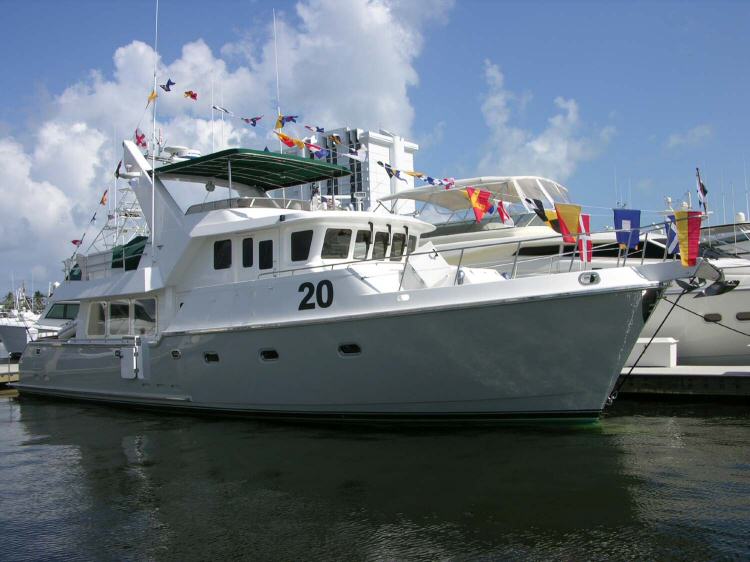






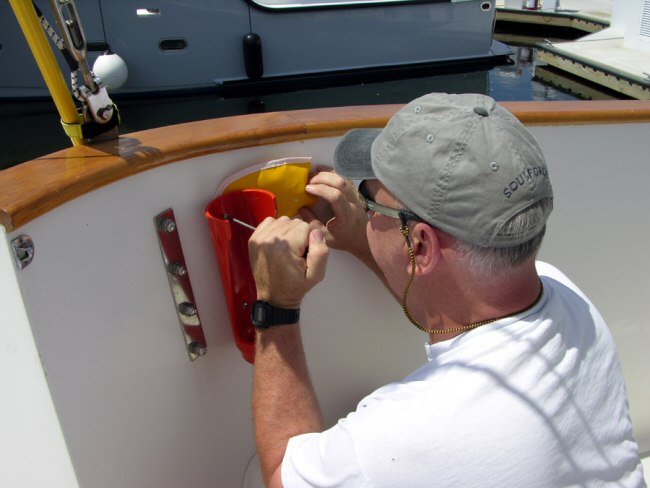
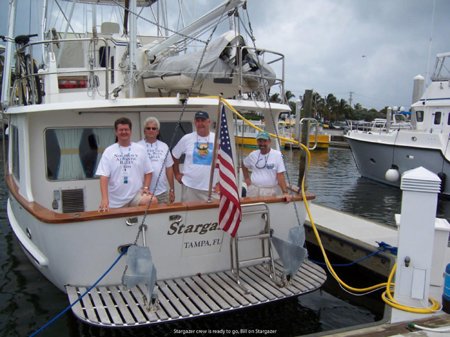
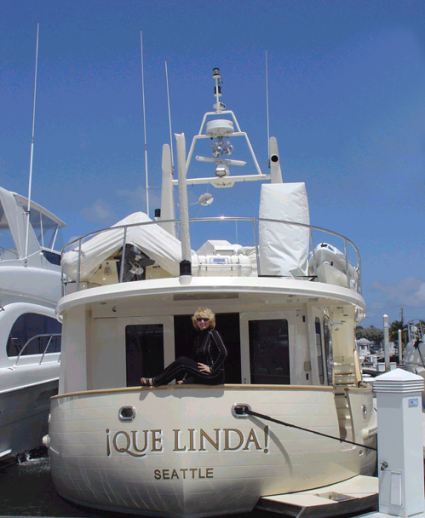


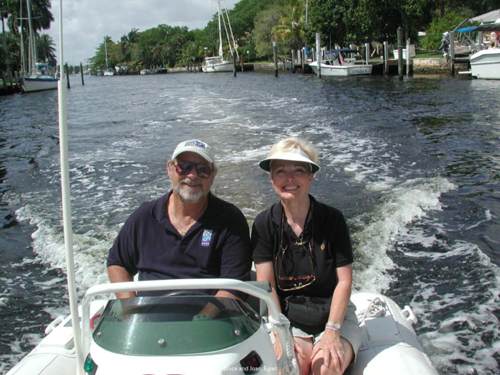
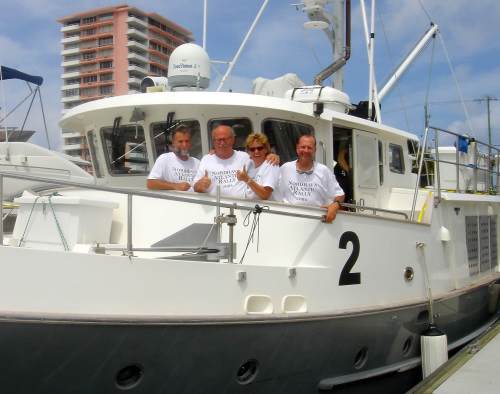

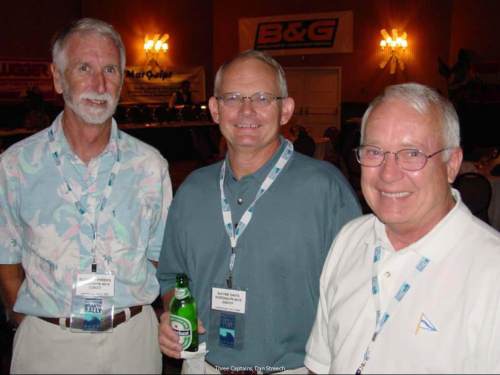

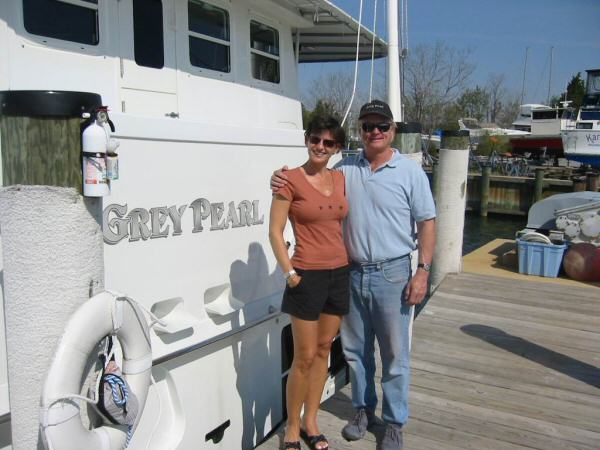


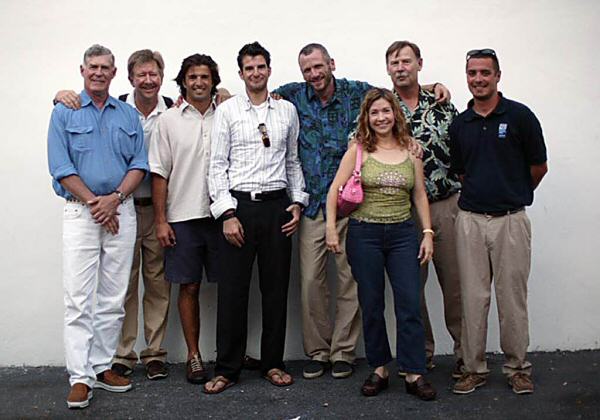
Leg One
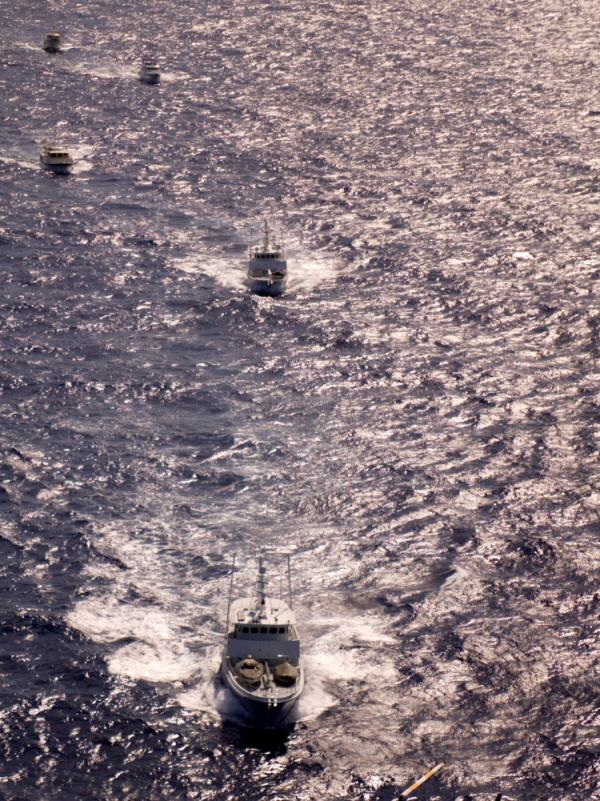


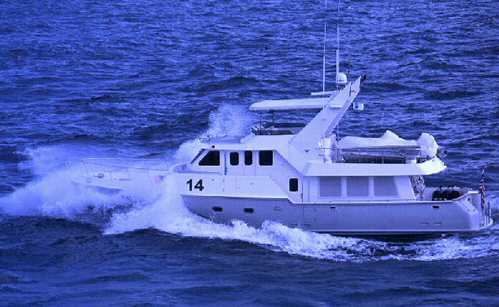

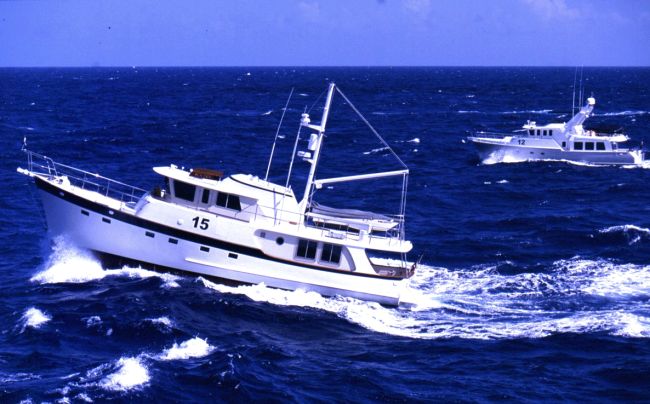
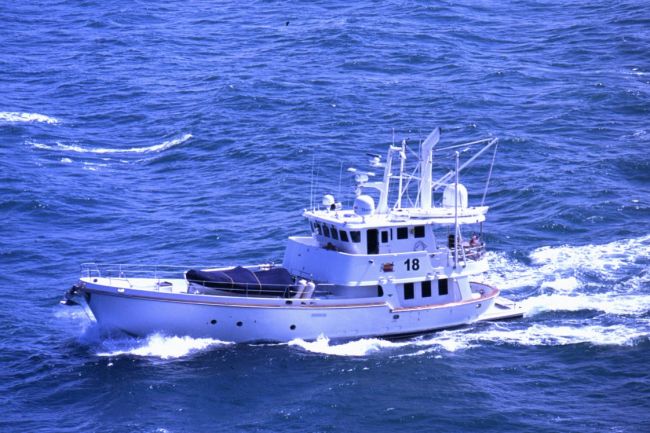

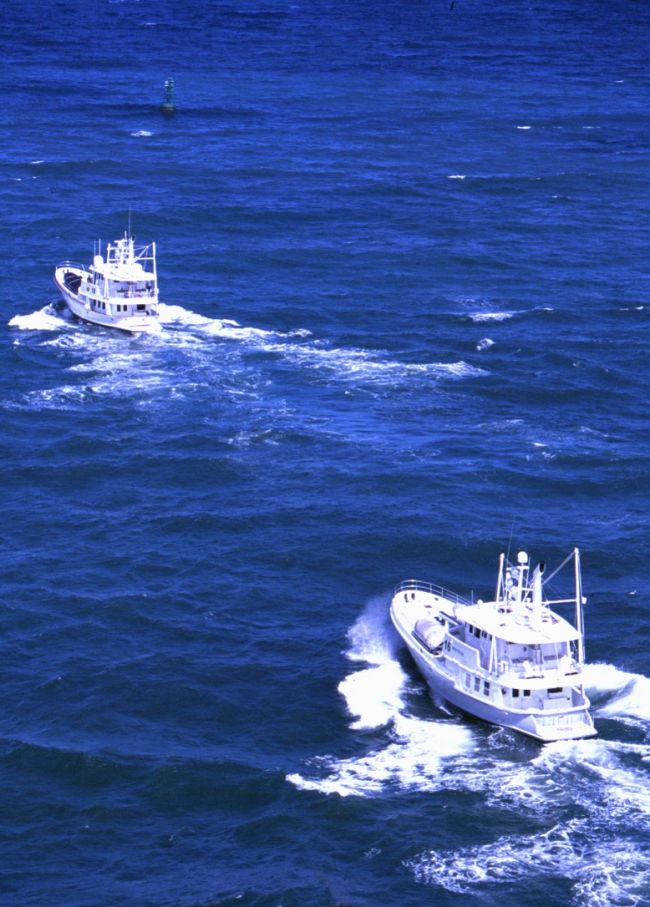
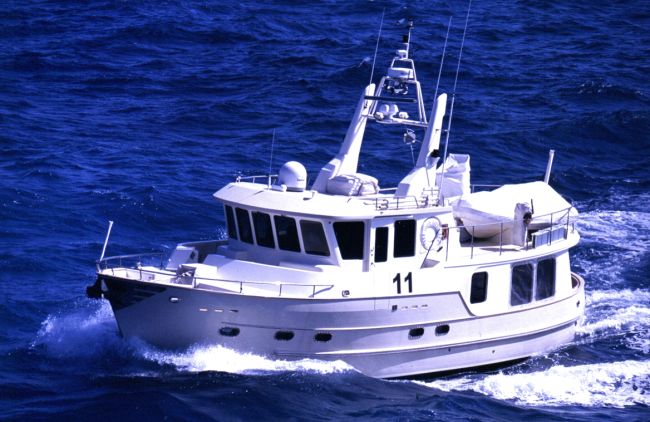
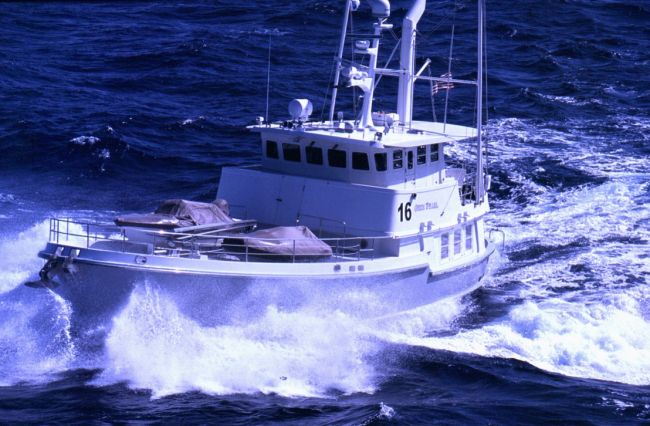


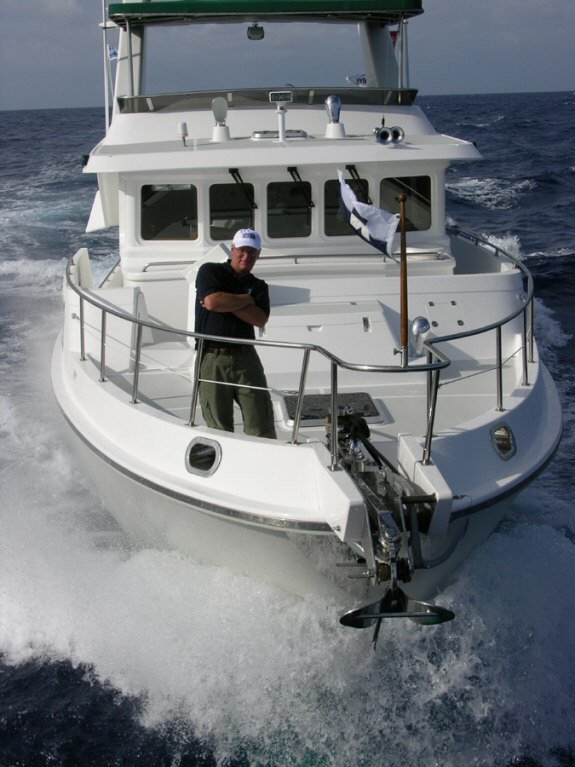

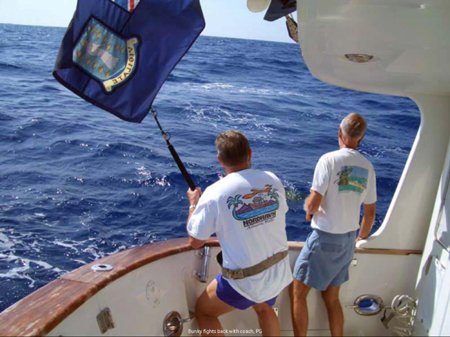


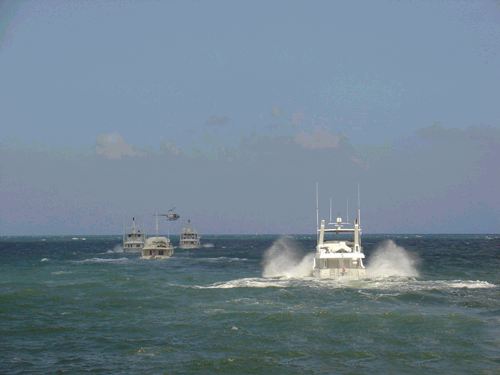
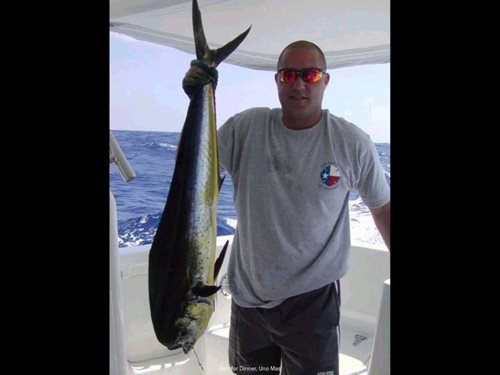


Bermuda


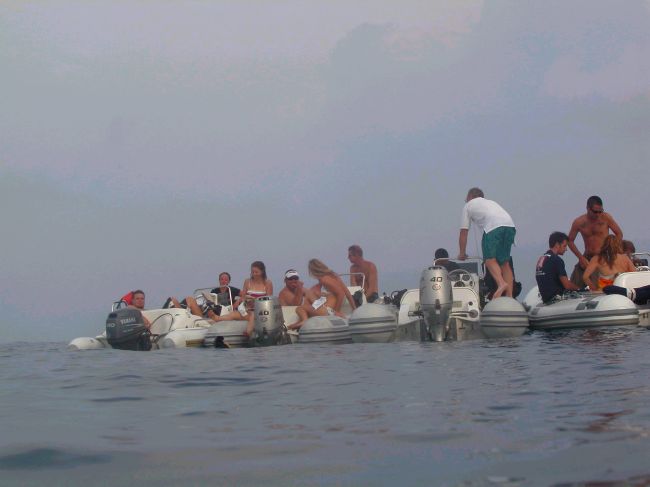


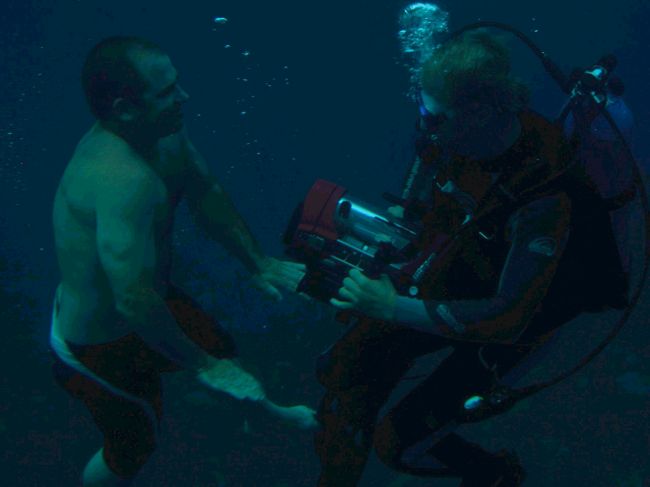


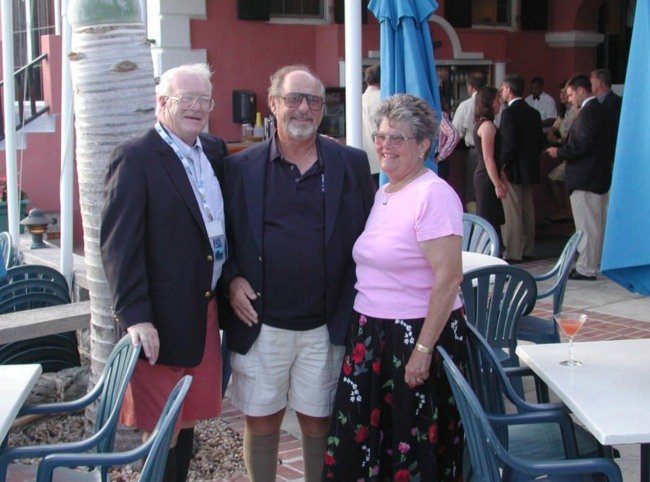

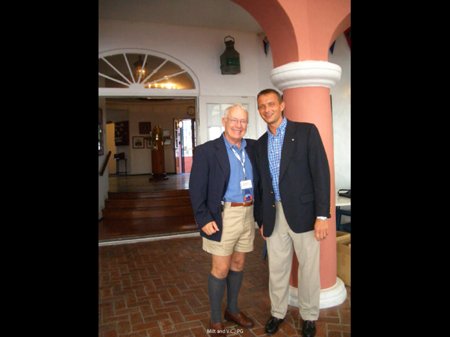
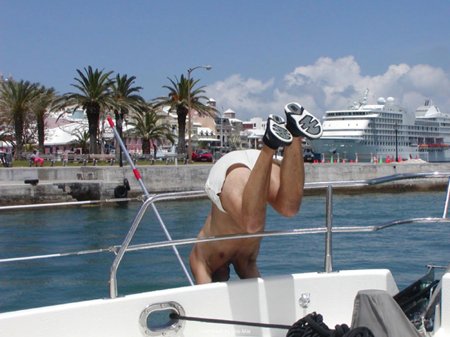


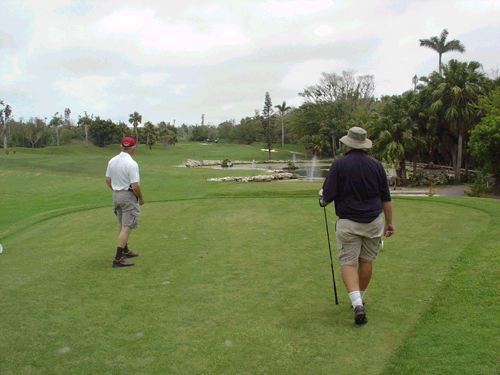


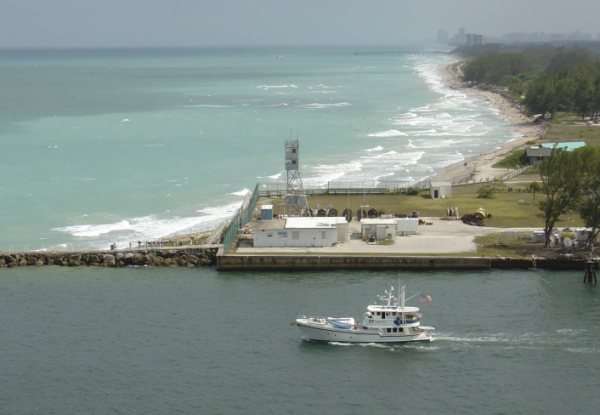


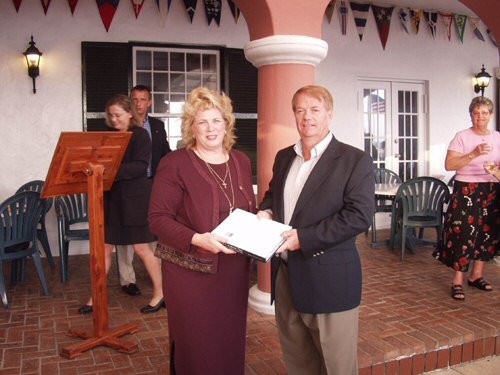

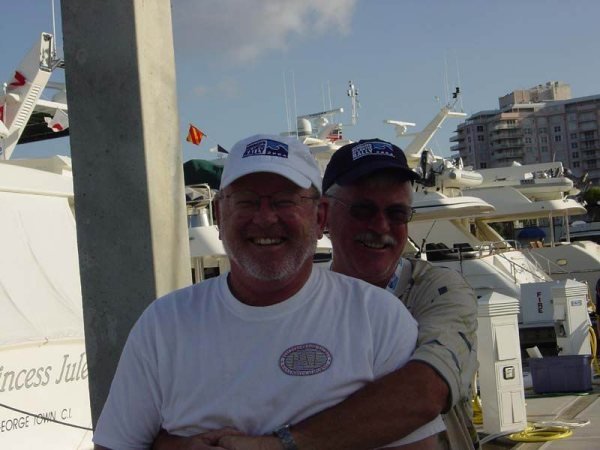


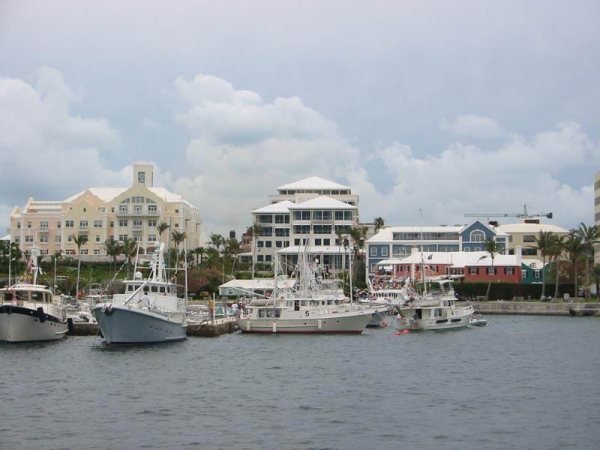
Leg Two
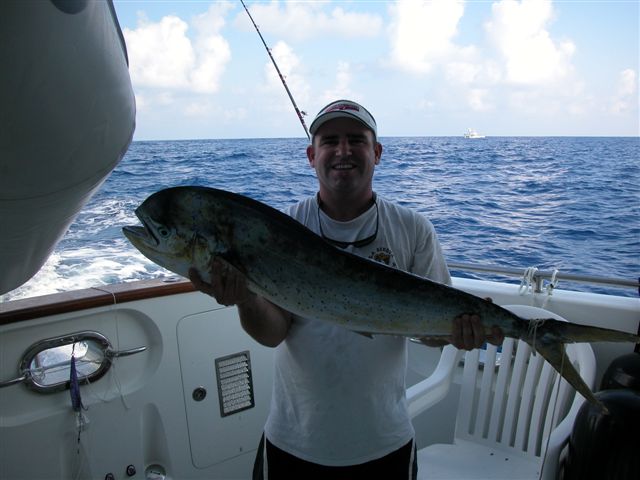


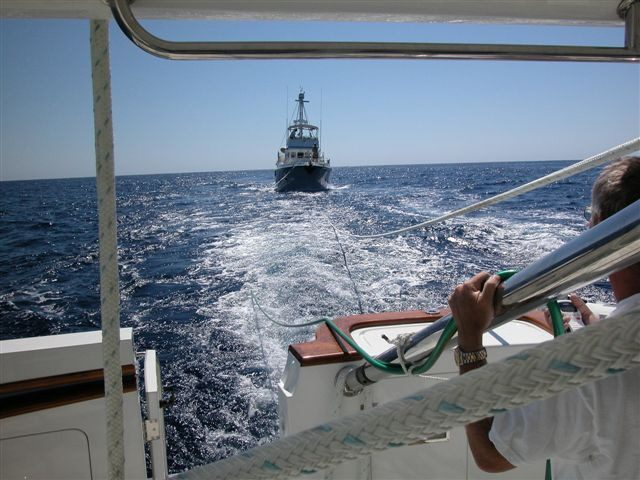


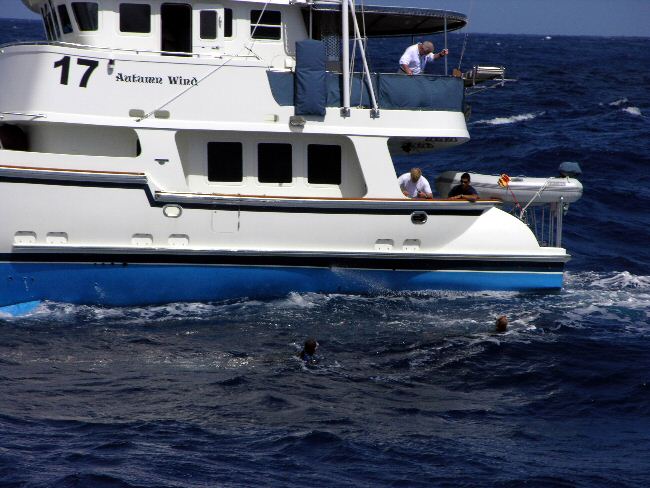


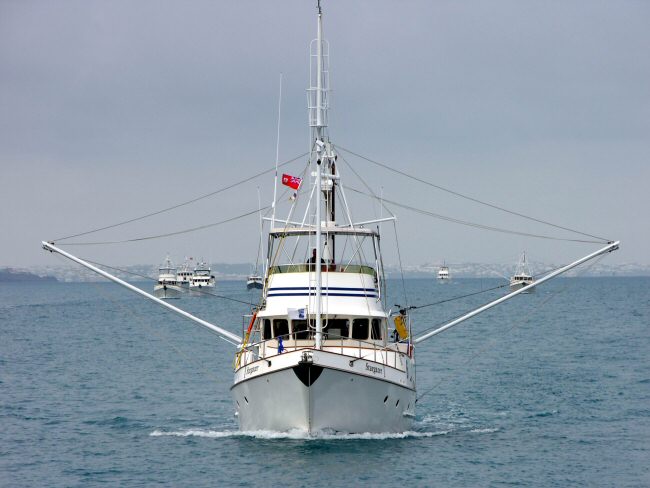


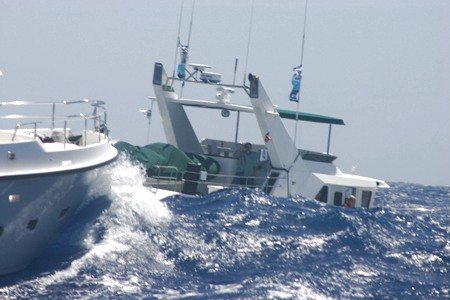


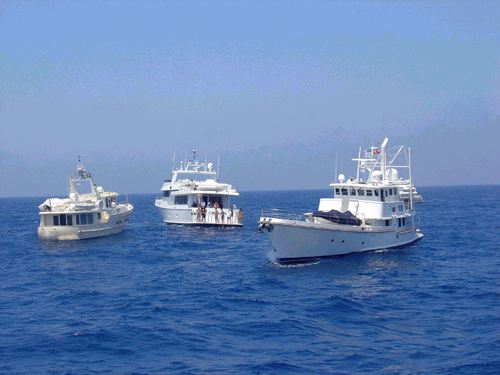


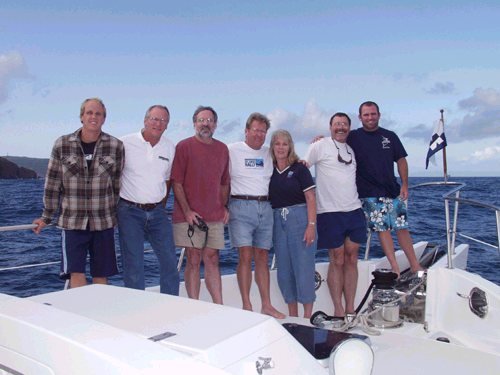
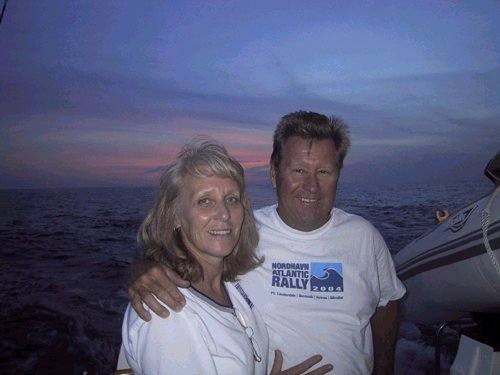


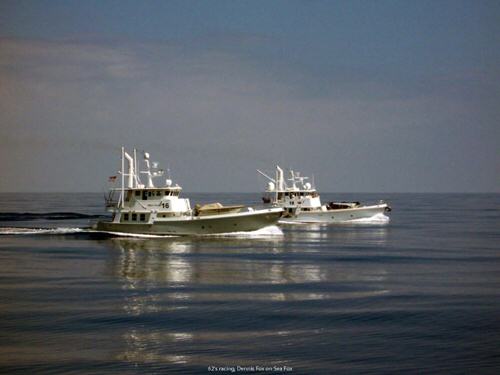




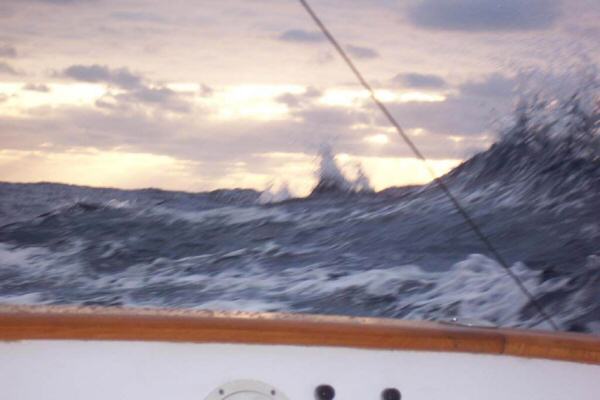
Horta


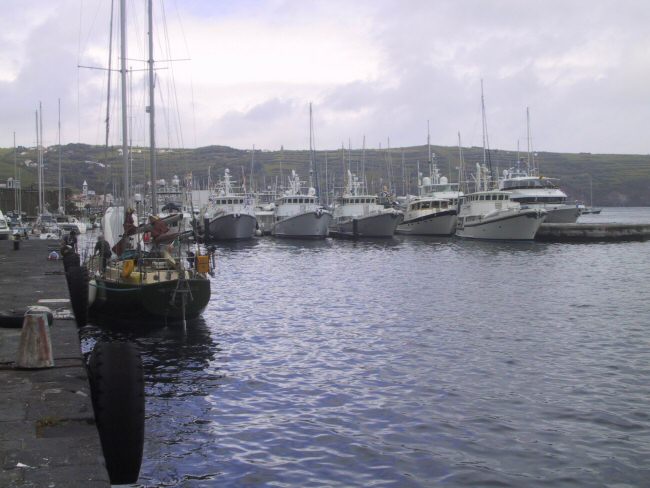
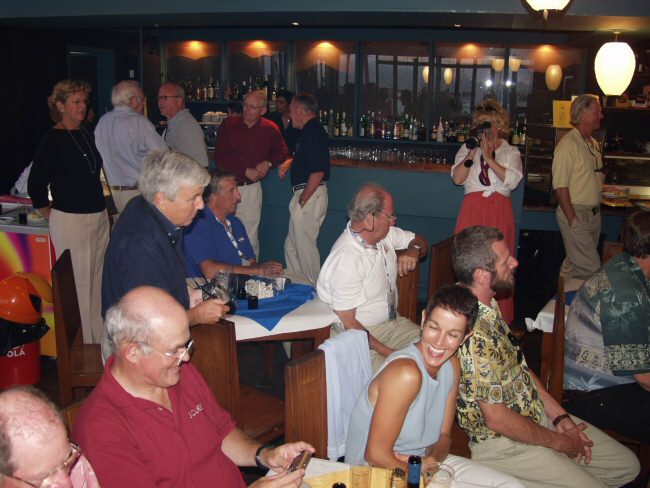
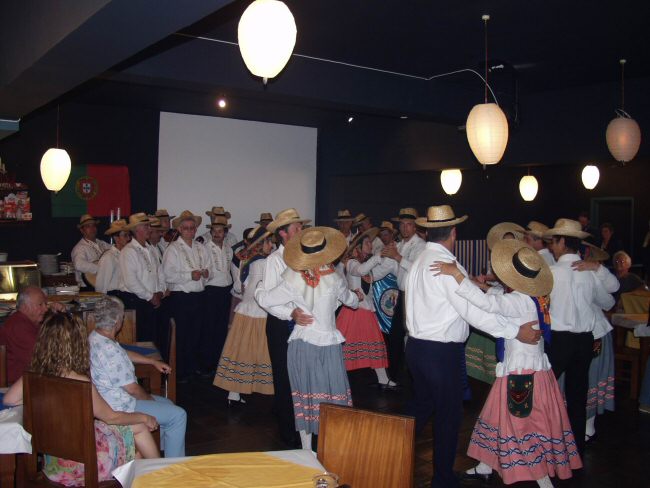



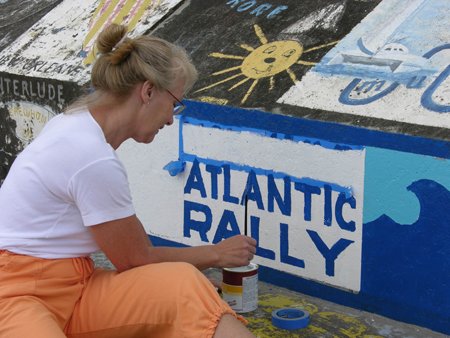


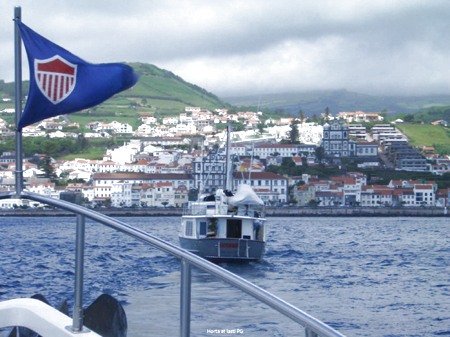


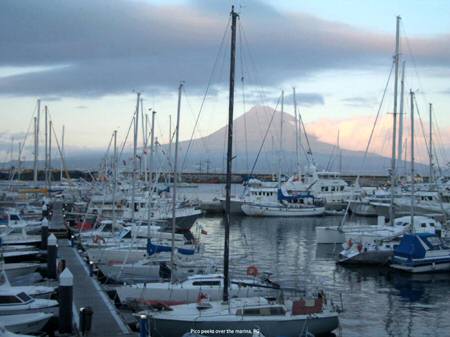
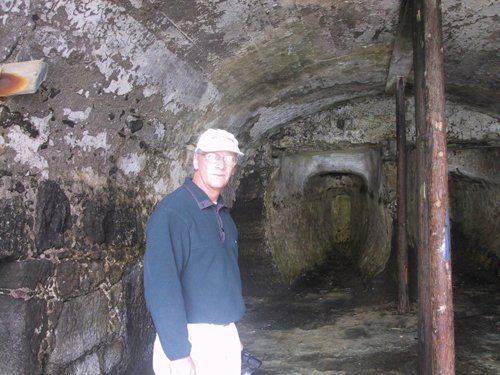
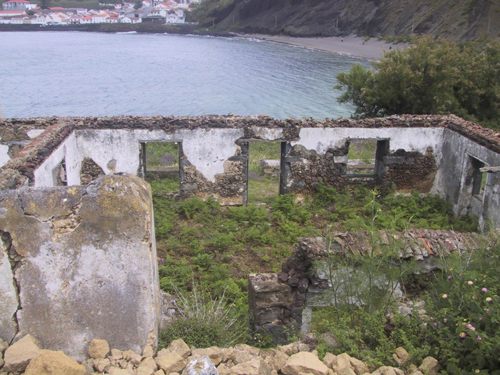


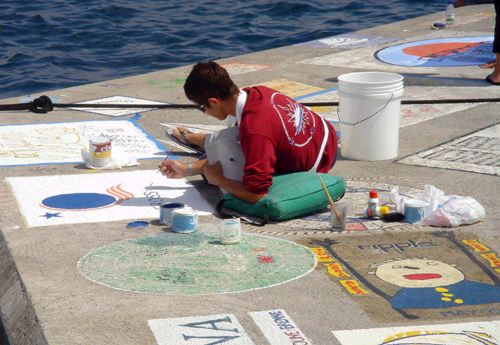


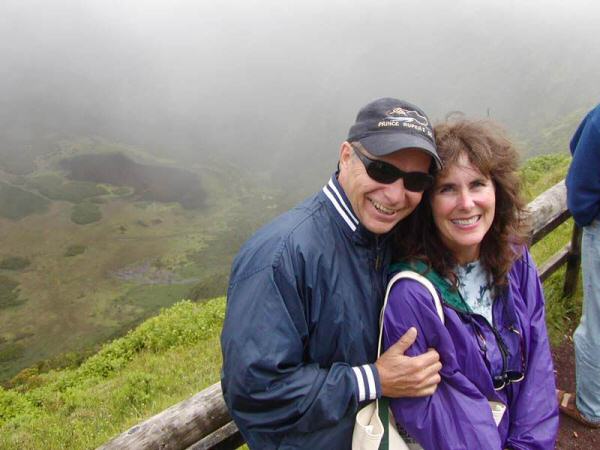


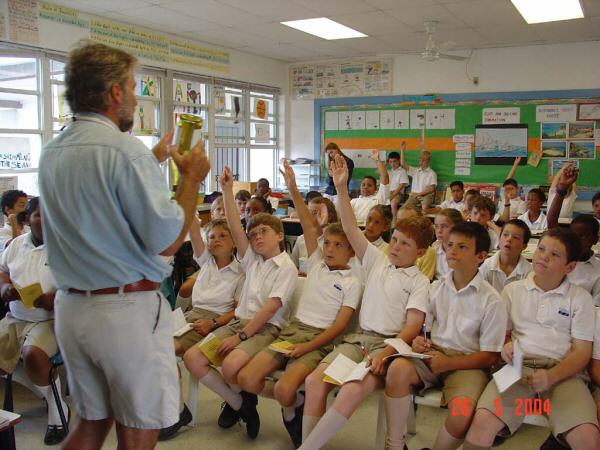
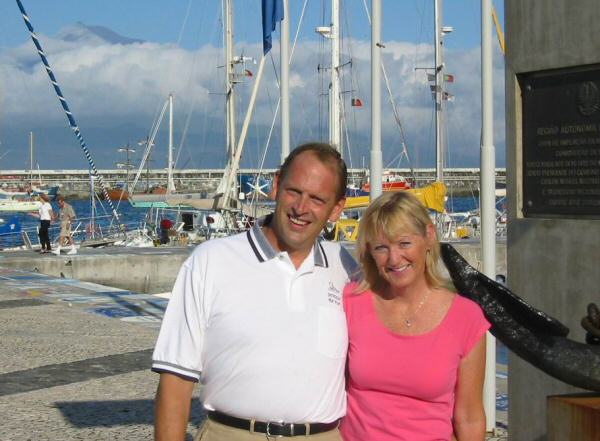
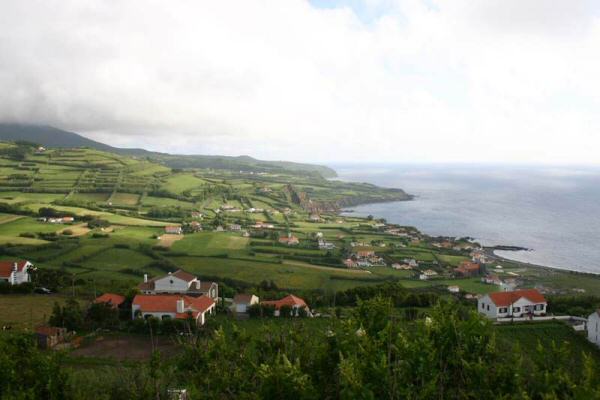

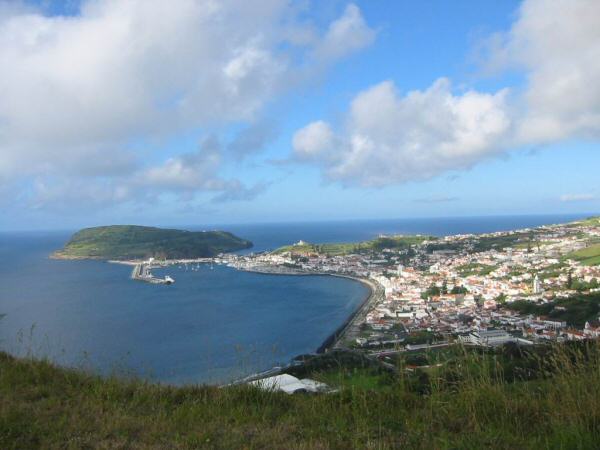
Pico Tour

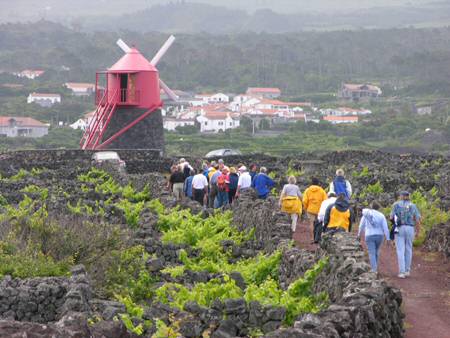


Leg Three - Gibraltar



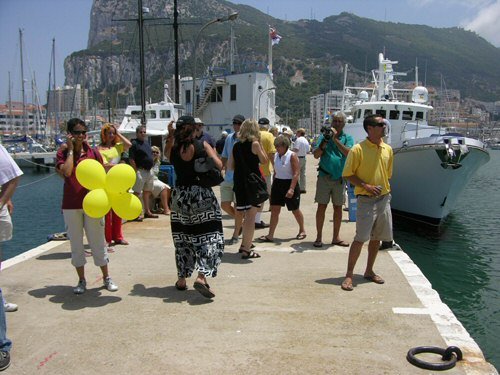

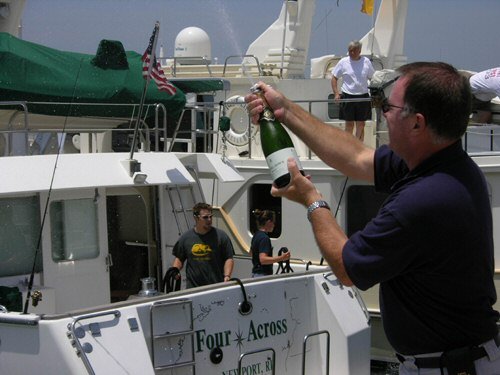

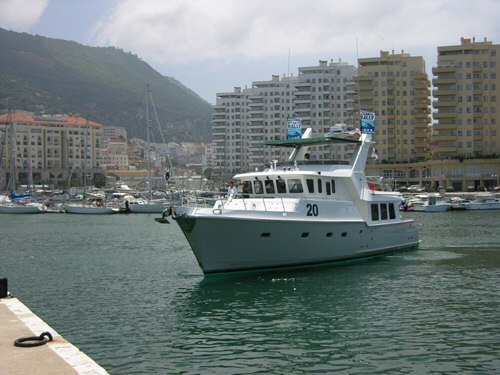



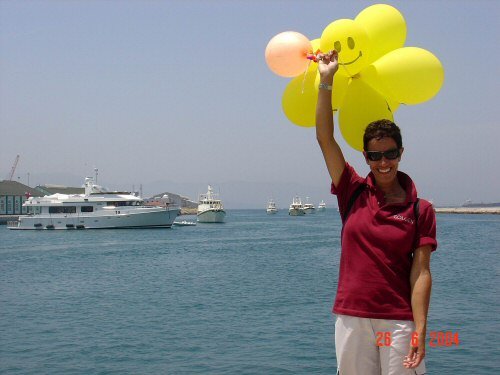
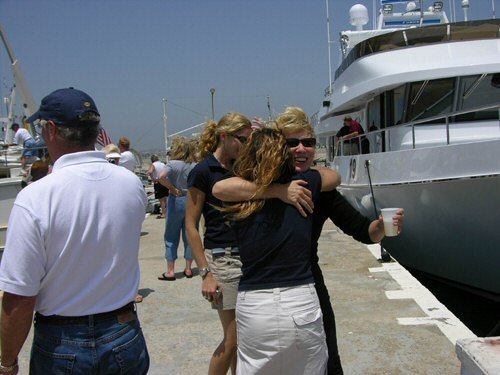



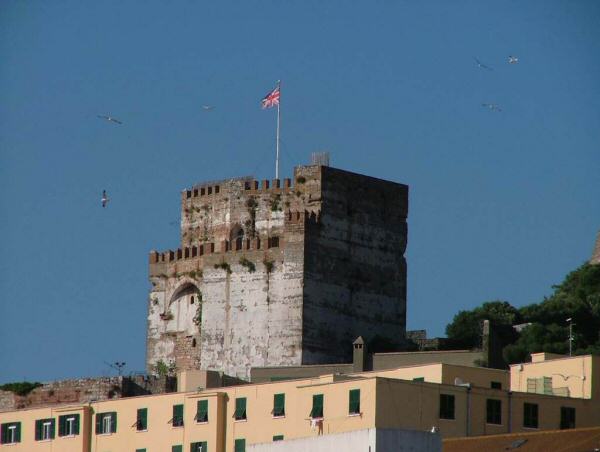

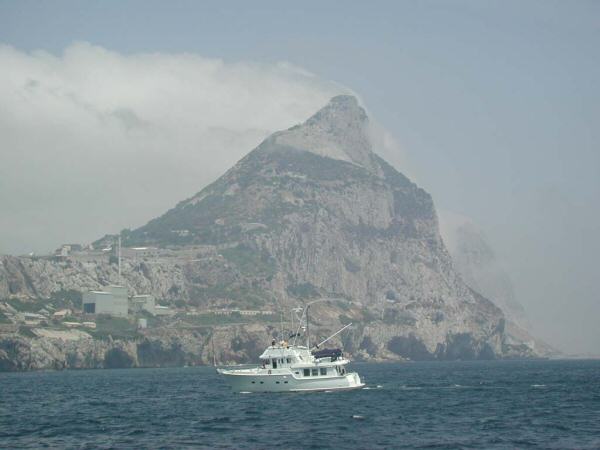
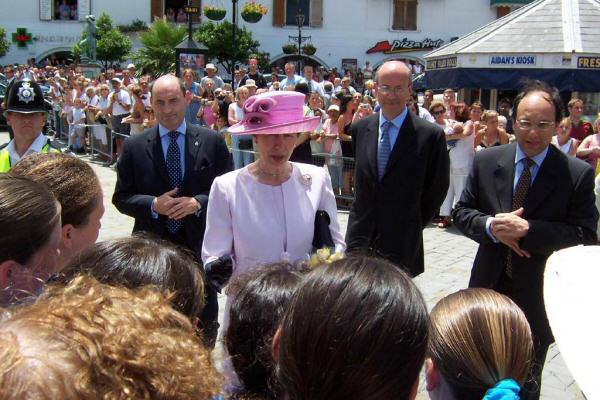

Grand Finale
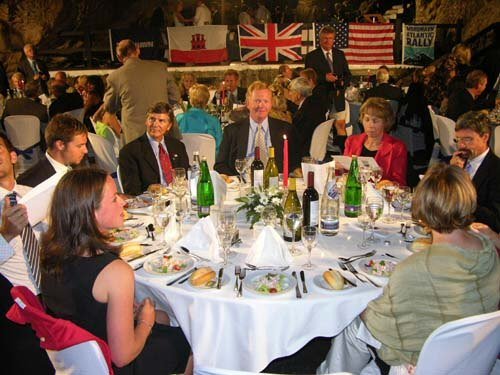



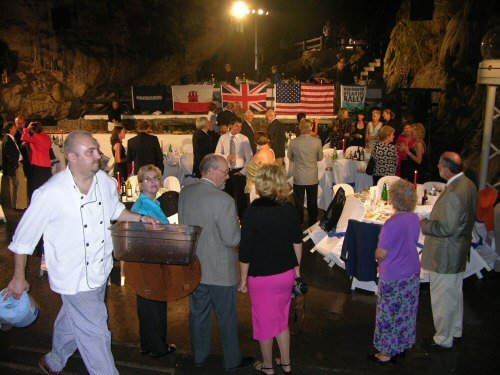


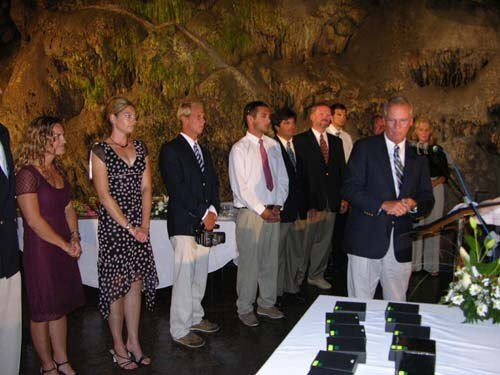
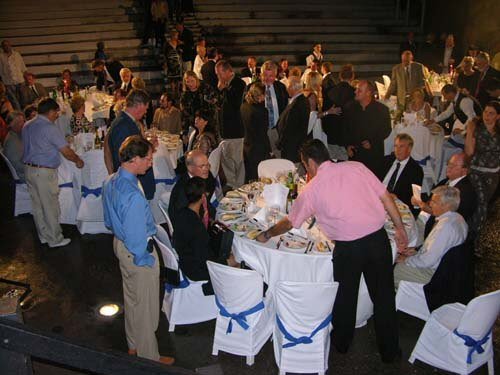
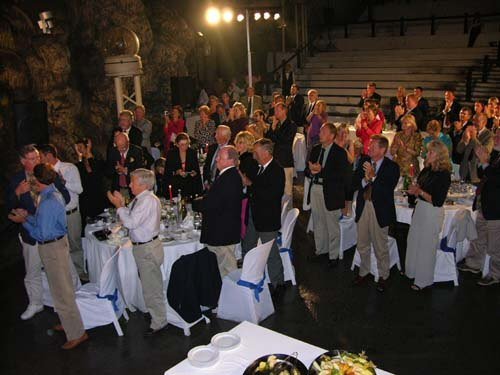


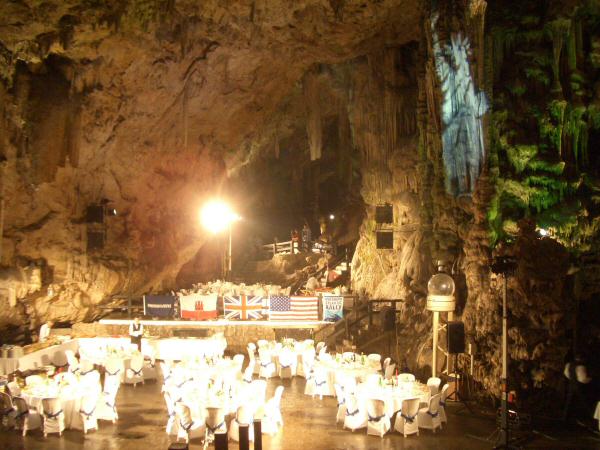
Morocco





Video
Underway
| Vessel | Lat | Long | Date | Time |
|---|---|---|---|---|
| Envoy | 36° 9.811" N | 5° 22.174" W | Sunday June 27 2004 | 10:09 AM GMT |
| Sea Fox | 36° 8.069" N | 5° 21.378" W | Sunday June 27 2004 | 10:07 AM GMT |
| Atlantic Escort | 36° 8.773" N | 5° 21.354" W | Sunday June 27 2004 | 9:02 AM GMT |
| Grey Pearl | 36° 7.589" N | 5° 20.251" W | Sunday June 27 2004 | 8:36 AM GMT |
| Four Across | 36° 8.969" N | 5° 21.352" W | Sunday June 27 2004 | 7:51 AM GMT |
| Uno Mas | 36° 8.930" N | 5° 21.266" W | Sunday June 27 2004 | 6:24 AM GMT |
| Stargazer | 36° 8.950" N | 5° 21.304" W | Sunday June 27 2004 | 1:23 AM GMT |
| Satchmo | 36° 9.624" N | 5° 21.006" W | Saturday June 26 2004 | 10:07 PM GMT |
| Strickly For Fun | 36° 8.486" N | 5° 22.540" W | Saturday June 26 2004 | 12:08 PM GMT |
| Egret | 36° 39.808" N | 13° 40.031" W | Wednesday June 23 2004 | 8:54 PM GMT |
| Sans Souci | 37° 44.399" N | 25° 39.527" W | Monday June 21 2004 | 7:52 AM GMT |
| Que Linda | 37° 44.901" N | 25° 39.399" W | Saturday June 19 2004 | 8:52 AM GMT |
| Sun Dog | 38° 32.954" N | 28° 38.860" W | Thursday June 17 2004 | 3:00 PM GMT |
| Odd at Sea | 38° 31.842" N | 28° 37.527" W | Wednesday June 16 2004 | 1:12 AM GMT |
| Goleen | 37° 45.361" N | 33° 16.783" W | Wednesday June 9 2004 | 2:26 PM GMT |
| Crosser | 35° 9.576" N | 48° 38.234" W | Saturday June 5 2004 | 8:58 PM GMT |
| Emeritus | 32° 47.374" N | 61° 45.093" W | Wednesday June 2 2004 | 2:20 PM GMT |
| Autumn Wind | 32° 21.876" N | 64° 11.638" W | Sunday May 30 2004 | 5:37 PM GMT |
| Commentaries from Leg One | ||
|---|---|---|
| Date | Posted By | |
| June 2, 2004 | Kirk White | Sans Souci : Beginning Leg 2 |
| Bon Voyage Bermuda NOTE: Nordhavn's Commissioning Manager, Kirk White, has taken over as Division One leader on board the escort boat Sans Souci. Here is his first report. "GET ON THE LEFT!!!" Justin screams as I steer my scooter down the right (normal side) side of the road and cars are headed at me. The drivers are slowing down and probably thinking something about tourists that will not be printed here. What shall I do...move further right? This is my first excursion away from the marina and what fun it was. Following Justin was just like being in the desert, up on the side walk, jumping off curbs, full throttle. Some things that I learned about Bermuda during my short stay there: Do the terms Dark & Stormy or "swizzle" mean anything to any one? It is possible that this had something to do with Justin's scooter riding abilities. Speaking of scooters, tourists are not allowed to rent cars in Bermuda, so the only transportation available besides taxis is the scooter. The locals can only have one car per house hold, so they to drive scooters by the gross. Men and women in business suits and ties, golf clubs, you name it, they haul it on the scooter. What is of particular interest is the short skirts and high heels on scooters, hmmmm... So much for that...Fast forward to the business at hand. All vessels in the first group got under nicely on Sunday. Winds favorable, seas favorable. Everyone happy. Yachts running good except for Sea Fox, a Krogen, which has Naiads,and had to pin a fin right out of the box. Don't know how they're getting along. Today, Grey Pearl, a Nordhavn 62 lost an alternator belt this morning. But they are running on the wing to make the repairs. Our first medical issue developed on Four Across, the Nordhavn 50. It seems someone on the vessel is possibly passing kidney stones. He is being monitored carefully by our resident doctor, Kevin Ware. Meanwhile on board Sans Souci, Garrett has caught a very nice tuna that we shall consume with haste, with Wasabe and soy sauce. Phil, our chief, makes a mean tuna roll. All fishing lines are out this morning, no luck yet, the lines have been in the water 15 min. We tried our best to be entertaining last night at our first roll call for Leg 2, but alas, I feel that Mr. Dan (Streech) took that show and has made it a very difficult act to follow. We shall not give up and will try harder - even if it requires rehearsals. Please feel free to write in with your questions. If you want a personal reply, just indicate it and I'll be happy to email you direct. |
||
| June 2, 2004 | Jenny McCauley-Stern | Bon Voyage Bermuda |
| Bon Voyage Bermuda With today's departure of the faster boats in Division One, the second leg of the Nordhavn Atlantic Rally officially commenced. In conditions that drastically contrasted from Saturday's calm departure of the slower-paced Divison Two boats, the newly pared-down fast group battled 30-knot winds blowing out of the west that made for a hairy exit. Fighting a swift current and strong wind gusts across its beam in addition to having to navigate through a line of mooring balls, Crosser, the flagship of the NAR, lost a couple of fenders and left it's mark on the RBYC docks before Nordhavn's Garrett Severen maneuvered the appropriately named T/T Sans Souci (which means "no worries" in French) against the bow of the 90' Monk-McQueen and pushed it into the clear. The mighty Crosser escaped with merely a few scratches and should be congratulated with essentially winning the tough crusade against the wicked weather. Bystanders commented that the winds were the most severe the area has seen in over a month. After retrieving Crosser's two lost fenders, Garrett steered the tender over to Grey Pearl. Set up on the dock in front of Crosser, the Nordhavn 62 fared a much easier departure thanks to the full power Captain Braun Jones received from his thrusters which draw off the wing engine. With the thrusters at full strength, Braun was able to quickly get off the dock without much fanfare, save for the fact that Leg One crewmember, Mark Wildman who was helping to handle lines, and who was scheduled to fly out of Bermuda later that night, wasn't able to jump off the boat. Fiancé Mary looked in disbelief from the docks as Mark waved and shrugged his shoulders. "He's been talking about going to Horta all week!" Mary lamented, and then added, "But if he thinks I'm lugging his suitcases to Baltimore by myself, he's nuts!" No worries. Garrett met Mark and delivered him safely back to the pier. About 15 minutes later, Sans Souci, the Division One escort boat, left the dock and led the new group of 6 boats on a rhumb line to the Azores. Despite the strong winds, conditions looked favorable as the gusts coming out of the west would soon be behind the boats headed on their easterly course. It was hard to believe that just two days earlier, the Division Two boats enjoyed a light easterly breeze and no troubles at all getting underway. "It's as if the weather gods are looking down on us!" noted Rally coordinator Milt Baker. The newly expanded group included Sea Fox, the 58-foot Krogen, which decided that it was better suited to the slower pace of the smaller boats. Unfortunately, just as it had on Leg One, Sea Fox suffered the loss of a stabilizer, making the 10 days that remain slightly daunting and almost definitely uncomfortable. Poor Julie Fox, who upon hearing the weather forecast out of Fort Lauderdale opted to fly to Bermuda thinking she'd rejoin the boat on the second leg, which, although 4 days longer, was supposed to yield much smoother conditions. The forecast from weather advisor Walt Hack indicates only 5-7 foot seas for the next 5 days, but it's not much consolation for a boat with a broken wing. Jenny McCauley-Stern |
||
| May 26, 2004 | NAR Report | Day 5 in Bermuda |
| Day 5 in Bermuda Day 5 in Bermuda: the fog is rolling in and it's been raining intermittently. We haven't seen steady sun in 2 days, but the mood continues to shine bright amongst the Rally participants. What a wonderful place Bermuda has been. Beautiful beaches, loads of culture and hospitable residents who instantly befriend you - eager to give so much local knowledge that by the time the week here is done, we'll hardly feel like visitors still trying to master driving scooters on the wrong side of the road. The Royal Bermuda Yacht Club has been such a gracious host - that they don't appear to mind that our getting ever-closer knit group has seemingly taken over the joint. With our laid back style and raucous laughter, the Rally participants share lunches at the terrace with RBYC members: two completely conflicting styles, but all with one similar appreciation for the love of our boats and being on the water. More accustomed to seeing sailboats and coastal cruising motorboats, our fleet of long-range trawlers intrigues them. But we all are just as happy to share information on our Nordhavns as they are to share their island with us. The first few days in Bermuda have been time for play. After the moderately uncomfortable passage from Ft. Lauderdale, everyone was eager to blow off steam and partake in a "Dark and Stormy", the Bermudian beverage of choice. The hours have been passed away with lots of organized dives, scooter tours of the island, shopping trips galore and dinghy rides. Monday, May 24 was Bermuda Day, a national holiday here which was marked by a road race and festive parade. Rally participants lined the road enjoying the Carnivale-like procession with lots of bright-colored costumes, island music and dancing everywhere. Island-style had officially taken over our group. Late Monday afternoon, the sun ducked in and the winds came a-blowing as a small front parked itself over our island, trying to ruin our good mood. On Tuesday night, 20 knot winds gave a scare to one of the boats that appeared to be dragging anchor. Not used to the med-mooring style of docking, it left many with their guard up for the night, but no more drama ensued. Now at the mid-way point of our stay, work begins on the boats. A Naiad tech was flown in to work on some stabilizer components that failed while underway on Leg 1. Boxes of parts shipped from the States have arrived via fed ex and the PAE commissioning team has spent the day tackling issues from non-functioning autopilots to a stubborn fuel leak. Brad Smith, division two leader, reports that there's been no major problems, and the guys have a handle on all the worklists. Certainly by tonight's Harbour Night out on Front Street, island-style fun will be in full swing once again. |
||
| May 23, 2004 | Dan Streech | Aboard San Souci |
| From Dan aboard “San Souci” - May 23th. With the theme song from the Tom Cruise movie "Cocktail" (Bermuda, Bahama, come on pretty momma) playing in the background, I say: Good morning from Bermuda! We made it!! The fleet arrived yesterday (Saturday) morning exactly on schedule with pride and satisfaction bursting from everyone on board. Our last night at sea (Friday night) was filled with excitement as the two fleets finally came together. We first saw group 2 on the radar, then one by one, their stern lights began to appear. It was a wonderfully satisfying moment which validated the endless hours of planning that have gone into this event. For the first time, radio roll call was a combined event in which all 18 boats (including Emeritus) reported their position in order of their size. Throughout the night, the radio was busy with questions and answers about the various issues of arrival. Around midnight, we began to see the lights of Bermuda. At first, it was just an indistinct sky glow, but then individual lights began to show themselves. Several of us marveled at the oddness of this little rock of land sitting out in the middle of the Atlantic Ocean. Our well-crafted arrival plan turned to benign anarchy when we arrived at the entrance to the "Narrows" passage thru the reef. We were to all enter together to give dramatic effect for the people waiting at the yacht club. However, the faster boats ended up about 45 minutes ahead of the slower boats and just proceeded on to the club. In the end all was fine because the staggered arrival actually helped the docking process run more smoothly. I was very proud of the participants as they deftly maneuvered their vessels into their "Med-moor" positions. Anchors were dropped and the powerful ABT bow and stern side thrusters were barking out their presence as each boat was maneuvered into position. Joan and Bruce Kessler were on the docks filming and Milt and Judy Baker with radios in hand were directing the various activities. The Royal Bermuda Yacht club is PERFECT. It is exactly what one would expect. The building is old and the floors creak, and it reeks with history and British decorum. One expects HRM the Queen Herself to appear at any moment. In fact, she has visited the club twice (in 1953 and in 1994) as evidenced by the photos on the wall. The striking dissimilarity between the pretty smiling young Queen of 1953 and the dour stooped Queen of 1994 is amazing and reminds us that "time waits for no Queen" The walls are covered with old photos of schooners, steam yachts and various yachting characters going back over 100 years. The lobby and trophy room (where the temporary PAE NAR office has been reestablished) open on to the outdoor bar and eating area. As one comes and goes from the slips, they must pass by the bar areaâ?¦ thus this "watering hole" has quickly become the social center for the participants. In a strange juxtaposition, the bar area is also an internet "hot spot", so the 100 year old edifice steeped in tradition has been invaded by laptops. While in Bermuda, I will be doing my internet business from the yacht club to give some relief to the expensive system aboard Sans Souci. I can only describe Bermuda in superlatives. I LOVE this place. The air is balmy, the weather is perfect and the mood is friendly and relaxed. The rocky shoreline of the lovely bay that we are located in reminds me of Maine. The pastel colors of the building and houses remind me of a Mediterranean scene, the beautiful lush greenery and flowers reminds me of Singapore. With the knee high socks and the "British" decorum and accents, one at first thinks that this place is stuffy. There is however an almost imperceptible wink that says "hey relax, we don't really mean it.." A local guy came into the club last night wearing a blue blazer with tie, short pants, knee high socks and shiny black shoes. I said to myself - I LOVE this place. Within a few hours of arrival, we headed up to Smatt's to rent scooters. PAE now has 10 scooters under contract for cruising around the island (no car rentals allowed- only locals are allowed to drive). As our valiant young PAE men roared off (on the left side of the road), Jim turned to me and said that open ocean passage making was child's play compared to the dangers that we are facing here in port. Ken and Roberta have taken a hotel room for a few days to get some privacy and Christian has taken a hotel room. Christian's very lovely and charming wife Andrea arrived yesterday afternoon and the 3 of us had dinner last night at a quaint Italian restaurant. We hadn't had pasta during the entire passage and Christian said that he was craving it. When we arrived, the best outside tables were all taken. Christian began rattling in fluent Italian and a table magically became available. During the passage, Christian has had non-stop questions about the technical aspects of a passage maker. The dinner conversation was about steering and the interplay between the stabilizers, the rudder and the bulbous bow. He would not quit until he understood it. One can imagine that there have been many similar episodes after practice or qualifying in which the sensitive interplay between down force, gear rations and tire pressures were discussed to the nth degree. While wondering the docks, I ran into Bob Rothman of Emeritus and asked him about his wayward course. He finally admitted that he is a loner and a "contrary" guy who isn't comfortable traveling in a group. Thinking to myself, then why did you join a group?, I told him that there wouldn't be much opportunity for him to deviate from the plan for the next leg since it is a straight line from Bermuda to the Azores. With a twinkle in his eye, Bob said "ahhh but you are wrongâ?¦ there is the rhumb line route and the great circle route" With that Bob and Janis his lovely wife of a lifetime walked away towards the yacht club. I could not be happier with the rally situation at this point. Leg 1 went perfectly and frankly turned out even better than I had thought. In all of our planning of the details, we had not anticipated the simple FUN and JOY that would come from this rally. I have not done well in naming the individual boats and their owners and crews, but they all have a story to tell and I am proud of each and every one of them. Without exception, the boats (Nordhavn and non Nordhavn alike) have been well prepared and have been well operated. The competence and confidence of the participants is high and will only grow as the rally proceeds. This will be my last report, as I must head home soon. Business and personal pressures are calling me and I must heed. Kirk White of PAE will take my position as group 1 leader for the final two legs. I wish the rally group well and know that they will complete this undertaking with great success. This first leg to Bermuda has shown me that the NAR management and the participants themselves are first class and will cope with whatever befalls them. I will stay here in Bermuda for a few more days, but won't post any more reports. All they would say anyway is: I LOVE this place and we are having fun. Satisfied, Dan |
||
| May 23, 2004 | Milt Baker | NAR Organizing Committee |
| From Milt Baker, NAR Organizing Committee - May 23rd. Leg one of the Nordhavn Atlantic Rally 2004, the first-ever Atlantic crossing by a large convoy of motor yachts, is history. All 18 rally yachts and their nearly 100 crewmembers arrived safely in Hamilton, Bermuda, at the Royal Bermuda Yacht Club on Saturday, May 22, and the rally fleet's first experience with "Med mooring" was smooth as silk--thanks in large measure to good preparation by rally skippers and crews and to light winds and very flat conditions. For most of the yachts, the trip was about 990 nautical miles. Division 1, the slow division, departed Fort Lauderdale Sunday afternoon, May 16, in 15-20 knot easterly winds, gusting to 25, and 5-6 foot seas. The 11 Division 1 yachts were led by Nordhavn's company yacht, the Nordhavn 57 Atlantic Escort, skippered by Pacific Asian Enterprises (PAE) vice president Jim Leishman. The start was documented on video under the direction of Bruce Kessler, who is making a video production on the rally. At times, three helicopters were in the air off Fort Lauderdale with video and still cameras rolling. After the start, the yachts settled down on the slow slog to Bermuda. To provide a more comfortable ride, rally weather forecaster Walter Hack of Ocean Marine Navigation Inc. called for the fleet to follow the Gulf Stream for 180 miles north before turning for Bermuda. That added about 70 nautical miles to the trip, but by all accounts it worked. By the time Division 1 boats turned for Bermuda, wind and seas were down. "It was a little bumpy for the first day and a half," one rally crewman reported, "but I think we'd all seen worse. And then it got dramatically better!" The yachts' stabilizers helped a great deal. The 11 division 1 yachts traveled within sight and VHF radio range of one another all the way to Bermuda. At night they maintained a minimum distance of one nautical mile from one another, and the closed in a bit during the daytime. Division 1 escort vessel was the Nordhavn 62 Autumn Wind, captained by Bill Smith. Division leader Brad Smith, a PAE employee, was aboard Autumn Wind, and he quickly learned that his expertise was much in demand. Technical questions for Brad came rapidly, and division 1 skippers found him a terrific resource. The seven Division 2 yachts, larger and faster, departed Fort Lauderdale 24 hours after the first yachts. Their forecast also called for heading 180 miles north in the Gulf Stream before turning. All but one of these yachts followed the recommendation and traveled together, but skipper Bob Rothman of the Nordhavn 57 Emeritus decided to take the most direct course to Bermuda and traveled outside the group. He slowed down on the approach to the island, arriving with the rest of the fleet. Division 2 escort vessel was the Nordhavn 62 Sans Souci, owned by Ken and Roberta Williams and skippered by Capt. Rip Knot. Acting as division leader aboard Sans Souci was PAE president Dan Streech who did his best Robin Williams imitation on the daily roll calls, opening with a few seconds of rock music followed by a hearty "Goooooood morning Division One!" Two days out of Bermuda, one crewmember called the weather "oily calm," and another called it perfect trawler weather. The fleet launched small boats, took pictures of one another, swam in 15,000 feet of ocean water, and even delivered lattes to one yacht whose precious cappuccino machine had ceased to function. PAE is sponsoring the rally is provide owners and crewmembers an opportunity to take part in a safe and enjoyable ocean-crossing event, experience the personal challenge of crossing the Atlantic aboard their own vessels, and enjoy the camaraderie of voyaging with friends and a degree of added safety by having other vessels nearby. Rally staff members travel ahead of the fleet, easing official clearance and making advance arrangements for dockage, duty free fuel and other luxuries and necessities in each port. A physician and two EMTs travel with the fleet, along with PAE technicians and other experts. Problems aboard rally yachts were remarkably few. Three yachts experienced problems with active fin stabilizer systems, but two of the three ended the passage with stabilization from their systems. One yacht's watermaker ceased to function, and at least one other watermaker was reported leaking. Thanks to satellite telephones and e-mails, parts for the systems were ordered and are expected to meet the boats during the Bermuda stop. Fuel system problems are common aboard small yachts on offshore passages, especially when the weather is rough. However, the NAR fleet had virtually no fuel problems. A few of the yachts reported changing filters due to dirt in fuel taken on before departure and one broke a fuel fitting, but everything was handled onboard with no significant loss of time or speed. The yachts reached Bermuda right on schedule, passing Five Fathom Hole at the entrance to the 17-mile channel into Hamilton at first light Saturday and arriving at the Royal Bermuda Yacht Club a few hours later. All 18 yachts were Med moored at the yacht club well before noon, and the demand for lunch on RBYC's scenic patio all but overwhelmed the club's staff. The Nordhavn Atlantic Rally yachts will be at RBYC for about a week. Division 1 yachts depart for the rally's longest leg--1,800 nautical miles to Horta on the island of Faial in the Azores--on Sunday, May 30, and Division 2 yachts on Tuesday, June 2. All are scheduled to arrive in Horta on Friday, June 11. After a little over a week in Horta, the yachts depart for the final leg, 1,125 nautical miles to Gibraltar. The rally fleet consists of 18 yachts ranging from 40 to 90 feet, all but three of them Nordhavns. The yachts include: Nordhavn 40 Uno Mas, John and Sue Spencer Nordhavn 46 Satchmo, Bill and Ellen Bane Nordhavn 46 Envoy, Wayne and Pat Davis Nordhavn 46 Egret, Scott and Mary Flanders Nordhavn 46 World Odd @ Sea, John and Dulcie Harris Nordhavn 46 Star Gazer, Michael Perfit and Kevin Keith Nordhavn 47 Strickly for Fun, Scott and Terri Strickland Nordhavn 50 Sundog, Robert Greenbaum Seaton 55 Que Linda, Hal and Linda Wyman Nordhavn 50 Four Across, Doug Seaver and Charles Metcalf Nordhavn 57 Goleen, Chris Samuelson and Sonaia Hermida Nordhavn 57 Atlantic Escort, Jim Leishman Nordhavn 57 Emeritus, Bob and Janis Rothman Krogen 58 Sea Fox, Dennis and Julie Fox Nordhavn 62 Grey Pearl, Braun and Tina Jones Nordhavn 62 Autumn Wind, Bill and Arline Smith Nordhavn 62 Sans Souci, Ken and Roberta Williams Monk McQueen 90, David Stone --Milt Baker |
||
| May 21, 2004 | Dan Streech | Aboard San Souci |
| FRIDAY MAY 21 DAN’S NAR REPORT N#5 It was another magic night aboard Sans Souci. After chef Phil’s delicious dinner of Chicken cordon bleu, we conducted the evening roll call. These roll calls are becoming ever more fun as the jokes, pranks and outrageous fishing stories seem to grow. Goleen now claims to have caught Sea Fox’s 4 foot fish and (wouldn’t you know it) it got away again with a lure. Crosser was boarded by a giant squid which they fought and killed with dental floss. They are now enjoying calamari. While discussing the rather tricky routing in the final approach to the Bermuda Yacht Club, Grey Pearl wanted the Lat/Lon of the nearest bar. And much more.. Emeritus has finally come within radio range and will join tonight’s roll call. My watch last night was 9:00 to midnight. The moonless sky was breathtaking with stars from horizon to horizon. The running lights of our faithful fleet blended with the stars as we floated along on the surreal “Lake Atlantic”. I spent much of my watch standing at the Portuguese Bridge enjoying the balmy air and counting shooting stars. It was so beautiful, that several people who didn’t want to waste the experience by sleeping stayed up. We chatted about nothing and everything in a way that just doesn’t seem to happen in “real life”. The pleasant melodic and reassuring purr of the dry exhaust was a backdrop to the above scene. Our faithful Lugger engine located two flights below us has of course run non-stop since we left Ft Lauderdale without a hiccup. These magnificent engines are designed to run 20,000 hours or more and are superb pieces of machinery. Our trip around the world on the Nordhavn 40 in 2001/2002 put 3,500 hours on the Lugger engine, so you can see that most of us will not live long enough to see our Luggers “wear out”. I talked to Jim last night and this morning by SSB and he was euphoric about the wonderful day that they had in group 2. They launched their RIB and played, fished and moved from boat to boat conducting video interviews for the documentary. Group 2 was 24 miles ahead of us as of this morning, so we plan to catch them sometime this evening. This morning has dawned with an imperceptible shift in mood and weather. As predicted by weather router Walt Hack, we now have light winds and seas from the west which means from astern. Following seas and winds are of course a “sailor’s delight”, but the glossy “oily” seas which so captivated us yesterday and now gone. The radio chat and activities on board have now turned to preparation for tomorrow morning’s arrival. Reality has intruded on the special bond that has formed among the 6 vessels of NAR group 1 over the last 4 days… It may sound strange to some of you readers, but I almost wish that Bermuda were further away than the 147 miles now showing on the GPS….. Love being at sea, Dan |
||
| May 20, 2004 | Jim Leishman | Aboard Atlantic Escort |
| MAY 20 - Aboard Atlantic Escort It's 03:00 on Thursday the 20th and the wheelhouse is again mine alone. Another great day of passagemeking with the best weather yet. As Walt Hack predicted the sea has calmed and the winds have gone variable - a nice break from the 15 to 20 knot easterly that has roughed us up since leaving last Sunday. Today we launched our small Achilles inflatable that we have stowed above our cockpit - resting on the tie rods for our towing bit. This is the rig we'd deploy in rougher conditions when launching the large Caribe from the upper deck might be to dangerous. The launch went without a hitch. James and Justin motored over to Autumn Wind and picked up Georgs Kolesnikovs bringing him back to Atlantic Escort. Georgs was unable to get his email out and came aboard to use our Iriudium system. James made another trip over to Autumn Wind and picked up Eric and Mike - bringing them back to Atlantic Escort to visit for the afternoon. The faster group is closing in on us. Speaking with Dan this evening on the SSB they were ony 75 miles behind and during the VHF roll call amongst our fleet we had to change frequencies as we were hearing the roll call of the larger boats behind. I imagine tomorrow we'll be in clear VHF range and we should arrive in Bermuda exactly as planned - together at 08:00 Saturday morning. Dan reported a pleasant day too within his group. Lots of picture taking, fishing - even a water balloon fight between boats - everyone is joking and having great fun. Four Across is having trouble with their water maker and we've agreed to transfer them water tomorrow. Our Village Marine unit is pumping out fresh water at almost 40 gallons per hour se we'll fill their water tanks using a 400 foot hose we have aboard for such a purpose. The procedure will be to take Four Across under tow on a 300 foot tow line and then pass the hose to them. We expect the process to take a couple of hours and look forward to the opportunity to test our system in these calm conditions to prepare ourselves in the event fueling or watering a vessel might be necessary in the rougher conditions ahead. Thats it for now, Jim Leishman |
||
| May 20, 2004 | Dan Streech | Aboard San Souci (addendum) |
| THURSDAY MAY 20 DAN'SS NAR REPORT N#4A We've had a mechanical failure in group 1!!. In a late breaking story: It was reported to the group leader that the espresso machine on Que Linda has failed! Disaster!! Not wanting any of the members of Group 1 to suffer hardships of any kind, Phil, the esteemed chef on Sans Souci, made up an order of 3 lattes for delivery to their vessel. Our valiant young men, Garrett and St. John (prounounced Sinjin) launched San Souci's small dinghy and made the delivery. With Christian at the wheel, Sans Souci made a close pass by Que Linda so that Ken could film the delivery and get shots of Hal and Linda in their hot tub on the upper deck. When the guys came back in the dingy, they jumped in the water. This was too much for Christian and he also jumped in from the upper deck for a swim in 15,000 feet of water. This ain't roughin' it, Dan |
||
| May 20, 2004 | Dan Streech | Aboard San Souci(addendum) |
| THURSDAY MAY 20 DAN'S NAR REPORT N#4 Each day just gets better! It is Thursday morning as I begin to write this. We are cruising along on absolutely glassy seas and Jimmy Buffet is playing on the sound system. Few things in this world can match the simple wonderful pleasure of a night watch in calm seas. My watch last night was from midnight to 3:00 AM. The bridge of Sans Souci was set for night running and the various screens, gauges, plotter, GPS units etc. emitted their soft red and green glows. The doors were open and the pleasant 75-degree breezes rustled the papers from time to time. Except for the occasional sound of water past the hull, it almost seemed as though Sans Souci were floating on a cloud. Best of all was the music. We have XM satellite radio on board and I had it tuned to channel 7 for 70's music. Every song was perfect for the moment and brought back many memories. After roll call this morning, the boats came closer together for a photo shoot. About that time Crosser reported whales on their port side. We saw them and turned over to get a closer look. It was a pod of 4 sperm whales and we were able to get right along side of them for quite a long look. I have never seen a sperm whale (that would be Moby Dick) and the site of them diving into the crystal clear water is a memory that I will have forever. The folks on Sea Fox are having quite a time. They claim to have caught the same fish 3 times. They first reported it last night and claimed it to be 4 feet long and that it got away. They said that they landed it and it slipped thru the scuppers and overboard. We protested that a 4 foot fish wouldn't fit through the scuppers and they then changed their story and said that it jumped through their transom door taking their prized lure with it. They then landed the same fish later and recovered their lure. They decided that it was too big and released it. They then claimed to have caught the same fish AGAIN. This time they released it again but not before scolding it and telling it not to bother them any more. See anything "fishy" in that story? I should take a moment and introduce our fleet AKA Division1, AKA the "fast" boats. We consist of: Sans Souci (Division 1 Escort)- Nordhavn 62 #9: We have a crew of 8 including Ken and Roberta Williams and your author. Crosser- A Monk-McQueen 90 with a crew of 9. Grey Pearl- Nordhavn 62 #8 with a crew of 5 including owners Braun and Tina Jones. Sea Fox- A Krogen 58 with a crew of 6 including owner Dennis Fox and VIP guests Kurt Krogen and Tom Selman. Tom is owner of a Nordhavn 50 in his other life. Goleen- Nordhavn 57 #29 with a crew of 4 including owners Chris Samuelson and the lovely Sonaia. Emeritus- Nordhavn 57 #21 with a crew of 4 including owners Bob and Janis Rothman. Unfortunately, Emeritus went ahead and has not been part of our happy fleet. It has been really fun and rewarding to see how the dynamics of the fleet have developed. Having never done this before, we didn't know for sure how (or even if) the travel as a fleet would work. As it has turned out, it has been quite easy to stay together. The twice-daily radio roll call is the "campfire" time as we chat and each vessel reports on their situation. Numerous running jokes carry over from time to time and we have gotten to know each other better through these chats. I start the roll call each morning with 30 seconds of rock and roll music then and my best Robin Williams impersonation of "Goooooood Mooorrrrnnnning Group 1!!!!" At noon today, we had a BIG event- we changed the clocks. We sprung forward to Bermuda time so that when we arrive there won't be any mix-ups. Go NAR! Dan |
||
| May 20, 2004 | Dan Streech | Aboard San Souci |
| WEDNESDAY MAY 19 DAN'S NAR REPORT N#3 Nordhavn Rally We are now in that wonderful "sweet spot" of a passage where routine, comfort and relaxation have taken over. Those prone to seasickness have their sea legs, running jokes and pranks abound and everyone is in their own world of reading, sleeping, fishing, eating, listening to music or playing with their (wretched?) computers. There is no sense of "when do we get there". In many ways, we are there!. Sans Souci is on a rhumb line course for Bermuda which now lies 530 miles ahead and we will be sipping Pina Colatas at the Royal Bermuda Yacht Club within 3 days. She is running sweet and is perfect in every way. Once again I am reminded of Jeff Leishman's design genius and Ta Shing's fine craftsmanship as the 5-year-old Sans Souci conquers this open ocean passage with ease. Our gaggle of boats (6 of us) answered roll call this morning with extra gusto as I suspect the sense of well-being has infected the entire fleet. Bob Rothman (the 7th of our group) continues on his own special course and is about 40 miles away. The only known mechanical problem is on Sea Fox. One of their stabilizer fins made "an expensive crunching noise", so that fin was secured and they are running on one fin which will still give adequate stabilization. I spoke with Jim this morning by SSB and got fairly good reception on the 4 meg frequency. His "slower" group of 11 boats are all well and are now about 90 miles ahead of us. We are closing on them at about 1.5 knots, and will thus catch them in about 60 hours. At this point, it is self evident that the entire group of 18 boats will arrive safely, on time and together in Bermuda and that the fundamental concept of NAR is sound. Hats off to the entire NAR planning committee and especially to Jim for making this event possible. Their hard work and attention to detail is paying off big time. I know that history is being made. Thanks also to the participants themselves who have invested their time, money and effort to be a part of this rally. Without them, there would be no rally. The seas and wind have settled down and are about as good as you can expect on an open ocean passage. As we learned on the ATW, there is nearly always the "lumpiness" of multiple swell patterns present in open ocean. As long as they are allowed to soften in light wind conditions, the motion of the boat and the speeds are fine. The sky is bright blue and is dotted with puffy clouds and the crystal clear water (15,000 ft deep at this location) is a deep cobalt blue. The sun glistening off the deep blue sea is more beautiful than I can describe in words. Chef Phil continues to be a joy. Last night's dinner was halibut wrapped in fila dough (aka halibut "en croute") and this morning was an especially delicious omelet with ham, bacon and cheese. Could someone check for me and see if a cholesterol reading of 756 is OK? Contented, Dan Position at 1:00PM EST May 19, 2004 30 00.2 N 74.51.9W |
||
| May 19, 2004 | Jim Leishman | Aboard Atlantic Escort |
| From “Atlantic Escort” May 19 Nordhavn Rally It's Wednesday morning - 03:00 - aboard Atlantic Escort. My fleet of 10 boats spread out before me - each stern light clearly visible equally spaced across our horizon. My concern over seperation and radar ineffectiveness has not been an issue. We've been able to aquire each boat on our radar and lock it into the ploting computer. Amazingly the Furuno Navnet radar has been able to hold each target while giving us continious information about each vessels speed and course. All is well and we're making almost 8 knots towards Bermuda. Our chart plotter indicates an on time arrival Saturday morning. Weather matches our forecast perfectly with easterly winds in the 15 knot range and seas four to six feet. We're anticipating continued good weather with lghter winds and calming seas. There have been a number of minor issues with some of the boats. Egret (N46) lost one of her fin actuators the first night out. Scott Flanders - her owner was able to bypass the fin, lock the bad blade and continue on on a single fin. He's doing well and a new part awaits him in Bermuda. Aboard Satchmo (N46) Bill Bane and the crew was able to correct a fuel blockage which was causing alarming fuel vaccuum. We're experiencing minor problems and dealig with them as they come up. We spent most of today manuvering for photography and the radio was alive with the chatter of people enjoying themselves. I'm more confident than ever of our expeditions success. More latter, Jim Leishman |
||
| May 18, 2004 | Dan Streech | Aboard San Souci |
| TUESDAY MAY 18 DAN'S NAR REPORT N#2 Position at 7:30PM on May 18 is 29 20.9 N 77 47.7 W We have been at sea for about 27 hours now and are beginning to settle down to a routine. The departure from Ft Lauderdale was CHAOTIC to say the least. We had a well-rehearsed departure plan, which had been discussed in several meetings. It was important to leave in a prearranged formation because there were 3 different helicopters in the air for magazines and the documentary. While circling in the turning basin we delayed the departure several times waiting for traffic to clear while meanwhile the helicopters were hovering. Just as we were committed to the path towards the harbor entrance, we realized that a ship with assisting tugs was entering and coming towards us. We all squeezed past the ship (which was in the middle of the channel) and entered the very choppy and bumpy Atlantic. Right away, things went awry. We (Sans Souci) were to be the lead boat, but we headed out on the wrong course due to a temporary case of CRS. Some followed us and some proceeded on the correct course. Our formation was thus mixed up. After 30 minutes or so, we got reformatted and back into a proper lineup- except Sans Souci ended up in second place. The filming commenced and I am sure that some incredible shots were taken as the brave fleet pounded into the 6-foot seas. The helicopter pilots are amazingly skilled. With a 20-knot head wind, they were flying sideways within 50 feet of the boat. The confusion and noise together with multiple radios and a cell phone call caused a case of TMI (Too Much Information). Also, I should add that at the very crescendo of the chaos, the refrigerator in the pilothouse flew open and a dozen soda cans poured out. One of them exploded and drenched us. Undaunted, we stayed the course and smiled for the cameras! After a bumpy 24 mile ride into head seas to our first way point, we cracked off for a more comfortable ride to our next way point about 160 miles north. This gave the crew a chance to relax and settle in. We are quite pampered aboard Sans Souci with 3 professional crewmen. Rip Knot (I'm not kidding) is our courageous Captain. Several years ago, Rip moved Sans Souci from Seattle to Florida several years ago and later spent time on Sans Souci in Europe. Phil Strable is our chef and is in charge of the galley. In his real life, Phil is a chef aboard private rail cars, so he is quite comfortable in the spacious galley of Sans Souci. He is very gracious and "at our service" 24 hours per day. Last night's chicken Caesar salad and this morning's scrambled eggs and bacon were served with a smile. Phil's mysterious persona is enhanced by his collection of brightly colored tattoos! Our EMT is St.John O'Neil-Dunne. "Singen" is a student from Tulane with a wry sense of humor and is a look alike for Kramer on Seinfeld (especially the hair). Singen took great delight in telling us that extreme seasickness is best cured with suppositories and that he has them safely stored in the freeze! Also aboard are: Owners Ken and Roberta Williams. Ken and Roberta purchased Sans Souci 6 years ago after selling their software company. They have used their boat in the Pacific Northwest, Mexico, Florida and Europe but until now have not made any open ocean passages. They are a lovely couple and easy to get along with. With their software background, they are very "techy" and thus have Sans Souci equipped with some nice gadgets. The gadget I like best is the "always on" Internet connection purchased thru Stratos net. That Internet connection is distributed thru out the boat by a common wireless system, so I can use my laptop anywhere on the boat and get my e-mail. Is that good? The cost of the Internet connection is based on usage and will probably amount to several thousand dollars or more by the end of the passage. Christian Fittipaldi. Christian is a world-renowned race driver who has competed in Formula 1, CART and NASCAR and most recently was a winner in the 24 hours of Daytona. As a racing fan, I had followed Christian’s career for many years before meeting him when he called our Dana Point office several years ago with interest in a Nordhavn. Christian and I have formed a friendship and Marcia and I have been his VIP guests at several races. Christian has owned several boats and is very passionate about boating and the sea, but until now has not made an offshore passage. If Christian gets hooked on passage making, we already have the headline of the ad figured out - "Fast guy learns to go slow" or something like that. Garret Severen. Garret is a fine young man who has worked for PAE for about 3 years. He started with the commissioning crew on the docks in Dana Point and moved to Stuart Florida when we opened the office there. Garret is "First Mate" aboard San Souci and as part of the PAE response team is prepared to help with problems on any of the boats in the fleet. A small inflatable is at the ready to take Garret and the EMT to the other boats if an “event†takes place in open ocean. SEVERAL HOURS LATER: I just finished a great two-hour afternoon nap and am gradually getting caught up on my sleep. When Marcia and I flew out to Florida on a Jet Blue "red eye" , I lost one night of sleep and couldn't ever seem to catch up during the busy week in Ft Lauderdale prior to departure. The seven boats in our group have drifted apart somewhat. All but Emeritus are within radar and VHF range. Emeritus turned to starboard last night and has taken a different track. When Emeritus didn't answer this morning's radio roll call, we called them on the satellite telephone and found that they were 90 miles from us (VHF radio range is about 30 miles). We conduct a roll call each day on the radio at 8:00AM and 8:00PM to check on the condition of each boat. It is now about 4:30 PM, and afternoon will soon turn to evening. All of the boats will close in a little for the night. It is very comforting to look out and see your compatriots running lights. We cooked our main 24V alternator today in a smokey event. At this point, we are not quite sure what happened but think that it might be the regulator. Despite the fact that parts of it were glowing red, we think that it might still work. Mickey Smith and I are going to have a post mortem e-mail chat about it later to try to figure out what happened. In a radio chat with Seafox, we learned that Tom Selman has been battling with seasickness. We told him that we would launch the boat and rush over with the suppositories.. he has miraculously recovered. The seas have calmed somewhat and a lovely long swell is starting to dominate. Chef Phil is going to produce a magnificent dinner tonight. Best Regards from the happy ship San Souci, Dan |
||
| May 16, 2004 | Dan Streech | Aboard San Souci |
| DAN'S NAR REPORT #1 SUNDAY AFTERNOON 5-16 Nordhavn Rally There are few things in this modern world that are more dramatic than the pending departure of a yacht on an open ocean passage. Multiply that drama by 18 and you can imagine the atmosphere in this morning's "Captain's" meeting. Nearly 100 people were present for final instructions before this afternoon's departure of Division 2, AKA the "slow group". Division 2 consists of the 8 smaller (and thus slower) boats plus the escort boat, the Nordhavn 62 "Autumn Wind". Division 1 consists of the 7 larger boats, which by virtue of their longer waterline length will travel about 1 knot faster. (The lead escort boat, the PAE-staffed Nordhavn 57 "Atlantic Escort" will float between the two groups.) The faster boats in Division 1 depart one day later. The staggered departure is designed so that all boats will arrive in Bermuda at the same time. The previous 8 days have been frenetic, sometimes stressful, and mostly fun, as each of the boats has been prepared for departure. The 18 participating boats are located on 3 docks in close proximity; so the docks are always busy with carts hauling groceries, spare parts, dingys, liferafts and more. There have been 3 parties as well as numerous informal events as the participants have renewed old friendships and made new ones. Each day has been busy with boat inspections, seminars and meetings. PAE people have been conducting boat inspections and interviews on each boat as well as making final preparations on our own boat, "Atlantic Escort." The seminars have ranged from trouble shooting an autopilot, to fishing techniques to dealing with medical emergencies. Alaska Diesel (their Lugger engines power 16 of the 18 entrants) is a major sponsor of the rally and conducted a seminar on maintenance and trouble shooting of their engines. ADE has had representatives available throughout the week to answer questions or help with any issues relating to their engines or Northern Lights generators. American Bow Thruster is also a major sponsor of the NAR and had representatives available to check out and survey their bow thruster and stabilizer systems. Robert Kinney of Alcom electronics conducted a seminar and inspected the boats, which had his electronics, fitted. We particularly want to thank major sponsor Yachting and Motorboating magazines for the wonderful luncheon party which they hosted. Peter Janssen (editorial director for both magazines)'s speech was poignant, powerful and emotional as he was able to capture in words the special moment in yachting history, which was about to take place. Peter's description of the special qualities of each of the participants was perfect. At precisely 3:00PM, dock lines were thrown aboard and the 9 vessels in Division 2, plus Atlantic Escort departed. A large group of people assembled at the entrance to the marina and there were waves, shouts and not a few tears as each boat passed by. The people from Division 1 shouted, "see you in Bermuda" as each boat heavy with fuel, water and supplies passed into the distance. The fleet fell into formation as they departed the Ft. Lauderdale breakwater so that the aerial photography could be conducted. Director Bruce Kessler is filming a documentary of the NAR, so cameras have been ever present throughout the week, as the various events have occurred. I am aboard the Nordhavn 62 SANS SOUCI and am the leader of Division 1. Tomorrow is our day S |
||
Leg 2
| Commentaries from Leg Two | ||
|---|---|---|
| Date Posted | Posted By | |
| June 20, 2004 | Georgs Kolesnikovs | Aboard Goleen |
| SUNDAY JUNE 20 2000 What a day! First interview at 0830 aboard the Seaton custom 55 Que Linda!. By 0930, the marina is demanding that we immediately move the boat as the full-time slip-holder has returned after several days away. So, over to raft up against the Nordhavn 62s, Grey Pearl and Sans Souci, we go. No sooner has the interview resumed when the VHF squawks. The smaller-boat group is approaching Ponta Delgado, one day after departing Horta. Linda Wyman of Que Linda! and I decide to jump into Lindita, their RIB, to race out to say hello. Hal Wyman's son, Chris and his bride, Stacy, join us. Off we go, readjusting vertebrae as we pound into head seas for about a mile. We greet eight boats of the 12 in the group. Much waving and shouting and picture-taking. Then we race back to the marina and Que Linda! to complete the interview. I hike back to Goleen where I fix salad and cheese for lunch and then nap prior to my afternoon interview aboard Sans Souci. Ken Williams, who is playing golf with Chris Samuelson, gets delayed and we miss each other for the second day in a row. Before long, the tender from the Monk/McQueen 90 Crosser is here to pick me up, for an interview followed by cocktails. Crosser is a mind-blowing combination of luxury, fine taste and craftsmanship. David Stone and Sandy Howarth, the owners, are delightful, and certain to win the rally hospitality and congeniality awards. Before long, owners and crews from Grey Pearl and Sans Souci arrive for cocktails. Anita Neifert, chef and stewardess aboard Crosser, serves two type of margaritas to wash down the chicken liver pate and antipasto she has made. Everyone is having a smashing time as Crosser gently swings on the hook just off the main drag of Ponta Delgado which, in a downscale sort of way, is reminiscent of the waterfront at Monte Carlo. The rain starts just as we are about to return to our own boats. I hitch a ride with Linda Wyman. My umbrella collapses in the breeze as Linda pushes the throttle to the metal. Back on Goleen, Sonaia Hermida is preparing bacalhoada, a Portuguese specialty made from salted cod. Bransom and Jonathan have not yet returned from their second day of sightseeing. Chris is ashore, at the marina cafe, watching the Portugal-Spain Euro 2004 soccer match on the jumbo screen. I join him, and find a bunch of other NAR types taking in the game and soaking up the suds. I am quite wet, so I return to Goleen for a change into dry clothes. From the cheers, I can tell the second half has started, so out in the rain I go again to see the rest of the game. It's an outdoor cafe, so I tuck my trashed umbrella under one arm. We are scheduled to depart for Gibraltar Monday at 12 noon. Email from Bill Bane aboard the Nordhavn 46 Satchmo to Chris Samuelson: Chris, We left on schedule today (Saturday, June 19) at noon and the day has been spectacular. The sun was just right for us 46s to get a picture with Pico in the background. Hope it turns out. You guys have a good trip and I look forward to seeing all of you in the light at sea as you toodle past. Bill --30--gxk |
||
| June 19, 2004 | Walt Hack | Weather Updates |
| To: NAR-2004 Fm: O.M.N.I. NJ/USA 1205Z 19 JUN 2004 - Elongated high pressure ridging across the central Atlantic extending ENE toward Gibraltar will weaken slowly the next 24-48hrs. - A broad 1000mb low over the northern North Sea is expected to remain semi/stationary today, but will slowly weaken during Sun-Mon/am as it drifts to the west coast of Norway. - A developing 998mb low near 48N 28W Mon/am is expected to track eastward toward 48N 16W through Tue/midday, then turn ENE across the British Islands through Wed/midday, then reaching the North Sea as a 992mb low on Thursday. For the Slow-Group, along the rhumb line from Horta to the Gib Straits expect: Sat/19: WSW-W 15-22kt. WSW-W 6-8ft. Sun/20: W'ly 15-21kt, W'ly 6-8ft. Freshen WSW 17-26kt, W-WSW 7-9ft by eve. Mon/21: WSW-SW 17-25kt, W-WSW 7-9ft. Tue/22: WSW-W 17-25kt, intervals/gusts upto 30-35kt during am, possible. W 8-10ft. Wed/23: Ease by early Wed , W-WNW 12-20kt. Ease W 6-8ft Thur/24-Gib: NW-N 8-16kt, W-WNW 4-6ft. For the Fast-Group along the rhumb line from Sao Miguel to Gib Straits, expect: Mon/21: WSW-W 25-30kt. W to NW 8-11ft. Tue/22: WSW-W 22-30kt. W 7-10ft & NNW 7-9ft. Ease WSW-W 17-25kt by night. Wed/23: WSW-W 15-21kt am. WSW-W 6-8ft & decaying NNW 5-7ft. Ease W-WNW 10-18kt, W-WNW 5-7ft during eve-night. Thur/24-Gib: WNW-NNW 8-16kt. W 4-6ft. B/Rgds, Walt/OMNI |
||
| June 19, 2004 | Ken Williams | Aboard Sans Souci |
| June 18 Report from Ken Williams on board Sans Souci At Anchor in Sao Miguel Division One arrived in Sao Miguel this morning at 8:30am. The 150 mile ride from Horta could not have been smoother, or calmer. Last evening's only excitement was provided by Chris and Sonaia from Goleen. Sonaia elected to make the crossing on Crosser, in order to sample life on another boat, in particular to take advantage of their masseuse. Throughout the evening Chris and Sonaia spoke often via VHF radio, including on one occasion a prolonged romantic discussion that had everyone glued firmly to their radios. As their conversation was ending, Braun from Grey Pearl sternly warned them that all VHF communications were to consist only of rally business. Later, in the middle of the night, John, my father in law, broke the news to Rip that Ray Charles had passed away. In memorial, Sans Souci broadcast a selection of Ray Charles songs to the fleet. Arrival in Sao Miguel is on track to take longer than the passage to get here. We weren't allowed to enter the harbor until cleared by the marina office, which was supposed to open at 9am, but didn't really open until nearly 10am. Then we discovered that they had no space for us. We were asked to anchor and send in tenders with the ships papers. For some reason, when we left Horta, we had to check out with immigration, and then had to check back in today here in Sao Miguel. The Azores are part of Portugal, which is part of the EU, so once we are into the EU, it seems to me that we should be in the EU and no further paperwork necessary. Not true. Here in Sao Miguel it was as though we were entering the country for the first time. I had to stand in line at four different offices, and clearing customs consumed about three hours. Back when Nordhavn was helping us, it took only about 10 minutes. While I was ashore working with customs, Rip and team were back on Sans Souci trying to find an anchorage. Sans Souci was the last boat into the outer harbor of the Marina, and our other four boats took the last available spots. After searching for an hour for safe anchorage, they decided to come into the marina anyhow, and pulled along side the fuel dock. This gutsy move freaked out the local authorities who promptly called the cops. Thank goodness for Sonaia, from Goleen, who speaks Portugese. She convinced the police that Sans Souci had hydraulic problems, and could not anchor. She then asked everyone on our boat to look busy, so that our cover story would work. The police left after we promised to make our repairs and get out to anchor as quickly as possible. After enough moorage was found in the marina that two of our boats could come in, we grabbed one of their anchorage spot. As I write this, Grey Pearl, Crosser and ourselves are at anchor. The marina has said that they will not ever have space for Crosser, but that Grey Pearl and Sans Souci may be admitted tomorrow (to raft together against the sea wall). Everyone on my boat complained about the situation, except me. I love being at anchor, and could stay here for days. We can swim, hang out, or tender in as we please. Roberta, her parents and myself just spent a couple of hours on the back deck drinking some wine and talking. The Grey Pearl team floated in their tender behind the boat for a while, to chat. Crosser brought us cookies (peanut butter!) Roberta and I had to watch her parents eat them while we starved. Soon we will tender into town for dinner, and it will be fun to explore. Overall .. Life is good. We may be in the marina tomorrow, or we may not. I don't care. The sunset is gorgeous, and we have three days to explore a new island. I may not do an update tomorrow or the next day - depending on if anything interesting happens or not. The Division Two fleet does not leave Horta until Saturday, and I do not know if I will receive regular updates from them. On Monday we will start on 1,000 miles of what could be our roughest ride yet. But, that feels a lifetime away. -Ken Williams Sans Souci, 6209 |
||
| June 19, 2004 | Georgs Kolesnikovs | Aboard Goleen |
| FRIDAY JUNE 18 0935 We are entering the harbor at Ponta Delgado. It appears there is no room in the marina for us, despite any number of telephone calls from Horta, and we will anchor, at least until matters are sorted out. FRIDAY JUNE 18 0220 Lat 38 04.4 North Long 26 48.6 West, Speed 8.9 knots at 1,450 rpm, Course 125, Wind 3 knots from SE, Light swell, Distance remaining to Ponta Delgado 56 nm, ETA 0830 What a happy ship! You can sense it right away. The four of us are going to have a great time aboard the Nordhavn 57 Goleen on the passage to Gibraltar. On some yachts, there is unease or tension between owners and crew. On others, the tension is between the husband and wife who own the vessel. On many other yachts, and Goleen, there is none of that. Simply put, we are all here to enjoy ourselves. On board is Chris Samuelson, Goleen's owner who is a Brit, his friend Bransom Bean, an American living for many years on the Isle of Man, Jonathan Ehly, my crew mate on Strickly For Fun who hails from San Diego, and me myself from Frenchman's Bay just outside Toronto. Two hours after leaving Horta, Chris, in a tribute to the two Americans aboard, selects a CD by Don McLean. A minute later, American Pie rocks Goleen, and Bransom and Jonathan sing along. It's happy hour! We crack open beers to wash down the Pringles. Then I volunteer to make a hearty yet simple supper, a large omelet made with Bermuda eggs, American bacon, and Azorian pork sausages, onions and potatoes. Chris and Bransom share a bottle of Beaujolais, and Jon and I sample a bottle of red wine from the island of Pico. It is quite nice and we affectionately call it Pico Plonk. When we were alone in the pilothouse, Chris remarked, more to himself than to me, that this was the first time in 6,500 nautical miles that he has sailed without his partner, Sonaia Hermida. Sonaia had a rough time during the Bermuda-Azores leg and opted to fly on to Gibraltar. I suggested that Chris call her and tell her, not me, that he is conscious of her absence. As it turns out, Sonaia is only a half-mile from Chris, having accepted an invitation from Crosser to at least cruise as far as Sao Miguel aboard the 90-foot Monk/McQueen. When Chris hails Crosser on the VHF, Sonaia cannot take the call. She is having a massage. THURSDAY JUNE 17 1605 We are under way again, aiming to run along the north side of Pico and then head for Ponta Delgado on Sao Miguel where our way point is 37 40.445 North 25 36.463 West. Our group of 5 yachts is made up of Goleen, the custom Seaton 55 Que Linda, two Nordhavn 62s, Grey Pearl and group leader San Souci, and the custom Monk/McQueen 90. Our way point off Gibraltar, actually, south of Tarifa, will be 35 59.013 North 05 35.630 West, another 1,136 nm across the Atlantic. At the briefing prior to departure, Jim Leishman requested that we get under way from Ponta Delgado 24 hours after the small-boat group passes. If they run at 7 knots, and we scoot along at 8.5 knots, we should all arrive at Gibraltar together on the morning of June 26. The smaller boats are leaving Horta on Saturday morning. Milt Baker told us the best time of approach to Gib will be at high tide so we get a push through the Straits of Gibraltar into the Med. We will hug the northern coast of the straits to avoid outbound ships. The sixth yacht in our group, the Nordhavn 57 Emeritus, will depart Horta on Sunday as per the original rally schedule. Stabilizer repairs were being made as we departed Horta since the Trac tech arrived later than expected. In light of an earlier comment I made about Naiad stabilizer failures, I should note that Trac as well as Naiad are having the same success rate in the fleet, that is, one of three systems are not working properly. I'll need to double-check but I believe 15 boats have Naiads and 3 are equipped with Trac made by American Bow Thrusters. gxk |
||
| June 18, 2004 | Walt Hack | Weather Updates |
| To: NAR-2004 Fm: O.M.N.I. NJ/USA 1700Z 18JUN 2004 - Strong S-SW winds expected remainder tonite into early Sat/19-AM. Secondary low pressure center 550nm NW of Faial, will move NE-NNE tonite then North into Sat/19-PM to a nearly stationary position just ENE of the Grand Banks of Newfoundland. The occluded front associated with the low will pass Faial-SoaMiguel o'nite tonite 2400L-0300LT. Since the associated low center will remain to the NNW-NW of the Azores, expect local Azores winds to veer a bit S'ly to W'ly into early morning Sat/19 then back and ease WSW-SW again during the day Sat. Strongest winds associated with this system will occur in the Azores late tonite into the dark morning hours Sat/19, then ease. Thus, not expecting severe conditions from Faial eastward toward Gibraltar for the Div/2 group departure Sat/19th and for the 2-3 days following. - A new disturbance south of the prevailing stationary low to the north, will pass not far north of the Azores o'nite Sun/20 into Mon/21-AM and will freshen the SW-W winds to 25+kt near and just east of SaoMiguel Monday/21. - For both Groups, winds east of 20W will veer SW to W'ly, then mostly WNW remainder to Gibraltar Strait, as high pressure settles in across the lower 30's latitudes west of the Madeiras. - Div/2 departure Sat/19 Horta, along the rhumb line via south of San Miguel, to Gib/Strait expect: Sat/19: 0000-0600LT Ease ot SW 20-30kt. Ease further after 0600LT SW-WSW 15-25kt. Swell WSW 8-10ft til noon, then 7-8ft. Sun/20: WSW-W 10-20kt. WSW 5-7ft. Mon/21: W-WSW 15-25kt. West 5-6ft. Tue/22: SW 17-25kt. WSW 5-7ft occ 8ft. Wed/23: SW-W'ly 10-19kt. W-WNW 5-7ft. Thu/24: W'ly 10-17kt. West 4-7ft. Fri/25-Gib: WNW-W 10-20kt, West 4-6ft Gib/Strait. - Div/1 departure Mon/21 Sao Miguel, along the rhumb line to Gib/Strait expect: Mon/21: SW-W 18-28kt. Swell WSW 7-10ft. Tue/22: W'ly 20-28kt. Swell W 8-10ft occ higher sets 11-12ft. Wed/23: WSW-WNW ease 15-23kt. West 7-9ft. Tue/24: W-NW 10-20kt. NW 5-7ft. Fri/25-Sat/26 Gib: W'ly 10-20kt 4-6ft thru Gib/Strait. B/Rgds, Walt/OMNI |
||
| June 18, 2004 | Ken Williams | Aboard Sans Souci |
| Message# - 49165 posted 6/17/2004 by Williams Ken Day 39 - At Sea, on the way to San Miguel Division One of the NAR fleet, with the exception of Emeritus, left Horta at 4pm GMT, headed for St Miguel, another island in the Azores. As I write this, it is 8pm, and we show 121 miles to our destination. We’re running at 9 knots, and anticipating arrival around 10am tomorrow morning. Thus far, all is smooth, but our departure on Monday for Gibraltar looks dicey. Here’s the weather forecast I just received: “…There is some indication that Mon/21-Tue/22 will bring some 25+kt SW-W winds and waves above 10ft to the Azores waters and eastward to 20W-15W. These conditions could impact directly on the scheduled vessels' departure Monday/21st for Gibraltar…” I’m not sure what this means for our Monday departure. The Division Two group is scheduled to leave on Saturday, and pass by San Miguel sometime on Sunday. By Monday when we depart, they should be 150 miles or so in front of us. The goal is for us to get on exactly the same track and close the distance a little each day, catching up to them just as we arrive together in Gibraltar. Hopefully the outlook will improve. We have always known this third leg had the potential to be the roughest, but hoped for a positive surprise. Given that the last leg, which we thought would be the smoothest, became a very rough passage, it seems like we are owed good weather. Fair is fair. Our departure today was not without incident. One of our boats made a decision, just hours before departure, to not continue with one of their crew members. I do not know what was behind the surprise crew change, but it was quite an event, as a very large pile of bags suddenly appeared on the dock, and the person involved started going from boat to boat seeking a ride. I do not know what ultimately happened, or what will happen with him. Sans Souci also had a crew change during the final hour in Horta. One of the Division Two boats had a gentleman with a kidney stone problem during the Bermuda to Azores leg. After a few days of pain, the gentleman involved, one of the boat owners, believed himself cured. A visit to an Azorean hospital indicated otherwise. He underwent (I believe it is past tense) a minor medical procedure, and will need to miss this next leg. As this left the boat in question with only three crew members we agreed to transfer Eric Leishman from Sans Souci to the other boat. We now have eight persons on board. I am happy to report that our departure was without incident. I did take pictures of our logo, which we painted on the dock, and will post that picture later tonight, or tomorrow. Earlier this morning, Phil accidentally spilled a can of black paint on it. He had a scary hour as he hurriedly repaired the damage. As you will see from the photo, no permanent damage was done. I drove the boat away from the marina, zigzagging through a mine field of sail boats who were anchored within the approach to the marina. The wind was light, so I wasn’t really tested. Yesterday, I watched a 130 foot power boat, without a stern thruster, side step into a 135 foot opening, with multiple sail boats rafted together in front, and in back, of the space he was assigned. In non-boater talk, I’ll compare it to parking a car. It’s as if he had to parallel park a car, in a space that was only marginally longer than he was. A car simply could not do it. We had 20 knots of wind at the time, directly on his nose. Dozens of us stood on the dock for the entire 20 minutes it took him, admiring his valiant efforts. I’ve had situations approaching strange marinas where I’ve been asked to accomplish similar feats. I know what I can and can’t do, and for now, choose to anchor out in these situations. Many of you have written to me in the last couple of days asking that I send them a manual for arriving crew that was put together by Scott Strickland of Strickly for Fun. I have asked Scott for it a few times, and do expect that I will get it – but, I’ll have to keep bugging him. I had a printed copy in my hands yesterday, and wished I could have had a copy prior to this trip. I tried to get a copy immediately, but Scott wanted to “de-personalize it” prior to giving it to me. As soon as I get it, I’ll post it immediately on the internet site and alert everyone to its existence in my daily update. Scott and I are different people, and that came through in my reaction to his “rules and regulations.” He laid down very strict guidelines for crew. There was even a rule requiring that play with a Game-Boy was to be done outside, on the rear deck. We aboard Sans Souci were much more laid back, perhaps too much so. The document will be valuable for all boaters who download it, and customize it to reflect our individual preferences. It will force us to think through what we consider to be appropriate crew conduct, and ensure that our wishes are clearly communicated. Yesterday, I wrote a paragraph for my daily update, which I deleted moments after I wrote it. I was thinking about how many miles the group had traversed; 18 boats, each having already crossed 3,000 miles of ocean. That’s 54,000 miles collectively. I then added the following sentences to my paragraph: “And, prior to the rally many of these boats converged on Florida from as far away as Alaska, crossing at least another 50,000 miles collectively. All of this without major mechanical difficulty or injury.” My point was that although I have spoken at length about mechanical problems on the various boats, I wanted to make sure that my comments were read in the context that we are talking about a LOT of boats, and a LOT of miles. Although there have been mechanical failures, these boats have redundant systems. None of the boats would have been “in need of coast guard rescue,” with the possible exception of Uno Mas, which lost its stabilizers in high seas. That said, I’m reasonably confident they would have been fine, but the point could be argued. -Ken Williams Sans Souci, 6209 |
||
| June 17, 2004 | Georgs Kolesnikovs | Aboard Goleen |
| THURSDAY JUNE 17 1000 There is a briefing for skippers and crews in an hour, and then five of the larger boats will be off, on a 150-nautical-mile leg to Sao Miguel, the largest of the Azores islands. The rest will depart Saturday as per the original schedule, and we will meet up somewhere along the rhumb line to Gibraltar. I will resume posting, upon our arrival in Gribraltar on or about June 26. More, later. |
||
| June 17, 2004 | Walt Hack | Weather Updates |
| To: NAR-2004 Fm: O.M.N.I. NJ/USA 1600Z 17 JUN 2004 - New surface pressure pattern is evolving across the Azores waters these next 3-5ft days. NE'ly winds today will become variable overnight into Fri/AM, before freshening SE-S , then SW-WSW winds become the dominant wind stream over the weekend. - Developing low pressure Friday/18th 600nm NW of Faial will mature into an occluded low pressure center by early Sat/19, remaining near that position through Sun/20-Mon/21, while secondary low pressure disturbances move NE'ward across the waters between the stationary low and the Azores waters. These secondary low pressure centers are not expected to be of gale intensity, but will freshen up the winds across the Azores to 20-25kt+ at times from the S-W into mid-week coming. - During the coming 3 days, weather will be variable: some rain, some showers, some breaks to partly cloudy. - There is some indication that Mon/21-Tue/22 will bring some 25+kt SW-W winds and waves above 10ft to the Azores waters and eastward to 20W-15W. These conditions could impact directly on the scheduled vessels' departure Monday/21st for Gibraltar. - During the coming 24 hours between Faial to SaoMiguel, expect winds to swing from prevailing NE'ly to S and SW by Fri/morn, and may freshen to 20-25kt by noon Friday. Waves will build to 6-8ft by mid-morning Fri near Sao Miguel. B/Rgds, Walt/OMNI |
||
| June 17, 2004 | Ken Williams | Aboard Sans Souci |
| Subject: Day 38 - We're going to sea! Tomorrow at this time, unless something VERY surprising happens, we will be at sea. I was worried that our voyage would never come together, but finally, at 5pm today, we had a meeting to discuss logistics. I showed up for the meeting a few minutes late, thinking there would be a bit of joking around at first, but everyone was dead serious, and hard at work when I arrived. There had been confusion over which boats were going, and where we were going, but this was dispensed with in seconds. All of the Division Two boats that had said they would go elected not to. The decision was also made to bypass Terceira. I was a little disappointed, but agreed with the decision. When the idea was first discussed, we had thought Terceira was closer. Our idea had been to arrive by around noon, swim and picnic until after dinner, and run all night to St Miguel. Unfortunately, this didn’t work for a number of reasons. To arrive in Terceira by noon we would have to leave here by around 4am, which is impossible (we’re just not ready). Also, the weather isn’t such that people are thinking about anchoring and swimming. Today was cool and windy. I don’t not what the exact winds were, but it felt like 20 or more knots. That said, I’ve looked at the weather report for tomorrow, and it looks good. The whole trip is on hold until we speak with our “official” weather forecaster, Mr. Walt Hack, tomorrow, but I will be very surprised if there is an issue. The bottom line: we’re anticipating an 2pm (GMT, which happens to also be Horta time) departure for St Miguel. We’re planning to run at 9 knots, and it’s only a 150 mile run. We should arrive around 10am on Friday. We will be traveling with the same boats as on our trip from Bermuda; Crosser, Goleen, Grey Pearl and Que Linda. Emeritus will not be accompanying us, due to stabilizer problems. Just hours before our arrival in Horta their stabilizers locked up completely. A repair person was to arrive here today, but at 7pm, they had not arrived. As I had anticipated, there was some discussion about Emeritus. Bob is a highly independent person, and prefers running alone. No one ever said it, but I suspect we were all thinking the same thing. If we leave without Emeritus, the odds are he will make the run alone. I can’t conceive why someone would bypass the extra safety offered by traveling as part of a group, but then there are people on my boat who can’t understand why Roberta and I are paying for a hotel room when we have a perfectly good bed waiting on the boat. Sometimes people like their independence. That said, I REALLY want to find a way for Emeritus to catch up with the group. Aside from the fact that I like having him around, it is safer if we travel together. Other topics at the meeting: - The Division One and Division Two boats were on completely different routes on the last leg. We would like to avoid having this happen again. Tomorrow, we will choose a way point just after St Miguel, and have both divisions plan to run the rhumb line (a straight line) between that point and Gibraltar. This ensures that we are on the same track - The Division Two (slower) boats will leave Horta, assuming the weather is right, on Saturday. Division One will stay in St Miguel until Monday, and then start for Gibraltar. This should put us on the same track, arriving at roughly the same time. There was a party that had been scheduled for tonight. It was a pot luck on the dock, and was described as being “Bring your own bottle.” I didn’t see a lot of people drinking, and the whole event seemed a bit serious. The departure tomorrow has us focused on preparations. Sans Souci represented itself well at the pot luck. Our chef, Phil, made some amazing Thai Potstickers. Roberta and I are on the Atkins diet, so we couldn’t eat them. As Phil was carrying them out of the boat, I asked Roberta if it was ok to cheat and “have just one.” She said she had already cheated and had one, so she supposed I could do the same. Phil made at least 50 or so potstickers. Roberta and I ate one each, which left 48. Two minutes after Phil carried the potstickers out to the group, I completely caved and ran for the table. I had to have another one. No luck. They had completely evaporated. We are not roughing it too badly on Sans Souci. Those of you who read my report yesterday may remember that Roberta and I were to have a meeting today to discuss whether or not we should consider selling Sans Souci in Europe, and buy a new boat in the US, rather than shipping Sans Souci back. We spent a couple of hours with the Nordhavn people, and I’m not sure what we accomplished. Roberta and I still need to talk more, but my sense was that we have an emotional attachment to the 62, and as much as we like their new models, it would be hard to own a different boat. It was tough to conceive of giving up that big front deck, or the upper deck in the back. It may have become a non-issue anyhow. We were thinking about the huge cost to ship Sans Souci back from Europe. This number may shock some of you. I know it shocked me. Guess what the cost is to ship Sans Souci from France to Seattle? $102,000. Yes. You read that right. I called Dockwise Yacht Transport, the shippers, to ask if I would be able to get a refund if we were to cancel the trip. They said “Sure, but only as a credit against a future trip. There are no cash refunds” Ouch. It will be strange moving aboard Sans Souci. We had seven people on the last leg, and only five of these people are continuing on with us. Garret and St John have moved to Autumn Wind. We are being joined by two young men, Eric Leishman and Mike Ronquillo (an EMT), as well as Roberta’s parents, John and Nova Heuer. Tomorrow we’ll check out of the hotel, turn in the rental car, and move aboard. Speaking of change, today I received an email asking me to pass along a message to Marty and Marge Wilson, aboard Karma. I spoke of them a few days ago. They are the couple who are half way through their second circumnavigation on a Nordhavn 62. Purely by coincidence, we were parked next to them here in Horta. Roberta and I have enjoyed meeting them, and have been looking forward to getting to know them better, but as I went out the door to pass along the message, I realized that Karma has left. They are now on their way north to New Foundland. I’m sure we’ll meet again, but have no idea where or when. It felt really strange for some reason not to see their boat. The only other thing I can think of to report is that Roberta, her parents, Phil and Garret have been working hard to paint our logo here in Horta. It looks great! We still have some touch up to do tomorrow, but we’re proud of it, and hope to see it again someday. I on the other hand wasted the afternoon messing with the satellite television tracking system. I finally decided that we are still too far from Europe. I’ve been thinking we’re almost there, but we still have 1,200 miles to go! And, that’s just to Gibraltar. Roberta and I have at least another 1,000 miles to go to our boat slip in France. OK – one more thing. Tomorrow I’m planning to drive the boat as we leave port. I’ve driven Sans Souci thousands of miles, but have been self conscious about running it in the marina in tight corners, in front of Rip (our Captain) and Kirk (from Nordhavn). I need practice, and know that they’ll both be thinking “we could have done it better,” but I need the practice. Hopefully there won’t be much wind. Sans Souci is heavy, and doesn’t move much with the wind, but I’m pretty rusty… Talk to you tomorrow, from at sea! -Ken Williams Sans Souci, 6209 |
||
| June 16, 2004 | Ken Williams | Aboard Sans Souci |
| I’ve had a busy 24 hours, but feel frustrated, because I did a lot, but accomplished nothing. Roberta said I was grouchy today, and it’s possible she is right…. I get uncomfortable when things seem disorganized. As I mentioned yesterday, many of the boats are planning to leave on Thursday to go to another island here in the Azores. We’re staying in a hotel, so I’m a little out of the information flow. Today I spent several hours on the docks to see if I could confirm the plans for our departure. I felt a little bad trying to talk to people, when everywhere I went people were hard at work on their boats. At each boat, as I found the owner, I would say “Is Thursday still on?” The response was always something like, “Are you planning on going?” To which I would respond “Absolutely.” And they would say “Great, let’s do it!” Then I would dig in a bit deeper and say “When are we leaving?” only to be told, “I don’t know.” Or, sometimes, just to verify that everyone was on the same page I would ask: “Where are we going?” To which I would be asked “Where would you like to go?” One person I spoke with mentioned several Division Two boats that were going that I hadn’t known were going. Nordhavn has spoiled us. My experience today highlights how valuable Nordhavn has been on this rally. For our departure from Bermuda, they scheduled a captains meeting, where all the details were sorted out. For our landing in Horta, they had an advance team who made sure everything was organized. Prior to the trip they put together a book that was hundreds of pages thick with every imaginable detail, and many I would never have imagined, thought out for us. The people at Nordhavn have been awesome, as usual, and I can not thank them enough. One of the things I like about boating is that it is a generally laid back lifestyle. There are days you hang out in port, and days you anchor, and days you don’t know what you are going to do until something motivates you to get moving. If I were traveling alone, that’s exactly how boating life should be, but in this case there are 18 boats involved, and some percentage of them are going to move en mass to another island, and some of them aren’t. Some of them are looking to me to be their escort vessel. As I write this email, I am not sure when we are leaving, or exactly where we are going, or by what route. Perhaps there is a precise plan, and I just haven’t unearthed it yet. The actual run to Terceira and St Miguel appears simple. It’s only 150 to 200 miles in what appears to be ok (not bad, not good) weather. The tricky part is that a lot of logistics need to get sorted out. How or where will we reunite with Emeritus, the Division One boat that isn’t departing Horta until Sunday? Do we have reservations at the marina? How will the Division Two boats reunite? When? Does my new crew know we are leaving? If we are leaving early, should I move aboard the boat tomorrow night? Etc. Etc. It was sooooo much easier when Nordhavn was orchestrating everything, but in this particular case, we are “off the planned agenda.” The Nordhavn staff I’ve spoken to about this all agree that it’s a great idea (going to Terceira and St Miguel), but they correctly see the organizing of this side trip as our responsibility, not theirs. There’s a cocktail party kicking off an hour from now. Hopefully all my questions will be answered and I will be kicking myself for spending the day agonizing over the details…. On a happier, but also “nothing accomplished” note, Roberta and I spent a lot of the last 24 hours thinking about “Should we consider ordering a new boat from Nordhavn?” We love Sans Souci, but there are some compelling reasons why this is the right time to ask ourselves this question. Nordhavn has several new models coming out that we have thought about; the 55, 64 and 72. We’ve ruled out the 72 as too large for us. Roberta and I want a boat we can run alone. We are very private people, and like the feeling of running the boat ourselves. Even as much as we love Sans Souci, there are days when we think it is more boat than the two of us can handle alone. We looked at the plans for the 64 last night, and were blown away. It’s one heck of a boat! But, we also decided it was more boat than we need. Roberta is looking at the plans for the 55 now, and it looks perfect, but as we study the plans we keep noticing ways in which it is different from Sans Souci. The 62 is tough to beat, and we have Sans Souci set up exactly as we like it – with one exception, and that is what has us looking at plans. We currently have four staterooms; a very nice master stateroom, and three relatively small staterooms, each with their own also small head. For this voyage, that is perfect, but this is not normal cruising for us. Our normal trip is really just Roberta and I, and on rare occasions another couple. What we really want is two deluxe staterooms with equally nice heads. I’m not sure how serious we are. The probable outcome is that we will do an interior remodel on Sans Souci, after shipping it back to the US as originally planned. One of the factors causing us to think about this is that it is expensive to move the boat from Europe back to Seattle. Plus, Nordhavn is opening a new sales office in the UK, and it would be SO simple to just have them sell Sans Souci in the UK, and deliver us a new boat to Seattle. Another possibility is to just order a new 62 outfitted exactly the way we want it…. And, continuing in the vein of “not accomplishing anything,” I spent some time on the boat today trying to get television working. Sans Souci is unusual in that we are already set up for European television. We have a Sea-Tel system that receives satellite television, and two different receivers, one for French television and one for British television. A quick side note; We added the French satellite receiver so that I could practice my French. What I didn’t anticipate was how boring French television is, and how much fun British television is. As serious as I am about my studies, I find it impossible to force myself to watch French television. My challenge today was to get ANY television working. It may be that we are still too far from Europe, or it may be that the system isn’t working. After hours of effort, I am no closer to knowing whether or not I have a problem. And to top off my day: As I am finishing writing my daily update, my internet connection has stopped working. I am using a dial-up service that has worked great the last few days. It is slow (standard dial-up modem speed), but has been working reliably – until today. Argh! I want to go back to sea. Life is so much simpler… -Ken Williams Sans Souci, 6209 |
||
| June 15, 2004 | Walt Hack | Weather Updates |
| To: NAR-2004 Fm: O.M.N.I. NJ/USA 0200Z 15 JUN 2004 For Thurs/17th transit to Terceira then Fri/18th Sao Miguel: - Prevailing wind stream of NE'ly wind and NE swell are being generated by the resident 1034mb high pressure cell west of Lands End/UK near 50N 13W, with its ridging to west of the Azores. For transit Thu/17-AM to Terceira or Sao Miguel expect: Winds E'ly 05-12kt and NE 4-6ft swell outset, becoming variable 10kt or less during Thu/afternoon, S-SW 05-14kt and 4-5ft swell late Thu into Fri/noon. - The prevailing ridge will weaken to the SW, bringing some variable light winds to the Azores waters Thu/17 afternoon into Fri/18 morning, but new, weak low pressure will move NE'ward across waters NW of the Azores, changing the prevailing wind stream thru and just east of the Azores to a W-NW wind, with a generally moderate WNW fetch thru the region. - Will likely see some weather, showers and locally gusty winds, moving SW to NE early Sat/19 into Sun/20. - Ext/outlooks suggest a broad high pressure system resident between the Azores and Portugal Mon/21-Wed/23, and if verifies, could bring some moderate weather to the Rally transit to Gibraltar. Will need to watch the Easterly winds thru Gibraltar Strait for the week. B/Rgds, Walt/OMNI |
||
| June 15, 2004 | Ken Williams | Aboard Sans Souci |
| We now have a new plan for leaving Horta. Our original plan called for us to be here through Sunday, another six days, and then to go non-stop the 1,200 miles to Gibraltar. Now, we are planning for a few of the boats to leave early Thursday morning, to go to an island called Terceira. We will anchor out for the day, swim, picnic, and then run overnight to St Miguel. The total distance is around 200 miles. We'll rest there for a couple of days, and then have "only" a thousand mile run to Gibraltar. I'm still not 100% certain that the trip is on. Sans Souci is the escort vessel, so I feel an obligation to stay with the group. That said, my division, Division One, is only five boats. One of these boats, Emeritus, will not be ready in time for an early departure. A repair person is arriving on Wednesday to work on Emeritus' stabilizer problems. Their stabilizers froze during the last hour of our trip from Bermuda. Originally we thought something had tangled in them, but then found that there was a far more serious problem. That leaves only Grey Pearl, Que Linda, Goleen and us. I had a noteworthy conversation last night with Bob Rothman of Emeritus. Those who have been reading my updates for a while will remember that Bob has an independent spirit. On the run to Bermuda he ditched us, to run alone, with no warning. He announced again on the second leg that he was leaving us to take a short cut. We didn't want to lose him, so we also took the short cut. He was a good sport about it. His sense of humor surprised us all as we got to know him better. One time when we called him for roll call he did a perfect imitation of an answering machine explaining that "Emeritus is not here now, but you may leave a message after the beep." It had all of us rolling with laughter. Since St Miguel is on the way to Gibraltar, Bob could easily join up with us after his repairs. I was certain that Bob wouldn't object to us leaving four days ahead of him. All that would be required would be for him to run the 200 miles alone. That said, I felt I needed to get his permission. What I was feeling bad about is that if he were to have a problem en route to St Miguel, he would not have anyone to provide assistance. When I raised this issue with Bob he looked at me like I was a total idiot, and said "Ken, I've run 25,000 miles alone. I think I can handle getting to Gibraltar by myself." I explained to him I was talking only about having him meet us in St Miguel - not Gibraltar. It will be interesting to see if he joins up with us or does the entire Gibraltar run alone. I'm hoping he joins us. As much as he likes his independence, my sense is that he enjoyed running with us as much as we enjoyed his company on this last leg. Today was mostly spent on my computer. Yuck. Several people have asked me to upload pictures, which I've been slow to do, because I have been bandwidth challenged. It took a while, but I just uploaded a LOT of new pictures, including some cool pictures of Justin and James swimming to Autumn Wind to clear its prop, and a great picture of Uno Mas trying to run with broken stabilizers. To see the pictures, go to http://sanssouci.talkspot.com. The new pictures are under "Photos - Part II". On the dock today: Autumn Wind was displaying the clump of rope that was removed from their prop yesterday. I am speaking of the rope that was left on their prop, AFTER enough was cut off at sea to allow them to run the last 150 miles into Horta. It was a huge mass of rope, perhaps two feet across. To display the mass, Autumn Wind was dangling it a few feet off the ground from the pole of one of their flopper-stoppers (I'll explain what these are later). It is inconceivable to me that Autumn Wind was able to run with all this rope wrapped around their main shaft and prop. I had thought they ran over a net, but it looked to me like a collection of old rope that somehow was washed off the deck of a boat. Bill Smith, Autumn Wind's owner/captain, said that when it first occurred, he had no idea what had happened. He had been running fine, in the middle of the night, when the engine started lugging, and then just quit. It could have happened to any of us. Scary.. I spoke with Jen Alloway, a crew member from Four Across who told me an interesting story. A couple of days out of Bermuda their water maker completely died, and could not be repaired. I asked her "How were they able to continue without water?" Actually, I first made the mistake of asking her if they had a backup watermaker? She thought I was joking. We are spoiled aboard Sans Souci, in having a backup for most major components. Four Across had no such luxury. Jen said that they continued because they felt that if they stopped taking showers, did no laundry, minimized flushing toilets (I didn't ask), and didn't wash dishes, they could get by. This is not the way it turned out though, and explains a picture I saw and was confused about. In the picture, there is a rope stretched between two boats, and a young man hanging from the rope. If you look closely, there is both a rope and a garden hose spanning the two boats. I didn't upload the picture to my website because I didn't know what it was. Now I do. Atlantic Escort heard about the problem, and decided to transfer water, using the same technique they had used to transfer fuel to Uno Mas. According to Jen, this worked perfectly, and Four Across arrived in Horta with a nearly full water tank. In an earlier update I mentioned that we were parked next to another Nordhavn 62, Karma, which is not part of the rally. I was able to spend a few minutes with her owners, Marty and Marge Wilson. Marty mentioned that he sold his company nine years ago (the same year I sold mine!) and has been circumnavigating ever since. I asked if he had ever been to Horta before, and he said "Sure - on our first circumnavigation." When people say things like that I am at a loss for words. I asked what he was doing for crew, and he said that he was running with just himself, his wife and another couple, their friends. I asked where he was going next. "Newfoundland." He had a fun story. He said he remembered being in port in Dana Point a couple of years ago, and overhearing a boater talk about his plans to circumnavigate, and that the gentleman was leaving "soon." He said the next time he was in Dana Point, was a couple of years later, and that the same gentleman was sitting at the same bar stool, still talking about circumnavigating. Marty, had just finished his first lap, and was leaving for his second. He said that the moral of the story is that you can't just talk about it, you have to get out there and do it. Lastly, I promised yesterday I would explain what paravanes are. Before I explain paravanes, I will give a brief overview of stabilizers, for those who might not be familiar. Stabilizers look like stubby airplane wings that poke out from the side of the boat a few feet below the surface. The stabilizers are hinged at the front, and can rotate up or down. As they move, they lean the boat left or right, with the goal of keeping the boat level. They are analogous to the elevators on an airplane wing. As you can tell from the number of stabilizer problems the rally boats have experienced, stabilizers are complex and take a beating when in rough seas. They are in constant motion, as they attempt to stabilize a 125,000 pound boat, in seas that are slamming it from side to side randomly. To add stabilizers to a boat is an approximate $25,000 investment, but for crossing oceans, they are indispensable. That said, there is a cheaper solution to the problem. I believe that of all the boats on the rally, only the Nordhavn 46s have paravanes. My recollection is that two 46s have paravances, two have stabilizers, and one 46 has both stabilizers and paravanes. Paravanes fulfill the same need as the stabilizers, but using a different technique. With a paravane system, large poles extend on each side of the boat. They look somewhat like giant fishing poles. At the end of each pole there is a line that hangs into the water. At the end of that line there is a metal object that somewhat resembles a cross between a paper airplane and an anchor. I call it a fish, and I believe that's what others call it, but am not certain. Did you see the movie "The Perfect Storm?" Paravanes figure prominently in the movie, as the waves get rough enough that the fish become flying fish, and one of them goes wild flinging itself into the pilot house. One of the characters in the film (I think Mark Wahlberg) has to climb out on one of the poles to cut loose the fish before it kills someone. Perhaps this could occur during a perfect storm, but is unlikely in "normal" bad weather. Typically the fish fly along about 15 or so feet beneath the surface, each about 15 feet outward from the boat. As the boat moves though the water the fish fly under the water. Any attempt by the boat to lean to the left or right requires a similar motion by the fish. In any attempt by the boat to roll, one side must rise and the other lower. The side of the boat that wants to rise must "pull" the fish higher. The fish is happily moving forward under the water, and pulling it upward takes energy. The effort to pull the fish upward dampens the boats temptation to lean. Hmm. this is harder to explain without a picture than I thought. All I can say is that if after reading this you are still curious, look at the pictures on the website, and go see Perfect Storm. You'll get it. Earlier I mentioned Flopper Stoppers. I remember looking at my first Nordhavn 62, and seeing what I thought were paravanes. I think I even took pride in explaining to Roberta how the paravanes worked, and then hearing the world Flopper Stopper and being totally confused. Here's what they are: Flopper Stoppers are a special form of paravanes that are for anchoring. They are identical to paravanes, except for that the fish work when the boat is standing still, instead of moving. Normal paravanes are useless when the boat isn't moving. Imagine a paper plane that isn't moving through the air. Nothing happens. It won't fly. Flopper Stoppers function like an upside down parachute, creating tension on the side of the boat that is trying to lift. Roberta and I have used the Flopper Stoppers several times when we've anchored in places that weren't as protected as one could hope. For instance, we anchored one night off of Ibiza, and were being tossed around so much we knew that sleep would be impossible. We dropped the Flopper Stoppers, and immediately, life was good again. Talk to you tomorrow! -Ken Williams Sans Souci, 6209 |
||
| June 14, 2004 | Ken Williams | Aboard Sans Souci |
| Life in Horta I do not have much new to report. Roberta, I and her parents spent the day yesterday sightseeing. We drove completely around the island, to the top of the island and just about every road on the island. I really don't want to sidetrack this mailing list into becoming a travel log, so I won't bore you with the details. Suffice it to say that this is a very beautiful place, and we had a great time. Yesterday afternoon was spent wandering the docks. My primary goal was to talk several other people out of CDs full of pictures. I now have hundreds and hundreds of new pictures to upload. The website has been light on pictures from Division Two, and I can now resolve this inequity. I was a little frustrated though, in that I wanted pictures of the heroic efforts made to get Autumn Wind and Uno Mas rolling again, and struck out. I have a lead on the pictures I'm seeking and will upload them as soon as I can get them. My current challenge is that it would take a lifetime to upload all the pictures I have on a dial-up internet connection. There is an internet café here that allegedly has reasonable speed, but is closed today. I may wait to upload new pictures until tomorrow for this reason. One interesting rumor I heard on the docks: Several boats are considering the possibility of leaving early. According to the schedule, we were to be here in Horta for another week. Plenty of time was left in the schedule, so that we would have a buffer to provide for repairs or weather delays. It is now apparent that most of us do not need this time, and many of us are itching to go. The Azores islands are very spread out. From one end to the other is nearly 400 miles! The major island in the group is St. Miguel, and we are on the island called Faial (the city is Horta). I've been interested in going to St. Miguel because it has the largest population, golf courses, restaurants, etc. Horta is a bit more of a small town. I went to the airport yesterday to ask about flights to St. Miguel, and even asked one flight attendant if it was worth while to go. Her response, "If you haven't been to St. Miguel, you haven't been to the Azores." It was a coincidence that I had been thinking about flying to St. Miguel, because that is exactly where the other boaters who wanted to get moving were thinking to go. We would go to St. Miguel and anchor out for a few days. I immediately agreed. The good luck is that St. Miguel is 200 miles in the same direction as Gibraltar - East. Instead of leaving a week from now, we could be rolling within a couple of days! As much as I wanted to be on land, I'm impatient to get back on the water. I am also looking forward to being at anchor, with a big city only a tender ride away. I should know later tonight whether or not this is just talk, or something we are going to do. I was blindsided by one piece of bad news. We are losing Garrett and St. John from Sans Souci. As I hinted in a prior update, several boats have had crew issues. Aboard Sans Souci we've been fortunate to have a crew which has gotten along well. This is not true of all boats. On some boats the tensions have reached the point that change is necessary. I have made no effort to find out what boats have had problems, or what the problems were. The rally organizers decided that the easiest way to resolve the issue was to mix up the crews, where possible. I do not know what process was used to decide who was moving, but learned through the grapevine yesterday that two of our crew are being replaced. We shall miss them. The positive side of this is that we are gaining two new crew members, both of whom I've met and both of whom seem like they will be great crew members. They are Eric Leishman, and Michael Ronquillo. Other than that Eric is Jim Leishman's son (a Nordhavn hauncho) and Michael is an EMT, and that they both seem nice, I know nothing about them. I'll relay more as I learn it. Other news. I have a little more information on how the Division Two boats fared on this last leg. Roberta spoke with the crew from Stargazer. They were happy to report that they had NO problems. She asked about their stabilizers, and they explained to her that they use paravanes rather than stabilizers, and that they worked perfectly. My guess is that at least half the people on this list are scratching their heads as to what paravanes are. I don't have time to explain them today (because of a rally event that starts in a few minutes) but I'll do my best to describe them tomorrow. I was on another boat briefly (either Egret or Envoy - I confuse them) and noticed that they were replacing the hydraulic pump for their stabilizers. I asked how they were able to get a new pump and they said that a Naiad representative hand carried it here. I didn't make it by Uno Mas, but I'm very curious to find if they will be able to get a new inverter in time to make the next leg. They can run the leg fine without the inverter, but would need to run their generator non-stop. This would have an adverse effect on their fuel consumption, and could be a major problem. When last I spoke with them they weren't sure what would happen. Talk to you tomorrow! -Ken Williams Sans Souci, 6209 |
||
| June 13, 2004 | Ken Williams | Aboard Sans Souci |
| June 13 I am happy to report that all rally crews and vessels are now safely here in Horta. My email yesterday contained several inaccuracies. At the time it was sent, the boats had not yet returned to port, and information was sketchy. Since that time, I have spoken with the crew members from Uno Mas and Autumn Wind, and know a bit more about what occurred. I'm sure that I still do not have the full story, as when I saw the crews, they were just in from 12 long days at sea, and talking to me was NOT the foremost thought on their minds. Autumn Wind, as I had reported, did foul their main prop with a fishing net. After running for some time on the wing engine, two young men from Atlantic Escort, Justin and James, dove beneath the boat to see if they could free the prop. As calm seas were still days away, they dove under the boat wearing only face masks, in 10 foot seas. I will ask when I see them why they did not wear tanks. My assumption is that they felt safer without the tanks. After many attempts, they were finally able to cut through a couple of the lines. Autumn Wind's prop was impossible to clear completely, but they were able to get it turning with most of the mass still attached. Brad, who was on Autumn Wind, reported that they found that at 1700 rpm the vibration wasn't too bad and were able to make it into port. I incorrectly reported that Satchmo had stabilizer problems. I had their story crossed with that of Uno Mas. I still have not spoken with anyone from Satchmo, but am told their main engine AND their wing engine quit. The problem was fuel related, and was solved reasonably quickly. The Uno Mas story amazes me, both their story from yesterday, and their overall story. Uno Mas, a Nordhavn 40, is the smallest boat in the rally. I do not know whether or not its size was a factor, but yesterday Uno Mas was "knocked over" by a wave. They were running in beam seas (meaning the waves were coming at the boats from the side) and got caught in a squall, with winds gusting to 50 knots. According to the Uno Mas crew, a wave rolled them over to at least a 45 degree angle. On Uno Mas, the electric inverter is located in the lazerette, in the cockpit of the boat. The lazerette is a space beneath the floor, in the open portion of the back deck of the boat. When the back of the boat was partially submerged, water leaked into the lazerette and fried the inverter. The inverter is responsible for generating 110 volt current from 12 volt batteries. Alarms immediately started sounding. As it was described to me - "I couldn't tell if we were on fire, or if we were sinking. The high water alarms were sounding, and smoke was pouring from the lazerette." Once Uno Mas had righted itself, the crew cut power to the inverter. I did not ask whether or not the main engine quit, but assume that it continued running. Uno Mas' crew was able to get moving again, but found that without 110 current, the cooler for their stabilizers would not work. Without stabilizers, Uno Mas was being tossed about by the waves in an unacceptable, and dangerous, manner. They were able to run a generator, to make 110 electricity, but unfortunately, the electricity from the generator had to pass through the inverter before reaching the stabilizer cooler, and the inverter was hopelessly fried. Atlantic Escort gave radio guidance on rerouting the power around the inverter, but Uno Mas' crew had difficulty knowing which wires to cut or reroute. They were assisted, by Justin, from Atlantic Escort, who SWAM to their boat in the high seas. After a bit of rewiring, they were underway, with the generator providing the electricity needed to cool the stabilizers. (Check out the image gallery for a cool shot of Uno Mas facing the waves without their stabilizers). I asked how many crew members were aboard Uno Mas, and was surprised to learn that the entire crew of three persons was standing before me. John and Sue Spencer and friend Chris Mather. When I remarked on how impressed I was that they were able to make the passage with only three crew members they said that three was a luxury! John and Sue had brought the boat to Florida from Alaska alone, with the two of them alternating three hour shifts on the long passages. There are some amazing people on this trip! One last comment on Uno Mas. Those of you have been reading my updates for a while will remember that they were transferred 100 gallons of fuel about half way across the Atlantic. I had to ask how much fuel they had at arrival. The answer: 101 gallons! -Ken Williams Sans Souci, 6209 |
||
| June 12, 2004 | Ken Williams | Aboard Sans Souci |
| June 12 Sans Souci is safely in the marina here at Horta, after traversing 1880 miles of ocean nonstop, as are most of the boats from the rally, with two exceptions. Before I tell you what I've heard, I'd like to make the following statement: I have heard conflicting reports about what follows. I have done what I can to collect accurate information, but a lot of different stories seem to be floating around the dock. Hopefully, tomorrow I will be able to give an update with better information. Autumn Wind, a Nordhavn 62 that was escorting Division II, is still not into port. Sometime yesterday, 150 miles out, their main propeller became tangled in a fishing net. Details are sketchy, but apparently Atlantic Escort went back 50 miles to help them. Autumn Wind had to run overnight, at 2.7 knots on the wing engine, waiting for calm enough seas that a diver could go under the boat to cut away whatever was stuck in the prop. I asked who had done the diving, and was told James Leishman from Atlantic Escort. Apparently he was successful, as Autumn Wind is now running at 9 knots and will arrive tonight. I can't imagine what it must have been like to be beneath Autumn Wind, as a solo diver, trying to cut away a net, in open ocean. The winds have subsided a bit, but I doubt it was anything that could be called a calm sea. Had Atlantic Escort not been around, Autumn Wind would still have reached Horta, although it would have taken a while, thanks to their wing engine. I don't remember if I have already explained what a wing engine is, but a wing engine, as defined by Nordhavn, is a completely redundant engine and prop. The prop for the wing engine is small, with roughly a one foot diameter. It is located about midway between the main prop and the starboard side of the boat, and is a feathering prop, which means that when it isn't being used, it folds up neatly, so that it does not drag down the boat. It does not spin at all unless the wing engine is being used to power the boat. The wing engine itself is reasonably small; only 75 horsepower on Sans Souci. I am constantly amazed that such a small motor and prop can propel a 65 ton boat. Roberta and I once used our wing engine to get into port, while nearly 100 miles from shore. I remember being VERY happy I had the wing engine. Not all of the boats on the rally have a wing engine. There is some debate amongst boaters as to the best way to implement a "get home" capability. An alternate solution being employed by some of the boats is to have an alternate power source, such as a generator, that can also power the main shaft (prop). I would never consider a solution that did not employ a redundant prop. What would they do in a situation such as occurred with Autumn Wind? There are rare situations where the main shaft can freeze, or the main prop be damaged, that can't be fixed at sea. What would these boats do in such a situation? Float and hope for help? Maybe there is a solution I'm not thinking of.. I was confused when I heard this story because I didn't understand why Atlantic Escort would have been running 50 miles in front of Autumn Wind, and the explanation raised more unanswered questions. I was told that Autumn Wind had been lagging the balance of the fleet in order to provide assistance to Uno Mas. In the version of the story I heard, Uno Mas had both their main engine and the wing engine fail, which sounds unlikely. My apologies, but the only thing I know for certain is that Uno Mas is not here in port. Someone else told me that there never was a problem with Uno Mas, and that it will arrive here later tonight. I also heard that Satchmo, which IS here at the docks had a problem with their stabilizer cooling system that had to be repaired at sea. The waves were too high to launch a tender, so one of the young men, Justin, aboard Atlantic Escort, decided to swim to Satchmo. This is unconceivable to me. Prior to the trip, Dr. Kevin Ware spoke to the group about triage. His rule: you do not put a second boat into danger in order to rescue a boat in trouble. Justin must not have attended that lecture, and based on the seas I witnessed yesterday, is a true hero. When his swim was described to me, the words used were "He had to be fished from the sea both when he got to Satchmo, and when he returned to Atlantic Escort." Stabilizers seem to have been a major failure point throughout the fleet. Within our own group, 10 miles before arrival, a call came on the radio from Emeritus, who had just lost their stabilizers. We don't know what is wrong yet, but assume that they snagged a rope or fishing net. I was just on the docks, and Garrett, from Sans Souci, was about to dive under Emeritus to see whether or not, as we suspect, something had become tangled in the stabilizers. As lumpy as the seas were, I was surprised to hear how much seasickness was a major issue on this last leg. On Sans Souci, we had no one who was seasick, but we were an exception. I do not know the exact count, but there are several people who will not be going on the next leg. I spoke to one person who was horribly sick throughout this last leg, even though she had come from Seattle to Bermuda without a problem. As Roberta and I arrived yesterday, we were greeted at the docks by Roberta's parents, John and Nova. They had flown in just hours before, and will be joining us on the next leg. I've mentioned before that I am worried about them. Our third leg will be "the rough one," as the run from here to Gibraltar is known for high seas and wind. Sans Souci's pilot house is upstairs, and we go up and down the stairs dozens of times each day. I'm thinking ahead to Nova climbing those stairs as we are being slammed by waves, and don't like the thought. Nor do I like the thought that her or John might become seriously seasick. That said, a couple of the captains on this rally are in their seventies, and are having no trouble whatsoever. John and Nova are extremely athletic and have traveled the world with Roberta and I, so I'm sure it won't be an issue - I hope. Most of the activity this morning on the docks revolved around the quest for shore-power. I've gone through this before in other marinas in Europe. Each marina has their own system, and connectors. There is no standard, and there is no documentation. As someone said to me on the docks this morning, "I've just wired up a cable and plugged it in, now I need to go aboard ship and see if I've blown anything up." He was not smiling as he said it. We moved into a hotel, leaving the crew behind with the boat. It appears that we are the only ones to have done this, and it seems to bother both our crew and the other owners. It is making us outsiders in the group. Hopefully everyone understands that this is not our intention. We just think its better to provide everyone a little space when possible. One owner I spoke with this morning asked if I thought there were additional hotel rooms available for his crew. His tone hinted that his was not a crew that had bound together well. He wanted some time away from the crew, and I understand how he feels. Our boat has had no dissent. Everyone is getting along amazingly well, and I'm hoping that we maintain our relationship with these people for many years to come. That said, Roberta and I are looking forward to "when we get our boat back." Our first evening in Horta was strange. EVERYTHING was closed. We hadn't realized it was a holiday and at first thought we were in an episode of the twilight zone. We hiked for an hour around town, in the rain, without seeing anything that was open. Finally, we had dinner in our hotel, which was a mistake. I've never been a fan of hotel food, and last night's dinner was no exception. We have been told that "the place to be" in Horta is Peter's Sport Café, a local pub, frequented by boaters. We went there at around 6pm and discovered it was absolutely packed. There was no hope of finding a place to sit and we were too tired to stand. None of the rally group was there, although apparently our group did successfully arrive there later in the evening. Most boats have a no alcohol policy at sea, including our own, so you can imagine that Peter's was a very welcome sight. Our group apparently had a quite successful evening at Peters. I was warned that Peter's packs in an international crowd, and confirmed this during my brief visit. I heard French, German, Portuguese, Spanish, and other languages I didn't recognize. It had the feel of a great place, and my prediction is that we will become well acquainted with it. It's perhaps good I couldn't understand our fellow mariners at Peter's, as I believe we may have been a popular discussion topic. Nordhavn must have pulled a lot of strings to get us all berths in the marina. Horta is a popular stop for boaters crossing the Atlantic. They do not normally have 18 open slips this time of the year. In order to accommodate us, they had to move other boats out of the way. Sailboats were rafted four deep along the outer quai. I don't know, and don't want to know how they explained to these people that they had to raft up to make room for our power boats. I feel a little guilty each time I walk past them. Horta has exceeded all our expectations. Prior to our arrival, Horta was described to me as "somewhat third world." I'm not sure I know what this means, but it isn't an accurate depiction of Horta. We live most of the year in Mexico, so we are acquainted with life in "out of the way" places, which is not what we found. Horta is a very modern city. Thus far we have been impressed with all we have seen. It is amazingly clean, modern and the people have been very nice to us. Our only frustration has been with trying to communicate. Roberta speaks Spanish, and I speak French. Between us we usually get by well in Europe, but here, we seem to get nowhere. Today at lunch was comical as Roberta's mom tried to explain that she wanted her hamburger well done. We tried every word we could think of, but nothing worked. Somehow whatever we said translated into "warm milk" which she liked, so at least the story had a happy ending. Tomorrow I want to spend more time around the port. Our friends sometimes think we are crazy, and I can't explain it, but both Roberta and I love being in marinas. We've spent many months of our life living aboard Sans Souci in one marina or another, and feel at home with boaters. There is a common bond that links boaters, regardless of their nationality or background. The people we've met in marinas are fun to hang out with, and interesting almost without exception. I also want to learn more facts about what happened with Autumn Wind, Satchmo and Uno Mas. I try to learn what I can from other's problems, as I know that sooner or later it will be my turn, and I'd like to deal with whatever comes my way as well as I possibly can. One cool thing from yesterday. We are parked beside another Nordhavn 62, called Karma! It's purely a coincidence. They are circumnavigating the world going "the other way." I'm looking forward to speaking with the owner to hear about their voyage. Lastly, I received an email asking whether Roberta and I would now be willing to make this trip again, without the rally. The answer is: Yes - to the extent we had someone along who was a skilled mechanic. I am not at the same level as most of the owners here. I can handle filter changes, and oil changes, and perhaps even bleeding the lines - but, diagnosing any type of serious electrical problem, or fixing a leaking hydraulic system, is over my head. Even with the wing engine as a backup device, I wouldn't feel comfortable. However, this trip has definitely expanded what I would feel comfortable doing. I remember worrying about 10 hour runs in 15 knot winds. This now sounds like a milk run. Roberta and I wouldn't hesitate to undertake a 24 or 48 hour run. Although I would be nervous to cross an ocean alone, I suspect that mine is a minority opinion. I haven't spoken with everyone about their plans, but most I have spoken to are in no hurry to go home. Some see this as the first leg of a circumnavigation. Others plan on cruising the med for a few years before deciding where to go next. Sooner or later, most of the other boats on the rally WILL be making the trip back to the US, and I assume that most will make the trip alone. Sans Souci is the only boat I'm aware of that is being shipped back to the US. I am SO jealous of the other boats, who are just beginning their time in the Med. We've already spent four years there and are ready for something new, but I will be very sad when Sans Souci begins its journey home. Ken Williams Sans Souci, 6209 http://sanssouci.talkspot.com PS: Several of you have written asking that I try to find their logo, which has been painted on the dock here in Horta. We didn't have time today, but I haven't forgotten. We will search the docks within the next couple of days. PSPS We're just going out the door to dinner. I have more pictures that I will post later tonight.. |
||
| June 12, 2004 | Milt Baker | NAR Organizing Committee |
| All 18 Nordhavn Atlantic Rally yachts have arrived safely in Horta, but the last few days were the toughest of the 1,800-mile run from Bermuda. As forecast by rally weather forecaster Walt Hack, a strong front overtook the fleet about three days out, bringing squally weather, winds reported at 25-30 knots, and 8-10-foot seas. But still good fortune smiled on the fleet, and the winds were mostly from astern or on the quarter. The skipper of the largest yacht in the fleet, the 90-foot Monk-McQueen yacht Crosser, elected to leave the fleet and speed up to 12 knots to smooth out the ride, arriving in Horta about 24 hours ahead of most of the fleet. The remaining yachts in division 1, the fast fleet, reached Horta in squalss and 25-knot winds Thursday, and most of division 2, the slow fleet, arrived at mid-day Friday. Bringing up the rear were the rally's smallest yacht, the Nordhavn 40 Uno Mas, the rally flagship, Nordhavn 57 Atlantic Escort, and the Nordahvn 62 Autumn Wind, all arriving late Friday. Uno Mas, a fleet favorite, arrived to a rousing welcome, with close to 50 ralliers on the south end of the seawall cheering and waving as the proud little Nordhavn chugged by with her three-person family crew. As with other rally arrivals, Uno Mas was greeted with a loud chorus of horns, led by the big Kahlenbergs aboard Crosser. On the piers there was jubilation. Hugs were exchanged as the boats arrived, and one after another and crewmembers spilled out onto the pier. Official clearance was a breeze, with the ever-efficient Bensaude agents Marco Quadros and Mario Barbossa arriving aboard each boat seconds after the yachts arrived, going over the paperwork, disappearing with passports and papers, and returning minutes later with a smile. "You may haul down your Q flag, captain," they told us with a smile. "Your yacht and crew are cleared! Welcome to Horta!" Tired skippers were compared notes on the passage, as crewmembers struggled to get the European electrical power from the pier channeled properly into the American boats' systems. Some larger boats opted to try the complex 3-phase wiring (380 volts, five wires, 32 amps) while others took the simple approach using a single 16-amp, three-wire, 220 volt line. With the pressure from the rally's longest passage off, many just elected to continue using their generators and spend their time relaxing and visiting with rally friends, new and old. Shorepower could wait for tomorrow. Or the next day. Once the last two yachts arrived and were safely alongside, Judy and I felt an immense sense of reliefâ?"two legs down, no debilitating and enduring mechanical problems in the fleet, and no injuries of consequence, and it all went well. Our little fleet was once more all together, all the NAR yachts in a tight group in Horta's new marina, and there were smiles everywhere. Nuno Lima, the able Horta marina manager, has proved to be a man who can solve any problem. When Judy and I arrived, the new marina was chock-a-block with sailing yachts. "Don't worry," the smiling Nuno told us, "By next Friday, they will all be gone." And he was true to his word, arriving early Friday morning prepared to tow away the final few who had chosen to ignore his directions to move their yachts elesewhere. NAR people are now all over town: in the restaurants and cafes, in the hardware stores, in the hotels, and on the street. Nordhavn ballcaps and T-shirts are everywhere. A television crew was on the dock at mid-day yesterday, and reports are they the interview with our single Portuguese speaking crewmember was on the news last night. Although mechanical problems were not the dominant theme for this leg, the rally fleet did indeed see some problems. They included: --In heavy seas two days out from Horta, Uno Mas took some water into the lazarette where much of the yacht'Ts electrical equipment is housed, and that led to losing her stabilization. Pitching and rolling in heavy seas without the stabilizers, skipper John Spencer tried to assess and then make repairs. Advice and counsel were provided over VHF from Atlantic Escort, but in the end Nordhavn 57 commissioning manager Justin Zumwalt donned a wet suit and swam across in the big seas from Atlantic Escort to Uno Mas, where he made repairs. He then swam back, spurning praise from everyone involved. The very modest Justin seemed to consider it just another part of his job. --The last night out, Autumn Wind lost main propulsion when a heavy line floating in the sea became entangled in her propeller. Skipper Bill Smith fired up his wing engine, and continued on to Horta at 4 ½ knots. Atlantic Escort, several miles ahead, turned back to accompany Autumn Wind and lend assistance, rendezvousing at dawn. Seas were still heavy at sunrise, and rally leader Jim Leishman decided the conditions would not allow him to safely put a swimmer in the water to help solve the problem. When seas calmed around mid-day, Jimâ?Ts son James Leishman, swam to Autumn Wind and cut away most of the line, allowing Autumn Wind to resume using her main engine, shaft and propeller. Autumn Wind and Atlantic Escort were the last two yachts to arrive. --Stabilizer problems continue, making the captains with paravane stabilzation smile at least a little smugly. On this leg, Naiad did not have a monopoly on the problems. Nordhavn 57 Emeritus, which has Trac stabilizers, had one fin jam against the hull. Trac, one of the rally sponsors, has a technician on scene to solve the problem. A Naiad technician flew in from Connecticut with the parts needed to solve stabilizer problems on the Krogen 58 Sea Fox, the Nordhavn 62 Grey Pearl, the custom 55 Que Linda, and the Nordhavn 46 Envoy. Sea Fox, Grey Pearl and Que Linda had stabilization throughout the trip, though Sea Fox was able to use only one fin. Envoy, which carries both active fins and paravanes, used her paravanes through most of Leg 2. --The Nordhavn 46 Satchmo lost both her main engine and wing engine for a short time after the fuel system sucked in some air in heavy seas. Thanks to skipper Bill Bane's cool head and technical expertise, Satchmo was back up and running in minutes. --The rally flagship Atlantic Escort lost its single 16-KW generator. Even with a lot of Nordhavn technical horsepower onboard, they were not able to get the genset restarted until the sun came up in Seattle and they were able to confer with Northern Lights. The problem? A 12-volt fuel shutoff solenoid had been installed on the genset for this 24-volt boat. When it failed after many hours of running, it shut down the injection pump, which shut down the generator. Once the source of the problem was determined, the solenoid was bypassed and Atlantic Escort regained use of her generator. --Other problems aboard the boats have been minimal, causing some inconvenience but not affecting main propulsion or safety. The N-57 Goleen, for example, lost her hot water heater. The Nordhavn 50 Sundog may have a Furuno radar problem, but the consensus is that the radar had trouble seeing other yachts far away because of the big seas. One skipper of a non-Nordhavn told me on the pier yesterday how impressed he is with everything that PAE is doing on this rally. PAE's owners and employees are truly seaman who go to sea and cross oceans in Nordhavns; unlike other boatbuilders, they understand ocean-crossing from being there and doing it. When there are problems like the Northern Lights generator failure on rally flagship Atlantic Escort, they feel the results and they learn from it. When they see other problems, they also learn. And the result is better boats. Period. Seasickness took its toll. One yacht had a journalist onboard who was seasick from the sea buoy in Bermuda to the breakwater in Horta. She left the boat minutes after arrival in Horta promising that she will never venture out of sight of land. Another crewmember on the same yacht has decided to fly ahead and meet the fleet in Gibraltar; she too was seasick every mile of the trip. However, most rally crewmembers seemed to find their sea legs a day or two from Bermuda, and seasickness was not a significant problem for most, even in the heavy seas confronting the fleet a few days from Horta. The long passage on this rally is history, and now it's time to take on fuel and celebrate for a week before the final leg to Gibraltar, 1200 miles away. What a terrific event to be a part of! And what a great group of people. --Milt |
||
| June 12, 2004 | Anita Neifert | Aboard Crosser |
| Azores: By now a fellowship has developed in the fleet regardless of size of vessel or amenities. We all have made it, big or small. We all experienced the Atlantic, seas, marine life, wind and the silence of the night when one is on watch. With determination, a desire to accomplish what one has not done before, it now can be said, "We did it" Job well done NAR fleet of 2004. Rest well in the Azores, enjoy the new friends you now have met and cherish the moment! Anita Neifert Crosser |
||
| June 11, 2004 | Ken Williams | Aboard Sans Souci |
| We're almost there! Within a few minutes, I expect to hear someone shout on the radio LAND HO! Once we have arrived, I'll upload pictures from our arrival to the website. The arrival itself will be a bit of a challenge. I just spoke with our advance team in Horta who said that they have 25 knot winds at the marina. The weather report calls for this to increase to 30 knots. I'm confident we'll make it in fine, but it will be interesting. Last night was miserable. We've gone through 12 hours of sustained 20+ knot winds, with gusts to 30 knots. The wind, which was supposed to be behind us, was instead on our starboard beam. The waves were running 15-20 feet. Movement aboard the boat was impossible. I was very impressed with how Sans Souci handled it. There was never a time when we were scared, nor did the auto pilot ever quit. My greatest fear was that someone would injure themselves trying to move. Even simple tasks like standing up had to be timed to the movement of the boat. It was like being on an elevator. One second you would look out the window and see only a vertical wall of water, and then a few seconds later find yourself raised to the top of the wave, staring down into the trough, only to fall back down a few seconds later. Normally we rose straight up, only to fall straight down, but about every 10-15 minutes we'd hit a nasty wave that would turn us sideways on the way down. With each fall, the prop would cavitate for a few seconds, with an accompanying ugly growl. On the morning roll call, several of the other boats reported sick passengers. A reporter on one of the other boats was described as having not moved for over 24 hours, and looking an interesting shade of white. Here's a quote from the normally unflappable Bob Rothman on Emeritus - "When the bow goes down, it makes that cracking sound, and that's a little unnerving." About 11pm, during Roberta's and my watch shift, Que Linda reported that they had suddenly dropped in speed to 5 knots, without explanation. They thought that perhaps we had hit an adverse current. After being advised that the rest of the fleet was running fine, Que Linda slowed the boat, put it in neutral, put it back into gear, throttled up, and the problem disappeared. I'm sure they'll be digging hard to determine what happened after we reach Horta. We have now confirmed that Crosser arrived safely into Horta last night. We arrive at 4pm today. Strickly for Fun, Four Across and Sea Fox should arrive at daybreak tomorrow morning, and the balance of Division Two should be in by noon tomorrow. I've been doing a bit of research on Horta and the Azores. I've just realized that we will have nine days on an island which doesn't have much to do. In all of my research I've only been able to find reference to one restaurant. I'm predicting that within a few days, momentum will build for "going some place". I will be very surprised to see the whole group sit still for nine days. Whether this means leaving early for Gibraltar or leaving port to go anchor somewhere I don't know. It's also possible that we'll fall in love with Horta and never want to leave. It's too soon to say. It surprises me that I'm already thinking about heading to sea again when we haven't even got land in site. Strange.. Horta has one fun custom I'm looking forward to. Tradition dictates that all arriving boats paint their logo on the sidewalk at the marina. It's bad luck to leave Horta without having done so. I've already received emails from people, who visited Horta in past years, wanting me to look for their logo to verify it is still there. I'm looking forward to walking the quai reading the inscriptions from past mariners who have made this journey. More later from on shore! -Ken Williams |
||
| June 10, 2004 | Ken Williams | Aboard Sans Souci |
| FROM KEN WILLIAMS ON SANS SOUCI - JUNE 9 We're almost there! As I write this, it is 9:45 am here, and we are planning our arrival for tomorrow sometime late afternoon. Our ability to beat the weather predictions continues. I am looking out at a calm sea. There is an 8 to 10 foot swell going, but the waves are so spaced out that it's really not an issue. We're proceeding east into a 10 knot headwind, being carried forward by a strong sea current. Through the night, the current was slowing us to 8 knots, and now with exactly the same engine RPMs (1700) we are running 10 knots plus. Both divisions have boats that decided to scoot ahead, to get into port before the predicted storm on Friday. Crosser split off from our division and is now anticipating arrival at 11 pm tonight. Strickly for Fun, Sea Fox and Four Across split off from the slower division, and are targeting an early (7 am) arrival on Friday. Division One (our division) is forecasting arrival late afternoon tomorrow. As I am typing this, Bob on Emeritus, has come on the radio to announce that he has just spoken with the Horta marina and they informed him that they will be closed all day tomorrow, for remodeling, and to swap out the water. If he hadn't added the bit about swapping the water, I might have fallen for it. One of the items I have added to my post-voyage checklist is to have our radios checked. Emeritus and Que Linda clearly have the best tweaked radios in our group. Sans Souci's radios are working fine, but our range is much more limited. Twice per day we have been doing an SSB talk with the other division. Emeritus has taken over this duty, because Sans Souci's radios won't reach. We can hear Atlantic Escort in the other division, but they can't hear our transmissions. I think it's nothing more than having someone who knows what they are doing to help us refine the antennas. I've enjoyed hearing Bob from Emeritus on the radio. Someone said that he's a retired pilot. You can hear the years of experience in radio communications in his voice. I can't explain it, and I sure as heck can't emulate it, but his style on the radio is both light-hearted and professional. He has done a masterful job of handling the inter-divisional communications. Yesterday was ultra-quiet. Our team has taken to reading, or watching DVDs on their laptops. There was almost no discussion on the radio, and not even much discussion amongst Sans Souci's crew. The few highlights from the day: - Garret removed our "small water maker" from the engine room. We have two water makers, a small 12 volt one that only makes about seven gallons per hour, but runs off the engine alternators just fine. And, another larger one that generates approx. 50 gallons per hour, but requires that we run a generator. To conserve fuel, I have been reluctant to run the generators more than I need to, so we've been running the small water maker non-stop. After thousands of miles of flawless operation, it wants some care and attention, which Garret is in the process of administering. Now that we have Horta comfortably in range with a predicted 550 gallons of excess fuel, we can run the generators and large water maker all we want. - Yesterday afternoon, Goleen called us to look at our GPS. At first we thought something had gone wrong, as it read: 37'07, 37'07. The latitude and longitude were exactly the same! There was nothing magic about it - it was just a cool coincidence. Goleen decided to exploit the situation by dropping 16 bottles with notes in them. - Roll call this morning was a non-event. At the start of our trip, roll calls were one hour plus affairs, but now people respond "Plenty of Water, Plenty of Fuel, No Mechanicals, No Medical problems." There is still an occasional burst of humor, but it's clear that the calls are getting shorter. The call lasted perhaps 10 minutes. - Looking around, I notice that everyone is wearing jackets, and Phil just mentioned that he is off to change into long pants. Hopefully it will warm up later this afternoon. - Shelby, our dog, doesn't seem to be reacting well to the trip. She has slept the vast majority of the trip. Her paws can't get traction on the wood floors, so when she tries to walk she winds up sliding from one end of the room to the other as the boat tilts. I'm sure she's happy to just be with us, but I don't blame her for trying to sleep all she can, in the hopes that land will appear when she wakes. Roberta and I spent last night plotting various routes for our trip beyond Gibraltar. We've both decided that an additional 1,000 miles is too much. We would like to do three weeks of cruising, but want it to be "fun" cruising, not macho passage making. This means we need to find someone to run the boat to its moorage near Monaco. Roberta's preference is that we run the boat ourselves from Gibraltar to Mallorca, and then have a delivery crew meet us there. Her thinking is that we have never run the southern Spanish coast. I prefer the cruising past Mallorca, which is the southern coast of France. I want to see all my favorite places in the Med once more before we ship the boat back to the US. My guess is that the decision will be made for us as we seek someone to do the delivery. Looking at the calendar, we will have nine days in Horta. I know nothing about Horta beyond a few emails that I've received. I'm envisioning a VERY small town, and that we will be bored an hour after arrival. I'm hoping it's warm. If so, it would be fun to take the boat out and seek a quiet bay to anchor in for a few nights. We'll see. -Ken Williams Sans Souci, 6209 |
||
| June 9, 2004 | Kirk White | Aboard Sans Souci |
| One day to go As Rip Knot(R. Holden Belcher) and I are watching the sun rise this morning and what a beautiful sunrise it is, am reminded why I love this time of day and always choose this particular watch, new day after new day. Most people give up this watch gladly thinking to themselves that the early watch is when you're supposed to be sleeping. Let them sleep that's what I say. They just do not know what they are missing. Five of our fleet are traveling together this morning in a nice tight formation, the sixth vessel, Crosser, has decided to speed up and try and avoid some inclement weather that they thought may be headed our way. Crosser is reported to be 90 miles ahead of us as of 9:00 this morning. they expect to arrive in Horta around 11:00 pm tonight. Whether or not we see any adverse conditions or not is yet to be seen. The weather forecast is constantly changing and usually for the better. It has gone from nearly gale force conditions to almost flat and every where in between for our approach to Horta. The ocean is giving us a very nice ride this morning, gently raising us up and down in what is my best guess is aprox. 10' swell at 11 or 12 second intervals. As I watch Que Linda, she will practically disappear with only her super structure in sight. Did I mention our approach to Horta? That's right folks, we are within striking distance...286 miles as I check our GPS this morning. 37.33 N ,34.32W. If you ask anyone around here they will tell you that they can smell the land. It is amazing how the time literally few by one day at a time and then on the other hand maybe not as quickly as some people would have preferred. The excitement level is rising and it has been suggested that we spiff up our living quarters today in preparation for our arrival. You know, make every thing appear as if we were not aboard the boat for days (10 days total, that is if nothing goes wrong between now and tomorrow). We are discussing when we will be able to see the Azores as the islands are mountainous. Horta is on Ilha Do Faial that has an elevation of around one thousand forty five meters and on Ihla Do Pico, the Island next to Horta, the elevation is two thousand three hundred sixty five meters. I have put the question to the fleet to see if any one could figure out the distance at sea, on a clear day, that the islands could be seen. A little while later ,I heard on the vhf, someone asking what the tangent of 1 was. What that has to do with the question I guess I shall find out later. I'm thinking that we shall be able to see land at distance greater than 50 miles. I guess I should make the switch to the metric system and say kilometers. The temperature is coming down and the humidity has completely gone away. We have actually dug into our more northerly clothing attire, jackets, sweat shirts and was even thinking about dragging out some long pants which would be very different as I have been in tropical type weather for the past few months. My wife, Patty, would really enjoy the climate. I'm thinking that the temperature coming down has a lot to do with the overcast skies and breezy conditions although we are climbing higher in the latitudes. We have done many things in the last few days to occupy our time, trivia questions broadcast over the radio that everyone has participated in, jokes, chess, cribbage, naps, did I say sleep?, eat, stand watch, write up ates for the internet, did I say naps?, engine room checks and minor repairs.. And now a few words from our captain, Rip Knott: The changing face of the Sea is always a fascinating sight. Yesterday the Chef mentioned that the water looked like mercury, a shimmering metallic, slippery, silver-like surface sheen was glistening in the late afternoon light. The bright gray sky met the ocean and the only division was the reflection-line. The "Sans Souci" continues on its unswerving course to the harbor at Horta, Faial, carrying us all in safety and comfort. We all remain watchful and observant as the clock ticks toward our rendezvous with this dot on the Ocean Planet, and its centuries old harbor . I was reading book 11 in the Patrick O'Brien series and there they were on the 'Surprise' heading toward 'Fayal.' It reminded me again that we are on ancient route, traversed by many a mariner over the ages. Still, it feels new to all of us who are on this Journey. Kirk here again. The weather has continued to deteriorate as the day progresses. The seas are coming from the north west at about 6 to 10 foot swells and the duration is about the same at 10 to 12 seconds between swells. The wind has come up and seems to be increasing as the day wears on. Right now the wind is blowing at a steady 20 knots with gusts to 25 and is coming from the south east. Still the ride is not bad so far. Let's hope it stays that way Until later, Kirk |
||
| June 9, 2004 | Ken Williams | Aboard Sans Souci |
| Day 30 - 470 miles to Horta The Division One (faster boats) are now officially in front of the Division Two boats. They are taking a more southern route than we are, and we never came within 40 miles of each other. At the current speed, we will be arriving in Horta at 6:30pm on Thursday, and they will arrive on Friday morning at around 7am. Our latest weather report: '…SUPPORTING GUIDANCE STILL SUGGESTS THAT SEA CONDITIONS WILL DETERIORATE DURING THE COMING 3-4 DAYS. WE SUGGEST PREPARING FOR POSSIBLE WAVES TO 9-12FT COMBINED SEA/SWELL AS EARLY AS TUE/08TH-NIGHT FOR THE FAST GROUP, AND FOR BOTH GROUPS WED/09TH THROUGH THU/10TH….' This morning’s roll call was dominated by weather discussions. We are receiving conflicting weather reports from multiple analysts, plus we have several people who are doing their own interpretation of the weather charts. The prognosis for the next two days ranges from relative calm to 10 foot seas. I’m cheering for those who predict calm seas. Unfortunately, everyone is in agreement that our arrival on Thursday will be rough. Let me rephrase that, and say “bumpy”. These are sturdy boats. There is nothing in the forecast that represents a real safety challenge. It will just be bumpier than I would like it for our arrival in a strange marina. To some extent it is irrelevant what the weather report says. We’re 500 miles from the nearest land. Whatever it will be, it will be, and there isn’t a darn thing we can do about it. Ordinarily I’d be studying the charts for places to hide from bad weather. There is no such concept on this passage. Our plans are not likely to change, whether the winds are at 10 knots or 40 knots. My fuel concerns are evaporating. We have a thousand gallons of fuel on board, and only 461 miles to go. Thus far we’ve been averaging around .93 miles per gallon, giving us a range of 930 miles. In other words we can easily make it to Horta. Life aboard ship has become quite boring. We’re all just putting in time. Trivia games and reading help pass the time – but, the trip seems longer and longer. In one conversation today, we started referring to sleep as a time machine. We know that if we go to sleep, the distance will drop dramatically before we wake. It’s like being able to leap forward in time. I reminded people that Steve Jobs wrote a book called “The Journey is the Reward”. We need to stop thinking about land, and enjoy what we are doing. That didn’t make anyone feel better, including me. We want land, and sooner is better. In another indication of everyone’s mood, this morning Roberta noticed we had dolphins on our nose again, and no one expended the effort to look at them. Roberta and I are starting to disagree over what comes next. After over a month on the boat, I know that I will be in the mood to stay on land for a while. Roberta says that our “boating experience” won’t really begin until we finish the rally, slim the crew down to just her parents and us, and start wandering the Spanish coast. We are under no time pressure to return to the US, beyond some commitments at the beginning of August that could be moved. We DO need to get the boat back to France before we leave for the US, so that it is positioned for its eventual trip across the Atlantic this winter. I’ve made arrangements for a boat slip near Monaco (on the French Italian border). My math shows this trip at roughly a thousand miles from Gibraltar. I would like to do a relaxed couple of weeks cruising after we arrive in the Med, but don’t know that I want to span great distances. I’d like to move at a mellower pace and use our time to see new places and meet new people. This brings up lots of issues about where we cruise and how we get the boat to its slip in France. In some ways, it is too early to make this decision. It is the wrong time to be making decisions about future passages. The urge for land is biasing my judgment. The outcome from this morning’s discussion with Roberta seems to be that we’ll cruise for two or three weeks after Gibraltar, and then have a delivery crew move the boat to its temporary slip in France. Reality is setting in as I think about what is in front of us. Whereas it feels like we’re on the downhill slide, we still have 450 miles to Horta, followed by 1,200 miles to Gibraltar, and then the 1,000 plus mile run to Monaco. All of this is being done at roughly the speed of an ordinary jogger. I am not complaining. We have been extremely lucky on Sans Souci. No major mechanical problems. No crew conflict. Awesome people and awesome food. 10 minutes after we reach shore I will remember how great this trip was. Before I forget, I should comment on last night’s dinner, which was exceptional as usual. Phil made a chicken stir-fry that was a huge hit. How he was able to chop vegetables while hanging onto rails with one hand, and a still-bandaged finger on the other, I don’t know. On another Phil-related topic, he dropped a bottle last night with a message in it. It will be fun to see if he ever gets a response. After last night's weather discussion, Crosser announced that they would prefer to get into port as soon as possible, to avoid the coming bad weather. They upped their speed to 11 knots and are now 15 miles ahead of the group. We too have accelerated a bit, and are now showing speeds between 8.5 and 9.5 knots. My plan is to stay at this speed unless we get a nasty surprise on fuel consumption, which I’m not expecting. I am constantly amazed at how many people are reading my daily updates. When I posted the pictures of the swim party on Crosser, I received a radio call from Crosser within minutes reporting that they were getting calls from home saying they had seen the pictures. In another example, I commented yesterday that I had passed on a stabilizer upgrade prior to this trip, and am now wishing I hadn’t. That also has resulted in a series of emails and calls from other rally boats, all trying to help. I’ve now spoken with both Que Linda and Grey Pearl who say they are running straight, whereas Sans Souci is lurching from left to right as we go. I’m now convinced – a stabilizer upgrade is very likely to be part of our future. Talk to you tomorrow! -Ken Williams Sans Souci, 6209 PS. Following is an email I received talking about Sea Fox, and also an email I received that gives more information on the “mailbox in the middle” that I discussed a couple of days ago. Ken, As a crew member aboard the Krogen 58’ Sea Fox during the first leg of the NAR and being in communication with owner/captain Dennis Fox during Leg 2, I offer the following insight into some of the information having been reported on this site: First, I’d like to clarify some of the comments regarding the inability of Sea Fox to keep up with the bigger boats during the first leg of the rally resulting in a decision to run with the smaller boats in leg 2. Dennis, as a competent and conservative captain usually runs Sea Fox in a “dogged down” environment at sea whereby all hatches, ports, and doors are closed for safety, with the generator and air conditioning providing a comfortable climate controlled environment for the crew. A comfortable crew is a rested crew should things go wrong at sea. With the larger boats running faster than the previously agreed upon speed during leg 1, Dennis elected to reduce speed for a 12 hour period as the fleet neared Bermuda. He did this in order to obtain current data for fuel/range calculations in the fully climate controlled environment so as to be able to plan appropriately for the 1800 mile second leg. At the conclusion of the 12 hour test and with pleasing results, Dennis increased speed arriving into Bermuda between the two fleets. Dennis’ decision to run with the smaller boats for the second leg is yet another example of his prudent seamanship. Approximately one-third of the way across on leg 2, he reported a remaining range of over 2500 miles in his climate controlled environment (generator running, A/C on and hot showers). I’m sure Dennis and crew are comforted by having more than ample reserves in case heavy head seas were encountered during the trip. With the exception of a nagging problem with the stabilizers, Sea Fox continues to run like a Swiss watch. Now on his fourth Krogen, Dennis has run Krogen designed hulls thousands of miles and captain and crew continue to be safe and comfortable aboard the form stabilized hull even without the additional motion dampening provided by active fin stabilizers. Dennis has previously run 650 miles from Puerto Rico to the Bahamas in 10 foot seas without them and had a great ride. On another note, I’d like to take this opportunity to thank all those at PAE for the coordination of this event and making the Krogen team feel so welcome. I met many wonderful people in both Fort Lauderdale and Bermuda and wish a continued safe journey to all. Many thanks, Kurt M. Krogen |
||
| June 8, 2004 | Kirk White | Aboard Sans Souci |
| Subject: one day to go Thursday, June 10th,2004 As Rip Knot(R. Holden Belcher) and I are watching the sun rise this morning and what a beautiful sun rise it is,I am reminded why I love this time of day and always choose this particular watch, new day after new day. Most people give up this watch gladly thinking to them selves that the early watch is when your supposed to be sleeping. Let them sleep that's what I say,they just do not know what they are missing. Five of our fleet are traveling together this morning in a nice tight formation, the sixth vessel, Crosser, has decided to speed up and try and avoid some inclement weather that they thought may be headed our way. Crosser is reported to be 90 miles ahead of us as of 9:00 this morning. They expect to arrive in Horta around 11:00 pm tonight. Whether or not we see any adverse conditions or not is yet to be seen. The weather forecast is constantly changing and usually for the better. It has gone from nearly gale force conditions to almost flat and every where in between for our approach to Horta. The ocean is giving us a very nice ride this morning, gently raising us up and down in what is my best guess is aprox. 10' swell at 11 or 12 second intervals. As I watch Que Linda, she will practically disappear with only her super structure in sight. Did I mention our approach to Horta, That's right folks, we are with in striking distance. 286 miles as I check our GPS this morning. 37.33 N ,34.32W. If you ask anyone around here they will tell you that they can smell the land. It is amazing how the time literally few by one day at a time and then on the other hand maybe not as quickly as some people would have preferred. The excitement level is rising and it has been suggested that we spiff up our living quarters today in preparation for our arrival. You know, make every thing appear as if we were not aboard the boat for days (10 days total, that is if nothing goes wrong between now and tomorrow). We are discussing when we will be able to see the Azores as the islands are mountainous. Horta is on Ilha Do Faial that has an elevation of around one thousand forty five meters and on Ihla Do Pico, the Island next to Horta, the elevation is two thousand three hundred sixty five meters. I have put the question to the fleet to see if any one could figure out the distance at sea, on a clear day, that the islands could be seen. A little while later, I heard on the vhf, someone asking what the tangent of 1 was. What that has to do with the question I guess I shall find out later. I'm thinking that we shall be able to see land at distance greater than 50 miles. I guess I should make the switch to the metric system and say kilometers. The temperature is coming down and the humidity has completely gone away. We have actually dug into our more northerly clothing attire, jackets, sweat shirts and was even thinking about dragging out some long pants which would be very different as I have been in tropical type weather for the past few months. My wife, Patty, would really enjoy the climate. I'm thinking that the temperature coming down has a lot to do with the overcast skies and breezy conditions although we are climbing higher in the latitudes. We have done many things in the last few days to occupy our time, Trivia questions broad cast over the radio that everyone has participated in, jokes, chess, cribbage, sleep, naps, did I say sleep, eat, stand watch, write up dates for the internet, did I say naps, engine room checks and minor repairs.. And now a few words from our captain, The changing face of the Sea is always a fascinating sight. Yesterday the Chef mentioned that the water looked like mercury, a shimmering metallic, slippery, silver-like surface sheen was glistening in the late afternoon light. The bright gray sky met the ocean and the only division was the reflection-line. The "Sans Souci" continues on its unswerving course to the harbor at Horta, Faial, carrying us all in safety and comfort. We all remain watchful and observant as the clock ticks toward our rendezvous with this dot on the Ocean Planet, and its centuries old harbor. I was reading book 11 in the Patrick O'Brien series and there they were on the 'Surprise' heading toward 'Fayal.' It reminded me again that we are on ancient route, traversed by many a mariner over the ages. Still, it feels new to all of us who are on this Journey. -- Rip Knot I'm back, The weather has continued to deteriorate as the day progresses, the seas are coming from the north west at about 6 to 10 foot swells and the duration is about the same at 10 to 12 seconds between swells. The wind has come up and seems to be increasing as the day wears on ,right now the wind is blowing at a steady 20 knots with gust to 25 and is coming from the south east. Still the ride is not bad so far. Let's hope it stays that way. |
||
| June 8, 2004 | Ken Williams | Aboard Sans Souci |
| Subject: day 31 - 266 miles to Horta We’re almost there! As I write this, it is 9:45am here, and we are planning our arrival for tomorrow sometime late afternoon. Our ability to beat the weather predictions continues. I am looking out at a calm sea. There is an 8 to 10 foot swell going, but the waves are so spaced out that it’s really not an issue. We’re proceeding east into a 10 knot headwind, being carried forward by a strong sea current. Through the night, the current was slowing us to 8 knots, and now with exactly the same engine RPMs (1700) we are running 10 knots plus. Both divisions have boats that decided to scoot ahead, to get into port before the predicted storm on Friday. Crosser split off from our division and is now anticipating arrival at 11pm tonight. Strickly for Fun, Sea Fox and Four Across split off from the slower division, and are targeting an early (7am) arrival on Friday. Division One (our division) is forecasting arrival late afternoon tomorrow. As I am typing this, Bob on Emeritus, has come on the radio to announce that he has just spoken with the Horta marina and they informed him that they will be closed all day tomorrow, for remodeling, and to swap out the water. If he hadn’t added the bit about swapping the water, I may have fallen for it. One of the items I have added to my post-voyage checklist is to have our radios checked. Emeritus and Que Linda clearly have the best tweaked radios in our group. Sans Souci’s radios are working fine, but our range is much more limited. Twice per day we have been doing an SSB talk with the other division. Emeritus has taken over this duty, because Sans Souci’s radio’s won’t reach. We can hear Atlantic Escort in the other division, but they can’t hear our transmissions. I think it’s nothing more than having someone who knows what they are doing help us refine the antennas. I’ve enjoyed hearing Bob from Emeritus on the radio. Someone said that he’s a retired pilot. You can hear the years of experience in radio communications in his voice. I can’t explain it, and I sure as heck can’t emulate it, but his style on the radio is both light-hearted and professional. He has done a masterful job of handling the inter-divisional communications. Yesterday was ultra-quiet. Our team has taken to reading, or watching DVDs on their laptops. There was almost no discussion on the radio, and not even much discussion amongst Sans Souci’s crew. The few highlights from the day: - Garret removed our “small water maker” from the engine room. We have two water makers, a small 12 volt one that only makes about seven gallons per hour, but runs off the engine alternators just fine. And, another larger one that generates approx. 50 gallons per hour, but requires that we run a generator. To conserve fuel, I have been reluctant to run the generators more than I need to, so we’ve been running the small water maker non-stop. After thousands of miles of flawless operation, it wants some care and attention, which Garret is in the process of administering. Now that we have Horta comfortably in range with a predicted 550 gallons of excess fuel, we can run the generators and large water maker all we want. - Yesterday afternoon, Goleen called us to look at our GPS. At first we thought something had gone wrong, as it read: 37’07, 37’07. The latitude and longitude were exactly the same! There was nothing magic about it – it was just a cool coincidence. Goleen decided to exploit the situation by dropping 16 bottles with notes in them. - Roll call this morning was a non-event. At the start of our trip, roll calls were one hour plus affairs, but now people respond “Plenty of Water, Plenty of Fuel, No Mechanicals, No Medical problems.” There is still an occasional burst of humor, but it’s clear that the calls are getting shorter. The call lasted perhaps 10 minutes. - Looking around, I notice that everyone is wearing jackets, and Phil just mentioned that he is off to change into long pants. Hopefully it will warm up later this afternoon. - Shelby, our dog, doesn’t seem to be reacting well to the trip. She has slept the vast majority of the trip. Her paws can’t get traction on the wood floors, so when she tries to walk she winds up sliding from one end of the room to the other as the boat tilts. I’m sure she’s happy to just be with us, but I don’t blame her for trying to sleep all she can, in the hopes that land will appear when she wakes. Roberta and I spent last night plotting various routes for our trip beyond Gibraltar. We’ve both decided that an additional 1,000 miles is too much. We would like to do three weeks of cruising, but want it to be “fun” cruising, not macho passage making. This means we need to find someone to run the boat to its moorage near Monaco. Roberta’s preference is that we run the boat ourselves from Gibraltar to Mallorca, and then have a delivery crew meet us there. Her thinking is that we have never run the southern Spanish coast. I prefer the cruising past Mallorca, which is the southern coast of France. I want to see all my favorite places in the med once more before we ship the boat back to the US. My guess is that the decision will be made for us as we seek someone to do the delivery. Looking at the calendar, we will have nine days in Horta. I know nothing about Horta beyond a few emails that I’ve received. I’m envisioning a VERY small town, and that we will be bored an hour after arrival. I’m hoping it’s warm. If so, it would be fun to take the boat out and seek a quiet bay to anchor in for a few nights. We’ll see… -Ken Williams Sans Souci, 6209 |
||
| June 7, 2004 | Kirk White | Aboard Sans Souci |
| Since I last wrote, not a whole lot has happened unless you want to call stopping again Saturday for a scheduled 12:00 noon swim in the ocean a "happening". An announcement was made in the 8:00 am roll call that since we had so much fun the day before at the swim meet, we should do it again. We all gathered at 12:00 and Crosser announced that if anyone swam to their swim platform, cocktails would be served (talk about buying friends). So where would you guess the swim team wound up? If you guessed Crosser, you would be correct. Yep, the whole team gathered on Crosser's swim platform, and Anita, the smiling one, started whipping up some sort of rum drinks by the pitcher. After several pitchers were mixed and drunk we started declining any more beverages as we all thought that it was not such a good idea to drink and swim. Dale the designated driver (the captain of Crosser) brought out his remote control to the stern and backed his vessel within 10 yards of our prospective vessels for the return swim. Thanks Dale. Sunday was a pretty uneventful day so I shall pretend it didn't happen. Today is Monday June 7th, the weather has changed somewhat. It is overcast and light rain has fallen. The weather reminds everyone of the Pacific N.W. The swell has increased to 8 feet or so from the northeast. The weather forecast for our arrival is any where from not bad to almost gale force. I see that predicting the weather in the Atlantic is the same as in the N.W. There always seems to be a 50 percent chance of anything followed by more or less of the same. Our distance from Horta is 611 miles and we expect that we will arrive on Thursday in the p.m. depending on the weather,(you know, anywhere from o.k. to gale force predictions - don't-count-your-chickens-before-they-hatch weather). This would be more than 12 hrs. earlier than our scheduled arrival and approximately 16 hrs. ahead of division 2 which left 24 hrs. earlier than we did from Bermuda. Their speed was based on fuel conservation to insure that all vessels could make the crossing with fuel to spare. I understand that even though the division 2 boats are crossing for the reason stated above, Atlantic Escort still transferred 100 gal. of fuel to Uno Mas (the brave little Nordhavn 40 that could) to insure they could complete the crossing and would not have to be left behind. As you will recall P.A.E. had a Nordhavn 40 cross the Atlantic without refueling but they traveled at a considerably slower to speed in order to make the crossing. Please let me say a few things about our hosts, Ken and Roberta Williams. These people are the most generous and kind people I have had the opportunity to travel with. They are both full of good conversation. We (the crew) have virtually taken over their vessel and use it as our own with out a single complaint from either. Thank you sincerely. On this trip across the Atlantic we have seen dolphins, whales, Portuguese man-of-war, flying fish (incredible little creatures that can soar forever), large tankers and container ships, and sailboats. Afterall, this is the Atlantic highway...I'm surprised there are no stop signs. We´ve also caught many fish including Strickly For Fun´s score of a 50 lb. dorado. Still, everyone is looking forward to getting to shore. For the most part, no one among us is a professional seaperson so solid ground is much thought about. No one is considering suicide or anything like that but having the boat tied securely to the dock is getting higher on the priority list. see ya later, Kirk |
||
| June 7, 2004 | Ken Williams | Aboard Sans Souci |
| Roberta summarized our current weather on the morning roll call with the other boats by saying: "When I first looked out the window this morning, I was positive that we were back in Seattle". We have been working our way northeast, and are now about at the same latitude as North Carolina. Today is grey and dingy. Morale seems to shift with the weather. When we have blue skies and flat water, no one looks to see how much further we have to go. Whereas today, with the boat being slapped from side to side by the waves (a steady 15 knot wind on our port beam), everyone is focused on getting off the boat as quickly as possible. Everyone is smiling on the outside, but you can hear in their voices that tempers could flare on a moment´s notice, should anything not be as they planned. The weather conditions around us are not all that bad. We shouldn't be getting pushed around as much as we are. We have a few different theories as to what is going on. The boat is light, and we're bobbing like a cork. This is Rip´s theory. We have burnt off about 1,100 gallons of fuel. My recollection is that diesel weighs around 8 pounds per gallon. This means we have lightened our load by over four tons, not counting our food supply, which seems to be vanishing at the same rate as fuel. I am not putting a lot of stock in this theory. Sans Souci weighs somewhere around 60 tons, and a 4 ton difference shouldn't make a huge difference in the ride. My personal theory is that we're bobbing the correct amount, given the fact that it's a beam sea, with high waves (around eight feet). Since the waves are coming from our port side, we are just riding wave after wave to the top, only to surf down the other side. We have stabilizers that are supposed to handle this, as indeed they are. I am confident that if I were to turn off the stabilizers, Sans Souci would have seven sick crew members leaning over the rail within minutes. Prior to the trip, I was contacted by Naiad to solicit my interest in upgrading my stabilizers. The technology has changed radically over the past six years, and they were willing to sell me the "latest and greatest" technology at a heavy discount. They wanted a chance to showcase their newest technology. I considered making the upgrade, but even a deep discount is not free, and this is an area where I didn't think the investment made sense. Roberta and I are not normally the type of people to do long passages. We see this voyage as something that every serious boater should do at least once, but not something I'd like to repeat if I can find a way around it. I responded to Naiad´s proposal as honestly as I could. I consider myself more an "anchorer" than a "boater". I'm in boating for the days when the water is flat and the days are warm. My favorite trip involves anchoring off a desolate island; spending the day (or days) swimming from the back deck, followed by a barbecue on the back of the boat, and a nice bottle of wine. When weather comes, we either head to the nearest boat, or find a calm bay to hide out in. My focus is on picking days to go to sea that don't require stabilizers. The stabilizer system on Sans Souci may not be the "latest and greatest" but it performs well, and meets or exceeds my expectations. That said, if the stabilizer salesman were standing before me as I type this, I'd happily buy anything that would stop us being slammed around. It would be nice to stand up again someday without having to hold on to everything in sight. You may have noticed that in the above paragraph I said that I like to be surrounded by warm water, which is inconsistent with us bringing the boat back to Seattle in January 2005. Sans Souci is going to Alaska next year. This seeming incongruity is explained very simply: Sometimes Roberta gets to pick where we go. Sometimes I get to. Next year it will be her turn. Returning to our current trip: - The Division Two boats are only slightly ahead of us now. By this evening we will each be at exactly the same distance from Horta. We will not see each other, darn it. We are following the "rhumb line" approach to Horta, whereas the Division Two boats are on a more southerly track. I checked this morning, and compared their mileage to Horta to ours. Each of us has roughly 650 miles to go, whereas our distance to each other is roughly 110 miles. Not only will we pass by them without ever being in radio range, but we'll tie up in Horta nearly 24 hours before them. - Neither group has any major mechanical or medical problems. - Sans Souci's water maker has died (at least until we get it repaired). Luckily we have a backup. We have a 500 gallon water tank, which would last us for several days were it not for the washing machine. Everyday seems to be laundry day here about ship. - Boredom and trip fatigue is finally settling in. Kirk has been trying to pump energy back into the group by thinking of things to keep us busy. Trivia games that span all the Division One boats have become common. Kirk caught me reading the news online and talked me into reading the headlines to the entire NAR fleet. I announced that I would research any story that caught their interest and get back to them with added info. To make sure everyone was happy I sought headlines from both the conservative and liberal press, the financial press, the entertainment press and even the sports press. At the end of my 20 minute "speech" I asked if anyone wanted more info on any particular story. The only response: Who is J-Lo marrying? And, was her wedding dress white? That's it for today! Ken Williams Sans Souci, 6209 |
||
| June 6, 2004 | Justin | Aboard Atlantic Escort |
| Position: 35' 21.33 N 42' 32.64 W SOG: 5.8 knots Course: 83 degrees Engine RPM: 1150 revs Fuel burn: 3.1 GPH Wind speed-direction: 15-20 knots on our port quarter Barometer: 1021 MB and rising Distance to way point Azores- 691 NM Depth: 7087 feet Sea condition: choppy and lumpy 6-8 ft Water temperature: 72 degrees Fish: Don't want to talk about it Music: Andre Segovia Word for the day: Skunked Thought for the day: "The Superior man is modest in his speech and exceeds in his actions" I had seemed to have forgotten----Just like on the ATW n40 adventure, I am finding myself in constant awe of what cruising the open ocean in a Nordhavn can do to a person. The freedom and solace spirit of adventure runs through my veins every morning when I wake up. The power of the deep blue ocean and the ever-changing weather conditions is demanding and makes a person thrive with life. The Nordhavn comforts you and delivers back to all these elements with a proud and stout punch into the waves with out a twitch. With all the creature comforts one could ask for, I am lost in paradise aboard this vessel. I hope it will not end any time soon, but every good thing must come to an end and Gibraltar is right around the corner. The solitude and beauty of open ocean cruising in a Nordhavn can be life changing. All is well aboard Atlantic Escort. |
||
| June 6, 2004 | Walt Hack | Weather Updates |
| To: NAR-2004 Fm: O.M.N.I. NJ/USA 1800Z 06 JUN 2004 - Leading edge of weather frontal boundary lays between Div 1 & 2, presently expected to remain near 35N in your longitude thru Monday, then move north again. Most of the very active weather, rain, showers, and some thunderstorms, are confined to the latitudes between 37N-40N. - New low pressure still expected to develop off southern New England Monday/07th, and drive eastward to waters just north of the Azores by Thu/10th. It will be this low pressure system that will freshen SW-W winds and build sea/swell to 10ft, with possible higher sets, by Wed/PM, as the low passes north. - Overall picture continues to indicate a SW to NW wind stream across the remainder of the Rally route to Horta, a bit easier than earlier expected, although forecast data still indicates some rough quartering to following sea/swell conditions during the coming days. Except for some some local weather conditions, most of the wind and sea forecasts appear to be nearly coincident for both Groups remainder to the Azores, assuming both Groups will remain nearby. For the Slow and Fast Groups, along the rhumb line remainder to Horta: Sun/06: W-NW 10-20kt. Swell WNW 4-6ft. Mon/07: WNW-NW freshen 15-25kt. Swell NW build 6-8ft AM, and to 8-9ft PM for the Fast Group. Tu/08: NW-WNW 10-18kt, backs WNW-SW 10-20kt by eve. NW-WNW subside AM 5-7ft. Wed/09: SW'ly freshen 14-24kt, occ 30kt. Sea/swell Build 7-10ft by eve. Rain and thunderstorms. Thu/10: SW-W 12-22kt + gusts. SW-W 7-10ft swells. Rain and thunderstorms. Fri/11: W-NW 12-22kt. W-NW 6-9ft. Rainshowers, some rain. B/Rgds, Walt/OMNI |
||
| June 6, 2004 | Ken Williams | Aboard Sans Souci |
| Day 28 - 875 miles to Horta (Azores) You may have noticed that the subject line to this email gives our distance to Horta (in the Azores) rather than our distance from Bermuda. That's because we have passed the mid point! Conversation is now focused on arrival in Horta. Chris, on Goleen, has been speaking with the marina in Horta, and has been able to procure slips for all of us, and also get agreement that we can arrive on Thursday, a day early. I'm sure this will not excite Nordhavn, who likes to organize having press to greet us. After 10 days at sea, arriving at the perfect time to make the press happy will NOT be foremost in our minds. To do this we need to pick up the pace. Our fuel report this morning looked much better than yesterdays, so I'm fine with it, subject to watching our fuel closely. Kirk suggested that as an alternative to speeding up, we could shift to a course that would allow us to join the slower boats, and all arrive together in Horta at the previously agreed time. Chris' answer demonstrated how eager everyone is to once again see land. His response, "Well, that would be a big negative on that one. We will not be slowing down." As I mentioned in an earlier daily update, we are running the boat from one fuel tank, and transferring fuel into it from the other five tanks. Sans Souci has a fuel transfer system that allows us to easily transfer fuel from tank to tank. Unfortunately it has been running slower and slower. Garret replaced the fuel filter on the transfer system a couple of days ago, and that didn't help at all. It has been taking us 3 to 4 hours to transfer 50 gallons of fuel. Rip spent much of yesterday trying to determine why. Finally, we realized that the fuel transfer system needed to be bled. This was a bit complicated, and involved somehow pumping fuel backward through the fuel transfer system. I'll have Rip and Kirk walk me though how this was done, in case I ever need to do it. We are now transferring fuel at a pace that is still slower than we like, but acceptable. I overheard a fun conversation between the fleet yesterday. I shall not reveal the names of those parties involved, but some of the boats were explaining to the other boats that there is a mailbox in the exact middle of the Atlantic. The idea is that you can write letters, put them into the mailbox, and once a month the military collects the letters from the mailbox and posts them. The mailbox was described as being like a floating jug, with a huge cork in the top. You pull the cork, pop in your letters, and continue on. The exact latitude and longitude of the mailbox was being shared, and the writing of letters was being encouraged. I asked Rip if it was for real, and he said "It's an old sailor's myth that has been going around forever." No one has ever found the mailbox. Too bad, it seemed like a cool idea. The only excitement during Roberta's and my 8pm to midnight watch shift last night was watching a storm come in. It first appeared as a few specs on the radar, then within a few minutes the entire left side of the radar went bright white. It didn't look like a squall, but it did look like it could be a hard rain. At the time all six boats were running very close to each other (all within a two mile radius). I wasn't sure if the radar would work once the rain hit, so we started immediately maneuvering ourselves away from the other boats. I was reasonably certain, but not positive that there wouldn't be much wind, but thought it wiser to get away from the rest of the boats, in case we might need to fly blind for a while. The radar does have a setting to minimize rain, and to adjust for bumpy seas, but neither works perfectly. On several prior occasions we have been through squalls with high winds and had zero radar visibility. This turned out to be nothing more that a long hard rain, with only 13 knot winds. We were thankful for the free fresh water wash down. If you were here, barefooted, sharing decks with Shelby, you too would be happy to see rain. I missed sunrise this morning, but apparently it was incredible. St John got some great pictures of the sunrise, one of which I put on the website. Bob Rothman on Emeritus announced the first glimmer of sunlight on the VHS by saying, in his deep booming radio voice - "Ladies and Gentleman, I give you the sun!" Sans Souci responded in our own way by finding the Beatles tune "Here Comes The Sun" and playing the entire tune on the VHS radio as the various crews admired the sunrise. Sorry I missed it. At the 8am roll call this morning we spoke with Division Two. All was peaceful at their end. No medical problems and only one mechanical problem. Envoy's stabilizers have failed. Braun, on Grey Pearl, mentioned that he also had a minor stabilizer problem. Apparently the tank that holds the reserve of hydraulic fluid had fallen off the wall. A bolt had sheared itself off. He patched it back In place. He spoke with Naiad (the makers of the stabilizers) and has them sending a technician to Horta with spare parts. The group had a long discussion about the weather. We are getting weather information from more than one source, as well as our own interpretation and forecasting. I subscribe to the Ocens service (www.ocens.com) and have been studying the weather reports from them. Thus far, the weather has been far calmer than anyone has predicted. We still haven't had a really calm day (on this leg) but we haven't had any rough days either. Our primary weather forecaster (Walt Hack) is cautioning us that we may see Near Gale Force conditions on our final approach to Horta. From looking at the maps of Horta, it appears to be an easy approach and we should be able to get in under high winds without much trouble. The high winds aren't supposed to arrive until Friday, further reinforcing why a Thursday arrival in Horta would be a good idea. I just looked out at the front deck. The 62 has a huge front deck. Even with the tender, we have a ton of space. Phil has set up a lawn chair, and is wearing just shorts, head phones and sunglasses. He has been there for the past couple of hours. Yesterday, we had most of the crew on the front deck stretched out reading. A few days ago St John wrote a little essay in which he compared the boat to a house, with the front deck as the front yard. It certainly seems an appropriate comparison today, Phil looks like he is loving life. I'd go out there, but my days of laying in the sun are over. I' m a "hide in the shade" guy these days. I know too many people who have had skin cancer to lay in the sun for hours. He is looking pretty red... When we get to Horta we will be meeting Roberta's parents - John and Nova. They have traveled most of the world with us, and will be fun to have on board. They will do the last leg of the trip with us, and then help Roberta and I run the boat to France. Our plan is to run for another couple of weeks after Gibraltar, but we have no firm schedule. Roberta's parents are great people, and far younger than their age might imply. They love to dance, and I'm betting we'll have dances going on the front deck within 24 hours of their arrival. At first I opposed to having them on board for our final leg, but Roberta persuaded me. Our last leg is likely to be the roughest. My thinking was that they should meet us in Gibraltar, as the cruising from that point on will be reasonably short day runs. A five day run in bumpy seas will be rough physically and mentally. Roberta explained all of this to them, and they're excited about coming on board. I have no doubt they would have happily done the whole trip from Florida if we had asked. It is always fun watching Roberta and her Dad interact. Both of them love to argue politics, and they get into heated debates that last for hours. Once in a while I need to intercede, to calm things down, but 99% of the time it's just fun watching them stubbornly argue their positions for hours and hours. This morning, we were surrounded by dolphins. We've had them before, and they are always welcome to come visiting. They like to play in the wake at the front of the boat, and will stay with you for hours. I uploaded pictures of the dolphins, and of our swim yesterday to the website. The pictures are in the section called "Photos - Part II" at http://sanssouci.talkspot.com . St John said that if we stop the boat next time he will dive in to swim with them. He seemed serious, and I don't think dolphins bite. Perhaps it isn't a totally crazy idea. While everyone else was relaxing, I worked on paying our bills. Roberta and I travel nearly non-stop. We claim Seattle as home, but I doubt we were there more than about six weeks over the past year. I suspect most retired boaters have the same problem we do paying bills. People mail you things and assume that you open your mail regularly. We have had important bills sit for months unopened. I still haven't found a perfect solution, but will share what we do now. I use an online bill payment service; www.paytrust.com. All of our bills go to them. For $12 per month they scan all of our bills, and send us an email when a bill comes in. I go to their website and authorize payment, and they mail the check. I can define rules that cause bills to be paid automatically as long as they fall within certain parameters. This works most the time, but there are some of our vendors who stubbornly refuse to send their bills to the bill payment service. For instance, I still can not convince the electric company to send our bill to Paytrust. They say it's against their policy. I get around this by estimating our electric bill and automatically sending them a check for slightly more than I think the bill is each month. Whenever I finally see the bill, we are always slightly overpaid. I've got things as under control as they can be - but like I said, it's still a bit messy. It is amazing though that I just issued a check for fence repair at our house in Seattle from a boat in the middle of the Atlantic. I'm not sure if I mentioned it in an earlier update, but we are accessing the internet through a Fleet 77 system. This is my first trip using it, and I'm really impressed. It isn't DSL, cable modem or even dial-up, but it is acceptable speed for most things, and has been solid thus far. After I had the Fleet 77 installed, they released a 55 that does the same thing and costs less. When I get the boat back to the US I want to try one of the high-speed internet systems. I think KVH makes one. I've heard they are unreliable. I am definitely internet-centric, which I think is driving some of my fellow crew-members crazy. Kirk and Roberta have conspired at times on how to lure me away from the computer. I'm playing chess with my dad, who is in southern California, now while typing this. Lastly, St John just surprised us all by saying that he received some funding for this trip from his college. He convinced them that this was a research project. At first I thought it was strange but then when he described the research he was doing it got more interesting. His topics (as best I remember them): "How do people react when a younger person seizes control of a situation" (he is the youngest on board, but will be calling the shots if someone gets hurt - he's an EMT). "Issues associated with strangers living in confined places" and his third topic: "How someone who has never been on a boat adapts to a long sea passage." (both St John and Phil are new to boating). It's a little weird to think that we've been being studied all this time. Had I known I would have worn shoes, and perhaps combed my hair. It will be very interesting to see what's in his report! That's it for today! -Ken Williams Sans Souci, 6209 |
||
| June 6, 2004 | Jim Leishman | Aboard Atlantic Escort |
| Sunday - June 6, 2004 Position: 35 degrees 08 minutes North - 043 degrees 25 minutes West Distance to Horta 735 nautical miles ETA Horta - Friday 10:30 This morning dawned with 20 knot northwesterly winds and rain. Numerous squalls passed over the fleet and provided a thorough fresh water wash down. We anticipated continued wind and rain however the sun broke through and winds moderated around 10:00 so we've enjoyed another beautiful day on the North Atlantic. Passing through the half way point yesterday, the fleet stopped at 15:00 for a swim party. Some of the boats were decorated with balloons and "World Odd @ Sea" flew a kite most of the day. The water temperature has cooled to about 73 degrees so the swim was refreshing and I noticed numerous wet suits were in use. Check out the image gallery for an amusing photo of Eric Leishman and Brad Smith standing on "Autumn Wind's" bulbous bow. In addition to the fine weather we feel fortunate to have had such good mechanical luck. We did have a little scare last night at roll call time. Just as "Envoy" was called upon for her position and status her owner Wayne Davis reported that they had hit something and that their engine had changed rpm and was making an unusual noise. We completed the roll call with each vessel and then came back to Envoy to try to assist them anticipating a big problem. We were relieved to hear that they had not actually hit anything but that the noise was the failure of their hydraulic pump that drives their stabilizers. As unfortunate as this failure was it would not affect Envoy's ability to continue to Horta and she was fortunate to have Paravane stabilizers as a back up. They continue today at normal speed and with a comfortable ride. Fishing aboard Atlantic Escort continues to be slow. We have lines in the water constantly, however the fish are not biting. We anticipate as we close in on the Azores that the fishing will improve. The night before last John Ehly on "Strickly For Fun" landed a beautiful Wahoo so we continue to be optimistic and put forth a fishing effort. Stay tuned, Jim Leishman |
||
| June 5, 2004 | Kirk White | Aboard Sans Souci |
| From Kirk White on board Sans Souci. O.K. Dan, Dammit! Today was the most fun to date. While I was down trying to make sure the water maker was performing properly, I notice that the engine speed was cut back to an idle. When I came up to investigate I found that we were missing two of our crew members over board. It seems that Garrett and St. John had decided that they could abandon the wheel watch, jump in the water and swim over to Goleen who was stationed off of our starboard quarter. It seems that there was some sea life swimming around out here in the middle of the Atlantic and Goleen had decided that it would be good if the fellows came over to their vessel to help search for it and have an opportunity to ride on their boat for awhile. I was a little perturbed about this because they where out having fun and I was checking equipment operations. I got over it really fast though when I decided that this was exactly what should happen. GO HAVE FUN!!! I then requested that the shore boat be launched as it was a very nice day and the water was calm enough to facilitate a launching. Permission granted we hurriedly prepared the shore boat for launching and over the side she went. Phil and I excitedly jumped into the boat, started her up, and zoom were gone. We zipped right past Goleen, leaving Garrett and St. John drooling with envy as I was thinking to myself, Leave me in the bilges will you!! Our first mission was to go see Grey Pearl as it was the next nearest vessel. After about 10 minutes running almost flat out in the 14 ft. inflatable with a 60 h.p. engine (Cousteau has nothing on us), we finally arrived at the "Pearl" (as Braun the owner so warmly calls her) . As we were passing by at a high rate of speed, we were waved over for what we thought was an invitation to chit chat, only to be fired upon by a salvo (to use Jim's wording) of water balloons. Fire as they may they could not hit the brrrooooaaaad side a barn. So we circled around again to give them another chance which they blew again. What did we do about this? Circle around again, this time slower and in the same direction they were traveling, thinking just maybe,just maybe they could land a shot and would really feel good about their unprovoked attack, but alas they were out of ammunition. Oh well...better luck next time! Onward to our next vessel in line for a visit, Que Linda. Hal and company was probably 3/4 mile from the Pearl, so full speed ahead. We were approaching Que Linda (which I found out this morning means very pretty in Portuguese) from her port side and there was the crew standing on deck to greet us. As we came in close enough to say hello, Hal fired of this cannon contraption (a cannon that fires 12-gauge black powder shot gun shells used for possibly starting sail boat races from a far distance or for scaring the crap out of unsuspecting innocent bystanders) that made a extremely loud noise that had Phil and myself hitting the deck and wondering if this was the end. They were quite happy with themselves. Needless to say we left them there for fear they would try another shot at us. Next stop Crosser, the 90-footer that is traveling with our group, probably another 3/4-mile further away from our mother ship. As we approached, we did so more cautiously because we were getting a little gun shy as the element of surprise was not in our favor - especially since our every movement was being broadcast over the entire Atlantic by all the vessels in our fleet. We were pleasantly greeted by the biggest smiling face of the whole fleet of 18 boats: Anita, the chef on Crosser. And what do you think this person had for us wayward travelers? Two, not one, but two ziplock bags full of the finest homemade chocolate chip cookies in the whole North Atlantic. I can only describe these cookies as the richest, most scrumptious cookies I have ever had the joy of eating ( sorry Patty). The kind of cookies that make you shake at least a half-hour after you have eaten them. God bless you Anita for only throwing cookies at us. Last stop Emeritus. As I mentioned in an earlier report, Emeritus has been in vhf radio contact this whole second leg and in visual contact a lot of the time. The reason being when we left Bermuda the entire fleet of boats was supposed to take a due easterly course to the 57 degree longitude and then turn to a rhumb coarse to the Azores. Well Bob did not agree with the course selection and decided that the best course as he saw it was rumb line straight from Bermuda to the Azores and so away he went. As it so happens the rest of the fleet for the most part was in agreement with Bob, but expressed that they would stay with the due east course to keep everyone together. Upon consideration of the weather reports it was basically a general consensus that the rhumb line course to the Azores would not put anyone in danger and would shave several miles from the leg. The decision was made, rhumb line Horta. Bob could not escape and was forced to keep company with the fleet and he has been a real team player. So by the time we arrived to Emeritus, we were 3 miles from our mother ship in 16000 feet of water and over 800 miles from the nearest land. We were greeted by a smiling crew. Presents were presented to us: 2 fine cigars and three bottles of Sam Adams. All in all, our fleet visit provided two very friendlies, two not so friendlies. Well it was time to head back, which we did at a much leisurely pace since Sans Souci was coming toward our position when we heard over the vhf that the Pearl was going to stop for a little swim in the ocean. Sure enough when we finally arrived back on the scene there were people in the water swimming. It was contagious. Before you could say Atlantic Crossing, the entire fleet had gathered up and everyone was in the water. It was quite a sight to see several heads bobbing around in the sea. It is one thing being in a rubber boat at this depth and quite another being in the water. We swam to different boats and visited for awhile .I even tried diving to a great depth and I must have made it a least 3 feet down before deciding that I had gone deep enough and resurfaced. After a half-hour or so, everyone returned to their respective vessel and we turned eastward to resume our trek to the Azores. What a great adventure it had turned out to be. Kirk |
||
| June 5, 2004 | Ken Williams | Aboard Sans Souci |
| Message# - 48509 posted 6/5/2004 by Williams Ken Day 27 - 800 miles from Bermuda We said we would swim in the middle of the ocean, and today we did it. We looked at the map and guessed at the halfway point between Ft Lauderdale and Gibraltar, and decided it was time for a swim. We did have a few of the boats together yesterday for a brief swim, but today's swim was a much bigger event, with everyone included. There were some tricky logistical issues. The sea and the wind were refusing to cooperate, as we attempted to get all six boats close enough to make it a party. Dropping anchors was not an option, although Hal on Que Linda did point out that we were sitting on top of a HUGE undersea mountain, and that whereas yesterday we were in 16,000 feet of water, today it's a measly 2,200 feet deep. That's better, but still a little more than I have anchor chain for. We stopped all six boats within about a 100 yard radius and jumped in. Sans Souci contributed the music with the Beach Boys at maximum volume. Crosser provided the primary swim platform. Que Linda had the hot tub going. I'm happy to report that all went perfectly and we have no injuries to report. On other topics. Last night on Roberta's and my 8pm to midnight shift, we observed a huge blip on the radar about 8 miles behind us. By tracking it on the radar, we decided that it was going to pass right trough the center of our fleet. We were moving at 8 knots, and the cargo vessel at 15 knots. I called them on VHS to ask whether or not they saw our fleet, and they reported that they did. They also reported that they were a bulk transport vessel (which I assume means container ship), and that they were en route to Turkey. Then the part of the conversation I found memorable occurred. Golant (the mega-Freighter): : "Are you sailboats?" Sans Souci: "No, We are power boats." Golant: "Could you repeat that?" Sans Souci: "Power Boats." Golant: "How large?" Sans Souci: "We range from roughly 50 feet to 90 feet" Golant: "Oh... You are military?" Sans Souci: "No. Pleasure Craft." (Pause) Golant: "Pleasure Craft?" Sans Souci: "Yes." Golant: OK, we will pass you on the port side. I was imagining the confusion on the deck of the freighter. They had probably made MANY crossings, but never run into a pack of small power boats traveling together this far from shore before. No one ever has. They must have thought they had discovered some invading force sneaking its way across the Atlantic. Que Linda has a cannon, loaded with blanks, that they fire from time to time. I'm very happy they did not fire it at that particular moment... Crosser called them, to pump them for a bit more information, and after a brief interrogation said: "OK. We will permit you to pass us" This also struck me as funny. The freighter was huge, and we were granting it permission to pass us. The freighter had its own interpretation of the words "we will pass you on the port side." Our entire fleet was tracking them closely on the radar, waiting for them to turn to port. The port-most (most northern) of our ships was Crosser. We were immediately to their starboard side, about 1 mile off. The balance of our fleet was to our starboard side, or in front of us. The freighter did not turn as as they said they would. As it came closer, Crosser called the freighter to ask if they wanted Crosser to move aside to starboard. The word came back from the freighter that our fleet should change nothing. The freighter had everything under control. And, they did. After a few more minutes their intentions came clear. They were going to pass between us and Crosser. We were separated by a mile, so there was plenty of room, but it was still very strange looking out on the port side seeing a city-sized ship fill our view, and to see Crosser disappear completely on the radar. We had a bit of an issue at the 8pm roll call yesterday. Sans Souci received the slip assignments in Horta from our advance person there, Milt Baker. Each of us had a slip, with one exception; Goleen. They have 17 slips to be shared amongst our 18 boats. Their suggestion for Goleen was to raft alongside of Atlantic Escort. The only explanation offered was that they ran out of slips, and that the simplest would be to raft together two Nordhavn 57s. Chris (owner of Goleen) took the news well, but then as he thought about it got a little more upset by the minute, with good cause. Horta has known for a year that we are coming, and we are arriving with fewer boats than we had planned. Fortunately Sonaia on Goleen speaks Portugese, and can argue with the marina, much better than any of the rest of us could have. Chris assured us that he would not be rafting, and I believe him. I would not want to be the person in charge at the marina in Horta as I am confident that Chris will be informing them loudly of his discontent. I understand how he feels. It would be difficult for a variety of reasons. You can't get off your boat without passing through another boat. Your power cables don't reach the dock, or, if they do, there is no place to plug them in, as Atlantic Escort would already have their power cord plugged in. After 10 days at sea, we are all going to want things to be "right" when we finally reach land. I hope he is able to get some where with the marina. Fuel burn here on Sans Souci continues to be an issue. We are running about .85 miles per gallon. This morning at 8am we had 1635 gallons of fuel remaining with 1070 miles to go. Our range on the fuel we have remaining is around 1400 miles. This is worst mileage than we ran on the first leg. Perhaps the prop picked up some crud while we were in Bermuda. Goleen offered to send down a diver to look at our prop, but the wind and waves were too high when we stopped for our swim. We spoke this morning to Division Two, who are doing fine. No medical issues, and no mechanical problems. Interestingly, they stopped to transfer fuel to Uno Mas, the smallest ship on the rally. 100 Gallons was transferred in an hour and a half. I'm surprised they were transferring fuel now, long before it is needed, but perhaps they decided the transfer would be needed sooner or later and wanted to do it before bad weather creeps in. Our weather report is predicting possible gale force winds as we approach Horta. That's still six days away, so who knows how accurate the weather forecast is. We're not worried about it (at least for now). Uno Mas is a Nordhavn 40. Last year, a Nordhavn 40 navigated the world in 28 weeks, including making the 2,600 mile passage to Hawaii. This raised the question of how they did it. The answer: very slowly. The slower you run these boats the farther they go. The 40 on the circumnavigation made the passage at 5 knots. Division two is cruising this leg at 7 to 7.5 knots which shortens the range of the 40 greatly. We have the same issue here on Sans Souci. If I ever get seriously worried about fuel I always have the option to drop my speed a knot or two and significantly raise our range. No dolphins or whales today, but we've seen sea turtles and flying fish.. Talk to you tomorrow, Ken Williams Sans Souci, 6209 |
||
| June 5, 2004 | Walt Hack | Weather Updates |
| To: NAR-2004 Fm: O.M.N.I. NJ/USA 1230Z 05 JUN 2004 - 1006mb low center over eastern Newfoundland at 50N is expected to drift eastward and deepen to 1000mb reaching 50N 30W by Mon/7th. The low will continue to deepen to 992mb as it reaches 50N 22W by Tue/8th. Thereafter the low should begin to drift ENE and weaken to 1008mb while moving across 53N 20W by Thur/midday. - High pressure over the central N/Atlantic centered near 30N 50W with a weak ridge extending ENE toward Gibraltar will change little through Tue/8th. During Wed-Thur the ridge will weaken across the central-eastern N/Atlantic while a new area of low pressure develops near 43N 50W by Wed/am. This low pressure area is expected to deepen to a 991mb low as it reaches 44N 40W by late Thur/night, then turns ENE-NE crossing 46N 31W by late Friday. - Overall the mostly aft of the beam to following conditions will prevail remainder Horta. We do note building NW-WNW swells late Sat through Monday that will slowly decay Tue. As the next low develops, then moves eastward freshening WSW-SW winds and building W-SW sea/swells are expected Wed-Thur with fresh to near gale SW'ly winds/seas possible near/at Horta Fri/11th. For the Slow-Group, along the rhumb line to Horta expect: Sat/05: WSW-W 15-25kt. NW 5-7ft with occ 8-9ft sets pm hrs. Sun/06: WNW-NW 15-25kt and gusty. NW 6-8ft occ higher sets. Mon/07: Back NW-WSW 15-21kt early, ease 10-18kt by noon. NW 6-8ft. Tue/08: WSW 11-21kt am. Freshen WSW 15-25kt pm/hrs. NW decay 5-6ft. Building West 6-8ft 8sec periods pm/hrs. Wed/09: WSW-W 20-25kt am. WSW-WNW 20-30kt pm. West 8-10ft occ 11-12ft sets. Thur/10: WSW-SW 25-30kt am. SW'ly 25-35kt pm. WSW to WNW 8-12ft. Fri/11: SW 22-33kt, WSW & WNW 9-12ft. For the Fast-Group along the 'apparent' rhumb line to Horta, expect: Sat/05: W-WNW 10-20kt. NW 6-8ft. 7-8sec. Sun/06: Freshen NW 15-22kt, occ 25kt. NW 7-9ft. Mon/07: NW-W 10-20kt. NW 7-9ft. Tue/08: W'ly 15-25kt. NW-W 7-10ft. Wed/09: WSW-SW 15-25kt am. SW 20-30kt pm. West 7-10ft occ 11-12ft sets pm hrs. Thur/10: SW-WSW 25-30kt, WSW-W 8-12ft. Fri/11-arvl: SW 22-33kt, WSW & WNW 9-12ft. B/Rgds, Walt/OMNI |
||
| June 4, 2004 | Ken Williams | Aboard Sans Souci |
| Message# - 48477 posted 6/4/2004 by Williams Ken Day 26 - 600 miles east of Bermuda At noon today, I thought I would have nothing to say in today's report. That's when a call came in from Goleen trying to suck us into another water balloon fight. I said yesterday that I was "beyond" water balloon fights, and wanted to find some new pass-time. Unfortunately, life doesn't work like that, and within minutes I was back in the action. Things got a bit more interesting when St John and Garret dived into the water and swam to Goleen. We assumed they would be right back, but then Crosser called on the radio to say they were surrounded by whales, so everyone headed to Crosser. The whales turned out to be a school of dolphins, but they were fun to see anyhow. As we were standing on the front deck admiring the dolphins, Kirk said "Let's launch the tender and visit the other boats." Rip was in the engine room at the time working on the water maker. I was fairly certain he wouldn't support the idea, so I said "Let's hurry." We have the tender strapped down TIGHT on the front deck. We keep hearing that the waves can be big out here, and want to ensure that the tender doesn 't get swept off the deck. But it wasn't so tight we couldn't get it in the water in 10 minutes, which we did do. Kirk and Phil took off in the tender to visit the other boats, collecting cookies and cigars. At this time the boats were separated across an at least five mile area of sea. It was about this time that Rip came up the stairs to ask what was happening, and where Kirk went. Being a man of honor, I pretended to know nothing, and blamed it all on Kirk. That's when Grey Pearl called (on the radio) to say they were going swimming. Roberta automatically started steering that direction, and we noticed Que Linda turning back to join us. Goleen also joined in the fun. This kicked off a great swim time, with all of the boats emptying into the 16 thousand foot deep water. After the swim, we were able to lure St John and Garret back to Sans Souci by promising them cigars and cookies. Note: pictures from today are on the website (http://sanssouci.talkspot.com) under Photos - Part II. We were returning to Sans Souci when we had our first injury of the trip. Phil was jumping into the tender, which was being cast about by rough water, from Grey Pearls swim platform, when he somehow caught his finger on something on Grey Pearl. We still don't know exactly how it happened, but the middle finger on his left hand was suddenly pouring a LOT of blood, and had a deep 2 inch long gash. Quickly returning to Sans Souci, we alerted St John, our EMT, that it was time for him to get to work. I must say that he took the matter very seriously. He grabbed an emergency kit the size of an average suitcase and started scrubbing, cleaning and bandaging Phil's finger. He also called to the Doctor on Atlantic Escort. I doubt a cut finger has ever had so much attention. No stitches were needed, although Phil now has a large gauze-wrapped cylinder protruding from the center of his left hand, where his finger used to be (actually, I'm fairly sure the finger is still there hiding beneath the gauze). Demonstrating how concerned we were, I heard several people asking St John if he could hurry, because we were hungry and needed Phil to get back to work. Phil is sitting next to me now trying to type an email. It's hilarious watching him try work around his bandaged finger. He's smiling too, so I assume all is well. Earlier this morning, I listened in on a radio conversation between Que Linda and a non-rally boat that is 10 or so miles ahead of us. It was just idle chit-chat amongst passing strangers, but was the kind of conversation that reminds me of why I bought a Nordhavn. They didn't know each other, but were swapping tales of where they had been and where they were going. Que Linda was talking about their run from Alaska to Florida and that they were now headed somewhere in the Med, and maybe to the UK, but that they didn't know exactly where yet. The other boat, a 48' motor-sailor was talking about some of the places they had recently been, like cruising the east coast of the US, Trinidad, the Caribbean, and more. It was just a very cool feeling to think about boats wandering from country to country. While listening I had to look at our own engine hours gauge to see how many miles San Souci had covered. It says "1535.2". That means Sans Souci has logged somewhere around 14,000 miles, and we still have a lifetime of cruising ahead of us. Also this morning, Roberta and I were starting to tie down our plans for where we're going after Gibraltar. I hate being on a schedule, but some of the nicer marinas in the med require reservations. We can always anchor and tender in, but I prefer having the boat in a marina. Our tentative plan has us going from Gibraltar to Puerto Banus in Spain, then to Cartajena (another port in Spain) and then Ibiza and on to Mallorca (Puerto Portales). That's as far ahead as we have planned. We know that ultimately we have to get the boat to France but want to think only as far ahead as necessary. A few days ago I mentioned that one of the passengers on Four Across, in the Division Two boats, had a medical issue. We now have heard that all is well, and that the individual is back on their feet. Here's an issue I'm tracking closely: Fuel. I am positive we have plenty of fuel, and will arrive with 500 gallons left over. However, knowing there isn 't a problem has never stopped me from worrying. All I could think of as I was swimming was that Sans Souci was burning fuel and we weren't moving. We have five fuel gauges for six tanks, all of which have a certain amount of round-off error. Rip's calculations show us with 100 gallons more than my own. Under normal circumstances there is no need to know exactly how much fuel is on board, but this is not a normal trip. We had planned to run around 8 knots to minimize fuel consumption, but have been running between 9.5 and 10.5 knots all day. The sea is flat and it's a good time to move fast. We have a gauge here in the cockpit that shows actual consumption. It claims we are burning 12 gallons of fuel per hour. My goal was to use only about 8 gallons per hour. I was told before the trip that the gauge is wrong by 10-20%. I personally would be happier if my personal tank readings, and analysis of what the instruments say, weren't so inconsistent. Speaking of fuel: The largest boat amongst us, Crosser, is actually a much faster boat than the rest of us. Whereas Sans Souci is happy at 9 knots, Crosser would be happier cruising at 13 knots. She wasn't really designed to be run for days on end at slow speed. As I'm typing this, Crosser is on the radio saying that they were going to do a few laps around us, at full speed, just to give their engines a chance to run at full speed for a bit. When asked what their fuel consumption was at 13 knots they responded: 44 gallons per hour. Following are excerpts from emails by St John and Phil, I'm including for your perusal. Thank you, Ken Williams Sans Souci, 6209 ---------------------------- From St John: Everybody aboard may think I am funny or wish to correct me but I think the lingo that I choose around the boat is a perfect description of what this is, our temporary home. The front bow of the boat I have named our front yard. As that is where we lay out to read, tan, and have water balloon fights with our neighbors, the Goleens, water gun fights amongst ourselves, or just plain get out of the house (the inside of the boat). To clear our heads with some fresh air, the door to the yard, or Portuguese bridge, if I have it correctly, is our picket fence keeping us safe at night inside our study, or pilot house where we get the work done of running the boat, and also our own work of writing emails, managing finances, etc. The aft deck I view as our porch, a place to sit and read quietly, by far the least bumpy place on the boat. Here you can sit on a nice comfortable seat and watch the sun rise, or set, read a book, take a quick snooze, do some exercising, or just get lost in the ocean. One could also transfer each of these areas into a little suburban house and no one would know the difference. I think it is safe to say family Sans Souci is really coming together. Our last name really is Sans Souci and not too much matters when you are in the middle of the Atlantic. Everyone else on the boat is here to help you, offer advice, play a game with, have a good laugh, a good chat, or just plain be there to offer some company amongst this wide vastness of blue. This trip, there has been a change amongst the crew as we all realize we are stuck together and after slowly testing the waters the first leg, we are all getting along great with one another. Joking around with each other at dinner, throwing water balloons at one another, even as far as asking little questions to get a better idea about who everyone is. Before, we were simply owners, captain, chef, guest, medic, first mate and tech. Now we are Ken and Roberta, Rip, Bill, St John, Garret and Kirk. Each of us providing their own little ingredient to the Sans Souci soup, which I think tastes delightful. The seas are calm and the sun shines during the day. At night the moon spotlights us providing a nice light almost as if someone is saying, "Hey we know you are out there, and safe travels." My first impression was that boredom would set in and everyone would be acting like the family on Seventh Heaven, with too many problems that not even a minister could handle. Luckily, I couldn't be more wrong as we each find something to do and someone else who by the end of the trip we can call our friend. -From Chef Phil: 11:50 pm, Thursday June 3, 2004 Tonight as I turned off the lights in my cabin I looked out my port hole and I saw the full moon just above the horizon and it all hit me as to how amazing this experience is. Here I am about to fall asleep and I have left my safety and well being in the hands of two people who are standing watch in the pilot house while the boat moves forward through the darkness at about 9 knots via an automated system called an Auto-Pilot. I have no idea how it works, it just does. I simply cannot describe the sight right now as I look out my little port hole and see the moon reflecting off the water and watch the waves roll and move as we cut through the water at a steady speed. I soon will fall asleep and all throughout the night this boat will continue moving forward. The engine will continue to run, the boat will continue to move in an easterly direction. I will awaken several hours from now and begin my task of feeding everyone on board. And then again tomorrow night this same pattern will repeat itself. I know this is not the way our ancestors crossed the ocean so many years ago. They did not have the luxury that I have right now as I sit comfortably in my cabin typing away on my laptop sending messages via a satellite up in the sky. But this is my experience none the less and it is nothing short of amazing. But I can say that I do know how they felt as they looked up at the full moon reflecting off the ocean and were in awe of the vastness of the waters surrounding them. This planet is just f%$^ing amazing and I am just a spec in the middle of all this water. I am but a spec. ----------------Chef Phil - Second Posting --------------------------- Well guys, The first official injury that required Singen our EMT on board to jump into action happened today and it happened to yours truly. Before I go into the details of the injury let me backtrack to how it happened. It seems that so far, on a near daily basis, we all put our heads together and devise a plan to have fun with the other boats in our group. We were the first ones to launch a pirate attack complete with hurling (bio-degradable) water balloons at the first unsuspecting boat, Goleen. Today was no exception. Kirk and I launched the dinghy and headed out to visit all the other boats knowing we may meet with similar retaliation given the fact that we were an easy target. The first boat we reached was Grey Pearl and they attempted to launch water balloons at us but Kirk's quick maneuvering of the dinghy afforded us only near misses but no direct hits after 3 complete circles around the boat. The next boat we reached was Que Linda and as we made our first pass they opened their starboard boarding gate and to our surprise, they fired a cannon at us! Just a very loud bang and allot of smoke but I don't believe it was really loaded. I think. Then it was off to the next boat. A special note: all these boats were anywhere from ¼ mile to 3 miles away and Kirk would put the petal to the metal in the dingy reaching speeds of up to 30 knots launching us over the waves with ease. It was better than any E-ticket ride to Disneyland. The next boat we reached after Que Linda was Crosser. Would we be met by friends or foe? Much to our surprise we were greeted with 2 bags of homemade cookies which were passed to us with beaming smiles. One last boat to visit, the farthest one from our original position, the Emeritus. To our great surprise they were happy and maybe a bit surprised to see us even though our little adventure was being broadcasted over the VHF radio amongst all the boats. We were once again greeted with smiles. Although this time we were offered cigars and beer. We were very happy campers. As we made our way back we to the mother ship we found Sans Souci, Goleen, Que Linda and Grey Pearl in a circle with most of the crew from all the boats out in the clear blue ocean swimming at a depth of 2797 fathoms or 16,782 feet (that's taller than Mt. Rainier!). For you into exact locations our latitude was 34 degrees, 28 minutes north, and our longitude was 52 degrees, 56 minutes west. We all joined in with a game of more water balloon tossing and tons of laughter. After a time of extreme laughter and fun it was time for all of us to go back to our respective boats and continue on the journey. Kirk was still driving the dingy and he delivered those who were just too tired from having too much fun back to their boats. I was on the rear platform (stern bustle) waiting for my ride back to the boat and it was at the moment that I boarded the dinghy that the tragic event happened. I still don't know what I cut my finger on but as I was jumping into the dingy whatever I was holding onto with my left hand (and I still don't know what it was) sliced my middle finger open. I felt it happened and prayed when I looked at my finger it was nothing more than a scratch but unfortunately that was not the case. I had a two inch rather deep gash on the inside of my middle finger from the tip right down to the middle. I knew the best thing I could do was to hang my hand in the healing salt water and I told Kirk to make a b-line for the Sans Souci. As I boarded the boat I said to Singen, "Grab your medical bag, I've got a job for you" and showed him my bloody hand. Singen went immediately into EMT mode and after a sterile saline wash he applied 4 or 5 butterfly steri-strips and wrapped me up. His assessment was no stitches were needed. So all is well, just ask the crew, I was up making hamburgers for lunch with an hour. So you see, if we aren't gazing at the seas on a moon lit night we are having a blast in the ocean and rolling with the punches. This wont stop me from experiencing everything I can everyday of this trip. Besides, I'm right handed and I injured my left finger. Best regards to all, Chef Phil |
||
| June 4, 2004 | Walt Hack | Weather Updates |
| Subject: NAR-2004 OCEAN OUTLOOK 6/2 To: NAR-2004 Fm: O.M.N.I. NJ/USA 1600Z 04 JUN 2004 - High pressure cell 400nm to the NE of the Slow-Group will continue to move ESE'ward and re-form the sub-trop high pressure ridge along 30N into the W/Atlantic, to south of the Azores in the E/Atlantic during the coming 4-5 days. - Still expecting secondary lows to track across the lower 40's latitudes from south of Newfoundland to north of the Azores before they turn NE-N to waters west of the UK. It will be these secondary low pressure disturbances that will freshen the wind/sea condition along the Groups' tracks. - Frontal boundary 300nm to the NW of the Slow-Group will eventually approach the track and bring some weather to the route for several days, commencing Sat/05th-PM or Sun/06th-AM, including showers, rain, and thunderstorms. Locally gusty winds to 30+kt are possible Sun/06-Mon/07. For the Slow-Group, along the rhumb line to Horta expect: Fri/04: S-SW freshen 11-21kt. NW-W 4-6ft. Sat/05: WSW-W 15-25kt. NW 5-7ft with occ 8-9ft sets. Sun/06: WNW-NW 15-25kt and gusty. NW 6-8ft occ higher sets. Mon/07: NW-WSW ease 10-18kt by noon. NW 5-7ft. Tue/08: WSW 20-30kt. West 7-9ft 8sec periods. Wed/09: WSW-W 20-30kt. West 7-10ft occ 11-12ft sets. For the Fast-Group, basis posns today along the 'apparent' rhumb line to Horta, expect: Fri/04: SW-W 15-25kt. West 6-7ft. Sat/05: W-WNW 10-20kt. NW 6-8ft. 7-8sec. Sun/06: Freshen NW 15-25kt. NW 7-9ft. Mon/07: NW-W 10-20kt. NW 7-9ft. Tue/08: W'ly 20-30kt. NW-W 7-10ft. Wed/09: WSW 20-30kt. West 7-10ft occ 11-12ft sets.. B/Rgds, Walt/OMNI |
||
| June 2, 2004 | Georgs Kolesnikovs | |
| Georg's June 3 Report THURSDAY JUNE 3 1930 What a meal! Meatballs made by Teri with ground beef and Italian sausage, a hearty tomato sauce, string spaghetti, and a baby spinach salad with goat cheese, whole wheat garlic bread, and a Wolf Blass Presidents Selection 2000 shiraz. A refreshing breeze, a sun starting to think about setting, and the sea, the everlasting sea, its bosom heaving in leisurely swells. Passagemaking does not get much better than this. And, in the 21st century, I can look forward to calling home on the Iridium satellite telephone later tonight. THURSDAY JUNE 3 0730 Lat 32 52.1 North Long 53 13.6 West, Speed 6.4 knots, Course 92, Wind 10 knots from North, gentle 3-to-5-foot seas During my morning watch, I caught up with reading messages from other vessels in the rally. I suspect that Dan Streech, president of Pacific Asian Enterprises, enjoys being at sea as much and even more than his customers. |
||
| June 3, 2004 | NAR Report | Aboard Sans Souci |
| Some of you will have already heard about our adventures yesterday because of our own Johnny-on-the-spot reporter, Mr. Ken Williams. If there is any news to print whatsoever you can be assured that it will be sent out on the air waves immediately. But just in case not everyone receives Ken's mass e-mail news about what is happening out here in the Atlantic, (and I recommend that you subscribe to Ken's web site for the latest) I will report my version. Before leaving Bermuda, the crew of Sans Souci was discussing things that could be done to liven up the Bermuda to Azores crossing. It was decided that we could be a little ornery and partake in a little mischief. Roberta and crew felt that we should purchase a Jolly Rodger and some weapons of mass destruction a.k.a. water balloons. Along with the balloons was also procured a couple automatic weapons a.k.a. super soakers, (it also seems that Strickly For Fun had the same idea in the first group that left Bermuda...is it possible that they overheard our conversation??) As we made ready for our first attack, the Jolly Rodger was attached to a deck brush handle, Garrett was busy making a funnellater (a funnel with two rubber hoses attached that stretch like crazy - actually they are spear gun rubber hoses) St. John, our EMT, was busy with filling our wmd's. Roberta was manning the video camera and giving direction for camera action. We chose our victim carefully, Goleen, the closest vessel to us. In order to catch the intended prize we had to come up with a plan to come along side with out raising suspicion (again almost the very plan Strickly For Fun used to attack Atlantic Escort...and we had no idea that they were on the same track of mayhem that we were. It's almost as if we had conspired together). Having made all necessary preparations for the ensuing attack I called Goleen on the radio. "Goleen,Goleen,Goleen, Sans Souci calling," "Sans Souci this is Goleen, over" "Goleen, we have the sun to our back and we think this would be a good time to take pictures of your vessel on the great Atlantic. Would you mind slowing your vessel so that we may come along side?" "Sans Souci, no problem , we shall slow to 5 knts immediately " "Thank you Goleen,we will come along your port side and would it be possible to have your crew on deck?" "No problem Sans Souci, although Sonaia says she is having a bad hair day." "No problem with the bad hair day Goleen. I doubt that it will be an issue whatsoever" Can you see where this is going? Anyway along side we came . Garrett, Phil, and St. John, shirts off, bandanas on their heads, manning the funnellator and wmd. Rip had the flag pole with the Jolly Rodger, Roberta was on the camcorder, Ken on the still camera and myself on the helm. As we got near enough for an attack we cranked up some attack music, broadcast it over the PA, raised the pirate flag and commenced firing. Fire and fire and fire some more. We had a few hits and a lot of misses. Goleen was a good sport and stayed on station while we practiced lobbing balloons. They took pictures of our efforts to take control of their vessel, laughing all the while. After we had run out of ammunition Goleen took off with a roar an announced that they were the Royal Navy and that they would fire upon us if we did not cease chasing them, which we didn't and which they did. A flare was shot across our bow and we gave up chase. What a hoot it was for awhile and everyone was very excited . We did a little bantering back and forth with Goleen all the while not letting the fleet know exactly what had happen and leaving it to their imagination to speculate. |
||
| June 3, 2004 | Ken Williams | Aboard Sans Souci |
| Williams Ken Dax 25 - 410 miles from Bermuda Rip spoke to me this morning about his concern that readers of my daily reports might be getting the wrong impression. His concern is that people will think that Sans Souci “breaks a lot” or that Nordhavn boats generally have problems. This could not be further from the truth. Roberta and I chose Nordhavn because we wanted the best, and after six years of ownership, we believe that more fervently than ever. I would be very surprised to see us ever own a non-Nordhavn boat. They have my strongest recommendation. In the off chance that anyone reading my emails shares Rip’s concern, I’d like to tell a bit more of the story. Contrary to what you might think, I’ve been very pleasantly surprised by how Sans Souci has performed on this voyage. To tell you why requires a bit of explanation… Ocean crossing personal powerboats are a rarity in US marinas. When Sans Souci was at Roche Harbor, in the Pacific Northwest, we were somewhat of a tourist attraction. Not a weekend went by that someone didn’t come begging for a tour of the boat. It took us a while to get used to the concept that there was nothing we could do about the constant stream of people wandering past our stern. As unusual as Sans Souci was, we had no problem keeping her properly maintained. The Pacific Northwest, and Seattle, has some of the top maintenance facilities in the world. Several of the companies that built the systems aboard Sans Souci are based there, for instance Lugger (the engines and generators) and Nick Jackson (the Davit). For the past four years, Sans Souci has been in France, where it is an even rarer boat. There are plenty of top quality shipyards, but they aren’t accustomed to boats such as Sans Souci. Seattle is a major fishing port, and the propulsion system that powers Sans Souci is more similar to an Alaskan fishing boat than the megayachts one sees in the south of France. In the med, power boating is speed-focused, even speed obsessed. We always felt culturally more at home with the sail boaters than the power boaters, for reasons I’ll perhaps talk about in a later report. Actually, I’m just making excuses for something I’m not very certain about. To jump to the point: When Sans Souci was in France Roberta’s and my perception was that we were working with great people, who were making an honest effort to maintain Sans Souci, but that it was outside their core competency. We never had a major mechanical problem with Sans Souci, but I always had this sense that we needed to get back to the US sooner or later for some catch-up maintenance. One of the benefits of this rally was the opportunity it presented to have Nordhavn directly involved with Sans Souci’s maintenance. Over a six month period we had the attention of Nordhavn’s top people. I also took advantage of the opportunity to upgrade Sans Souci to as close as I could get to Nordhavn’s current “state of the art.” Nordhavn is constantly upgrading their boats, and Sans Souci represented their best effort, as it was six years ago. Since then, there have been innovations in many areas. The ones that interested me most were the electrical system upgrades and the improved cooling systems. To make a long story short, between October of 2003 and May of 2004, Sans Souci became a very different, and greatly improved, boat. If I were to list everything that was done, I suspect there would be at least a hundred different entries on the list. Rip flew to Florida a week before Roberta and I arrived, for a test drive. His first words to me were something like “Ken – you won’t believe it. It’s like a completely different boat.” He was a very happy camper. As a software guy, I am intimately acquainted with a process called debugging. Whenever software is developed, or modified, it needs tested for bugs. It has been my experience that there is not a straight line correlation between the amount of code and the time it takes to debug it. There is an exponential relationship. Twice the amount of code means four times the debugging time. Sans Souci had hundreds of upgrades, each of which needed debugging. I remember calling my contact at the shipyard to ask if he wasn’t concerned that we were taking a boat which had had so much work done across an ocean, without a proper shakedown period. His response was that I was being overly nervous; that they had checked everything out – and, would be prepared to meet the boat in Bermuda if problems showed up. There have been issues which I suspect have their origin with the repairs that were made. The bolts coming loose on the steering may have happened because someone forgot to put lock nuts on when the rudder assembly was inspected. Dan Streech wrote this morning to say that he was 99% sure that when we study the alternator we will find that it is an enfant mortality issue. It was a new alternator, and perhaps a small percentage of them fail immediately. Anyway … my only goal with the preceding paragraphs is to say that I see this differently than Rip. He sees what we are undergoing as “normal” maintenance, whereas I see there as being more issues than I’m accustomed to seeing, but that they are well below what I expected to see. I just do not believe you can have a boat in the shop for six months and expect everything to work on the first try. Which brings us to the “issues” we’ve experienced today. Garret spent hours working on the large water maker to get it going. Apparently we had a badly leaking hose for the second time during the voyage. We were making water, but then pouring it into the back of our boat, rather than the water tank. We also had an unscheduled main engine shutdown earlier today. We have a fuel transfer system aboard Sans Souci that helps us to move fuel from tank to tank. We have a total of six tanks, and are running the boat from one particular tank. We have the option to take fuel from any selected tank, or we can transfer the fuel to a particular tank and have the engine take it from there. I’ve always run by just taking fuel from whichever tank I wanted, and let the boats balance tell me which tank to pull from. If the boat felt heavy in the front, I pulled from the front tank, etc. Only one of the six tanks is physically higher in the boat than the main engine, the engine room starboard tank. We decided it would be nice to move the fuel into that tank, and keep life easy for the main engine, under the assumption that gravity fed fuel is simpler for the main engine to grab than fuel that has to be forcefully sucked from a tank 30 feet away. This also gives us the advantage of filtering the fuel one extra time, as the fuel transfer system has its own filter. To move fuel into the engine room tank we need to run the fuel transfer system periodically. I’ve personally never used the fuel transfer system, but it isn’t really complicated. You move some levers which tell the system where to get fuel, and where to put fuel, and then you turn on the pump. Minutes later, you are done. Or, at least that’s what it says in the book. The fuel transfer system is being stubborn today. It’s not a huge issue, as I ran the boat quite happily for six years without ever using it – but, it has been frustrating Rip who would like to see it working. After a bit of discussion we decided that we should replace the fuel filter on the fuel transfer system to see if that would solve our problem. Oops. We now know that if you are not careful, it is possible to suck air into the engine through the fuel transfer system. At about 1pm today, our main engine quit. That got everyone’s attention. We suspected immediately what had happened, and that the fix was to bleed the lines. Kirk White, is a senior hauncho at Nordhavn, responsible for the final fit-out of the boats. He is also a crew member here on Sans Souci. His reaction spoke volumes about his personality, and taught me a lesson. He never blinked. He saw this as a valuable opportunity to teach a lesson, and nothing more. He had no doubt the engine would be going again in a few minutes. He simply challenged us to think about what happened, why it happened, and what the next step should be. He knew that if he ran down the stairs and fixed the problem, a valuable opportunity to advance our knowledge about engines and fuel systems would be lost. Getting the main restarted only took a few minutes, but getting the fuel transfer system working correctly has proven a larger challenge. I’m sure it will be going by the time you read this, but for right now, we’re still in the learning phase. Currently, our primary hypothesis is that the fuel transfer system has been working all the time. The operating manual for the boat says that it transfers 60 gallons of fuel per hour. The brand name on the pump doesn’t match the manual, and the pump looks small. We think it is pumping just fine – but at only a small fraction of the rate we were expecting. As I was typing these last couple of paragraphs, we were “attacked” by Goleen, who snuck up on us and then started hitting us with giant sling-shot launched bio-degradable water balloons. We defended ourselves well. I was involved long enough to make a decision as to what music we should blare through our ships hailer. I chose “Yellow Submarine” which seemed to be a hit with both boats. For a brief period Sans Souci’s front deck was consumed with “Pull, Launch, Duck and Boogey” (all of which are verbs that seemed to be acting upon our respective crews). I thought our crew was the most innovative when we launched a flying fish at Goleen that had washed up upon our deck. I took photos, but will not be uploading them. Been there, done that. We need a new outlet for our creative energy… I’m now looking out the window at a sailboat. It refuses to answer calls via radio, and is the first small boat we’ve seen. We did get close enough to see its name, . “Anna” and a French flag. It still won’t answer on the radio, after repeated requests from our group and various horn honking. We got close enough to see a man in the back, and tried to communicate with him in both English and French, but he stubbornly refused to respond, or had no radio. A water balloon attack was briefly discussed, but we decided we had probably already frightened him more than we should have. Can you imagine being approached out in the middle of the ocean by six boats that shouldn’t realistically be there? We must have been quite a bizarre sight for him. Everyone is settling into cruising. Time seems to be moving both fast and slow. Bermuda now seems a distant memory, yet we were there within the last 48 hours. Perhaps time is moving slow because so much is happening. Days are filled with activities; twice daily roll calls, meals, watches, fishing, water fights, repairs, calculations, research, engine room checks, deciding what music to put on the iPod, etc. I’ve been finishing days thinking “Darn it, another day went by with no time to read, or to get work done,” Boredom has not been a factor, which is nice. But, as strange as this sounds - if I didn’t know better, I’d swear we have already been at sea for a month, and at this pace it feels like it will be years before we arrive. -Ken Williams Sans Souci, 6209 http://sanssouci.talkspot.com PS The weather outlook continues to be depressing (as compared to my dream of a totally flat ocean), whereas the reality continues to be near perfect. We have spent much of the day in fog, but it has otherwise been smooth sailing. For a while we ran within 50 feet or so of Emeritus. It was a very cool feeling… Following is the current outlook: For the Slow-Group, along the rhumb line to Horta expect: Thu/03: Variable to occ W-N 07-16kt. Swell nW 5=7ft. 6-8sec periods. Fri/04: WSW-SSW freshen 10-20kt. NW-W 5-7ft. Sat/05: WSW-NW 15-25kt. NW 6-8ft with occ 10-11ft sets. Sun/06: NW 15-25kt. NW 6-8ft. Mon/07: NW-WSW ease 10-18kt by noon. NW 5-7ft. Tue/08: W'ly 20-30kt. West 8-10ft 8sec periods. Wed/09: W'ly 20-30kt. West 6-10ft occ 11-12ft sets. For the Fast-Group, basis posns today along the 'apparent' rhumb line to Horta, expect: Thu/03: S-SW 11-21kt. Swell confused to West 4-6ft. Fri/04: SW-WNW 12-22lkt. W-NE 6-7ft. Sat/05: NW 10-20kt. NW 6-8ft. 7-9sec. Sun/06: Freshen NW 15-25kt. NW 7-9ft. Mon/07: NW-W 10-20kt. NW 5-7ft. Tue/08: W'ly 20-30kt. NW-W 7-10ft. Wed/09: W'ly 20-30kt. West 7-10ft. |
||
| June 3, 2004 | Walt Hack | Weather Updates |
| Subject: NAR-2004 OCEAN OUTLOOK 6/2 To: NAR-2004 Fm: O.M.N.I. NJ/USA 1600Z 03 JUN 2004 High pressure ridge lays south of both Groups' tracks, from a 1032mb cell eastern Azores waters near 38N 24W to a 1026mb cell near 28N 48W to central Florida. This ridge will remain quasi-stationary through mid next week, although it may migrate north-south 2-3 degrees of latitude. Low pressure track emanating from the Canadian Maritimes continues along a Grand Banks to south-of-Iceland route. 2-3 secondary lows are expected to develop off southern New England this coming week and track Eastward toward waters just north of the Azores. Thus, we continue to expect some freshening of westerly winds and building sea/swell between 34N-40N through Thu/10th at least. Thus, the basis surface pressure pattern will persist into next week, with low pressure to your north, high pressure to your south, keeping a basic Westerly component to the wind and wave fetch. During the coming 5 days, if combined sea/swell becomes a problem for sea-keeping, a return to an easterly course for 1-2 days may help. For the Slow-Group, along the rhumb line to Horta expect: Thu/03: Variable to occ W-N 07-16kt. Swell nW 5=7ft. 6-8sec periods. Fri/04: WSW-SSW freshen 10-20kt. NW-W 5-7ft. Sat/05: WSW-NW 15-25kt. NW 6-8ft with occ 10-11ft sets. Sun/06: NW 15-25kt. NW 6-8ft. Mon/07: NW-WSW ease 10-18kt by noon. NW 5-7ft. Tue/08: W'ly 20-30kt. West 8-10ft 8sec periods. Wed/09: W'ly 20-30kt. West 6-10ft occ 11-12ft sets. For the Fast-Group, basis posns today along the 'apparent' rhumb line to Horta, expect: Thu/03: S-SW 11-21kt. Swell confused to West 4-6ft. Fri/04: SW-WNW 12-22lkt. W-NE 6-7ft. Sat/05: NW 10-20kt. NW 6-8ft. 7-9sec. Sun/06: Freshen NW 15-25kt. NW 7-9ft. Mon/07: NW-W 10-20kt. NW 5-7ft. Tue/08: W'ly 20-30kt. NW-W 7-10ft. Wed/09: W'ly 20-30kt. West 7-10ft. B/Rgds, Walt/OMNI |
||
| June 3, 2004 | NAR Report | |
| Some of you will have already heard about our adventures yesterday because of our own Johnny-on-the-spot reporter, Mr. Ken Williams. If there is any news to print whatsoever you can be assured that it will be sent out on the air waves immediately. But just in case not everyone receives Ken's mass e-mail news about what is happening out here in the Atlantic, (and I recommend that you subscribe to Ken's web site for the latest) I will report my version. Before leaving Bermuda, the crew of Sans Souci was discussing things that could be done to liven up the Bermuda to Azores crossing. It was decided that we could be a little ornery and partake in a little mischief. Roberta and crew felt that we should purchase a Jolly Rodger and some weapons of mass destruction a.k.a. water balloons. Along with the balloons was also procured a couple automatic weapons a.k.a. super soakers, (it also seems that Strickly For Fun had the same idea in the first group that left Bermuda...is it possible that they overheard our conversation??) As we made ready for our first attack, the Jolly Rodger was attached to a deck brush handle, Garrett was busy making a funnellater (a funnel with two rubber hoses attached that stretch like crazy - actually they are spear gun rubber hoses) St. John, our EMT, was busy with filling our wmd's. Roberta was manning the video camera and giving direction for camera action. We chose our victim carefully, Goleen, the closest vessel to us. In order to catch the intended prize we had to come up with a plan to come along side with out raising suspicion (again almost the very plan Strickly For Fun used to attack Atlantic Escort...and we had no idea that they were on the same track of mayhem that we were. It's almost as if we had conspired together). Having made all necessary preparations for the ensuing attack I called Goleen on the radio. "Goleen,Goleen,Goleen, Sans Souci calling," "Sans Souci this is Goleen, over" "Goleen, we have the sun to our back and we think this would be a good time to take pictures of your vessel on the great Atlantic. Would you mind slowing your vessel so that we may come along side?" "Sans Souci, no problem , we shall slow to 5 knts immediately " "Thank you Goleen,we will come along your port side and would it be possible to have your crew on deck?" "No problem Sans Souci, although Sonaia says she is having a bad hair day." "No problem with the bad hair day Goleen. I doubt that it will be an issue whatsoever" Can you see where this is going? Anyway along side we came . Garrett, Phil, and St. John, shirts off, bandanas on their heads, manning the funnellator and wmd. Rip had the flag pole with the Jolly Rodger, Roberta was on the camcorder, Ken on the still camera and myself on the helm. As we got near enough for an attack we cranked up some attack music, broadcast it over the PA, raised the pirate flag and commenced firing. Fire and fire and fire some more. We had a few hits and a lot of misses. Goleen was a good sport and stayed on station while we practiced lobbing balloons. They took pictures of our efforts to take control of their vessel, laughing all the while. After we had run out of ammunition Goleen took off with a roar an announced that they were the Royal Navy and that they would fire upon us if we did not cease chasing them, which we didn't and which they did. A flare was shot across our bow and we gave up chase. What a hoot it was for awhile and everyone was very excited . We did a little bantering back and forth with Goleen all the while not letting the fleet know exactly what had happen and leaving it to their imagination to speculate. |
||
| June 3, 2004 | Justin Zumwat | Aboard Atlantic Escort |
| Caption---"Looking through the wheelhouse windows I can count 11 ships and 11 white stern lights in the distance - all is in order" It started out a beautiful morning with fair 15 kt. winds blowing on our beam, lumpy seas and a lust to catch a fish. Today is a big day, this afternoon we will be making a 35 degree turn to our new way point that will guide us into the Azores some 1200 miles to the Northeast. The GPS is telling me that our ETA at this speed (6.9 knots) will be in 7 days 18 hours and 54 minutes - I love modern day technology. As I rubbed my eyes and realized I was not in Bermuda anymore with a "Dark and Stormy" hangover, I glanced out to the horizon to see the fleet all in order as if we were part of a Naval squadron on a serious mission. This mission, although not a serious military event, is still making history: a powerboat rally of 18 boats carrying various people with all kinds of different personalities. We are in tight formation within 3 nautical miles of eachother. No radio chatter this early - just 12 offshore passagemakers steaming along in the middle of the Atlantic ocean. Each vessel is like a small city with all the various systems working together. As a project manager, it is amazing being aboard running this boat and to see first hand all these things working as I had planned. It is very satisfiing. It seems like yesterday (not the 7 months that has actually passed) that the "Atlantic Escort" was another Norhdavn 57 in the mold being layed up at the Taiwanese yard Ta-Shing. She was shipped to Savannah, GA, and after a quick run down to our commissioning yard in Stuart, Florida, we finished the final touches. With just 69 hours on the engine and all the machinery, we left Ft. Lauderdale in route to Gibraltar. It is pretty incredible that a 57-ft Nordhavn right out of the box is making this Atlantic Rally ocean passage without a hiccup. Just after 9:00 am every morning Kari Ware, ( the doctor's wife who is aboard) starts breakfast for all of us 7 hungry men. It is a big job and she is amazing. Just putting up with 7 guys on a boat for 12 days is one thing but to cook 3 meals a day for us also? Wow, she is unbelievble! I need to find me a woman like this!! If there are any women interested in a single white male 31 years old please e-mail me at justin@nordhavn.com The crew list on this vessel is as follows: Captain Jim Leishman, crew member James Leishman, crew member Justin Zumwalt, photograhher Dave Shuler, Doctor Kevin Ware and his wife Kari, Journalist Peter Swanson and Journalist John Wouldridge. They say a boat loses a foot every day at sea making the living spaces smaller and smaller, but I have found that everybody is respecting everybody else's space and it is working out wonderfully. Some great comradery is going on in this boat. We have not been able to hook an edible fish on this leg yet. We have 4 experienced fishermen abord with over $500 of the latest and greatest fishing gear, yet the dorado have outsmarted us again. I am not giving up though, you will see. We have a fishing tournament for each leg and a 25. lb Dorado caught by James Leishman won the first leg. Although there is some contraversy as he did not measure or weigh the fish. He is using the video of the catch to claim his prize. Today's lunch prepared by Kari of course was a real treat. Warm whole wheat tortillas filled with black beans, corn, ham, cheese,lettuce and tomato smothered with tobasco... mmmmm delicious. The day was pretty lazy with lots of lounging around reading books, chit chatting on the radio with all the other vessels and a few naps here and there. Once we made our final turn for the way point to the Azores the wind and seas changed from our beam to directly on our stern. A very comfortable change. I hosed all the salt off of the for deck and portugese bridge now that the wind and spray is behind us. Not long after, Captain Jim and the rest of us were enjoying a cold beer at sunset sitting in lounge chairs on the foredeck. I keep thinking to myself, "This is the life." I just hope I still have a desk when I return home to the office in July. The 8:00 pm roll call came after dinner (Pasta with clam sauce and fresh garlic bread...mmmm good) and I was happy to hear of no problems on the boats again and everyone enjoying themselfs out here in the big blue Atlantic. Tomorrow I will try to start an open music microphone on the VHF radio. Which will follow fishing talk 101, comedy hour and the cooking gosip that the ladies have started on channel 69. The daily VHF chat is getting booked up quick so I have to move now. I brought a guitar and harmonica so I just need to figure out how I can get these people to sing along. As I write this I am on my watch in the pilot house from midnight to 2:00 am and it is a beautiful clear night with an almost full moon. Looking through the wheel house windows I can count 11 ships and 11 white stern lights in the distance - all is in order. Position: 32' 39. 95 N 54' 04.01 W SOG: 6.8 knots Coarse: 93 degrees Engine RPM: 1150 revs Fuel burn: 2.9 GPH Wind speed-direction: 10 knots variable on our stern Distance to way point Azores- 1224 NM Range at this speed: Over 4000 miles Depth:13,369 feet Sea condition: waves 2-4 ft Water temperature: 73.9 degrees Fish: one 3 lb baby dorado we threw back Music: Van Morrison Word for the day: Stable Whisky Delta Bravo 7196 Atlantic Escort back to 16- Over and Out |
||
| June 2, 2004 | Georgs Kolesnikovs | |
| June 1 0700 Note to readers: I have given up on attempts to post to my weblog via Skymate. Henceforth, using SailMail and the single-sideband radio aboard Strictly For Fun, I will send reports to Ken Wiilliams aboard Sans Souci and Fred Wunderlich back in Fort Lauderdale for posting to their sites, and to Significant Other for keeping family and friends informed. Lat 32 22.6 North Long 59 30.7, Speed 6.4 knots, Course 107, Light wind, gentle 3-to-4-foot seas We are experimenting with a new watch system as the one we started with didn't suit everyone. I am now on from 9 p.m. to midnight and from 6 to 9 a.m. In effect, I get my share of watch-standing--6 hours out of the 24 hours the four of us deal with--done in one half of the day, thus, I should be able to look after my others chores, devote several hours to my work, as well as get a couple hours of sleep to augment the 5.5 hours I can get in between watches. The other three crew stand two-hour watches between midnight and 6 a.m., in rotation from one night to the next. At the roll call last night, our smallest boat, the Nordhavn 40 Uno Mas that is setting pace for us all, reported it had increased speed to 6 knots, so the entire fleet was able to bump rpm up 50 or 100. At 6 knots, Uno Mas reported burning 2.1 gallons per hour, meaning it had a healthy reserve in hand. (Aboard Strickly For Fun, we burn more, but our fuel tankage, at 1,400 gallons, is such that 1,800 nm is not a challenge, at least not from the point of view of fuel consumption.) The latest weather report from Walt Hack indicates the light winds and gentle seas are likely to end in 48 hours, being succeeded by wind up to 22 knots and seas up to 8 feet. Some of the new weather may come from the east--right on the nose--but by the weekend, we could be enjoying blue skies and sunshine and mild conditions again. Last night, I took a turn in the galley and served up the almost-famous Kolesnikovs Klops, a dish from my Latvian motherland made with ground beef, bacon, mushrooms, onions and plenty of sour cream, presented on a base of a creamed and buttered potato mash with green onions, with a side of dill pickles. So satiated were we that dessert of chocolate mousse with whipped cream has been postponed until later. If that sounds like a repeat of what I wrote from Autumn Wind, that is because it was. Autumn Wind was a dry boat while under way. Aboard Strickly For Fun, we uncorked a Hawk Crest Cabernet Sauvignon to wash down the meal. Lest that leaves the wrong impression, I should note the bottle was not emptied. Yesterday, I neglected to mention that Teri Strickland has named herself fleet D. At the beginning of the morning roll call, we broadcast Bad To The Bone by George Thoroughgood to the fleet on VHF 17. Naiad stabilizer problems continue to pop up. The latest to be afflicted is Sea Fox, the Krogen 58, which has been running on only one fin for the last 24 hours or so. Yesterday being Memorial Day in the U.S., no sat phone calls were made to Naiad, but starting this morning, sat phone charges have been mounting, with no solution yet. Also yesterday, Scott Strickland initiated a 12 noon "coffee klatch" on VHF 17 with a half-dozen vessels participating. Today, we plain forgot to get on the air. Everyone aboard Strickly for Fun is anxiously awaiting the first shout of "Hook up!" from Jon Ehly who has two fishing lines out. Jon is quite a fisherman and he cannot believe how bereft of fish we have been since leaving Hamilton. That, despite the fact he invested $500 in new lures. MONDAY MAY 31 0230 during my night watch Lat 32 22.3 North Long 62 53.2 West 403 nm from our waypoint at 55 00 West, Speed 4.8 knots because of an adverse current, Course 106, Light wind, gentle 3-5-ft seas In the night sky, there are dim flashes of lightning so distant I cannot hear thunder. I am alone on the 0200-0400 watch. With a four-person crew on Strickly For Fun, watches are stood solo--just the way I like it. Scott, I and Jon Ehly look after the three two-hour watches between midnight and 0600, with Teri standing the evening watch from 2100 to midnight. Between 6 a.m. and midnight, watch-standing is not a fixed schedule. Whoever feels like, he or she has the con. There is an informal attempt made to ensure no one stuck on the bridge for hours without a break. This is my first experience with free-form watch-standing during the day. It is ironic to find such an unstructured system on a boat as well and tightly organized as the Stricklands run Strickly For Fun. When I signed on, Scott emailed me a PDF file detailing the routine of the ship and what was expected of guests and crew. See preceding post. Those who haven't been at sea at night will be surprised to hear how bright it is out here as a result of the moon being a few days from full. Despite overcast skies, there is the appearance of a silver dawn. On the Furuno Navnet display, Scott has set the radar for night running: Black background. Red rings one-half mile apart emanating from the center where our vessel is. Bearing and course in green lines. Eleven red blips shows where the fleet steams eastward around us. We are now 12 vessels in this division of smaller/slower boats. The Krogen 58 Sea Fox has joined us, preferring to run a long passage such as this one at 6 knots plus or minus rather than 8 plus with the larger/faster vessels. That division of six vessels still is in port, in Hamilton, scheduled to depart Tuesday at 0800. They should catch us up on the final approach to Horta where we are due to arrive on June 11. --- Introduction for the 17-page document Scott and Teri have prepared for guests and crew aboard Strickly For Fun: "St f F " Pre-Trip Information 1. Purpose. The purpose of this document is to help you understand what to expect while traveling on the Strickland Motor Yacht, "St f F ". Reading this manual is very important. - It will help you determine if the trip is right for you! - It will let you know what to expect the trip to be like. - Give you important safety information. This manual will describe: 1. Purpose of the Crew Manual. 2. What to expect on the trip. 3. Our Route. 4. Safety Concerns. 5. Food. 6. Weather. 7. Sea Communications. 8. Harbor Communications. 9. Work Effort.10. Watch Standing. 11. Entertainment. 12. Comforts. 13. Seasickness.14. What to Bring. 15. Clothing and Personal Gear Checklist. 16. Rules. 17. Conclusion. A general understanding of the trip, equipment, and responsibilities will make the trip more enjoyable for everyone. This document is one of four documents you should read. C rew Manual Emergency Manual Watch Standing manuals We also have: Departure manual Underway Arrival Manual Shoreside (managing the boat at a dock without us!) Systems manual Conclusion of the 17-page document Scott and Teri have prepared for guests and crew aboard Strickly For Fun: 17. Conclusion. This trip is not for everyone. The trip is not a common activity. No one else you know will ever do this. This trip is designed to be an adventure of a lifetime. It will not be perfect! If you don't want new experiences, take a plane. Since you will be involved with actually operating the vessel you will need to do your share of the work. If you are not willing to help, please stay home. This trip is for people who want to grow. You must be willing to learn new skills. We do not expect people to know these skills before they come on the boat. Part of the fun is teaching and learning new skills. Due to weather our times have to be somewhat flexible. If we plan on a two-week trip, plan for a couple of extra days. If you want to follow a rigid time schedule, take a tour. For everyone to have fun we all need to get along. If just one person is cranky the trip will be miserable for everyone! We have a gang plank are we are willing to use it! In short: this trip is not for the boring, lazy, stupid, inflexible or grumpy people! SUNDAY MAY 30 1520 Lat 32 22 North Long 63 51 West Speed 6 knots Course 106 We've had our excitement for the day: Teri spotted a a round fender in the water ahead of us and Scott decided to call a man-overboard drill. The fender looked fairly new and Scott was determined to retrieve it. Thus, with the boat in neutral and alongside, he dove into 15,000 feet of ocean to get the thing. SUNDAY MAY 30 1030 We're at Five Fathom Hole off St. George and turning east for the Azores. Actually, we're first heading to 55 degrees 00 minutes west longitude on a heading of 106 magnetic. Weatherman Walt Hack suggested the waypoint to give us the smoothest possible ride between weather systems to the north and south of our route. Once we get to 55 00 West, in about 480 nautical miles, we'll pick up the rhumb line (shortest distance) to the Azores. After the 25 knots of wind that blew through Hamilton harbor for much of the day yesterday, today we have perfect weather for starting a long passage. There is a light wind and a gentle seas of 2 to 3 feet, with only the occasional bump, on our starboard quarter. Uno Mas, the fleet pacesetter, is steaming along at 5.9 to 6.1 knots. SATURDAY MAY 29 2315 The smaller boats are ready to depart Bermuda at 0800 on Sunday for the Azores about 1,800 nautical miles across the pond. As you can see in the weather forecast from Walt Hack a few posts down, conditions will be a bit bumpy at first but then should improve. This is the longest leg across the Atlantic, with the distance being what separates true passagemakers from poseurs. We should be at sea about 12 days, our pace dictated by our smallest vessel, the Nordhavn 40 Uno Mas. At the final briefing this afternoon, we heard that Uno Mas will start out conservatively, running its Lugger at 1,400 rpm which should produce 6 knots of boat speed with fuel consumption at 2 gallons per hour. The idea is to proceed cautiously for the first two or three days, recalculating fuel burn every 24 hours. Once real-world data for this stretch of ocean this week in this boat is in hand, we may be able to speed up a bit. At the farewell dinner tonight, most folks seemed eager to get under way again. I am in that camp too, looking forward to my time aboard the Nordhavn 47 Strickly For Fun with owners Scott and Teri Strickland and one other crew, Jonathan Ehly. Teri is the one who provided that great quote early in this weblog: "My husband is having a middle-life crisis, and he's invited me along." FRIDAY MAY 28 2245 I'm batching it tonight, feasting on baked potatoes and Mini Babybel cheese to replenish carbohydrates and protein after a 6-mile walk/run. The Significant Other is in town--actually, she's at Aqua, the high-end Michael Douglas restaurant--meeting a friend who is in her fifth year of working for Bank of Bermuda. I saw the other side of Bermuda tonight along the former railway line running down the center of the island. It's the Bermuda of ordinary folk, black and white, living inland, a reminder where the heart of Bermuda resides. It's the Bermuda of roosters crowing, even at dusk, of hens and chicks scattering at my approach, of barbecues and Friday night gospel meetings, of tree frogs singing. The Bermuda I saw certainly was not the million- and multi-million-dollar "cottages" along Bermuda's coast line, the prim and proper business bustle of Hamilton, the capital, or the privilege of Royal Bermuda Yacht Club. Tomorrow is the last day in Bermuda prior to departure Sunday at 0800. It's been a hectic week, with me torn between getting pictures selected, cropped, uploaded to the blog, and working on my assignments for Power Cruising and Circumnavigator, and helping get the Nordhavn 47 Strictly for Fun ready for the passage to Azores, and spending time with Significant Other. As I'm going to be away from home for two full months, in my time management here, I have erred in favor of Significant Other. --30--gxk |
||
| June 2, 2004 | Ken Williams | Aboard Sans Souci |
| Day 24 -- 240 miles east of Bermuda Today was an almost perfect day, No one sick, and reasonably calm seas. Hopefully there will be more days like this. That said, there were a few mechanical problems…. - Here on Sans Souci, we almost lost our steering system. Garret and St John had a problem in the middle of the night. Sans Souci suddenly refused to steer on auto pilot. Garret tracked the problem to a “collar” that connects the steering system to the rudder. The collar is attached to the rudder by four bolts, which had come loose. The steering system was limping along, but complete failure was imminent. After tightening things down (we are still missing one nut), we’re going again. - Que Linda has a leak in their stabilizer system. Fluid is pouring out, but they are capturing it in a bucket, and pouring it right back. - Grey Pearl lost an alternator belt, but after a 30 minute slow down was going again. On the good news front, I am happy to report that our new alternator is installed, and working fine. I believe our frying the first one was as a result of our overloading it. When the trip is over I’d like to do a bit of investigating on this issue. It seems to me like there must be a regulator of some sort that should have been able to stop us from burning out the alternator. We are being very careful with the new alternator – even to the extent of taking cold water showers to minimize electrical consumption. This is probably overkill, but we would like this alternator to last, and I still haven’t heard a good explanation of why the first one blew. We spoke with Division One (the slow boats) who are approximately 300 miles in front of us. They had no problems to report, and did not give us an update on the one medical problem that was reported yesterday. Given that there was no action, we decided to create some of our own. Sans Souci organized a pirate attack on another boat in our fleet - Goleen. I’ve uploaded the pictures to the website (http://sanssouci.talkspot.com.) As you can see from the pictures, we had fun, and our attack was a huge success. Roberta had a fun question. While we were in the throes of our pirate attack, Roberta took me aside to ask if people would think she looked silly if she set up a jogging track around the pilot house. I reminded her that most of the crew was on the front deck wearing pirate attire throwing water balloons. She was not in danger of looking strange. With each mechanical problem that occurs here on Sans Souci, I’ve asked myself whether or not I could have fixed it, had Roberta and I been on the boat alone. Thus far, the one that scares me is the alternator problem. Would I have been able to figure where the smoke was coming from before it caught fire? Maybe. Would I have known how to take it out of the system and continue the voyage? Probably not. Failing someone at the manufacturer who could do some real-time diagnosing via sat phone, I think we would have been turning back, or worse. Luckily Dan Streech, of Nordhavn was on board, and solved the problem. This is an issue Roberta and I discuss often. We still have a lot of the world to visit aboard Sans Souci. The fact of the matter is that I am a retired software entrepreneur. I’m a software guy, not a hardware guy. If I can press a button, or write some code to fix a problem, I’m fine – but, when the electric meters and torque wrenches come out, I start to sweat. My “fix” for this has been to duplicate all systems aboard ship. We have two engines, two radars, two generators, two gps units, two watermakers, two autopilots, two VHF radios, two fuel filters, two water filters etc. Do you see a pattern here? My primary repair strategy has always been to flip to the backup when needed, and this has served me through thousands of miles of cruising. The right answer is to force myself to become a diesel mechanic, and develop a strong understanding of electrical systems. I’m smart and will learn quickly, but even smart people can’t learn without making a concerted effort to do so. Aside from this trip, and until that day when I can honestly look in the mirror and see someone who could have diagnosed and replaced the alternator, my sense is that I’d like to confine my voyages to no more than 8-12 miles from shore when Roberta and I are traveling alone. I’m not sure how practical it is that I’ll ever be fully self-sufficient. I’ve been watching Rip Knot and Kirk White in action. The odds that I’ll ever possess their mechanical skills are somewhat comparable to the odds that they will ever be able to master computers or spreadsheets at my level. The question is where one draws the line to have a SAFE boating experience. What level of competence is needed, and what level is reasonable to expect? As I sit here doing my watch, in calm seas, with a totally dark sky, it’s the perfect time to think, about boating, and about life in general… What else is there to do for the next nine days? Thank you, Ken Williams Sans Souci, 6209 |
||
| June 2, 2004 | Jim Leishman | Aboard Atlantic Escort |
| Wednesday - June 2nd Position: N32-2' - W055-15' Speed: 7 knots Course: Due East It's the third day at sea for Division 2 and the crew has settled in nicely to the passagemaking routine. Aboard for this leg are Motorboating's John Wooldridge, and Peter Swanson who is writing for Yachting. Additionally we have our normal crew consisting of Dr. Kevin Ware and his wife, Kari, Dave Shuler, Justin Zumwalt, James Leishman and myself. With a crew of eight and six bunks - things are a little tight but we're all enjoying the trip very much. Since leaving Bermuda we've traveled about 500 miles east into the North Atlantic and have enjoyed moderate weather with winds mostly aft of the beam and under 20 knots. Our weather forecaster Walt Hack predicts more of the same with some increased wind and seas from the northwest early next week. We were all pleased to get underway last Sunday after a week of activities in Bermuda. A combination of working through boat problems, fueling, provisioning, diving, scooter riding, sight seeing and Bermudian night life all combined to drain our energy levels and pocket books. I have nothing but good things to say about Bermuda however it is probably one of the most expensive countries I've visited. The highlight of our stay was the formal dinner Saturday night at the Royal Bermuda Yacht Club. Crews of each Rally boat participated and we were joined by the Commodore and Vice Commodore of the RBYC. Dating back to 1844, the RBYC has earned the reputation of being one of the most prestigious yacht clubs in the world and has hosted the biannual Newport-Bermuda Yacht Race for almost 100 years. The halls and meeting rooms of the RBYC are filled with yachting history and it was a heady experience to feel so welcome and a part of this establishment. Our days at sea consist of morning and evening roll calls where each vessel in our division (12 yachts) check in and give their latitude and longitude, speed and course and an estimate of their remaining range at the present speed and fuel burn. Additionally, any problems the vessel is experiencing are discussed and then any additional comments or concerns are reviewed. Generally this is all for drill now as every boat is in visual range and most issues are discussed casually through out the day. Generally speaking, the problems are very minor - today a loose belt was discussed aboard "Stargazer" and her owner quickly made an adjustment and the problem was solved. The VHF provides entertainment as there is constant chatter amongst the crews. Calls are made on 16 and frequencies are selected for these discussions. At times numerous VHF channels are in use and the crews are developing the friendships we anticipated. There's heavy discussion about the daily fishing, weather, food preparation, onboard maintenance and dozens of other topics. I heard this morning Susan Spencer aboard "Uno Mas" announce that at 14:00 each day there would be "Chick Chatter" on channel 68 - I'll try to listen in tomorrow. Today, Georgs Kolesnikovs, a man I had absolute trust in, suggested that we slow down "Atlantic Escort" and line our entire crew up on the starboard rail for a photo opportunity. Georgs encouraged us to move in closer for the perfect photo and then without warning he and his captain Scott Strickland, Terri Strickland and crew maliciously attacked us with a water balloon salvo. We will not forget this and vow revenge before this Atlantic Ocean is crossed. More Tomorrow, Jim Leishman |
||
| June 2, 2004 | Kirk | Aboard Sans Souci |
| Where do you think the words deep blue sea come from ? I'm thinking that it has to be the Atlantic Ocean. The color of this piece of ocean is incredible. Since I am not very familiar with all the colors of blue, all I can do is to describe it as deep blue. The Pacific is no where near this, at least not the part of the Pacific that I'm familiar with which is off the west coast of the good old U.S.A. The weather today is hazy with the visibility near 3 mi.. True wind speed around 7.5 knots from the West, it is humid which makes things kinda sticky. The swell height is 4 to 6 feet, nice lazy conditions. We are aprox. 184 miles from Bermuda as I type this out. We'll probably be 50 more miles down the road by the time I get these few paragraphs written. We are approximately 1616 k.m. from Horta. Bob Rothman of Nordhavn 57 "Emeritus" has just called to inform me that he was in the process of having a scotch and a fine cigar. We are on a dry vessel and also have elected to leave the tobacco on shore - and Bob knows it. This is his means of a slow torture. Yes, we have Mr. Rothman in sight and in radio contact on channel 17 which is a 1 watt channel, which means that you have to be very close to carry on a conversation. Emeritus also offered assistance to Grey Pearl this morning when they decided to kill their main engine to change their alternator belts. Actually the way I understand it, they threw the belt so all they had to do was install new belts. Way to go Bob, a real team player. I'll tell you later how we managed to get the self proclaimed maverick to hang with us if you are interested. We are having a fishing contest, although I don't know how many vessels know it. But so far Goleen has claimed the only catch of the day and I think this was by accident as it seems that the fish in question was 3" long with a 6" fin spread (or should I say wing spread?) Was it possible that the little fish flew on board?? Me think so, but since it is the only thing that has resembled a fishy, I guess they have it for the day so far...unless our resident fisherman, Garrett, manages to pull something out of the sea. The ocean has a different feel then the first several days of our 1st leg. The powerful ocean has befriended us and has provided a rhythmic swell that allows our boat to surf the over the top. Although the swells may be 6ft high, the timing allows our boat to rock along gently and timely. The melodic lull has taken its toll on the crew as most find themselves being rocked to sleep when not on watch. Maybe the island personality is still with us as we move slowly and lounge about. Every so often an un-timed stronger wave hits the boat almost to remind us who is the boss here; the ocean not the boat. Days like today Chef Phil seems to have the hardest task of what to feed the crew. He spear heads this challenge head on and is always innovative and one thinks that they couldn't have thought up a better meal. Hungarian mushroom soup, crackers, and celery seemed to be the perfect combination for a humid day where no one was moving too fast. Despite the poor visibility and dusky appearance the sun is strong and sitting outside can only be done for short periods of time without getting overheated. As I sit on the bow soaking up the sun and hearing the waves crashed you wonder how much better life can be. For anyone who ever wanted to go somewhere to "find themselves" or get away from the hustle and bustle of normal life, the ocean passage is for them. You can let your mind wander to your heart's content - mine often venturing into the realm of deep philosophical thought which is not easily obtained when thoughts of work, friends, meetings, the gym, and travel take precedence. I get whiffs of Japanese rice being cooked below and my senses perk up relaying the message to my brain; the tuna we caught yesterday is going to be made into fresh sushi. Now I have been to wonderful Japanese restaurants like Nobu in New York City, but nothing seems to have the same taste as freshly caught Tuna from the Atlantic. Not only that, but in order to reap this reward all you have to do is walk downstairs or step 3 ft out of your room and voila! Your own private first-class restaurant. As it seems from this writing, the ocean is treating us well and provides time to catch up on everything you may not get a chance to do: remembering funny times with friends, watching old movies, or getting going on reading that novel that has been collecting dust on your bedside table. This is what consumes your life at sea, and I can be content with that any day. |
||
| June 2, 2004 | Walt Hack | Weather Updates |
| Subject: NAR-2004 OCEAN OUTLOOK 6/2 To: NAR-2004 Fm: O.M.N.I. NJ/USA 1500Z 02 JUN 2004 - Developed 999mb low about 550nm north of the Slow-Group near 42N 55W will continue to open from the Group route, moving rapidly NE'ward and clearing to the NE of the Newfoundland Grand Banks Thu/03rd. Most of the cloudiness and precip associated with this system lays east of the Group; over the coming 1-2 days, some scattered showers, and light rain are possible as the Group's track slowly closes on the thinning weather of the system. - The Azores high pressure cell, 0134mb near 40N 26W with ridging SW then West to 31N 40W to 28N 70W will weaken by Fri/04, with a midocean high pressure cell re-formed by the weekend. - Outlooks indicate a new intensifying low pressure system moving E-ENE off Newfoundland o'nite Fri/04 into Sat/05 toward Iceland, with a broad circulation reaching south to the Azores by Mon/07th. The fetch created by this low, from south of Greenland to waters north of the Azores, will build a NW swell into the Azores and waters west by Sun/06-Mon/07, and will need to watch heights of this wave field for Mon/07 thru Wed/09. - For the Slow-Group, along the rhumb line from near 32.4N 55.0W to Horta expect: Wed/02: SW-WSW 16-25kt. Swell W-WNW building 5-8ft. Thu/03: NW-W 10-20kt. NW 6-8ft. Fri/04: NW to NE early 08-17kt, to SE late. Swell North 6-7ft. Sat/05: S-WSW 10-18kt, to NW 10-18kt by noon. NW 4-7ft eve. Sun/06: NW-N 10-20kt. NW 6-8ft. Mon/07: NW 15-25kt. NW build 8-10ft 9-10 sec. Tue/08: NW 15-23kt. NW 8-10ft occ 12ft. 10-11sec. - For the Fast-Group, along the east course to 57W then the rhumb line to approaches Horta expect: Wed/02: SW-WNW 14-24kt. WNW 7-9ft. Thu/03: SE-S 10-20kt. North 5-6ft. Fri/04: SE-SW 12-22kt. East 5-6ft to SE 5ft. Sat/05: SW-W 12-22kt. Swell builds WNW 5-6ft. Sun/06: NW-N 12-22kt. NW 5-7ft. Mon/07: NW'ly 15-25kt. NW 7-9ft 9-10sec. B/Rgds, OMNI NJ/USA |
||
| Commentaries from Leg Three | ||
|---|---|---|
| Date Posted | Posted By | |
| July 12, 2004 | Jim Leishman's final thoughts on the Rally. | Gibraltar |
| It was 48 days from the time the first Nordhavn pulled out of its slip in Fort Lauderdale to the grand finale dinner on July 5 that commemorated the historic Nordhavn Atlantic Rally. In breathtaking St. Michael’s Cave in Gibraltar, 109 people – boat crews, PAE staff, friends, family members, and distinguished guests – all gathered to celebrate what was an amazing journey. And the entire gallery stood and cheered when Jim Leishman took to the podium to offer his final thoughts on the Rally: “The Rally was conceived late in the evening – actually while soaking in my Jacuzzi and thinking about the success of the ATW which had completed just months before… That trip had been the time of my life and had proven a great success for Nordhavn. Thinking about what we might do next, it suddenly occurred to me: a transatlantic rally with Nordhavn providing en route support. It was perfect! It could be completed in a fraction of the time of the ATW and would have great appeal to both the participants and the media. I dreamt about the concept nearly that entire night and now almost two years later, our rally is ending. It’s amazing how fast the time has gone…. “Today down on the docks our crew has been consolidating the tens of thousands of dollars of engine parts, stabilizer components, pumps, blowers, heart defibrillators, medical supplies and drugs, office equipment, diving gear and tools - all to be taken aboard Atlantic Escort on her voyage up to England, then to be shipped home to California.The international airfares, salaries, expense reports, hotel bills, car rentals and charges of every description are all rolling in – the party is ending – however, I can honestly say that even in my most optimistic vision of how the rally might have gone. I never would have believed that we could have enjoyed such a technically perfect voyage and that the participants and support crews would have enjoyed it so much. “I spoke with [PAE President] Dan Streech early this week and he described the tearful, overwhelming emotion he felt upon hearing that the fleet was safely tied up in Gibraltar. He reminded me that despite the cost - the resounding success of this rally and the good will generated more than justifies the expense. “The media has embraced the Atlantic Rally - our unique and capable vessels - and you the owners and crew. The magazines that have supported our Rally took a chance that this adventure would have a good outcome; the publishers, editors and journalists are fascinated by what we’ve just accomplished, proud to be involved and will be writing about all this in a positive way - for months and years to come. “I keep thinking about the fact that our departures and arrivals were on a schedule that Fed Ex would have been proud of. The vessels in the fleet performed beautifully with only minor problems. “Our three escort boats were prepared for a wide variety of mechanical and medical emergencies. Our services were tested and challenged and their capability proven but fortunately our escort presence provided mechanical repairs and medical care that were of a minor nature. Our entire fleet would have made the trip without outside assistance. There’s no question that each and every one of you crossed the North Atlantic on your own! “This has been a phenomenal experience for me, another experience of a lifetime. “I, along with the PAE support team and our crew at home, have learned more about our boats and the people who buy and cruise them in the past two months than we could hope to learn in the next five years. The experience has been invaluable to us as boat designers and builders. “We have made history this summer. We’ve accomplished the first ever transatlantic powerboat rally. Eighteen boats started in Ft. Lauderdale and eighteen finished in Gibraltar on the time and date that was established almost a year ago. “Robert Beebe [author of Voyaging Under Power] stated that the best voyage possible is one where - at its conclusion - there is essentially nothing remarkable to report. While I knew this type of voyage might not help Bruce and Joan Kessler sell our film, it certainly is what I hoped for and exactly what we got. “Strong friendships have developed and the support, expertise and generosity shared amongst the participants has been exceptional. We anticipate that these relationships will provide great benefit in the months to come as you continue your cruising into the Mediterranean. I want you to know that you can count on PAE to provide continued support for you during your time in Europe with parts, technical support and even PAE staff coming to help if necessary. “The success of the Nordhavn Atlantic Rally will result in new powerboat rallies in the years to come. There’s nothing I’d like better than to spend another summer with you all and you can rest assured that I’ll be thinking about that in the months to come. “Thank you all for your competence, your support and the very best of luck to you.” |
||
| July 12, 2004 | Ken Williams | Aboard Sans Souci |
| Greetings all. Roberta's and my cruising has come to an end. It's sad as I sit here looking at the boat, and looking out at the Mediterranean, and knowing that it will be at least a year, or even two, before we take to the seas again. Why might it be two years? Those of you who have been reading my updates for a while will remember that Roberta and I have considered selling Sans Souci, so that we could have Nordhavn build us a new 62. After spending a few months on Sans Souci, we've decided we would like the interior laid out a bit differently - mostly to enlarge one of the guest staterooms. After thinking for a while about selling Sans Souci, which is still an option, our current plan is to keep her and do an interior remodel. Hopefully this can complete in time for cruising season, but you know how those things go.. Before I begin my last update, one bit of business: Over the next few weeks, the website will be going through changesNow that the cruising is over, I am going back to my life as a retired computer guy. I've been keeping myself busy coding on a do-it-yourself website builder. It's just a hobby, but there are 400 or so websites that have been built with it, and after two months of neglect, it needs my full-time attention. I'm turning over management of this website to a gentleman, John Sytsma, who volunteered to take the site over. My hope for this site is that it can continue to be somewhat what it is, with a slightly wider focus. There are a lot of couples out there cruising the world, who could use a forum for exchanging information, both technical and fun. Nordhavn has a great site, but it's for owners only. Both the old and new website addresses work, so use whichever one you like. My goal for the site is that it can provide valuable information to people who are cruising. There is a real need for cruisers to share information on destinations, insurance, maintenance, boat customization and electronics, anchoring tips, etc. I'd also like to provide a forum for other boaters to share their trip reports. I have no interest in making money off the site. I do not want to sell advertising on the site or accept sponsorship money. My only goal is to enhance yours and my boating experience, through creating an online community of people with similar interests. It costs me nothing to keep the site alive, but it can profit all of us immensely. The website is meant to be a hub for the globally distributed community of trawler owners, or potential owners, who seek information or have information to share. My hope is that John will do a solid job of running the site. Ultimately though, its success or failure will depend on whether or not all of you who are reading this contribute to the discussion. I leave it up to you as to whether or not this is something you would like to do. If you would like to drop participation, simply go to the website and choose "Do Not Email" under the My Account section. All that said, we can now go back to my update. A wise man once said, the best place to start is at the beginning, so let me start with our departure from Gibraltar.. Last Thursday morning, July 1st, Roberta (my wife), Roberta's parents (John and Nova), Shelby (our dog) and myself left Gibraltar for Formentera. Our plan was to stop for one night at Puerto Banus, a port only 35 miles east of Gibraltar in Spain, and then run the 48 hours required to reach Formentera, an island off Barcelona Spain. Formentera is one of several islands in a group called the Balearic Islands. We had Sans Souci in the Balearic Islands a couple of years ago, so it would be a home-coming of sorts. On July 14th, a delivery crew will be meeting us on another island in the Balearics; Mallorca. The delivery crew will take the boat to France where it will sit for four months until it will be transported, via Dockwise Yacht Transport, to Vancouver, near our home in Seattle. I was nervous leaving the dock at Gibraltar. I've pulled Sans Souci away from the dock countless times, but have never felt comfortable doing so. Roberta and I give the appearance of competent crew going in or out of a port we are familiar with, but in strange surroundings, it can be a completely different story. The rally made life simple. We had seasoned veterans aboard ship at all times. Even on those occasions where I drove us into port, others took care of the myriad little details that need done for an arrival or departure. We timed our departure to leave before everyone else was awake. We figured this would help us cover-up any departure errors we might make, and also help us sneak out of town. Even though we finished the rally, the "final" event (banquet) was still four days away, and we needed to get cruising. When you have only ten days for cruising, weather delays can quickly ruin a vacation. I already have a hard time explaining why we shipped Sans Souci to the US from Europe, only to drive it back to Europe, where after we get our ten days of cruising, it will be shipped right back to the US. Each of those ten days is precious to us. Our departure was not to be as private as we wanted. As soon as I started the engines, all the neighboring boats woke up. As it turned out, this gave us a chance to say one more round of goodbyes to all our friends, and was really nice. The departure was anti-climactic. All went well . It felt strange to be alone! After 49 days with a group, we were suddenly floating free. Immediately after leaving the dock, I looked at the computer, and noticed that it still showed us at the dock. It was not receiving updates from the GPS. We had to float for a few minutes while I rebooted the computer. I keep saying that I'm going to make up a checklist for leaving port, and this was a reminder of why I need to get this done. Leaving Gibraltar harbor, we immediately encountered a tender with some very serious looking, and very armed, military types aboard. They circled Sans Souci close-in giving us a detailed inspection. It took only a few seconds to recognize these as American soldiers. We smiled and waved, and tried to look as harmless as possible. Roberta shouted for me to get the camera, which I refused to do. I have a general rule against photographing heavily armed serious looking people, although I did sneak a shot as they were leaving us. They never did wave or lose their stern dispositions. As we looked at where they were going we realized what was up - they were the advance team for an approaching American submarine. These are serious times, and they were protecting the sub. Good. Proceeding east a few miles later, we noticed on the map a large rectangle drawn. No note on the map told us what the significance of the rectangle was, In front of us we saw a commercial fishing boat pulling a net. This led us to believe that the box on the map denoted a fishing zone. Was the box on the map an indication of a fishing zone? It stretched from shore to about 10 miles out, and was about 5 miles wide. To go around it would add at least a couple of hours to our journey. I started doing research, and found nothing that helped. A cruising guide said to give fishing boats wide berth and to not assume they follow the rules of the road. Nothing told me how far behind the fishing boat its net stretched, which is what I really wanted to know. 50ft? 100 Meters? 5 miles? How does one know? We took the conservative route and went the two hours out of our way. The run to Puerto Banus is a short one, only about 50 miles. We were nervous about entering port, but our worries were unfounded. I had signed up for the only slip available, an 8 meter wide berth, at $650 per night. As expensive as it was, we had had to drive to Puerto Banus days earlier and personally beg for it. We had faxed, telephoned and emailed - only to be told the port was full. In person, we were able to work something out. Getting into the berth was simple, even with a bit of wind. Plenty of space, and the slip next to us was open. Puerto Banus is the nicest port I have ever seen! Imagine a better version of St Tropez - or, if you haven't been into St Tropez, I'll describe it this way: the city frames the port. The port is popular with the jet-set, and mega-yacht folk. There are at least 50 great restaurants you can walk to. There are upscale shops, discos, supermarkets, internet cafes, all within an easy walk. There is also a wild nightlife. Tens of thousands of people flock to the port each night for dining and dancing til dawn. The port had only accepted us for a day, but we didn't want to leave. This sent me back begging to the nice lady at the capitainerie, who consented to two more days. Contrary to the ports reputation as impossible to get into, we had found a loophole. The mega-yachts own their slips, and go to sea for weeks or months at a time. Their slips are held open just in case they want to come back, but are rented when the office knows that the owner isn't in danger of coming back. $650 per night for a boat slip is irrational, and not something I would normally pay - but, after 47 days on the rally, a little luxury sounded better than you can imagine. We also weren't looking forward to our next run, which we knew would be tough. Those of you who have been reading my posts for a while know that I am a "day boater" - I don't like to go anywhere that is more than about a four hour run. We now needed to run 48 hours, with effectively just Roberta and I on board. Roberta's parents were not part of our watch schedule. Neither has any knowledge about boats, and wouldn't know what to do if anything should go wrong. We assigned ourselves alternating four hour watch schedules, and set in for the long haul. Our first problem wasn't long coming. Nova was making dinner (spaghetti) went the stove quit. At the end of the trip, coming into Gibraltar, we had run out of propane, and flipped to our backup propane tank. I made the changeover, and noted that the backup tank was reading empty. I went back to the galley, and the stove was back on, but suspected it wouldn't be for long. I had Rip look at the tanks, and he confirmed the tank reading, but told me not to worry, as he had personally filled both tanks, and knew that regardless of what the gauge said that it was full. Ignoring instrument readings can be problematic, as we were finding. I do believe that Rip filled both tanks, but the fact of the matter was that we appeared to be out of propane. Oh well. it would be a nuisance, but certainly wasn't a huge deal. Around 2am, on my shift, with just John and I in the pilot house, we hit a weird one. There was a blip on the radar, but we couldn't see anything. It was an absolutely black night. It was about two miles out, and we assumed it was a sailboat running without lights. But then I tweaked the radar and realized that I could see eight or so of the blips, running in a slightly arced line, spaced about a quarter mile apart. For those of you who want to look at a map, we were at: 36'31N by 3'33W, about 12 miles off shore. They were curving to the right, blocking my path, and roughly matching a line I could see on the map, that I assumed was an underground cable. I wanted to cross them, as I was reasonably certain that it wasn't a net - but, I wasn't 100% certain that it wasn't a net. What to do? I circled for a bit, and messed with both radars to try to see if I could learn more. On our smaller radar I couldn't make them appear no matter what I did. On the large radar they were unmistakable. I shut down the small radar, in case it was some sort of interference between the two radars. Nope - no difference. Something was in the water. I woke up Roberta, who grumpily said I should just turn right - go another five miles out to sea - and, forget about it. The dots stretched for at least another 10 miles, but we kept them on our left. I don't think it was a radar glitch, as it wasn't a straight line - but was it a net? I don't know. There were no lights whatsoever, and I never saw anything. Our ride was bumpy, but not a problem. The wind seemed to know which way we were going and stayed on our nose. We had about four hours that were really bad - where we were really slammed, but nothing that scared us. What did worry me was fatigue. With Roberta and I doing four hours on, four hours off, I was having trouble sleeping. Roberta would send me downstairs to sleep, and I would lie there not able to sleep on command. I did one night-time shift alone and noticed myself drifting towards sleep a couple of times. I reminded myself that this could be fatal, and forced myself awake. I set my alarm clock, built into my cell phone, for 15 minutes later - and, kept setting it over and over again through the shift. The next morning I told everyone I wasn't doing a night-time shift again without someone along to keep me awake. Many people do watches alone without falling asleep. Others, particularly sail boaters, sometimes go to sleep and just don't worry about it. These people are nuts, in my opinion, and have also been known to run, or anchor, without lights. Scary and dangerous. We had a couple more encounters with commercial fishing boats. Roberta decided to experiment with passing a half mile behind one. Nothing bad happened. This emboldened us, and when we encountered a fleet of 10 of them blocking our path coming into Formentera, we just drove straight through them (keeping a respectful distance behind the individual boats) We approached Formentera in 25 knot winds, at 9 in the morning. We were tired and wanted to go to sleep. Anchoring looked like it would be a miserable experience. I had phoned virtually every marina on the near-by larger island of Ibiza, all of which had no space available. Finally I called Formentera's sole marina which surprised us by saying they had an available slip. The cruising guide warned that it was a small marina with frequent entry and exit of high-speed ferries, and not very protected from the wind. Our smooth exit from Gibraltar, and entry/exit at Puerto Banus had emboldened us. I was convinced we could get into port, no problem, even with the wind. I was wrong. Just entering the port took a half hour, as ferry after ferry came shooting into the port entrance. Each time that I would think I was aligned, a ferry would come blasting out, or another shoot up behind me. I finally picked my window and shot into the port. Inside, the port was a mess. There is a small turning bay, perhaps 150 feet across. On the right is a ferry dock, with room for four or five ferries. To the left there were various boat docks, and straight head there were some more boat docks. I was directed to proceed through the turning bay, just past the first dock on the right. In the bay was one ferry arriving, one departing, a 50' sail boat that was struggling with the wind, and drifting out of control, plus a couple of other smaller boats that seemed to not know where they were going. The wind inside the marina was showing as 22 knots. I was dodging the other boats, while looking to see what I had to do to get to my dock. Unfortunately, the narrow entrance to the dock I wanted to get to was further narrowed by a couple of sailboats rafted together at the end. Quickly, I ascertained that this wasn't happening. The entrance to the dock would be nearly impossible without wind. The wind put it over the top. I shouted to Roberta "Let's get the hell out of here!" Her response: "You can do it. Just take your time." I believed her, and maneuvered a bit more, trying to avoid the out of control sailboat, which seemed to now be under control, but still in my way. After a few more futile efforts to align myself, I called to Roberta - "This can't be done. If you think you can do it, the controls are yours." She gave me a disgusted look, and grabbed the controls. I went towards the back of the boat, to have a look at the situation there and within 30 seconds, realized the boat was pivoting! I ran back to the front, where Roberta was and shouted "What are you doing?" She said "This is impossible - we have to get out of here. We're drifting into the wall. If we don't get out now, we're going to hit" That, and the fact that she walked away from the controls, got my attention quickly. I did drive us out of the marina, but it was one of the hairier things I've ever done. The marina was not surprised when I called back to say "Sorry. I decided to pass on the slip. I cannot get in." I now understood why it was the only available slip within 50 miles. Anchoring was sounding a LOT better. Formentera is a strangely shaped island. The northern part of the island is a long sandbar, a 3 mile long sandbar. Given that sandbars have two sides, this means six miles of beautiful beach, and many miles of awesome hiking. Unfortunately, the sandbar is low, so there isn't much protection from the wind, but there is some. The sandbar runs north to south, and boats tend to anchor on the east or west side, based on the wind. Not only does this provide some sheltering from the wind, but it also has you blowing offshore should you break anchor. Each side has beach-front restaurants. It was an east wind, so we chose the west side, and anchored. It wasn't bad at all, and we asked ourselves why we ever considered going into port. We were alone, due to the wind, but this didn't last long. With each hour, the wind dropped, and new boats arrived. By 1pm, the wind was down and the beach was packed. We napped then tendered ashore for a wonderful lunch, and hike on the beach. As were tendering to shore our first time, the first sail boat we passed had a couple of young men (hunks) standing on the back deck, totally nude, showering. Dress codes are extremely loose in the med. I was a little nervous that Roberta's mom might freak out, but all she said was "Can't we slow down a little to see if they turn around?" I told her not to worry that she would see LOTS more similarly dressed people over the next few days. Roberta's dad later made his only comment on the situation, saying "Ken, do you think they sell any copies of Playboy on the island? I can't imagine they do. This is much better." We had three incredible days on Formentera. The only excitement was tendering to shore. On the second day, the wind flipped directions. All of the hundreds of boats moved to the other side of the sandbar. The winds had come back up. This was not a problem for us at anchor, but the waves were breaking on shore. We could see everyone at the restaurant enjoying their lunch, but I didn't want to take the tender to shore, with the breaking waves. Everyone was hungry, so they convinced me. We all got in the dinghy and tried, but failed. Back to the boat. We then noticed the restaurant tender going boat to boat taking people to shore. To get to the beach they were surfing the waves, lifting the engine, and driving fast up onto the sand. We signaled the guy and did it - exciting! Roberta's parents didn't like it though, as it was tricky getting out of the tender and very wet. On a related topic of wind at anchor, I should mention our flopper stoppers. We've had them for years, but only used them a couple of times. On the east side of Formentera, we were anchored with a 1.5 meter swell. This made it miserable on the boat. The flopper stoppers (there is a picture of them on the website act like stabilizers at anchor. Roberta and I made a command decision to force ourselves to really master their deployment, after years of avoiding their use. It took some practice, but what had taken hours the first time, we now have down to minutes. I would now consider dropping them a normal part of our anchoring process, unless the water was absolutely flat, and never own a boat without them. After a few days, we moved to an anchorage at nearby Ibiza. Sometimes I like quiet bays to anchor in, but as we had no ability to cook aboard ship, I was seeking protected anchorage, with a good restaurant. We found the perfect place for this at Ensenada de la Canal on Ibiza (Playa Mitjorn). Great restaurants, and a fun beach. The restaurant did have a tender, but we decided to do our own tendering. The local tender guys tend to be a bit crazy, and I was convinced I could do a better job. The waves were breaking again (too much wind), but I had studied their technique, and had my own ideas. I would get close enough to shore, to be just where the waves started breaking, raise the motor and jump into the water. I would then lead the boat as close to shore as I dared, and ask everyone to jump out. The bad part of this idea was that Roberta and her parents were exiting the tender in knee high breaking waves. This wasn't horrible, and Roberta and I thought it was kind of fun, but her parents were not amused. Leaving shore, I goofed once, and we took a large breaking wave straight over the bow of the tender, soaking everyone, and filling the tender. Roberta and I were laughing hysterically. Her parents were not. I loved it there, but it was clear that Roberta's parents did not like the twice-daily trips to and from shore. They were real work. The wind was moving, so it was time to find a new anchorage. I asked Roberta's parents whether they would rather go to another anchorage, or if I should see if I could get into port in Mallorca early. They jumped on the opportunity, and I agreed. As much as I love life at anchor, being on shore sounded good. We had a nine hour run ahead of us to Mallorca, and I was burnt out on long runs, so I looked at the map to see how to break up the trip. I found a port on the east side of Ibiza that would get us a couple of hours closer and called them. They had a slip!!! We headed out immediately. Wow! A very cool marina, called Puerto Sta Euralia. I had had no expectations, and was extremely impressed. We had no trouble getting in, with one small exception. In the med, everything is the Med Tie. There are no finger docks. Everyone parks side to side, with only fenders to separate them. Your bow is held in place by a line that extends to the bottom of the marina, and your stern is tied to the wall by your own stern lines. The bowline, when you arrive, is dangling from the wall at the back of your boat. You back to the wall, someone jumps off, grabs the rope, jumps back aboard, and then walks it to the front of the boat, where you winch it tight - and, you are done. Roberta's and my normal procedure is that I back the boat to within about 20 feet of the wall, then she takes control, and I walk back to collect the bowline. We have a redundant set of boat controls at the aft deck (as well as several other places on the boat). For an unknown reason, which I need to investigate, the aft controls would not work. Roberta pressed the button and assumed she had control. She shouted up at me: "I've got it" and I ran downstairs. We were drifting slowly backwards at the time. She then shouted: "I can't get control!!!!" Oops. We were going to hit the wall. I ran back up and goosed us forward just in time. As usual, a crowd had gathered to watch us park. The 62 is an unusual looking boat, which is in some ways a pain. I am often confronted by a curious crowd which wants to learn more about the boat while I am trying to tie lines. In this case, the crowd which was preparing to ask questions, instead watched Roberta and I look very confused as we bailed ourselves out of trouble. Oh well. By a stroke of luck, Sta Euralia is the same city as one of my favorite restaurants on Ibiza - the Bambudhha Grove. We taxi'ed to dinner, and had a great time. The next morning, we set out for a seven hour cruise to Mallorca, which we decided to shorten by picking up the speed to 9.5 knots. In just six hours we were entering the port at Puerto Portals, in Palma. Puerto Portals is incredible! I had thought Puerto Banus was great, but now am reconsidering which I like better. It's not quite as big, or hip - but, it's quieter, and much classier. We had no trouble getting into our slip, and the people are very nice. We've mostly cruised the coast of france, with only one previous trip to Spain. I've been growing more impressed with it by the day, and wish I had more time. We don't. We have only four days here at port in Mallorca, waiting for the delivery crew - and, our time on the boat will be over. Thus, my log has reached its end. Thank you again for having "accompanied" Sans Souci and myself on this long quest. We have crossed the Atlantic and then some. I thanked everyone in sight with my last update, so I won't bore everyone doing that again - - but I did forget one important thank you --- to Sans Souci herself. She has brought us nearly 5,000 miles, through some calm seas and some very rough seas, with virtually no problems. I asked last night at dinner if anyone was ever scared. Neither Roberta, nor her parents could remember one moment when they felt in danger. That says a lot. I doubt I'll ever cross another ocean, but am thrilled to have done so. Who knows, maybe I'll reconsider someday? Ken Williams Sans Souci, 6209 |
||
| July 9, 2004 | Georgs Kolesnikovs | Ashore |
| Greetings! I've returned home after a most enjoyable two months crossing the pond with Nordhavn Atlantic Rally 2004. Georgs Kolesnikovs Editor-at-large, Power Cruising |
||
| June 29, 2004 | Ken Williams | Aboard Sans Souci |
| Message# - 49584 posted 6/29/2004 by Williams Ken Post-Rally - Strickland Guest Manual I received over 20 emails asking for the manual that Scott Strickland put together for visiting crew. It is on the website, but I’ve gotten several emails from people that are having trouble finding it My apologies. I’m still stuck with a horrible internet connection, and having trouble getting to my own site to fix things. Also: my email has been swamped over the last 24 hours from people thanking me for doing the log. Thank you everyone!!! It was a wonderful trip, and I enjoyed the writing. Roberta has always been the writer in the family, while I have been the bureaucrat and techie. It was strange, and fun, to do her job for a brief time… I would like to respond to each of you individually, but haven’t the time right now. We’re heading back to sea on Thursday, and tomorrow we’ll be busy provisioning. Our first stop is Puerto Banus (near Marbella). We’ll be there one night, and then head to the Balearics. -Ken Williams Sans Souci |
||
| June 27, 2004 | Ken Williams | Aboard Sans Souci |
| Message# - 49532 posted 6/27/2004 by Williams Ken Day 49 - The End (Gibraltar) Our final day in Gibraltar was perfect. The weather was horrific, but there is more to the story…. Roberta and I had the 8pm to midnight watch. As our shift began, we were about 150 miles from Gibraltar, and all was calm. But then I opened my email, to find this note from Walt Hack, our weather analyst: “…The weather god has again intervened in the developing pressure pattern today and Saturday , and will indeed swing the local wind for the Gibraltar Strait passage to EASTERLY! However, he is being kind and keeping the wind intensity to at/below 20kts, and the wave heights at about 5ft or less….” Thus far, the wind has always behind us, or on the side. Generally speaking, I don’t like wind from ANY direction. But, the worst possible direction is to have the wind blowing straight at you. We have run 4,000 miles with the wind behind us to the side or behind, with much of it in the 15-20 knot range. As I read the report, I was thinking, “OK, it will be a bit bumpy, but no big deal.” During our shift the wind did flip around to the front, and increase to 20 knots, as predicted. Also as predicted, we encountered the Division Two boats. We first saw them from about 8 miles away. As it was dark, all we saw was their lights on the horizon. The way that they were spread out, had I not known better, I would have sworn that we were approaching a city. Throughout our shift the radio was alive with chatter. Our division had only five boats, so radio communications were infrequent. Division Two with eleven boats was much more active on the radio, plus now they had our boats to speak with. Normally during Roberta’s and my shift, we put on a “book on cassette” to help pass the time. For the first time, it was impossible to do so, due to the non-stop radio chatter. As we approached Gibraltar, we were surrounded by freighters. Chris, from Goleen, had predicted that it would be a stressful night, and that no one should plan sleep. All boats wishing to enter the Mediterranean from the west much pass through the Straits of Gibraltar, or run thousands of miles south around Cape Horn. Throughout most of this rally seeing another boat was a rare and exciting event. We now found ourselves surrounded by freighters in every direction. My radar screen was almost worthless, and appeared to have contracted some form of measles (little white dots everywhere). Because of the merger of our two groups, there were 17 dots on the radar, representing our rally boats, and then at least an equal number that were big freighters, or enemy targets as we had taken to calling them. Our boats were huddled together in a tight pack, in the hopes that this might make us more visible to the freighters. Without Chris, I don’t know how we could have safely entered the strait. Chris has a device on his boat, which shall definitely be on my shopping list the next time I upgrade Sans Souci. He has AIS, which is a radar enhancement that gives you information about any ships that appear on your radar. All boats over 100 feet are required to transmit AIS information. Chris was seeing each freighters name, heading and speed. His AIS system was also computing how close the ship would come to our group. Chris has no lack of self-confidence. Whenever he observed an enemy target that was in our path, he did not hesitate to call them and let them know that he considered this inappropriate. Chris sounded incredibly intimidating as he put freighter after freighter through the same drill. He would ask them their heading and speed (which he already knew), then ask where they came from, what they were carrying and where they were going. He would then ask if they saw our fleet. Keep in mind that Chris is aboard a 57 foot boat speaking with a foreign crew, on a city-sized freighter, in his impeccable British accent. After a few minutes of verbal sparring, Chris would ask the freighter to change their course so that we might pass by safely. My favorite was an exchange last night, where the freighter immediately agreed to make a turn to starboard. This wasn’t sufficient for Chris, who then demanded to know exactly how many degrees, and when the turn would commence. We then watched in amazement as this freighter and another large freighter maneuvered to avoid striking each other, after having changed courses to avoid coming too close to us. Knowing that Chris was clearing boats reduced Roberta’s and my stress to a level where we thought we were going to bed after our shift ended at midnight. And, in fact we did, although we were wrong to think we would be sleeping. I do not know how high the waves were. My sense is that they really weren’t that large; perhaps 5-7 feet. However, they were very frequent. I timed them and a wave was hitting us around ever 2 seconds. Side to side rolling was not an issue, but the front of the boat was pitching up and down in an ugly manner. It was uncomfortable enough that sleep was impossible. The front cabins of Sans Souci had emptied, as everyone drifted to the main salon of the boat, where the pitching wasn’t quite as bad. From time to time we would hear something somewhere crash to the floor, even though we thought we had everything tied down. As Roberta and I were fitfully trying to sleep, the wind was getting nastier. We were in our bunks downstairs, and noticed that the pitching was getting worse. Before going to bed, Roberta had asked that I close the hatches, in case water came over the bow. I didn’t think this was likely, but I was very wrong. At 5am GMT, we took a huge wave over the bow, and suddenly had a huge amount of water get past the closed hatches. The television and two satellite receivers that sit in one corner of our cabin have survived through thousands of miles in good times and bad, often with the hatches open, but, now they were inundated with sea water, even though the hatches were closed. I had closed the hatches but not locked them. 99% of the time this would have been fine – but, this was the other 1%. They were toast, and not the only victims. A fair amount of sea water had entered our cabin. Roberta was not very happy with me…. It was time to get out of bed and see what was happening. The 62 is well engineered for high-seas, with handholds everywhere to help you move in a bouncing boat. For the first time, movement was nearly impossible. As we groped our way into the main salon, the first thing I saw was Roberta’s mom stretched out on the floor of the main salon. John, her dad, was trying to get her a pillow and blanket. Neither of them looked very happy. Phil was stretched out on the couch looking VERY uncomfortable. Michael was in a chair, trying to cover himself with a blanket. I went up to the pilot house to see what was happening. The winds had increased to 35 knots sustained, occasionally rising to 43 knots. Wave height was higher but not high. I’d guess at perhaps 6-8 feet. We were pitching violently, burying the nose every few waves, and I could see several other boats around us, all of which were also struggling with the wind. Kirk was at the wheel, with Rip standing beside him. Kirk was grinning ear to ear, which surprised me. His comment was “This is nothing. I’ve seen much worse heading north in the Pacific.” As I thought about it, I’ve also been through much worse. We were rocking, but nothing bad was going to happen. Within a few minutes the euphoria caught on, and I cheered up. I heard someone on the radio shout “Ride’m Bronco” and someone else say “Wheeeeeee!” We were getting slammed, but it was well below the threshold of what a Nordhavn could take – so, why worry about it? No one on our boat was seasick, and the hatches were now correctly closed – so, attention shifted to getting some great pictures before the wind died down. Photography was quite a challenge, as the sea spray was such that there was no way to go out on deck. Michael Ronquillo assisted me. He would open a side door to the pilot house, between waves and hold it open for just a few seconds, during which I’d snap a picture, and then pull back as he slammed shut the door. I have some very cool pictures that I’ll be uploading over the next few days (if I can get a decent internet connection). Hopefully someone got similar ones of us! The high winds lasted another five hours. A few times Chris called us to say that he had found calmer water by hugging the shore. We thought about it briefly, but were having fun and the picture taking was good – so, we stayed with the wind. He called us several times, confused about why anyone would voluntarily put themselves through such weather. It just felt like the perfect ending to the trip. Had we slid in on flat water, the voyage would have felt like it didn’t have a proper end. Around 10am GMT the wind dropped to a more rational 20 knot level. Jim Leishman came on the radio to tell us all to follow him to the “rock” for picture taking. I advocated mutiny on my boat, and going straight into port. After five days at sea, I wanted to be off the boat. Losing another couple of hours to posing for pictures sounded like the wrong idea. We stayed with the group though, and wound up having a great time. The sun came out, and the water was smoother. A camera boat was sent from shore to take pictures of the boats arriving, and we decided to give them something fun to take pictures of. I was in a humorous mood, so I put the song “YMCA” blaring from the front deck speakers, followed by “Electric Avenue.” Roberta’s parents went out on the front deck and danced their hearts out. Autumn Wind and Grey Pearl pulled along side of us, with their crews applauding. We also attracted a customs boat, with officers who looked un-amused pull along side of us. They left 15 minutes later, without contacting us, having decided we were crazy, not dangerous. As usual, Roberta, her parents and I moved into a hotel, which has proved somewhat disastrous. The hotel, called The Rock, is allegedly the nicest hotel in Gibraltar. It’s not bad, but I certainly wouldn’t recommend it. The worst has been that I couldn’t get a power adapter for my computer, and they don’t have internet anywhere in the hotel. They couldn’t even provide a phone cord so that I could dial into the internet. Meanwhile, back on the boat, the marina has wireless DSL. The crew is surfing the net at DSL speed, while I have finally gotten a flaky 28.8 slow modem connection working here in the room. There is a good chance I’ll be booting the crew off the boat so that Roberta and I can move back to the marina. The rally officially ends with a huge party on July 4th. Most of the boats will be leaving on July 5th. Roberta and I only have another three weeks before we have to be in Seattle, and want to deliver the boat ourselves to Cap D’Ail, near the Monaco border (approx. 1,000 miles). I’m a bit nervous about the first leg, from here in Gibraltar to Formentera, which is approximately 400 miles, or a 48 hour run. It will be Roberta’s and my first ever overnight run (other than the rally), and we’ll be doing it with just Roberta, I and her parents. We would like to do this next trip leisurely, so we are planning to leave Gibraltar early; meaning within the next few days. This will not go over well with the rest of the rally group – but, we already have a bit of a reputation as being anti-social, because we have been staying in a hotel while in port, so I suppose it doesn’t matter… Before I end, I should tie up some loose ends. Bob Rothman and Emeritus never rejoined our group. He traveled the entire distance from Horta to Gibraltar alone, arriving the evening before the rest of the group. In a very pleasant surprise, he tendered from boat to boat as we were arriving in Gibraltar to say hi to each arriving boat. During our final roll-call, one of our boats did not respond. It was the boat just behind me, so I went to the back deck and looked to see if it was still there. I instantly knew something was wrong, because it was sideways sitting still in the water. As were thinking we needed to turn back to help, a call came on the radio saying they were fine and that we should go ahead. They said they would catch up soon, and ignored questions on the radio about what happened. In port, I got the rest of the story, which I shall repeat without the boats name, as they were a little embarrassed. They ran out of gas. All of us have been running from a day tank, and transferring in fuel as needed. Sans Souci’s day tank is only 300 gallons, so it’s easy to run out of fuel if you forget to transfer fuel in. All they had to do was transfer a little fuel and they were back running. Oops. I’ve received many questions asking how we were able to do internet from the middle of the Atlantic. Sans Souci, as well as Goleen, were equipped with Fleet 55/77 units. These provide “always on” internet, but are expensive to use, and fairly slow. Our service was about half the speed of a normal dial-up modem. The nice thing though was that we were always on, and could surf the net at any time. The downside was that my internet bill for the trip will be around $7,000! Keep in mind that we had eight bored people sharing the connection. It’s still a lot of money anyway you look at it. A few people did get sick during the final approach, most notably Teri on Strickly for Fun. Once into port, Teri taped a t-shirt to the side of their boat which was hilarious. It was a t-shirt Lugger had passed out to the rally participants that had some stats on the trip. It originally said: “30 Vessels, 3,800 miles, 1 power source – Lugger.” Teri decided that there were other important stats to focus on, and added to the shirt how many patches she wore, how many pills of varying sorts, and a more personal message – FOR SELL (SEE WIFE). I put the picture of the shirt under the Photos – Part III, Misc pics section (http://sanssouci.talkspot.com) Also on the website: I posted a picture of a “thing” that we found during our swim 150 miles out. Thus far I’ve received three responses all of which thought it was something different. One person guessed at coral, one as a sargassum fish and the third as mature Squid eggs. I still don’t know which is true… I haven’t forgotten that everyone wants me to upload the Guest Manual that was put together by Scott Strickland. I saw him to day and he absolutely promised to get it to me within 24 hours. This is my last official rally email. I have a ton of pictures which I would like to upload, and will, as soon as I can get a high-speed connection. Check the site from time to time for them. I haven’t decided whether or not I will post anything as we run the next 1,000 miles. If I do, it will only be one or two updates, just to let people know we are surviving. If you do not wish to receive these, go to the website, click on My Account, and choose the option for “Do not send Email.” I will also send to the list information on how to obtain the video from the trip – assuming that it is for sale someday. Lastly, I wish to offer a HUGE thank you to the following people, plus to all the other people who deserve to be here, but whose names I’ve temporarily forgotten: The people at Nordhavn. Dan Streech, Jim Leishman, and their team. Milt Baker!!!! I’m not sure of his relationship to Nordhavn, but he put together the 500 page operations manual that was so amazing. I will be asking Nordhavn for permission to post it, as it would be invaluable for anyone thinking to cross the Atlantic. Bruce and Joan Kessler, the documentary film makers, who were given an impossible task, and yet I am confident will produce something great. They have already circumnavigated, and a real highlight for me was getting a tour of their Spirit of ZoePilote. The rally participants, who were an awe-inspiring group. Many of them are continuing around the world from here, and I’m very jealous of them. Our crew – Dan Streech, Christian Fittipaldi, Capt. Rip Knot, Kirk White, Garret Severen, St John, Oneill-Dunne, Chef Phil Strable, Michael Ronquillo, Roberta, and her parents. All of you! I have received an overwhelming amount of mail about my updates. These have really inspired the entire crew. Thank you, thank you. All the other people in the rally advance team (Jennifer, Amy, etc) who made this rally possible. History has been made. This was the first Cross Atlantic rally by power boats, but it will not be the last. Hopefully many of you who are reading this will make your own crossings, and I look forward to reading your logs someday! Thank you, Ken Williams Sans Souci, 6209 PS Chef Phil sent me a message which follows… ---- Through the eyes of a chef ---- (by Chef Phil) As chef on board the Sans Souci I want to give my “take” on this amazing experience as we are about to reach our final destination of Gibraltar. I’ve been spending the last few days thinking about all that has happened. It feels like this whole experience has been much like a roller coaster ride. First you buy your ticket to ride the roller coaster with a little anxiety and a little excitement about the thrill of the ride. Then you get in line and both the excitement and the anxiety builds. There still is a chance to back out but you tell yourself you’ve made the commitment and you should follow through with it. As you get up to the front of the line you start asking yourself what have you gotten yourself into? But still, you convince yourself, you can do it. And then you get in the car (boat) and they lock you in. Yikes! There is no turning back now. Now you are asking yourself questions like “what was I thinking?” As the car starts to move you still have anxiety but you are also proud of yourself for sticking with your commitment to do something challenging. The car starts to climb the first big hill and again you wonder why you decided to take on this challenge of the unknown. And then, weeeeeeeeee!, you are off and running and you are laughing and smiling and saying to yourself this is the best experience ever! And then you find yourself saying, “come on… bring it on, gimme all you got!” It is at that point that you know you can survive almost any challenge because you overcame your fears and lived to tell about it. And when the ride ends what do you do? You say, “come on, let’s do it again!” It literally seems like ages ago that I arrived in Ft. Lauderdale with Ken & Roberta and began the task of provisioning. There were so many unanswered questions back then in my mind about what it was going to be like preparing food in a kitchen (galley) that was constantly moving. Working in a kitchen-in-motion was not a new experience to me since I have been working for nearly a year now as chef on The Silver Lariat, a private railcar. I guess I was expecting much of the same. There are little tricks that I have learned on the train about how to minimize spillage and what you can and can’t do. But I had no idea that the “rocking motion” on a boat would be amplified at times which included not only left to right but up and down, back and forth and every combination there of. On a train the motion is best described as “rocking”, on a boat it can be a combination of anything depending on the conditions of the sea. At times you just have to wait out a roll to continue what you were trying to do. And that could be as simple as walking from one side of the galley to the other. I learned that the further you spread you legs apart while standing chopping vegetables the better chance you have of continuing to work when the rolls come along. Another part of this experience was learning and accepting the fact that you are sharing a small living space with 7 other people with 7 different personalities. One learns to be humble and go with the flow. Which was also the case when preparing food. I was lucky and I would say that most of the meals I prepared was to the liking of most everyone. It was fun to “spoil” everyone with 3 complete meals each day especially after I learned that many of the other boats in the fleet didn’t have such a luxury. I was told that I had the hardest job on the boat but I’d have to say I had the best job on the boat. To be able to cook meals for 7 very appreciative people and to say that I crossed the Atlantic in a motor yacht is something I am so very proud to be able to say. Asked if I would do it again knowing now what I didn’t know before my answer would be a resounding, YES. But with that said, I can say I’ve done it and I don’t need to do it again! After we reach Gibraltar I look forward to exploring parts of Europe before returning home to Seattle. If anyone out there is looking for a chef with “international experience under diverse conditions”, I’m your man. Time to revise my resume. Thank you Ken & Roberta for an experience of a lifetime! Chef Phil Strable |
||
| June 27, 2004 | Anita Neifert | Aboard Crosser |
| June 27 report from Anita Neifert on board Crosser As the sun rose from the east and daylight broke on the morning of June 26th, from CROSSER, we could now see the entire NAR fleet. Although the seas were 5 -6' with only 3 to 5 second break between each wave, we watched each boat from the bridge, each of them depending on their size, took the head seas differently, but with purpose and determination it Once up from thru Straits of Gibraltar, the wind and seas died down as the sun rose to show us the magnificent "rock"as it is affectingly called here. All the NAR boats gather together to make a pass for a photo opportunity. As CROSSER found her place in line with the group, I noticed a small ache in my heart, and a tear fell from my right eye. WE all have done it and thanks to NAR it has been a success. The memories and the experiences we all will recall years ahead. The videos and pictures we will share for the rest of our lives. As we circle in front of the "rock: the sun shines upon us, the rock stands bold and clear, with only a wisp of clouds now and then at the top. The rock represents how some of us feel. Bold and proud, truly blessed to have done this and now the Mediterranean lies in front of us to explore new horizons. Once at the dock at Marina Bay, celebrations begin and so do tears. We have done it, but yet we seem for some reason do not want this to end. So many new friends that we have made, so much knowledge to share and still learn from each other. We have traveled so far with each of you, no one wishes to truly say "good-bye". We are already missing our 8:00 am and pm roll call, our trivia questions, and heavens forbid the midnight VFH radio games! Crosser wishes each and every one of NAR participants and the boats calm seas, fair winds along friendship and memories for a life time. We thank you for this wonderful opportunity to have shared so much with so many for such a short time. Anita Neifert M/Y CROSSER |
||
| June 26, 2004 | Ken Williams (via proxy) | Aboard Sans Souci |
| Subject: Day 48-Arrival Gibraltar This update is being sent out by Ken's dad. I just got off the phone with Ken. He told me the hotel in Gibraltar has no adapters to hook up his laptop to the internet and asked me to give a brief update on whats going on. The last hours of the trip were the bumpiest with 40 knot winds directly into the bow of the ships with very high waves breaking over the bow of the ships. He has posted pictures to give you an idea of just how rough it was. I am soooo glad I wasn't there. All the ships are now docked in Gibraltar and everyone is safe and well. They will be in Gibraltar for nine days. The "End of Rally Party" will be July 5th. Knowing Ken like I do, I'm sure he will in the next couple of days find and internet cafe and give a much more detailed report. Ken said that as rough as it got, his only fear was that someone would get hurt trying to move around in the boat. |
||
| June 26, 2004 | Georgs Kolesnikovs | Aboard Goleen |
| SATURDAY JUNE 26 0845 Wow, what a rock it is! We are off Gibraltar, with a cloud hooked on the top of the mountain. At 36 05.2 North 05 21.6 West, the voyage is done. A great adventure for close to 100 souls is drawing to an end. A historic moment, not quite up there with Nelson returning from the Battle of Trafalgar, but important in its own right. The first-ever cruise in company across the Atlantic by a group of trawler yachts has been successfully completed. Let the celebration begin. But first, a photo shoot with the Rock of Gibraltar in the background. We await arrival of the rest of the fleet. It feels good to be here. SATURDAY JUNE 25 0530 Quote of the day from John Spencer aboard the Nordhavn 40 Uno Mas: It was like the boat was standing on the stern. I saw only air, no water. Chris Samuelson instigates a discussion among the fleet, saying it would be better if we picked up speed and headed closer to the Spanish coast, rather than idling along. Jim Leishman agrees. Faster boats are given the signal to proceed at a speed that is comfortable for them. Atlantic Escort will remain with the smaller boats. It is quite bash to weather. Wind speed increases to 35 knots, still on the nose. Spray flies everywhere. Now and then, bows are buried in steep seas. The horses have smelled the barn. SATURDAY JUNE 25 0330 Lat 36 01.9 North, Long 06 03.8 West After a gorgeous final day on the North Atlantic, with blue skies and gentle seas, we are being punished by the Strait of Gibraltar. We have a steep sea right on the nose with 25 to 30 knots of wind tossing waves at Goleen. WeÕre thumping along at 3 to 3.5 knots, just under 1,000 rpm. We are not alone. There are 16 sets of running lights in front and to the right of us. Our group of larger boats has caught up and merged with the smaller-boat group. --30--gxk |
||
| June 25, 2004 | Georgs Kolesnikovs | Aboard Goleen |
| FRIDAY JUNE 25 0930 Lat 36 17.2 North, Long 09 03.2 West, Course 101, Speed 8.2 knots, Wind 15-20 knots North, seas 6 to 8 feet under bright sunshine, Distance remaining to Tarifa waypoint, 168 nm, to Gib, 184 nm, meaning we are right on schedule for a Saturday morning transit of the strait with the tide. At the moment, there are at least 14 ships in the neighborhood, as reported by AIS. Mother Nature never lets you forget who is boss. With winds around 20 knots from the North, we are rocking and rolling again in a beam sea of 6 to 8 feet. The noise of waves slapping Goleen drove me out of the guest stateroom and up to the flying bridge for sleep after my watch ended at 0400. And what a busy watch it was, what with commercial ship traffic converging at the conflux of Europe and Africa and the entrance to the Med via the Strait of Gibraltar. At one point, we had a Dutch ship approaching from the east while a Moroccan came down on us from the north. It was so busy that I did not get my water bottle out of the fridge until the first two hours had passed, never mind making it to the head until it was almost too late. At the morning roll call, we heard that the smaller-boat group is only 26 nautical miles ahead of us. We should catch up by evening. The smaller boats are starting to come into VHF range so we begin to hear familiar voices again on the radio. Today is going to be a busy day aboard Goleen as we attempt to clean ship from stem to stern, and I have my interviews to complete as well. THURSDAY JUNE 24 2200 Earlier this evening, we took a detour, with excellent results. We had not caught a single fish since leaving Horta, thus, as we approached Gorringe Bank, where the ocean floor shallows to as little as 67 feet, we left the rhumb line to troll the area. To sweeten the bait, I kissed the two lures before putting lines into the water, and gave my patented fish cry, Here, tuna, tuna, tuna! Lo and behold, we had a10-pound tuna aboard before long. It is a bonita and thus not sashimi grade, but after a 12-hour marinade in olive oil and soy sauce, it will make excellent eating. Ironically, for supper, Chris made a tuna pie, albeit with canned tuna. THURSDAY JUNE 24 1700 That was close. Another vessel in our group came to within a few feet of brushing up against Goleen. It was attempting to toss a line to us to pass over medical supplies for the treatment of a minor foot injury sustained by Bransom Bean during the swim. Lesson learned: Think out and talk out carefully the procedure that will be followed before starting such an operation. Make sure both vessels are on the same page. If you have a monkey's fist with 50 feet of line to throw, there is no need to come closer than half that distance. Both vessels should move at slow speed, with one holding course while the other maneuvers. Separate if the operation cannot be executed with surgical precision and try again. Or simply drop the package in the water and let the other vessel retrieve it with a boat hook. --30--gxk |
||
| June 24, 2004 | Ken Williams | Aboard Sans Souci |
| Subject: Day 47 - 148 miles to Gibraltar - at this time tomorrow we'll be on land! I’m sitting at the table, in Sans Souci’s pilot house, studying a map. As I look out the port side window, Portugal is only 50 miles away. I can’t actually see it, but I know it is there. If I could look straight ahead for 150 miles, I would see our destination, Gibraltar, a British territory. If I shift my head slightly to the left, Spain is only 80 miles away. If I tilt my head towards the starboard window, Casablanca (Morocco) is 100 miles away. Last night, the Canary Islands were only a two day run south of us. I tried to convince the crew that we should stop in the Canary’s. >From there, we could have run to the Sahara Desert in a few hours, then turned back northeast, and still arrived in Gibraltar in advance of the big July 5th rally party. No one indicated any interest, and I suspect I would have been thrown overboard had I pushed the topic. From my seat in Sans Souci’s pilot house, there are a LOT of different countries and cultures surrounding us. I wish I had time to explore them all. As I was typing this paragraph, I looked out the starboard pilot house window and notice that Que Linda has come along side. I took the opportunity to grab my camera and shoot some pictures of them, and then curious as to why they were running so close, only about 50 yards away, I called Hal on the VHF radio. “We wanted to surf the net,” he responded. I had forgotten that we are always on the internet, and have a wireless internet system on Sans Souci. Hal was using our internet connection from his boat! I couldn’t stop chuckling when I realized this. We are the world’s first floating internet café! More history made… Speaking of funny things; Goleen did an hour long comedy show last night that was hilarious. Everyone on Goleen participated, and we all had a great time. That said, there was one strange moment when Goleen suddenly went quiet about 10 minutes into their performance. They were on the radio one minute, and then suddenly disappeared mid-sentence. They still had not come back on the radio after 10 minutes, and were not answering radio calls. Just as we were starting to think we should turn Sans Souci towards them, to see if they were in need of assistance, they popped back on the radio, without explanation, and recommenced their comedy hour – from the beginning. I still do not know if it was a prank, and part of the show, or temporary radio problems. I didn’t like how spooky it felt to have them just disappear. Within seconds of their return, we were all laughing so hard the earlier mystery was immediately forgotten. Last night, it caught us by surprise when we overheard the Division Two boats talking on the radio. At the time they were about 40 miles in front of us. As I type this, we have cut this distance in half. We’re still a bit out of range to comfortably hold a discussion, but expect to be able to chat back and forth on the radio before this evening. They should start showing up on radar within the next few hours. Chef Phil sat with Roberta and I for a while during our 8 to midnight watch last night. Our conversation drifted towards the rally, and whether or not it had changed our lives. Everyone agreed that it had, but no one could quite say how. For Roberta and I personally, it has stretched what we think we are capable of. For four years, while our boat was in France, we sat only 80 miles from Corsica, but never went there. We talked about it endlessly, and have all the marine maps, cruising guides, etc. But Corsica always seemed SO far away that the trip just kept getting put off. Had we not done the rally, we were going to “make the leap” to Corsica this year. That 80 miles sounds like nothing to me now, and I’m embarrassed to admit that we thought it was such a big deal. Roberta and I were even saying last night that we would be willing to make an overnight run with just her and I on the boat. We don’t have a particular trip in mind, but know that we never would have considered such a thing in the past. I’m sure there have also been bigger-picture attitude changes that are more subtle, and that even we may not understand. Boating from place to place, is very different than taking a plane. I compare it to walking a city, rather than just driving through it. There is more of a feeling of “really being there.” I had predicted that the distance would feel huge to me, but it doesn’t – the world feels much smaller than I expected. I have a sense of the world, that couldn’t have come from a map or book. Overnight, the seas decided to remind us “who the boss is”. The wind rose to 20 knots, and sent 9-12 foot waves crashing into our port side, for hour after hour after hour. There was no danger, and there was no sleep. About every 15 minutes a wave would hit our port side hard, resulting in a large bang, as though someone had just slammed the side of the boat with a massive sledgehammer. The stabilizers worked well, but even with most of the roll eliminated, there was plenty of movement left in the boat. Standing or walking without pacing your movements to the roll of the boat was impossible. I think we still would have been able to sleep had Shelby, our dog, not been so frightened. Every time a wave would hit, her eyes would go wide, and she would start running circles and crying. Much of last night was spent trying to convince her that all was well. This morning, the seas are calm, and life is good again. We’ve just received our slip assignments for Gibraltar, and are looking to see where the advance team put us. I have no update to give on Bransom’s foot. The only comment at roll-call was from Chris on Goleen, who said that “He has taken his drugs, and drank his wine, so he is currently unavailable for comment.” Michael Ronquillo, our Emergency Medical Technician, was sitting here in the pilot house, and started to panic. We calmed him down by saying that Goleen was “just kidding.” And, they may have been…. Our radio has just come alive again, and it’s Division Two I’m listening to. They have a regularly scheduled 2pm Chick-Chat (their name, not mine). Roberta is downstairs taking a nap now, and it doesn’t take long for us guys in the pilot house to determine that they are unlikely to discuss beer or sports, so we change channels. Tonight looks to be stressful. After days with no other boats, we are expecting to see them coming at us from every direction. I doubt anyone will get much sleep as we spend the night dodging freighters, and start thinking ahead to arrival. That’s all I can think of for now – so, talk to you tomorrow!!!! -Ken Williams Sans Souci PS A couple of days ago I published a picture of a very strange “thing” that we captured while swimming. I think it’s seaweed, but Roberta and Phil say it is a creature. Is anyone reading this list a biologist? Can you tell us what it is? – thank you! |
||
| June 24, 2004 | Georgs Kolesnikovs | Aboard Goleen |
| THURSDAY JUNE 24 1400 Lat 36 34.1 North 12 24.1 West, Course 103, Speed 8.2, running slower so Sans Souci can catch up, Wind 9 knots out of NW, Distance remaining to Gib 346 nm, with Chuck Berry's fantastic instrumental, Deep Feeling, on the CD player in repeat mode. Aboard Goleen, we are busy testing jokes on each other in preparation for our hosting of the evening entertainment on the VHF after our group roll call. We'll also be conducting a quiz, on cruising Europe, which is not likely to be overly serious. As the sample below indicates, the onboard humor has a definite British bent as the owner hails from Ireland and the vessel is home-ported in Southampton. Your reporter holds Canadian and Latvian passports, Bransom Bean is a Yank living on the Isle of Man, and while Jonathan Ehly is an American, living in San Diego, he grew up and was educated in Africa and the Middle East as he has missionary parents. "The following advisory for American travelers heading for France was compiled from information provided by the U.S. State Department, the Central Intelligence Agency, the U.S. Chamber of Commerce, the Food and Drug Administration, the Centers for Disease Control and some very expensive spy satellites that the French don't know about. It is intended as a guide for American travelers only. No guarantee of accuracy is ensured or intended. "General Overview: France is a medium-sized foreign country situated in the continent of Europe. It is an important member of the world community, though not nearly as important as it thinks. It is bounded by Germany, Spain, Switzerland and some smaller nations of no particular consequence and with not very good shopping. "France is a very old country with many treasures, such as the Louvre and EuroDisney. Although France likes to think of itself as a modern nation, air conditioning is little used, and it is next to impossible to get decent Mexican food. One continuing exasperation for American visitors is that the people willfully persist in speaking French, though many will speak English if shouted at. As in any foreign country, watch your change at all times. "The People: France has a population of 54 million people, most of whom drink and smoke a great deal, drive like lunatics, are dangerously oversexed and have no concept of standing patiently in line. The French people are in general gloomy, temperamental, proud, arrogant, aloof and undisciplined-and those are their good points. Most French citizens are Roman Catholic, though you would hardly guess it from their behavior. Many people are communists, and topless sunbathing is common. Men sometimes have girls' names like Marie, and they kiss each other when they hand out medals. "American travelers are advised to travel in groups and to wear baseball caps and colorful trousers for easier mutual recognition. "Safety: In general, France is a safe destination, though travelers are advised that, from time to time, it is invaded by Germany. By tradition, the French surrender more or less at once and, apart from a temporary shortage of Scotch whiskey and increased difficulty in getting baseball scores and stock market prices, life for the visitor generally goes on much as before. "History: France was discovered by Charlemagne in the Dark Ages. Other important historical figures are Louis XIV, the Huguenots, Joan of Arc, Jacques Cousteau and Charles de Gaulle, who was president for many years and is now an airport. "Government: The French form of government is democratic but noisy. Elections are held more or less continuously and always result in a runoff. "Culture: The French pride themselves on their culture, though it is not easy to see why. All their songs sound the same, and they have hardly ever made a movie that you would want to watch for anything but the nude scenes. And nothing, of course, is more boring than a French novel (except, perhaps, an evening with a French family). "Cuisine: Let's face it, no matter how much garlic you put on it, a snail is just a slug with a shell on its back. Croissants, on the other hand, are excellent, though it is impossible for most Americans to pronounce this word. In general, travelers are advised to stick to cheeseburgers at leading hotels such as Sheraton and Holiday Inn. "Economy: France has a large and diversified economy, second only to Germany's in Europe, which is surprising because people hardly work at all. If they are not spending four hours dawdling over lunch, they are on strike and blocking the roads with their lorries and tractors. "Public Holidays: France has more holidays than any other nation in the world. Among its 361 national holidays are 197 saints' days, 37 National Liberation Days, 16 Declaration of Republic Days, 54 Return of Charles de Gaulle in Triumph as if He Won the War single-handed Days, 18 Napoleon Sent into Exile Days, 17 Napoleon Called Back from Exile Days and 112 France Is Great and the Rest of the World Is Rubbish Days. Other important holidays are National Nuclear Bomb Day (January 12), the Feast of Ste. Brigitte Bardot Day (March 1) and National Guillotine Day (November 12). "Conclusion: France enjoys a rich history, a picturesque and varied landscape, and a temperate climate. In short, it would be a very nice country if it weren't inhabited by French people. The best thing that can be said for it is that it is not Germany. THURSDAY JUNE 24 1100 The latest weather from Walt Hack calls for W-NW wind 8-17 knots, seas 5-6 ft for Thursday, NW-NE wind 10-20 knots, seas 4-5 ft for Friday and Saturday. We're delighted to see no easterly winds for Saturday morning as they can make the approach to the Strait of Gib problematic. THURSDAY JUNE 24 NIGHT WATCH Hello, milky way! I sure do prefer night watches under a starry sky than when it is overcast. The milky way tonight looks as if it were whitewashed with a broad brush. A good look all around, visually and by radar, and I head for the galley and a ham and/or cheese sandwich. Which I'll probably chase with an ice cream before my watch ends at 0400. Last night I made an Azorian klops, a variation on the soon-to-be-famous Kolesnikovs Klops. We could find no sour cream in the Azores, thus, I made do with bŽchamel sauce which is readily available. In addition to the usual ground beef and bacon, I jazzed up the dish with Azorian sausage. David Stone of Crosser and Ken Williams of Sans Souci played a chess match last night--by VHF radio. It went on forever, and I went below before it was concluded, so I have no news about a winner. During the evening roll call, we heard that the Nordhavn 62 Autumn Wind is hand-steering this 1,100-nm leg. They discovered an autopilot problem in Horta too late to order in parts, and elected to press on the old-fashioned way, with a man on the wheel 24 hours around the clock. With six or so persons aboard, it should not be too tedious. (ED NOTE: there are 5 crew on board Autumn Wind). Our group did stop for a swim yesterday afternoon. One could say we swam with the whales as shortly thereafter several whales cruised between Que Linda! and Sans Souci. I must say that a far greater percentage of the people aboard boats in this group participate in the diving and swimming than did the folks in the smaller-boat group. Chris Samuelson and I aboard Goleen were likely the only ones in our group who did not jump in. The atta-girl award goes to Linda Wyman who swam over to one of the Nordhavn 62s, climbed up on the pilothouse roof, and dove in. Que Linda! indeed. --30--gxk |
||
| June 23, 2004 | Walt Hack | Weather Updates |
| To: NAR-2004 Fm: O.M.N.I. NJ/USA 1500Z 24 JUN 2004 - High pressure cell 1025mb persists to your SW, near 31N 24W, with ridging NE'ward to Lisbon/Portugal. Little change in the character or position of the ridge through Sat/night. - Weak low pressure over SE/Spain. Position relative to the pressure ridge is keeping W'ly winds thru the Gib/Strait. This now expected to hold through Sat/26th-afternoon, then shift easterly during Sunday/27th. If the wind shifts E'ly early, by Sat/AM, still only expect moderate or easier wind/sea conditions in the Strait. - Scattered clouds, some shower activity in the NAR region, some peripheral activity from the nearly stationary frontal boundary laying to the north of the NAR, from the Azores to N/Spain. - No heavy weather expected remainder to Gibraltar thru Sat/26th-AM. For the SLOW GROUP along the rhumb line route to Gib Strait Thu/24: Veer W to NW, to N'ly late, 10-18kt. West 4-6ft. Fri/25 - Gib/26: NW to N, occ NNE, 08-17kt, back to W'ly in the Strait 10-18kt. NW-WNW 2-4ft becomes West 3-5ft sea Gib/Strait. For the FAST GROUP along the rhumb line route to Gib Strait: Thu/24: NW to N 08-17kt. W+NW 4-6ft. Fri/25-Gib/26: NW to N, occ NNE, 08-17kt, back to W'ly in the Strait 10-18kt. NW-WNW 2-4ft becomes West 3-5ft sea Gib/Strait. At Gibraltar: Today/Thu: Hi Air Temp 86F, Lo 69F Partly cloudy. Forecast Sat/26 Hi 82F Lo 69F. Wind S-SE 3kt. P. Cloudy Sun/27: Hi 92F Lo 73F. SE 5kt. P. cloudy Mon/28: Hi 92F Lo 73F. South 4kt. P.Cloudy Tue/29: Hi 92F, Lo 73F. ESE 4kt. P.Cloudy Updating. B/Rgds, Walt/OMNI |
||
| June 23, 2004 | Georgs Kolesnikovs | Aboard Goleen |
| June 23 report from Georgs Kolesnikovs on board Goleen WEDNESDAY JUNE 23 MORNING ROLL CALL Our group of five larger boats is at 37 02 North 17 57 West, 564 nautical miles from Tarifa at the entrance to the Strait of Gibraltar. Our eventual destination, Marina Bay Marina on the west side of the Rock, is another 16 nm farther. The smaller boats are 73 nm ahead of us, 491 nm from the Tarifa waypoint. Our lone ranger, Emeritus, is already 29 nm ahead of the smaller group, hell bent for Gib on his own. It's odd that Bob Rothman has chosen to run separately from either group, even when he had a chance to hang with us or the smaller boats. If he is so independent-minded, why did he enter the rally in the first place? I suspect there may be more than independence behind his tactic. Perhaps Janis, Bob's wife, who had a tough time of the long second leg, is anxious to be done with the Atlantic as quickly as possible. There is something odd also about this stretch of ocean. Bob reported that his GPS signal dropped off. Jim Leishman reported that each of the three GPS units aboard Atlantic Escort was, for a time, showing three different locations. In our group, Chris Samuelson instigated discussion about our speed. His calculation is that we may not catch up with the lead group before Gib if we maintain our current speed of about 8.5 knots. He suggests speeding up at least 50 turns. We ask Que Linda!, the smallest boat in the group. Hal Wyman agrees to increase rpm accordingly. I know from my interview aboard Que Linda! that Hal is not all that happy to run his Caterpillar 3406C close to the maximum rpm of 1,200. According to the nominal distances and speeds set out in the rally operations manual, the average speed for the larger boats was to be 7.9 knots for this leg of the rally. (And 6.6 knots for the smaller boats.) Kirk White, the designated group leader, suggested last night that we consider running with the smaller boats once we catch up. It would be nice to let the smaller boats have their moment of glory, he said during roll call, by letting them finish first. WEDNESDAY JUNE 23 0120 ON THE NIGHT WATCH Conditions have improved considerably. The wind has dropped to 7-8 knots and the seas, as much as I can see the darkness, are down accordingly. The Nobeltec Admiral tells me there are 668 nm to go with an ETA of Saturday morning. I have both pilothouse doors open, but only halfway, so as not to inadvertently hurtle into the sea! TUESDAY JUNE 22 2030 Darkness is preparing to cloak the North Atlantic. In the dusk, I am sitting in the saloon, facing aft with my feet up, waiting for sleep to come. Wave after wave chases down Goleen, lifting her stern and then passing underneath with a whoosh. The seas as 6 to 8 ft but well spaced and benign. What a fine meal we had tonight. It was an Irish-Portuguese chicken stew prepared by Chris, washed down by an excellent vihno tinto from the Azores. --30--gxk |
||
| June 23, 2004 | Ken Williams | Aboard Sans Souci |
| Subject: Day 45 - Tooooo far to Gibraltar (547 miles) Chef Phil’s demeanor just before departure summarized how we all feel. He was sitting quietly, but looked gloomy. He kept asking how many days we would be at sea, and we kept telling him it would be five full days. He asked if there was anything we could do to shorten the trip. We would say “No,” and he would think about our answer for a few minutes before asking again – “How many days exactly will it be?” The concept of five days just couldn’t sink in. We now have two of our five days behind us, and the three that are left feel like a lifetime. Everyone is sleeping, when not on watch, just to pass the time. Last night on our watch, a lonely voice came on the radio to say “Anyone for chess?” No response. The voice came back later – “Anyone play poker?” An hour letter, a voice said “Anyone want to discuss the weather.” That one got a taker, but the conversation lasted only about three minutes before that too became boring. The weather is not doing much to brighten our moods. Yesterday, I thought I was back in Seattle. Grey and dingy. For a while, we drifted through fog, that existed both outside the boat, and inside our heads. Kirk has been doing what he can to energize the boat, but stubborn sullenness seems to have set in. He has now requested that each boat provide 30 minutes of entertainment after roll call. Sans Souci has decided to do a talent show tomorrow night. I’m hoping that the seas are calm. I’ll put up the music load, and have Roberta’s parents square dancing on the front deck. Thus far I can’t think of a personal talent to exhibit. Perhaps I can count to 20 in hexadecimal or something…. Goleen is at least making an effort. They announced a fishing derby for the day. Only Grey Pearl agreed to put lines in. The seas are improving. They’re far from smooth, but not bad at all. Kirk just jumped on the radio to announce a group swim. That may kick off activity. It will be a while though before we can gather everyone together. Our boats are spread out over a nearly 8 mile distance. My guess is that we should be together in an hour or two. It’s strange to think that in just three more days the rally will be over. I’m very curious to get everyone’s schedules post-rally. Roberta and I have now firmed up our schedule. We will spend a week in Gibraltar, for various small repairs. Then we’ll slim the crew back to just Roberta’s parents and us. We’ll then do a two-day around the clock burst of cruising to get to Formentera (near Ibiza). After Formentera, we will have another 800 or so miles to cover, but can take three weeks to do so, and stop at all our favorite places in the med. Around the end of July we’ll park the boat near the France/Italy border where it will rest, until November when it will be freighted to Vancouver. Hopefully we’ll get one or more of the other boats to cruise with us for some portion of the run. We’re surrounded by fun and interesting people, but we’ve been so busy crossing the ocean, we’ve not had time for fun. Some mellow island hopping is what everyone needs to remember why we love boating. As I write this, it is 1:20pm GMT, and we are at 36.57N by 16.54W. We project arrival in Gibraltar on Saturday morning around 8am GMT. Division Two is almost exactly 100 miles ahead of us, on the same track, and Emeritus is approximately 10 miles to their port side. We are running at 9 knots, and the slower fleet at 5.5 knots. On this morning’s roll-call, no one had anything to report. No mechanical problems. No excitement. My internet connection has gone flaky. I do have some pictures to upload, but am having a heck of a time doing so…. -Ken Williams Sans Souci PS Here’s an email I received which answers yesterday’s riddle: “…in a similar situation, i have lined the toilet with trash bags. good luck. -Mark Hayes” |
||
| June 22, 2004 | Georgs Kolesnikovs | Aboard Goleen |
| June 23 report from Georgs Kolesnikovs on board Goleen WEDNESDAY JUNE 23 MORNING ROLL CALL Our group of five larger boats is at 37 02 North 17 57 West, 564 nautical miles from Tarifa at the entrance to the Strait of Gibraltar. Our eventual destination, Marina Bay Marina on the west side of the Rock, is another 16 nm farther. The smaller boats are 73 nm ahead of us, 491 nm from the Tarifa waypoint. Our lone ranger, Emeritus, is already 29 nm ahead of the smaller group, hell bent for Gib on his own. It's odd that Bob Rothman has chosen to run separately from either group, even when he had a chance to hang with us or the smaller boats. If he is so independent-minded, why did he enter the rally in the first place? I suspect there may be more than independence behind his tactic. Perhaps Janis, Bob's wife, who had a tough time of the long second leg, is anxious to be done with the Atlantic as quickly as possible. There is something odd also about this stretch of ocean. Bob reported that his GPS signal dropped off. Jim Leishman reported that each of the three GPS units aboard Atlantic Escort was, for a time, showing three different locations. In our group, Chris Samuelson instigated discussion about our speed. His calculation is that we may not catch up with the lead group before Gib if we maintain our current speed of about 8.5 knots. He suggests speeding up at least 50 turns. We ask Que Linda!, the smallest boat in the group. Hal Wyman agrees to increase rpm accordingly. I know from my interview aboard Que Linda! that Hal is not all that happy to run his Caterpillar 3406C close to the maximum rpm of 1,200. According to the nominal distances and speeds set out in the rally operations manual, the average speed for the larger boats was to be 7.9 knots for this leg of the rally. (And 6.6 knots for the smaller boats.) Kirk White, the designated group leader, suggested last night that we consider running with the smaller boats once we catch up. It would be nice to let the smaller boats have their moment of glory, he said during roll call, by letting them finish first. WEDNESDAY JUNE 23 0120 ON THE NIGHT WATCH Conditions have improved considerably. The wind has dropped to 7-8 knots and the seas, as much as I can see the darkness, are down accordingly. The Nobeltec Admiral tells me there are 668 nm to go with an ETA of Saturday morning. I have both pilothouse doors open, but only halfway, so as not to inadvertently hurtle into the sea! TUESDAY JUNE 22 2030 Darkness is preparing to cloak the North Atlantic. In the dusk, I am sitting in the saloon, facing aft with my feet up, waiting for sleep to come. Wave after wave chases down Goleen, lifting her stern and then passing underneath with a whoosh. The seas as 6 to 8 ft but well spaced and benign. What a fine meal we had tonight. It was an Irish-Portuguese chicken stew prepared by Chris, washed down by an excellent vihno tinto from the Azores. --30--gxk |
||
| June 22, 2004 | Georgs Kolesnikovs | Aboard Goleen |
| TUESDAY JUNE 22 1100 I am catching up on reading email I downloaded in the Azores. It was great to hear from Fred Caron aboard the Nordhavn 46 Arcturus and Maurice Nunas aboard the Krogen 48 Whaleback. They have rendezvoused in the Solomons Islands in the South Pacific. It was great to also hear from Carol Flicht, Marty Levesque, Mike Harrington, Larry Polster, Bill Schleuse, Caledon Boatworks, Louis Letson, Frank Weismantel, Trawlers Midwest, and Charles Baker aboard Beebe's original Passagemaker, all of whom I will try to get back to when I am in Gibraltar. Not everyone is delighted with my reporting or the rally, as witnessed by this email: I decided not to pursue this on the blog but I would hope you would address my question a little more seriously. I'm the one who commented: "Given the lousy conditions and the forecast for improving conditions, why didn't you delay departure for one or two days? Is this rally really on that strict a schedule?" Your response was: Quite frankly, I don't believe a delay crossed anyone's mind. Everyone was keen to get started, and conditions were not that lousy. Yet your blog includes the following: "Personally, I've had my toughest time ever on a boat, having lost lunch twice in the first 12 hours at sea. I've never been sick on a passage. In fact, the last time I up-chucked was maybe 40 years ago, after too much partying." And "Arline Smith says the conditions are the lousiest she has seen on this boat." The Sans Souci site talks about how sick and miserable many folks were. I hope you can see why your cavalier response to my serious question might have confused me. I wonder how many of your group were saying to themselves, if not out loud, "What are we doing out here" or the like? Certainly a voyage of the magnitude you are undertaking will have its share of lousy weather/seas but when your weather router tells you conditions would improve greatly in 48 hours, what would compel the organizers to start out in rough weather? ItÕs been my experience, limited as it may be, that trouble begins when strict schedules overrule prudent decisions. While the conditions were not life-threatening I donÕt see the logic in subjecting the crews or boats to them unnecessarily. If the point was to prove how robust Nordhavns are, it was lost on me. I wish you folks the best and hope you all have a safe and pleasant crossing. As far as I can tell, everyone joined the rally and went to sea willingly, even enthusiastically. I upset my stomach by eating the better half of a family-size bag of potato chips by myself. Arline Smith complained because Autumn Wind, as the support vessel for the smaller boats, was required to run several knots slower than optimum. And we all returned to sea willingly and enthusiastically for the next leg, and the leg after that. As far as I could determine, in interviews in Bermuda and the Azores, there were only three people who were so uncomfortable that they did not wish to go on. One decided to carry on regardless while two flew ahead to Gib. With few exceptions, we are having a blast, even when the wind pipes up and the seas push us around a bit. TUESDAY JUNE 22 MORNING ROLL CALL Jim Leishman on Atlantic Escort reports the smaller boats are 677 nm from Gib, traveling at 7 knots. Bob Rothman reports he is 662 nm from Gib and bearing down on the lead group. Bob tells us that Emeritus was attacked by a huge shark during the night. It tore a a large chunk out of the rudder but Bob and his grandson-in-law used a copy of Voyaging Under Power to patch up the damage. In our group, Que Linda reports a small hydraulic leak in its stabilizer system. Grey Pearl notes that its Naiads show considerable improvement after an upgrade eliminated the gyroscopic control, Crosser proudly tells us its Wesmars continue to operate trouble-free. MONDAY JUNE 21 2000 GROUP ROLL CALL ON VHF RADIO On the menu tonight, there was pork roast on Que Linda!, meat loaf on Grey Pearl, and beef ravioli and chicken with mango sauce on Crosser. We had a light supper: mixed green salad with Azorian tomatoes, cucumbers, onion and cheese. Crosser won top honors in the dessert competition. They enjoyed homemade chocolate ice cream, courtesy of Linda Wyman who delivered it this morning prior to departure from Ponta Delgado. MONDAY JUNE 21 1945 FLEET ROLL CALL ON SSB RADIO Atlantic Escort, the rally command vessel steaming with the smaller-boat group, reports in at 37 16 North 20 55 West, 167 nautical miles ahead of us, traveling at 6 to 7 knots, with distance remaining to Gib of 745 nm. Glory be! Emeritus checks in, at 37 38 N 21 55 W, 114 nm ahead of us, 783 nm to Gib. Everyone reports similar weather to ours: wind out of the SW at 15-20+ knots, seas from the same direction 6-8 feet. Our group is at 37 35 N 24 16 West, chugging along at 8.5-9 knots. --30--gxk |
||
| June 22, 2004 | Walt Hack | Weather Updates |
| To: NAR-2004 Fm: O.M.N.I. NJ/USA 1600Z 21 JUN 2004 - Low pressure developing and intensifying north of the Azores today will move to the southern UK waters by Wed/23 as a full Gale low, and to Denmark by Thu/24. This low pressure system will not directly affect the NAR route to Gib. - High pressure ridge still dominates waters to your south, with a 1024mb high pressure cell near 24N 38W (1100nm to your SW), with pressure ridging to the southern Portugal coast. This ridge will drift southward a bit over the coming 3+ days, to the northern Morocco coast. - Rhumb line route and position of the NAR groups fits the weather time-line for mostly Quartering and Following wind/sea and swell conditions thru arrival Gibaltar. - We anticipate only low-risk ocean conditions through arrival Gibraltar by Sat/26. For the SLOW GROUP along the rhumb line route from Horta south of Soa Miguel to Gib/Strait, expect: Mon/21: W-SW 15-25kt. Swell West 5-8ft,6-8secs. Tue/22; WSW 15-25kt. West 6-8ft, 7-8secs. Wed/23: SW-W 10-18kt. West 5-7ft, 8-9secs. Thu/24: NW-W 10-18kt. West 4-5ft. Fri/25-Gib: NW-W 10-18kt. West 4-5ft. For the FAST GROUP along the rhumb line route from San Miguel Mon/21st to Gib/Strait, expect: Mon/21: WSW 12-22kt. Swell WSW-W 5-8ft. Tue/22: W-WSW 15-25kt. gusty/30kt. W-WSW 6-8ft. Wed/23: SW ease 10-20kt. West 5-8ft. Thu/24: W'ly 05-15kt AM. W-NNW 08-17kt PM. W+NW 5-6ft. Fri/25-Gib: NW-W 10-18kt. West 4-5ft. Updating. B/Rgds, Walt/OMNI |
||
| June 21, 2004 | Georgs Kolesnikovs | Aboard Goleen |
| MONDAY JUNE 21 1330 We started the last leg of the rally with a burial at sea. With a proper salute, we sent into the deep the hydrangeas and other lovely flowers that Sonaia brought aboard during our stay in Ponta Delgado. The three vases would probably not survive the passage upright. As you may have noticed from the weather report in the preceding post, we are not expecting calm seas in the next few days. But we are glad to be at sea again, even though water and skies are gray with mist. For the first time in the rally, I am thinking it won't be long now before I see Significant Other again, and my dear 83-year-old mother and equally dear 94-year-old father. But, first, we have 985 more nautical miles of North Atlantic to cross. --30--gxk |
||
| June 22, 2004 | Ken Williams | Aboard Sans Souci |
| Thank you to all who wrote me about my seasickness. I am feeling MUCH better now. I’m still not 100%, but at least I’m up and about. Our stay in Sao Miguel was great! Any cruiser should consider stopping there for a few days. On the negative side, it is a huge island, with large cities, but on the plus side, we found several great restaurants, including decent Chinese and Mexican food. Our first night, at anchor, inside the Ponta Delgado seawall, merits some comment. The area for anchoring is small and crowded. We were anchored just west of a shallow rocky area. Where we were anchored was fine, but there wasn’t room for much anchor drag should the wind come up. As Murphy’s law would dictate, that’s exactly what happened. We had hard rain and 30 knot winds most of the night. I was asleep at the time, but was woken by the unmistakable sound of anchor drag. It was only a short burst, followed by what sounded like the anchor grabbing. Rip and I took turns watching our position all night, and were pleased that the boat never broke anchor again. As visibility was bad, due to the rain, I used a radar trick, which many of you may already know, but that I’ll mention anyhow in case someone doesn’t. I set the radar at close-in range, in this case .5 miles. I then put up a VRM ring (a small ring, which can be sized to any size you want), to exactly touch the shore. This allowed me to know, at a glance, where our boat was in relation to shore, and if we had moved or not. Ordinarily I choose points of reference on land, but with the rain, my ability to do this was limited. After our night of rain, the marina called to say we could come into the marina, and raft against the wall. Sans Souci was to park with Grey Pearl tied-up on our port side. In front and in back of us, would be double-parked sail boats. This is the same situation that existed in Horta, where I watched a 130’ power boat park in virtually its own length. Rip and Kirk each told me this was my big chance to improve my driving skills. I asked what would happen if I goofed up – and, they said “Nothing but an insurance claim”. Winds in the marina were at 20 knots, on our tail. Prior to owning Sans Souci, I owned a 44’ twin engine “normal” planing boat. In my old boat, 20 knots of wind was a huge deal. The dual engines helped with parking maneuvers, but the boat was so light in the water, that even light winds made parking a challenge. I had forgotten how heavy, and how low-windage Sans Souci is. The thrusters easily overcame the wind, and parking really was as easy as just using the thrusters to side-step into the parking place. All not only went well on arrival, but I also pulled the boat out of the marina in similar winds two days later. Rip did an outstanding job of inspiring confidence, and convincing me I could do it. I don’t know that I’m quite ready to do complex maneuvers without him to bail me out when I get into trouble, but look forward to trying. Bob Rothman aboard Emeritus was stubborn about his desire to run alone, as we all expected him to be. I heard a rumor that he is a pilot who holds the record for the most single-engine solo flights across the Atlantic. After refusing to commit to any of us when he would depart, he snuck out of Horta at 6am, and is on our same track, but 150 miles or so in front of us. I doubt we’ll catch him before Gibraltar. We did speak with him this morning, and he explained that thus far his only difficulty was that his rudder had been bitten in half by a 17 foot shark. We’re confident he was teasing. On a much more serious topic, we had a brush with semi-disaster here on Sans Souci last night. The holding tank refused to pump overboard. Because we had been in a marina, we had our holding tank set to “hold” so that no toilet water would pump overboard. Our intention was to start dumping once we were the legal distance from shore, but when the time came, the holding tank refused to pump. After an hour of thinking about life without toilets for five days, Rip was able to unfreeze the system via a manual pump in the lazerette. As we were patting ourselves on the back for bailing our selves out of trouble, another alarm went off – this time telling us that the vacuum system for the toilet systems had failed. On Sans Souci, the toilets work the same (almost) as most commercial airliners. Waste is sucked from toilets, to a tank beneath the main engine, where it is macerated, and then pumped into a holding tank, to await further disposition. We have plenty of spare parts on board, but not a spare waste vacuum pump. This triggered another round of panic that once again calmed as we were able to get things going after allowing the vacuum pump to cool down. Our toilets are slightly different than the ones on airplanes, in that the toilet bowl MUST be left with some water in it, or the toilet can not form a proper seal. We’re still not certain this happened, but apparently someone flushed, and didn’t verify that water was left in the bowl. We have a light in the pilot house that tells us the pump is running, but a barstool was blocking its view. After a few hours contemplating five long days without toilets, you can bet that we will be monitoring that light in the future. If anyone has ever had their system fail, with a large crew, on a long passage, and had to deal with this, I’m curious how they handled it. Buckets? Hey, I know it’s not a pleasant topic. But, I’m curious what life would have been like. We still have 50 years of boating life to go. I suspect we’ll encounter this situation again sooner or later…. One last note on this topic. While I was in a panic trying to solve the problem, Roberta’s mom asked what was happening. I explained to her that we might not have toilets for five days, and she said “ok.” I asked why her reaction was so mild. She said it wasn’t that big a deal. “We’d deal with it.” This shows the difference between her, who was raised on a farm, and me who lived in a city. Here’s a question I received yesterday: “… There seems to be a recurring theme (on several boats) with the stabilizers. With what seems to be tech support at each of the previous stops, there does not appeared to to be a fix. Is there any discussion amongst the group about the source of the problems or any indications of what is causing the recurrance? Or am I over reading the issue. Regards and many thanks for an enjoyable and entertaining blog. John Coyle MV Neptune” Stabilizers appear to be the BIG issue, and they are oft-discussed, although, I’ve heard more discussion than proposed solutions. On this morning’s roll call, Goleen mentioned that they had now developed a small stabilizer hydraulic leak. Most of the systems that have failed are Naiad, but statistically Naiad is the dominant stabilizer brand in use. I believe that there are only three boats with ABT Trac stabilizers, including Emeritus which had a significant failure. I’m not sure why there have been so many problems, or what the solution is. I did discuss it with Dan Streech of Nordhavn, and he attributed it to older stabilizers being less reliable than those being installed today. Perhaps this is true. I have no way of knowing. My personal gut reaction is that stabilizers do take a beating, and that this has been a long trip, with lots of beam sea activity. We’ve worked the stabilizers hard, and they have had (mostly minor) maintenance issues. As of now, there is only one boat running without stabilizers. Given that we have run over 50,000 miles of sometimes hostile ocean, things may not be as bad as they sound. Today, there was some discussion of the merits of the new “digital” stabilizer systems. Braun, on Grey Pearl went for the expensive upgrade, whereas I passed on it. Braun swears by it, and appears to be running much smoother in following seas than we do. A couple of weeks ago I made the decision to get the upgrade after this trip, but then spoke with Marty Wilson on Karma, who said the upgrade had done nothing for him, except to de-stabilize his system. Currently, Sans Souci has had exactly “zero” problems with stabilizers. Now, I’m thinking to leave well enough alone. This update is getting long, so I’ll quit after passing along one more experience. We were invited aboard Crosser for cocktails on Saturday night. Crosser is the largest boat in the rally, and is NOT a Nordhavn. It is a custom McQueen. and this is its inaugural voyage. David Stone and his wife-to-soon-be have designed and built it over the past five years. I was eager to go aboard, as I had heard rumors that I would be blown away, which I certainly was. It really is in a different league. Incredible artwork, spacious bedrooms, a piano in the living room, a massage table built into the master suite, an eight person hot tub on the roof, heated marble floors, etc. It’s not a boat that a retired couple could run alone, but it did feel very “homey.” Check out their website: www.mycrosser.com. Sandy said they plan to live aboard for the next five years, full-time, just exploring the world. What a great life! Roberta and I have talked about living full-time on a boat, many times, and even once set aside three years for a circumnavigation – but, it’s something that is easier to talk about than do. Maybe someday… Talk to you tomorrow! -Ken Williams Sans Souci |
||
| June 22, 2004 | Kirk White | Aboard Sans Souci |
| Greetings, I'm back Sorry about the last day of our 2nd leg last week. It seems that we were all excited that we had made a very eventful crossing and where actually excited to be arriving in Horta. I must admit that it was a little depressing in a way because in was a cloudy and dreary day, with the visibility being almost non existent. I had earlier in the trip asked every one in the fleet to calculate how far out the island of Pico could be seen on a bright and sunny day. The answer that came back was any where from 96 to 106 miles from shore you should be able to say land ho. I would guess that we probably saw land about 3 or 4 miles out. What happened to the Azorean High I'd heard so much about, you know, clears skies,calm seas, yada ,yada,yada. It just goes to show you, mother nature rules this planet. It was fun though to watch everyone arrive in Horta to plenty of fan fair and honking of horns. The biggest and noisy greeting of all was for the little 40 who could, Uno Mas. balloons, horn honking, even music blaring and pre made cocktails delivered to the boat before the lines where made secure. I bet you could not imagine what was going on Thursday and Friday night. Since division 1 came in Thursday and Division 2 came in on Friday we were a little out of sink, but oh well, we were there in spirit. While we were in Horta, I was very busy with different issues on the various vessels. We had stabilizer problems which I was not involved in and Naiad Marine sent a service person to deal with the systems. Talk about world wide service. Naiad was in Fort Lauderdale, Bermuda, and Horta. The major things I was dealing with was the electrical hook ups, European 230 volt,50 cycle to American 220 volt 60 cycle. How do you manage this you may ask. What has been done, is to install 50 cycle charging systems that stand alone for charging the batteries and then using invertors that change d.c. voltage to 110/220,60 cycle power to run the boat. The system works pretty well, the problem is just wrapping you brain around how to wire the system up properly. The instruction is that if you are not sure of what you're doing get a qualified electrician to perform this service for you. O.K. lets see, it is a Friday, you have to sign up on a waiting list, they can come on Tuesday maybe, there are several boats that need the procedure...Hmmm... So I attacked , low and behold I managed to muddle my way through the process and got all the customers on line. A couple of other issues, Autumn Wind lost their auto pilot and have to hand steer to Gibraltar and also got a big ball of line and net wrapped around their propeller a few miles out of Horta on the way in, Emeritus had stabilizer problems and ABT came to deal with that. Uno Mas lost an inverter due to salt water intrusion, Egret lost an inverter due to fresh water intrusion (ice maker line broke), Goleen's clothes washer quit working, no water coming into the unit, fixed with a rap to the solenoid with a screw driver handle.There were a couple of other issues but nothing really worth mentioning. Everyone was ether in one mode or the other during the days we where there. Repairing from the 1800 mile trip we had just made or preparing for the next leg. You could definitely distinguish between the two modes. There were a few other things thrown in such as sight seeing and the likes. And away we go, we have left Horta behind on Thursday at noon, and headed to San Miguel, an island in the Azores 150 miles closer to our destination. We have left a few days earlier from the village of Horta as a few of the boat people were more than a little bored with the slow life, a lack of good restaurants and no golf courses. The move disrupted the rally events slightly and the organizers had worked so hard at making everything as nice as possible,so with Jim L's reluctant blessing, we went. The plan is to stay in Ponta Delgado Friday, Saturday and Sunday night. We expect to see the Division Two fleet sail by Ponta Delgado on Sunday and then we will leave 24 hours later on Monday around 12:00 noon or there about. The stay in Horta was great as far as I was concerned. The atmosphere was slow,the village slow and the people were from every part of the world. There was no fussing or fighting , everyone got along great AND there was plenty of beer. The trip to Sao Miguel was uneventful. We were assured that we would have slips upon arrival, but when we got there guess what ? No space and we were instructed to anchor in the harbor. Once anchored the captains all went ashore to check in. 3 hrs.later we where cleared ,but only space available for two vessels, Goleen and Que Linda. The other three boats got to anchor out for the night. We launched our dingy and ferried back and forth. It was quite enjoyable as this only time we got to see if the anchor actually worked. During the night a squall came through so Capt. Rip Knot stood anchor watch. The next day we were able to get into the marina side tied to a floating dock with Grey Pearl rafted next to us. Everyone was now satisfied , to shore one could go freely, and to shore we did go. Everyone except Crosser, they were too big to come into the marina. So Capt. Dale was the designated shore boat driver for them. The division 2 boats came by on Sunday close enough to shore that a couple of our crews went out in the skiffs and bid them good luck. As for myself, well it was a tough day on the coarse, 18 holes. Nobody pushing us as the place was empty. We allowed ourselves many mulligan. After all it was a friendly game. Departure from Ponta Delgado was around 1:00 pm on Monday. Nothing exciting to report. The division 2 fleet is aprox. 128 mi. ahead of us this morning, 20 hrs. after leaving the marina. This is Tuesday June 22nd as I try to get caught up on my report. Emeritus is basically with the division 2 fleet as he stayed in Horta and left earlier that his planned departure. Bob is back to his old ways, flying around the Atlantic on his on coarse. We are in SSB contact with him and he seems to be happy as a clam. Go Bob!!! Until next time, Kirk |
||
| June 21, 2004 | Ken Williams | Aboard Sans Souci |
| I knew I was in trouble 15 minutes after heading to sea, when Roberta said "Are you wearing your patch?" I wasn't, and it takes a couple of hours to kick in. I'm REALLY seasick; hence this will be a short update. I have a lot to say, but, can't sit up long enough to say it. I've been lucky thus far, other than the first day out of Fort Lauderdale. Hopefully, this will be like then, and a few hours from now I'll be fine. Because there are people who have family here on the fleet, who I am confident are curious how their loved ones are faring, I'll give a quick update, just to say I have spoken to both fleets, and everyone is well. I seem to be the only semi-casualty. There are a few mechanical problems to report. Seafox has lost all stabilizers. I spoke with them just before departure, and they were worried that they might. Autumn Wind is running without their auto-pilot. I'm VERY happy not to be on their boat. The Nordhavn 62 runs horribly under hand steering (my opinion). You can do it, but it's exhausting. I heard they are doing one hour turns at the wheel. Talk to you tomorrow(I hope!) -Ken Williams Sans Souci |
||
| June 20, 2004 | Georgs Kolesnikovs | Aboard Goleen |
| SUNDAY JUNE 20 2000 What a day! First interview at 0830 aboard the Seaton custom 55 Que Linda!. By 0930, the marina is demanding that we immediately move the boat as the full-time slip-holder has returned after several days away. So, over to raft up against the Nordhavn 62s, Grey Pearl and Sans Souci, we go. No sooner has the interview resumed when the VHF squawks. The smaller-boat group is approaching Ponta Delgado, one day after departing Horta. Linda Wyman of Que Linda! and I decide to jump into Lindita, their RIB, to race out to say hello. Hal Wyman's son, Chris and his bride, Stacy, join us. Off we go, readjusting vertebrae as we pound into head seas for about a mile. We greet eight boats of the 12 in the group. Much waving and shouting and picture-taking. Then we race back to the marina and Que Linda! to complete the interview. I hike back to Goleen where I fix salad and cheese for lunch and then nap prior to my afternoon interview aboard Sans Souci. Ken Williams, who is playing golf with Chris Samuelson, gets delayed and we miss each other for the second day in a row. Before long, the tender from the Monk/McQueen 90 Crosser is here to pick me up, for an interview followed by cocktails. Crosser is a mind-blowing combination of luxury, fine taste and craftsmanship. David Stone and Sandy Howarth, the owners, are delightful, and certain to win the rally hospitality and congeniality awards. Before long, owners and crews from Grey Pearl and Sans Souci arrive for cocktails. Anita Neifert, chef and stewardess aboard Crosser, serves two type of margaritas to wash down the chicken liver pate and antipasto she has made. Everyone is having a smashing time as Crosser gently swings on the hook just off the main drag of Ponta Delgado which, in a downscale sort of way, is reminiscent of the waterfront at Monte Carlo. The rain starts just as we are about to return to our own boats. I hitch a ride with Linda Wyman. My umbrella collapses in the breeze as Linda pushes the throttle to the metal. Back on Goleen, Sonaia Hermida is preparing bacalhoada, a Portuguese specialty made from salted cod. Bransom and Jonathan have not yet returned from their second day of sightseeing. Chris is ashore, at the marina cafe, watching the Portugal-Spain Euro 2004 soccer match on the jumbo screen. I join him, and find a bunch of other NAR types taking in the game and soaking up the suds. I am quite wet, so I return to Goleen for a change into dry clothes. From the cheers, I can tell the second half has started, so out in the rain I go again to see the rest of the game. It's an outdoor cafe, so I tuck my trashed umbrella under one arm. We are scheduled to depart for Gibraltar Monday at 12 noon. Email from Bill Bane aboard the Nordhavn 46 Satchmo to Chris Samuelson: Chris, We left on schedule today (Saturday, June 19) at noon and the day has been spectacular. The sun was just right for us 46s to get a picture with Pico in the background. Hope it turns out. You guys have a good trip and I look forward to seeing all of you in the light at sea as you toodle past. Bill --30--gxk |
||
| June 20, 2004 | Milt Baker | NAR Advance Crew |
| June 19 Report from Milt Baker, NAR Advance Crew NORDHAVN ATLANTIC RALLY HORTA VISIT COMPLETE The Nordhavn Atlantic Rally visit to Horta on the island of Faial in the Azores is history, and all 18 yachts are expected to reach Gibraltar on Saturday, June 26. A total of 93 people are traveling aboard the yachts. Five of the NAR yachts took advantage of good weather and departed Horta ahead of schedule Thursday afternoon, bound for the Azores´ largest city, Ponta Delgada, about 140 nautical miles away on the island of Sao Miguel. Chris Samuelson, owner and captain of the Nordhavn 57 Goleen, reported a smooth trip. "It was a perfect passage," said crewmember Georgs Kolesnikovs. "An afternoon departure, smooth seas, cocktail hour, and I fixed dinner. After a couple of night watches, we arrived in the morning." Joining Goleen for the trip were four other NAR Division 1 yachts, the Nordhavn 62s Sans Souci and Grey Pearl, the custom Seaton 55 Que Linda, and the Monk-McQueen 90 Crosser. Leaving Horta at noon on Saturday were the Division 2 yachts: the Nordhavn 62 Autumn Wind, the Krogen 58 Sea Fox, the Nordhavn 57 Atlantic Escort, the Nordhavn 50s Four Across and Sundog, the Nordhavn 47 Strickly for Fun, the Nordhavn 40 Uno Mas, and the close-knit group of Nordhavn 46s, Egret, Envoy, Satchmo, Stargazer, and World Odd@Sea. Remaining in Horta until Sunday is Emeritus. "I am leaving in strict accordance with the original schedule," said owner and captain Bob Rothman with his usual wry smile. "I´m pretty sure I can find my way to Gibraltar alone!" The good news, according to NAR weather forecaster Walt Hack of Ocean Marine Navigation Inc., is that winds and seas for the passage to Gibraltar are expected to be aft of the beam, just what the trawler crews would like. The bad news is that the winds and seas will likely be a bit higher than anyone would like, averaging 15 to 25 knots and 5 to 7 feet on average. Boat work occupied many of the captains and crewmembers in Horta. Problems with active fin stabilizer systems were the most common, with eight of the 16 stabilizer-equipped yachts reporting problems of some kind, though most of them did not disable stabilization aboard the yachts. Both American Bow Thruster/TRAC, a rally sponsor, and Naiad sent technicians to Bermuda and Horta at no cost to the crews to help solve problems, and all eight yachts which had stabilizer problems left Horta with their problems resolved--at least they hope so. Most of the stabilizer problems appear to be the result of either components that were undersized for such heavy-duty ocean-crossing use or system components not properly installed. The two yachts equipped with paravanes for stabilization, the Nordhavn 46s Stargazer and World Odd@Sea, reported no problems. The Nordhavn 46 Envoy, equipped with both stabilizers and paravanes, used its paravanes for the 1800-mile passage from Bermuda to Horta and also reported no problems. Crewmembers spent the past week enjoying Horta and its neighboring island Pico. Aside from working on the yachts, captains and crews sampled Horta's restaurants, took tours by bus, taxi and rental car, and socialized. An all-day tour of Pico sponsored by Pacific Asian Enterprises' partner South Coast Marine, with factories in Taiwan and China, was especially popular, starting with a ferry ride across the blustery channel to the Azores' youngest island. Social events consumed four of the seven evenings in Horta: a welcome dinner at Horta's Clube Naval featuring folk singers and dancers, a cocktail party hosted by the Azores director of tourism, a bon voyage party at one of the city's top restaurants, and a bring-your-own pier party, suggested by the crew of Sea Fox. At the bon voyage party, rally leader and Atlantic Escort captain Jim Leishman handed out awards for the second leg. Among the awards, perhaps the most notable was Captain Bill Smith of Autumn Wind receiving the photo award. He received the award for his compelling sequence of PAE's Justin Zumwalt swimming to the Nordhavn 40 Uno Mas in 6 to 8-foot seas to solve an urgent mechanical problem, then swimming back to Atlantic Escort. It will be a surprise if these pictures are not seen in the yachting press. One rally participant getting rave review is Dean Wiley, a crewmember aboard Scott and Mary Flanders' Nordhavn 46 Egret. Dean is the self-appointed "photo grunt", and he has colleted hundreds of digital pictures from his own camera and from other rally participants. He picked the favorites and edited them into a slide show that seems to grow daily. It jumps, seemingly without rhyme or reason, between at-sea passages and port visits, people and yachts, sunsets and smiles. And everyone who's seen it absolutely loves it. Maybe it's Rod Stewart's haunting track of "Time After Time" which Dean laid over the show, that reached out and grabbed us so completely! "The group has bonded very well now," said Judy Baker. "In Fort Lauderdale everyone was so busy that most everyone became friends with only people on the boats near them at Bahia Mar. Bermuda gave everyone a chance to mingle lots more and, of course, the two legs of the trip, with the fun and the problems, have brought all the participants very close. Walking down the pier here in Horta to deliver a message could take a half an hour by the time I stopped, solved a few problems and chatted with everyone along the way." Tradition dictates that every visiting yacht must leave behind a painted sign in Horta, and Kari Ware, mother hen for the otherwise all-male crew aboard Atlantic Escort, put her artistic talent to the test, designing and painting an exquisite NAR sign. (See the image gallery.) Each rally yacht was invited to paint its name on the sign. Individual painted signs were also left by Strickly for Fun, Emeritus, Egret, Envoy, Satchmo, Four Across, Uno Mas, Autumn Wind, Crosser, Grey Pearl, Goleen, Sans Souci and Stargazer. Horta Net, offering speedy internet service, was one of the town's biggest hits with the NAR crews. The eight-station internet business often had customers waiting while the NAR yachts were in Horta. Director Bruce Kessler and camera person Joan Kessler waved goodbye and covered the departures from the seawall for the NAR movie which Bruce is directing. Like the rally yachts, Bruce, Joan and the rest of the advance team--Milt Baker, Judy Baker, Amy Zahra and Jenny McCauley Stern--will soon be headed for Gibraltar to make arrangements for the final port visit of the rally. The Nordhavn Atlantic Rally is expected to conclude with a grand finale party in St. Michael's Cave inside the Rock of Gibraltar on July 4th. |
||
| June 20, 2004 | Walt Hack | Weather Updates |
| To: NAR-2004 Fm: O.M.N.I. NJ/USA 1700Z 20 JUN 2004 - Not too much change since the last few days n the overall surface pressure picture for the eastern Atlantic in the coming 5 days. High pressure across the sub-tropics from west of the Canarys to southern Spain, will persist thru the coming week, but will weaken by late this coming weekend across the Gib/Strait. - Wind/sea conditions along both the SLOW and FAST Groups tracks will remain following and quartering for much of the this leg to Gibraltar. However, there is some chance that the last day through Gibraltar Strait will meet some easterly mod-fresh winds. For the SLOW GROUP along the rhumb line route from Horta south of Sao Miguel to Gib/Strait, expect: Sun/20: WSW 11-20kt. Swell West 4-7ft. 8-10sec periods. Mon/21: WSW-SW 12-22kt. West 5-7ft. Tue/22: WSW 15-25kt. West 6-8ft. Wed/23: WSW-W ease 10-18kt. West 4-7ft. Thu/24: Veer wind W to NW to NNW 08-18kt. W+NW 5-6ft. Fri/25-Gib: NNW to ENE 10-20kt. East 4-5ft Gib/Strait. For the FAST GROUP along the rhumb line route from San Miguel Mon/21st to Gibraltar Strait, expect: Mon/21: WSW 12-22kt. Swell WSW-W 5-8ft. Tue/22: W-WSW 15-25kt gusty/30kt. W-WNW 6-9ft occ 10-11ft briefly. Expecting the wave field to be fairly stable so even the larger swells should provide reasonable riding. Wed/23: W-SW ease 10-20kt. West 5-8ft. Thu/24: SW-W 04-14kt AM. W-NNW 08-17kt PM. W+NW 5-6ft. Fri/25-Gib: NNW to ENE 10-20kt. East 4-5ft Gib/Strait. Updating. B/Rgds, Walt/OMNI |
||
| Commentary from our Yachting and Motorboating sponsors onboard. | ||
|---|---|---|
| Day | Magazine | Posted By |
| Day 43 | Motorboating | Brad Kovach |
| On Board M/V Atlantic Escort Day 43, Saturday, June 26, 2004 36 deg. 09 min. N, 07 deg. 36 min. W Posted Saturday, June 26, 1:00 PM EDT To quote Brad Smith, a fellow crewmate on the Nordhavn 57 Atlantic Escort: "The hotdog is in the bun." In other words, we’ve made it! Landfall, touchdown—however you want to phrase it. As I write this last report from the final leg of the 3,300-mile Nordhavn Atlantic Rally (NAR), all 18 boats that shoved off from Ft. Lauderdale in May are now tied up in Marina Bay, Spain. We have taken the Atlantic. And, boy, are we relieved to be here. Last night it seemed that Neptune himself had conspired to keep us from ever reaching Gibraltar, at least not without a lot of discomfort. We’d heard from Bob Rothman of Emeritus, who had pulled 50 miles ahead of the rest of the rally fleet, that a strong westerly wind had stacked up a "short, vicious" chop near the entrance to the Strait of Gibraltar. He was right. About 40 miles out, starting at about 10 p.m., we were bombarded with 30-knot gusts and five-foot seas that were harsher than most 10-footers I’ve encountered. "I’ve never been so roughed up by such little seas," said Atlantic Escort’s skipper Jim Leishman. One minute it was all sky; the next minute it was all water. Spray continually doused the foredeck and the windows of the 57’s Portuguese bridge as the bow vaulted up and down. Every few minutes, a series of super-sized breakers would douse us so severely that we could hear water draining "in buckets" from the flybridge. Sleeping was out of the question, especially since increased freighter traffic streaming out of the Strait also demanded critical attention. Oh, what a night. By the time I came on watch at 2 a.m., the six-boat "fast fleet" had caught us from behind. We were now one big, fat, 17-boat fleet. We pushed on through the sloppy seas and oncoming commercial traffic until about 8 a.m., when finally things started to calm down. The sequence of the waves spread out, which made them much easier to take, and the sun helped us navigate around boat traffic with more assurance. At 8:40, we passed Tarifa lighthouse and officially entered the Strait. "This is a pretty dramatic conclusion to the rally," said Leishman, referring to the past night’s miserable conditions. Fortunately, the further we moved into the Strait, the better the water became, until eventually, we once again had fairly calm conditions. We spotted the Rock peeking through the gauzy haze at about 8:30. By the time we and the other boats were resting in its shadow, it was 10 a.m. According to the official rally timetable, we were just one hour behind schedule. This is truly amazing when you consider all that could have gone wrong during the weeks-long event. "Eighteen boats started, 18 boats finished and 18 boats tied up," said rally organizer Milt Baker. "You’d think the law of averages would knock off a few." But in the end, we all made it. And we earned it over the course of that dismal, final night. Champagne corks popped and balloons flew high as the fleet pulled into Marina Bay. New friends hugged and kissed, and old friends became even better ones. To the NAR participants, I say congratulations. To the organizers, I say job well done. I’m not ready to draw a conclusion to the event yet, because for me, it’s still happening. We’ll no doubt celebrate this evening and enjoy what Gibraltar has to offer tomorrow before flying home on Monday. For a complete wrap-up of the NAR, see my article in the September issue of Motor Boating. Until Then, Brad Kovach Motor Boating |
||
| Day 43 | Yachting | Peter Janssen |
| On Board M/V Atlantic Escort Day 43, Saturday, June 26, 2004 Posted Saturday, June 26, 1:00 PM EDT By Peter Janssen We made it! It’s about noon on Saturday, and all 18 boats in the historic Nordhavn Transatlantic Rally are tied up at Marina Bay in Gibraltar, their crews toasting each other with champagne and beer, comparing sea stories, getting their land-legs back after 3,800 miles at sea. The sense of accomplishment—and pride—is almost palpable. After all, this is the first time that a group of powerboats (15 Nordhavns, one Krogen, one Seaton and one Monk-McQueen) has ever crossed the Atlantic. Milt Baker, one of Nordhavn’s organizers for the rally, walked down the dock a few minutes ago with a smile a mile wide. "Well," he said, "18 boats started, 18 boats finished, and 18 boats are tied up. Yeah." Jim Leishman, the leader of the rally and captain of Atlantic Escort, jumped off the boat as soon as it was tied up to hug his wife Sue, waiting on the dock. "It’s pretty amazing when you think about it," he said. "We kept the timetable (there were stops in Bermuda and the Azores), there was a lack of significant problems, and we’re getting a lot of compliments from people. I underestimated how much they appreciate our support. It’s really been great. But I have to say that I’m happy that it’s over." It’s sunny now, and the water is calm. Last night, however, the Atlantic showed us that only a fool would underestimate its power. Yesterday the forecast called for a relatively calm night and easy run into Gibraltar. For the last night, the 11 boats with Atlantic Escort all grouped together in a fairly tight little fleet. The "fast" group of five boats was 15 miles or so behind us (they left the Azores two days after we did) but the game plan was for them to catch up before we reached the Strait of Gibraltar. Our 18th boat, Bob Rothman’s Emeritus, sped up and got here yesterday. Before midnight the wind kicked up, straight out of the east, and we were soon taking a pounding, a real beating. For the remainder of the night and much of this morning, we were burying the bow, taking water over the flying bridge (and this is a 57-foot boat), and clawing our way to Gibraltar. So near, yet so far. I tried to get some sleep before my 4 a.m. watch, but I felt as if I were getting levitated off the bunk. It was like an out of control roller-coaster ride. Definitely not fun. Jim gave up on his sleep and curled up on the pilot berth behind the helm, trying to track the fleet. He finally gave the fast fleet the go-ahead to head for Gibraltar, without waiting for the rest of us. We reduced our speed (generally about 7 knots) to 3, and were still getting pounded. The boat fought her way forward, but the noise level varied from BANG to SLAM. It was extremely difficult to move around the boat. The wind was 35 knots or above, the seas choppy. At one point, one of the other boats in the fleet called Autumn Wind on the VHF to ask who was on watch. "Everybody," came the immediate and forceful reply. Meanwhile, we were pitching back and forth like a hobby horse. We put our spotlight on so we could act as a guide for the other boats. Meanwhile, our radar was picking up larger and larger targets, all the commercial traffic heading for Gibraltar. By 4 in the morning, Jim said the conditions were "nasty. We’re getting clobbered." All true. At one point we ran into a double-header—two consecutive waves that buried the bow and then swept over the bridge. At dawn, someone asked Strickly for Fun on the VHF about the conditions where he was, a bit north of us. Scott Strickland, the captain, replied, "The sun’s up, the seas are rough, and it sucks." The Atlantic does not give up easily. Things got a lot better as we headed into the Straight and passed Tarife Light, the southernmost part of Spain. This was an introduction into an entirely different world, one which has seen entire civilizations come and go. Indeed, the lighthouse looked absolutely medieval, Moorish perhaps; you almost expected to see some Crusaders leaning out of the parapets on the fortress surrounding it. As the weather calmed, we realized that the Spanish coast looked uncannily like California, with rolling, golden hills and sharp cliffs descending into the ocean. As we approached the Rock, the entire fleet grouped together for a photo shoot. It was remarkable to see all 17 boats in the fleet come together. Bob Rothman from Emeritus came out in his tender to welcome us. Looking at the crews of the other boats surrounding us, I felt a part of a community of people who accomplished something exceptional; they had a dream, a goal, and they pulled it off. As we headed into the harbor itself, we passed a man and a woman fishing on a small skiff. The woman looked up and then looked up again as 17 powerboats, ranging from 40 to 90 feet, passed within hailing distance. She smiled a large smile, and then gave us a very determined thumbs up. |
||
| Day 42 | Motorboating | Brad Kovach |
| On Board M/V Atlantic Escort Day 42, Friday, June 25, 2004 36 deg. 09 min. N, 07 deg. 36 min. W Posted Friday, June 25, 10:30 PM EDT We did it! We finally caught a fish! Well, actually, rally photographer Dave Shuler caught a fish. But in my book that scores one for the home team here on Atlantic Escort. We now join the ranks of World Odd @ Sea, Sundog and Uno Mas, who have pulled in a six-pound tuna, two-pound bonita and a seven-pound tuna, respectively, in the past six days. It looks like competition for the biggest fish award may be tight on this leg of the Nordhavn Atlantic Rally (NAR). Shuler hooked his five-pound tuna on a hand line rigged with a plastic green squid. We must have trolled right through a school of tuna because just seconds before Dave caught his fish we also had a strike on another one of our lures. It turned out to be just a nibble, however. Dave released his tuna after a few photos, and onward we went. As I write this report, we’re just 99 miles (double digits, woot woot!) from the mouth of the Strait of Gibraltar, and our estimated time of arrival at seven knots is approximately 12 hours and 29 minutes. From there, it’s about two more hours to Marina Bay, where space is reserved for all 18 rally boats. We should pull into port at around 6:30 a.m. (GMT) on Saturday, give or take a few hours. At 3:45 a.m. this morning, we heard from Goleen, one of the six boats in the "fast fleet" that has been slowly gaining on us since we left the Azores (they left a day after we did). It’s the first VHF contact we’ve had with this group; prior to that, it had been all SSB. The two fleets are now just 15 or so miles apart, and we should all meet up about the time we near the Strait. "It’s so exciting to hear from you," said Pam, a crewmember on World Odd @ Sea, while speaking to Goleen. "It really seems like things are coming together." Things do seem to be coming together today. After a pretty roly-poly night, we awoke to a gorgeous blue sky and a calm sea. The strong northeasterly winds that had developed yesterday evening had apparently blown themselves out overnight. Most of our crew spent the morning trying to squeeze in a few last hours of relaxation - sunbathing on the foredeck, reading, etc. But by afternoon, preparations had begun for the busy evening and day ahead. Anticipation of our arrival is high now, and we’ve been organizing and securing gear, washing clothes, cleaning the boat and removing the storm windows to get ready for the photo shoot that will take place tomorrow as we pull past "The Rock." A 2 p.m. update from Emeritus, the maverick rally boat that plotted a solo course to Gibraltar, reported that it had just navigated the Strait. According to the boat’s owner, Robert Rothman, conditions in the 10-mile-wide cut between Spain and Morocco were as follows: "28-knot winds blowing ESE, a ’vicious’ three- to five-foot chop and lots of boat traffic, mostly freighters." It’s going to be a busy evening and day ahead, indeed. Don’t confuse this sense of anticipation among the rally crews with anxiousness. While we’re all excited to make landfall, I don’t think that any of us really want this trip to end. That’s why many of the rally participants plan to cruise the Med for the next few years. Certainly, many of them will meet up with each other over the course of their travels. Personally, I’ll miss the camaraderie that has developed among our crew and the other crews that I’ve gotten to know. It will be a bittersweet moment when Atlantic Escort finally ties off its lines tomorrow at Marina Bay. The crew will celebrate, of course, but, sadly, we’ll also have to part ways in a short time. Atlantic Escort and its crew will eventually move on to London, while Motor Boating and Yachting Editorial Director Peter Janssen and I will fly home with very fond memories of this event and its participants. As a final addendum, I realize I never fulfilled my promise for a wildlife report a few days back. So, without further delay: We’ve spotted three whales, possibly sperm or fiddleback. Many boats have reported seeing sea turtles, some green and some brown. I saw one yesterday that I could’ve sworn was a brown plastic bag until I noticed its little flippers fluttering through the water. It seems that everyone has been visited by dolphins at one point or another. We had four of them play in our bow wake for nearly 20 minutes on day three of our voyage. There have been flying fish, hundreds of small, translucent jellyfish and even a marlin that jumped skyward when it was hooked behind World Odd @ Sea. Too bad it bit through the line, or the biggest fish award would’ve been in the bag for that crew. As it is, thanks to Dave’s tuna, we’re still in the running. Maybe I can use my journalist credentials to pull a few strings with the NAR committee. I’ll let you know how it turns out. Until Tomorrow, Brad Kovach Motor Boating |
||
| Day 42 | Yachting | Peter Janssen |
| On Board M/V Atlantic Escort Day 42, Friday, June 25, 2004 Posted Friday, June 25, 10:30 PM EDT By Peter Janssen It’s Friday evening, and a golden glow is settling over the 18 boats in the Nordhavn Transatlantic Rally. We now have only 85 miles to the Strait of Gibraltar, the ultimate destination of this historic passage of recreational powerboats (including 15 Nordhavns) that started 3,800 miles back in Ft. Lauderdale and included stops in Bermuda and the Azores. "How good is your sniffer?" Satchmo asked of Goleen a while ago on the VHF. "Why?" came back the puzzled reply. "Because I can smell land," Satchmo said. That may be wishful thinking, but the fact is that we expect to reach Gibraltar tomorrow morning, sniffers notwithstanding. Actually, one of our boats, Emeritus, a Nordhavn 57 whose owner, Bob Rothman, has a strong independent streak, outpaced the fleet and reached Gibraltar this afternoon. Brad Kovach, from Motor Boating, and I are on board Atlantic Escort, a Nordhavn 57 and the flagship of the fleet. We are surrounded by 11 other boats in a grouping that will get closer as dark falls and the worry about increased commercial traffic near the Strait becomes acute. "There’s security in numbers," said fleet doctor Kevin Ware. The "fast fleet" of five boats is now about 15 miles behind us and closing; they left the Azores two days after the rest of us and expect to catch up tomorrow morning before we enter the Strait. The seas are almost calm now, and Jim Leishman, captain of Atlantic Escort and leader of the rally, just took off the storm windows that had been installed in Ft. Lauderdale. We certainly doubt we’ll need them in the next 12 hours or so, even though Bob Rothman reported "a short, viscous chop" in the Strait a few hours ago. He ran through 15 to 29 knot winds from the east, which were blowing against current. We all know it’s not over until the fat lady sings, but we sense that she’s warming up right now. We did have some lousy weather last night, when the wind kicked up to 25 knots plus from the north, which hit us right on the port beam. Since my berth is on the port side and I could hear a lot of waves hitting the boat only six inches or so from my head, I simply hoped that Nordhavn did not skimp on the fiberglass when they made this boat. The sound effects seemed like something lifted from a comic book: Bam, Pop, Pound! The hits just kept coming. As we pitched and rolled, I thought we were in rock 'n roll heaven; the weather continued through my watch at 4 a.m., but by mid-day the seas were calm enough for some of us to enjoy sunbathing on the foredeck. Somebody put on a Dave Mathews CD. We chilled. Also, we ended our fish-less streak this afternoon, when Dave Shuler, the rally photographer, caught (and released) an eight-pound yellow fin tuna. We also had some fun this afternoon when a lady with a very British accent called us on the VHF; her radar showed our fleet (a very unusual sight, as you can imagine) and she wondered what was going on. We told her where we had started and she asked us for "sea stories." When we told her that everything had been going well, she said, "You mean no extraterrestrial landings, no nuclear subs, nothing at all?" We reassured her that we were happy, even without UFOs. A while later a four-prop PBY came in low over out fleet to check us out. We couldn’t see any markings to determine if it was one of ours, or theirs. Our plan tomorrow morning is to hug the north shore of the Strait, the Spanish side, so we’ll be north of the shipping channel. And then to head in to Marina Bay in Gibraltar. I personally am looking forward to Gibraltar. I’ve never been there before; I "haven’t done" Gibraltar. That’s probably true of many of the people in our little fleet. They are now doing a lot of things they haven’t done before - including going across the Atlantic Ocean on their own boat. No matter how jaded you are, that’s something worth doing, something you’ll remember forever. |
||
| Day 41 | Motorboating | Brad Kovach |
| On Board M/V Atlantic Escort Day 41, Thursday, June 24, 2004 38 deg. 25 min. N, 10 deg. 56 min. W Posted Thursday, June 24, 10:00 PM EDT Today has been another very eventful day on the Nordhavn Atlantic Rally, picking up right where yesterday left off—literally. During our respective watches from 12 to 2 a.m. and from 2 to 4 a.m., Brad Smith and I each had to call off a commercial ship that was bearing down on our position from about six miles out. That may not sound too urgent, but when you consider that both ships were making way at 12 to 14 knots, there wasn’t a lot of time for futzing around. Each ship kindly altered course to swing around and pass safely astern of our fleet. As we close in on Gibraltar, we’re seeing many more boats. In fact, we’ve spotted more vessels in the last day (maybe half a dozen) than we have in our entire 869 miles since leaving the Azores (one). This comes as no shock, really, since the Strait of Gibraltar is a major shipping lane en route to the Med. As a result of this increased traffic, the rally boats have started to draw into a close pack at night (while still keeping a one-mile cushion between vessels), and keen-eyed night watches have become more critical than ever. At about 2:30 a.m., we were hailed by a 134-foot megayacht coming up behind us and on the exact same course from the Azores to Gibraltar. To our surprise, the captain of the Monte Carlo called us by name, saying he had read about the Nordhavn Atlantic Rally in the Horta newspaper. So, you could say that we’re internationally famous. Brad and I chatted with the skipper for a few minutes, and he seemed genuinely tickled to have caught up with us. The yacht presumably passed us sometime around 5 or 6 a.m. Maybe we’ll meet again in Gibraltar. Dawn brought conditions almost identical to those of the day before, with clam seas and very little wind. According to our Furuno electronics and Nobeltech navigational software, we’re now 259 miles from the mouth of the Strait. At a current rate of 7.5 knots, our estimated time of arrival is Saturday afternoon, around 4:20 GMT. The fair weather should hold, said our marine forecaster, Walt Hack, but our onboard barometer is falling. We’re keeping our fingers crossed. At 11:30, we cruised by Gorringe Ridge, an underwater mound (possibly a volcano, since it appeared to have a crater at its center) that stretched to within 76 feet of the surface. Sea Fox, Sundog and we (Atlantic Escort) slowed down, put out the lines and trolled in circles around the seamount for 45 minutes or so. Sundog hooked a small bonita, which it released. We, on the other hand, haven’t caught a thing since leaving Horta. "Good thing this isn’t a fishing trip," said Jim Leishman, PAE vice president, "because so far it’s been a flop." Is it possible to go 1,130 miles with out a single strike? I’ll let you know. Two incidents had Dr. Kevin Ware in high demand on the VHF this afternoon. First, the helmsman on Goleen, one of boats in the "fast fleet," currently about 40 miles behind us, called via the Iridium sat phone to report that one of his crewmates had fallen and injured his foot. Shortly thereafter, Kevin received another call that a person aboard Strictly For Fun had cut her hand on the oven (I believe her exact words were, "The oven tried to eat my hand"). Neither injury sounded too serious, and the good doctor advised soaking the appendages in hot water and taking painkillers as needed. He plans to check in with them tonight for updates. "When it rains, it pours," he said. We were able to launch the dinghy again this afternoon—which is quite a production in itself when you consider the constant motion of the ocean. Once we had the Caribe in the water, Jim and his son James shuttled Dennis Fox of Sea Fox (a Krogen 58) to Atlantic Escort (a Nordhavn 57) for a test drive. They next took a bottle of white wine to Strictly For Fun, where the crew needed it for its shrimp scampi dinner. The last delivery was to Autumn Wind, whose crew needed some fresh DVDs. Wow, what a great day. The only thing that would’ve made it better was a trophy fish. David Shuler, however, did catch a small kitchen pan that James tied onto his line a tossed overboard. There’s nothing like a good practical joke, as long as you’re not the victim. In this case, David said he’d release his "panfish" back into the kitchen cupboard from whence it came. Until Tomorrow, Brad Kovach Motor Boating |
||
| Day 41 | Yachting | Peter Janssen |
| On Board M/V Atlantic Escort Day 41, Thursday, June 24, 2004 Posted Thursday, June 24, 10:00 PM EDT By Peter Janssen Another terrific day on the Nordhavn Transatlantic Rally—blue skies, azure water, and gentle 10 knot winds pushing us ever closer to Gibraltar, the final destination of this 3,800 mile voyage of 18 powerboats. In fact, at the end of the day, we had only 247 miles to go, and our scheduled arrival time is Saturday morning, probably between and 5 and 9. Obviously, we’ll all be very excited when we get there; the last land we saw was the Azores almost 1,000 miles behind us. At the same time, however, I know that I personally will have mixed reactions. After almost a week on board Atlantic Escort, a Nordhavn 57 and the rally’s flagship, this has become home; the entire passage a way of life. The seven other people on board have become close friends. I can fully understand the pull of simply signing on to do this forever. A trip like this definitely does things to your head—all to the good, as far as I’m concerned. The mood now is reflected in a message that Jim Leishman, captain of Alantic Escort and the rally organizer, addressed to the fleet a few minutes ago. "Everybody have a good evening," he said. "We’re so close we want everyone to be safe; just be extra vigilant tonight." It seemed that everyone in the 12-boat fleet that we’re in had a relaxed time today. Atlantic Escort launched her RIB tender this afternoon to visit some of the other boats. We trailed some fishing lines, as did many other boats, but produced nothing. "I’m glad the purpose of this trip wasn’t to catch fish," Jim quipped. "We’ve been trolling lines for more than 3,000 miles and haven’t caught a thing." Earlier in the day Emeritus, which, operating on her own schedule, was 20 miles or so ahead of us, reported seeing a dozen fishing boats converging on a very shallow spot (called the Gettysburg Seamount) in the middle of the ocean. This is a virtual Mt. Everest underwater, rising up to only a 150-foot depth in the middle of the 3,000-foot-deep ocean. We spent some time there, circling, fishing—but not catching. Emeritus, meanwhile, will probably reach Gibraltar tomorrow afternoon. The other five boats in our rally, the "fast boats" that left the Azores two days after we did, are now about 40 miles behind us and probably will catch up with us tomorrow afternoon. I had a bit of a shock when I came on watch at 4 this morning and looked at the radar; it seemed that all 11 boats in our fleet were surrounding us at a fairly close range; many only a quarter of a mile away. Autumn Wind, which had trailed us two nights ago because they had lost their autopilot, forsake us last night in favor of following Satchmo. We were disappointed, we felt jilted. It was almost as if we had a one-night stand that didn’t work out. Oh well. Now that we’re approaching the Straight of Gibraltar, commercial traffic is picking up. Indeed, a large container ship almost joined our fleet earlier in the day. It was only a mile or so in front of us and it seemed to stay there forever. Actually, it was going only 8 knots, while we were dialed in at 7. We assumed that it might be slowing down to avoid a gale up in the English Channel. But it definitely made us extra alert. We want to get to the Straight before the wind changes; it is now a westerly pushing us along, but by noon Saturday it’s supposed to change to an easterly, which we don’t particularly want to fight through the 9-mile wide straight. Meanwhile, Milt Baker, the rally’s land organizer, met with British naval officials in Gibraltar this morning, to make sure, in this age of heightened security, that they know that 18 American recreational powerboats were heading their way. Some of the ladies in the fleet held a "chic chat" session on Channel 68 at 2 this afternoon. The trivia games continued last night, starting at midnight, and are scheduled for tonight also. There were two medical issues today. Teri Stickland on Strickly for Fun cut her hand, saying "the oven bit me," and Kevin Ware, the rally doctor who’s on Atlantic Escort, told her what to do. And then we got another report that someone suffered a broken foot on Goleen, which is in the fast fleet behind us. Kevin talked with the para-medic with that fleet, and the situation seemed under control. So life goes on. I’m sure the fleet will close in again tonight to run in a tight formation. I’m also sure that everyone is counting the hours to Gibraltar; but I know a lot of them don’t want this to end. |
||
| Day 40 | Motorboating | Brad Kovach |
| On Board M/V Atlantic Escort Day 40, Wednesday, June 23, 2004 36 deg. 41 min. N, 14 deg. 17 min. W Posted Wednesday, June 23, 11:00 PM EDT For me, this has been the best day yet on leg three of the Nordhavn Atlantic Rally. The seas, what little there were to begin with, have glassed off. The wind has slackened to maybe five knots. As I look out the portside wheelhouse window, I see Atlantic Escort’s 14-foot Caribe tender zip by with an inflatable tube in tow, smiles plastered on the faces of all the participants. Mind you, we’re in the middle of the Atlantic Ocean here, in 1,300 feet of water, 425 miles from the nearest land. Now, I know what people on the first leg of the rally—from Ft. Lauderdale to Bermuda—meant when they called the ocean "Lake Atlantic." They’d obviously experienced the same fabulous conditions. The plan to launch the dinghy hatched last night after our latest weather report from marine forecaster Walt Hack. So far, he’s been right on the money. We figured we’d use the fair conditions to our advantage and visit a few of the other rally boats. Many had expressed interest in bartering for new DVDs, ice cream, herbs and spices, even fuel (right now, every boat seems to have a surplus of this last resource). Our first stop after deploying the tender this afternoon was Sea Fox, a Krogen 58, where we traded Motor Boating and Yachting Editorial Director Peter Janssen for a bag of black pepper. (OK, it wasn’t so much a trade as a chance for Peter to interview some people on another boat.) I was dropped off and on Autumn Wind, a Nordhavn 62, for a few hours. Unexpectedly, I felt a bit guilty about leaving Atlantic Escort and missing my 2 to 4 p.m. watch—like I was stepping out on my wife to go on a date with another woman. But, the folks (and the dogs, Josie and Jackie, both miniature poodles) on Autumn Wind put me at ease. In fact, no one I’ve met yet as a part of this event has been anything but friendly, gracious and helpful. If you’ve been reading our daily reports, then you’ll know Autumn Wind lost its autopilot outside of the Azores, and the crew has been manually steering since. According to Bill Smith, Autumn Wind’s owner, the crew turns the wheel 34,560 times in a 24-hour period. That’s a lot of wrist curls. "This is a gym, not a boat," Smith joked. Despite the manual labor, morale among the crew is high; they even joked about joining an arm-wrestling tournament once they reach Gibraltar. I took the wheel for a few minutes and nearly turned us in a semi-circle. This bigger, heavier boat drives quite differently than our Nordhavn 57. Good thing the four members of NorPCAST (Nordhavn Preemptive Counter-steering Autopilot Strike Team), as Autumn Wind’s crewmembers call themselves, have had lots of practice. Speaking of fun facts, yesterday I promised to share a few notes about the provisions aboard Atlantic Escort. To wit: Atlantic Escort has spent $5,000 to date on food, drinks and kitchen supplies. Among other things, this bought them: 4 lbs. of margarine (finished yesterday); 16 cases of water; 80 rolls of toilet paper; 25 bags of chips; 34 bottles of wine (11 remaining); 100 pounds of meat; thousands of paper plates and an entire grocery store shelf of Cup-o-Noodles. Wow! Yeah, I know, I also promised a wildlife report. But in order to conserve space, I’ll save that until tomorrow. Until then, Brad Kovach Motor Boating |
||
| Day 40 | Yachting | Peter Janssen |
| On Board M/V Atlantic Escort Day 40, Wednesday, June 23, 2004 Posted Wednesday, June 23, 11:00 PM EDT By Peter Janssen It’s hard to believe, but there we were, riding around in the middle of the Atlantic in a 14-foot RIB, visiting the other 11 boats in our section of the Nordhavn Transatlantic Rally. The sea conditions were so benign - 5 knot wind, almost calm water - that we decided to have some fun this afternoon. So we threw a handheld VHF and GPS into a waterproof bag to take with us, and launched the 14-foot Achilles RIB with a 40-hp Honda 4-stroke from the upper boat deck of Atlantic Escort, the lead vessel of this 18-boat, 3,800 mile voyage from Ft. Lauderdale to Gibraltar, and we took off. It wasn’t until we were some distance away that Atlantic Escort, a 58-foot Nordhavn, seemed very small, a speck, and I suddenly gave serious thought to where we were: some 420 miles from Gibraltar and, even though we were in a relatively shallow spot, the water in fact was 710 feet deep. Oh well. How many times do you have a chance to run around in a RIB in the middle of the ocean? But visit we did, and when we were done half a dozen of the younger crew members took turns riding a tube behind the RIB - a scene that would have looked a lot more likely on a lake in Indiana than in the middle of the Atlantic Ocean. I personally visited with Dennis Fox and his crew on Sea Fox, a Krogen 48; they very kindly gave me a tour of the boat for half an hour or so until I realized that Sea Fox was actually heading away from the rest of our fleet to find a special fishing ground (where the ocean was only a few hundred feet deep). A quick call on the VHF and our tender arrived to carry me back "home." Actually, Dennis was particularly anxious to reach Gibraltar because his wife Julie would be waiting for him there. As it turned out, Julie was on the second leg of the rally, from Bermuda to Horta, the Azores. Just after Sea Fox tied up to the dock in Horta, she fell down the boat’s stairs, knocked herself out and was bleeding from a cut in the back of her head. Fortunately, Kevin Ware, MD, the fleet doctor, arrived on Atlantic Escort shortly thereafter. He put in some stitches but then recommended that she get to a more thorough medical facility in case she had a concussion or something worse. Julie ended up in London and called in today to say that not only was she healthy, but that she had taken in a play or two while she was there. And that she planned to be in Gibraltar when the entire 18-boat fleet is scheduled to arrive sometime between 6 and 9 on Saturday. The five-boat "fast fleet" is now somewhere behind us but closing the distance, following in our wake. And Bob Rothman, captain of Emeritus, is somewhere to the north and ahead of us, traveling on his own. Bob is definitely an independent soul: He has flown across the Atlantic 22 times in his own single and twin-engine planes. Last night Jim Leishman, captain of Atlantic Escort and organizer of the rally, was standing in the pilothouse and commented about how remarkable this entire experience really is. "It’s amazing to look out the window and see the lights of 11 other boats out there. It’s really like a little city on the Atlantic. Each boat has people living their lives, eating dinner, talking, watching DVDs. They’re all having fun, even though they’re a long way from land." The other news from yesterday was that World Odd@Sea caught a 6-pound yellowfin tuna, while at midnight the VHF was full of intra-fleet trivia games and comments about how Sir Francis Chichester traveled through these same waters on his last voyage. This morning, when I came up for my 4 a.m. duty at the wheel, I realized that Autumn Wind was following us, exactly a mile back. In fact, we had turned on our bridge lights so they would have an easy target to follow since they had lost their autopilot somewhere the other side of the Azores. I had a bit of a shock during my 5 a.m.engineroom check when I realized that our sight gauge for fuel in the starboard tank was showing only half as much fuel as the one on the port side. I then checked every 15 minutes and it didn’t get any worse so I just mentioned it to Jim when he woke up. All was well; he had started a fuel transfer and the gauge would indeed show a higher reading in a little while (it did). This then turned into a grey-sky day, warm, almost humid. The only excitement (before the RIB tour) was when we looked up to see Sea Fox heading through the fleet in entirely the wrong direction. It turned out that they wanted to get a few miles back and then run up at a higher speed to give their engines a break from our normal 7-knot cruise. Kevin Ware was on watch when this occurred, and after they explained what they were doing, he replied, "So you’re going to turn around and then race past us, right?" Well, since they were only going to "speed up" to 9 knots, it would take a while. Otherwise we had a very relaxed day. James Leishman, Jim’s very capable 23-year-old son, put in a Bob Dylan CD for his watch, we saw some sea turtles and Portuguese Man O’War floating by, one boat reported seeing whales, and everybody had a good time. Stargazer promised another "midnight madness" trivia game tonight and warned that "this is serious business out here. There isn’t really that much else going on. Maybe we should encrypt the answers in an e-mail message to the fleet or use a flashlight for Morse code; or hoist the answers up in our signal flags." We’ll see tonight. Meanwhile, all is well. Our GPS says we have 410 miles to go, and it looks like we might have some rain tonight. PAJ |
||
| Day 39 | Motorboating | Brad Kovach |
| On Board M/V Atlantic Escort Day 39, Tuesday, June 22, 2004 37 degrees 3’N, 18 degrees 0’W Posted Tuesday, June 22, 11:00 PM EDT "When you get a chance, take a look at the stars," said Brad Smith when I relieved him of his watch at 2 a.m. this morning. "Best star night of the whole trip so far." Although I’ve only participated in this, the third and last leg of the Nordhavn Atlantic Rally, I’m inclined to agree with Brad. Zillions of stars—big, small, bright, dim—twinkled in the sky as if some celestial artist had splatter-painted them against a dark canvas. The Milky Way stretched from north to south, more or less, like a gauzy river running through heaven. Trust me, words don’t do it justice. This is just one of the unforgettable experiences I’ve had since we pushed off from Horta three days ago. Another "moment" occurred just this morning, while I was on the flybridge listening to Phish on my portable CD-player and casually watching our trolled lures skim along behind the boat. I felt as though I could sit there and watch the blue ocean roll on forever. At that moment, I had no worries, no boundaries—just a wonderful sense of tranquility, discovered in the place I’d least expected to find it. That’s when I realized I’d fallen in love with the passage-making lifestyle. If this trip wasn’t ending in Gibraltar, I think I’d have a hard time watching Atlantic Escort and the rest of the rally boats go on without me. We—all of the crewmembers on the boats, all of the event organizers and staff, even all of you reading at home—are part of an amazing voyage, and I think a lot of us will be sad when it’s over. The weather gods have continued to smile on us. The swells have receded to three to five feet, the winds to a mild 10 knots. The sun is out, and hardly a cloud blemishes the creamy blue sky. We now have 603 nautical miles between us and our final destination. Our estimated time of arrival is between 9 a.m. and noon on Saturday. Of course, this could change if the fair conditions don’t hold (there’s a nasty gale blowing in the English Channel, but our weather man tells us it shouldn’t interfere with our course) or if there’s some sort of mechanical of medical emergency. But we’re cautiously optimistic for a safe next four days. My routine is clearly set by now. It starts in blackness, as I keep watch from 2 to 4 a.m.—monitoring the VHF, making sure we hold course and keeping lookout so we don’t hit anything that shows up on our dual radars. Then, it’s back to sleep until around 9 or 9:30. Breakfast is served at 10ish, after which I have three or four hours before my afternoon watch (also from 2 to 4). I normally shower (Atlantic Escort’s water maker provides ample H2O for everyone to clean up daily), read and/or listen to music before lunch at 1 p.m. When my afternoon watch is over, I file my daily report via e-mail. Then, more relaxation, dinner and a movie in the salon. If this sounds boring to you, you may not be cut out for extensive cruising. To me, it’s wonderful. I do have one mishap to report since yesterday. A crewmember on board Strictly For Fun burnt his hand on his Nordhavn 47’s dry exhaust stack while he was trying to replace a running light. The burn was not serious, and Dr. Kevin Ware prescribed ice and aspirin to alleviate any pain via the VHF from our boat, Atlantic Escort. Tomorrow, I hope to bring you some fun facts about how many provisions Atlantic Escort has used on this trip to date. I’ll also put together a wildlife report on what we’ve seen thus far (here’s a hint, think Moby Dick). Until Then, Brad Kovach Motor Boating P.S. One correction from yesterday’s report on the game of virtual Trivial Pursuit. Autumn Wind was the gamekeeper; World Odd @ Sea was in fact the winner. |
||
| Day 39 | Yachting | Peter Janssen |
| On Board M/V Atlantic Escort Day 39, Tuesday, June 22, 2004 Posted Tuesday, June 22, 11:00 PM EDT By Peter Janssen Another beautiful day in the middle of the Atlantic, with a light blue sky, dark blue water, and an easy following sea pushing us toward Gibraltar, now only 590 miles away. In fact, about midnight tonight, we’ll be at the halfway point in this, the third (and last) leg of the Nordhavn Transatlantic Rally, which is a total of 1,000 miles from Horta, in the Azores, to Gibraltar. On board Atlantic Escort, a Nordhavn 57 and the lead ship in this 18-boat fleet, this has been a very relaxed day. Last night set the mood with everyone watching Seabiscuit; then today we all found a different part of the boat to get in some sunbathing. One of the best features of this boat is that, despite the fact that there are eight of us on board, it has enough different areas so that you can find private, or public, space as you desire. About noon today we were spread out on the foredeck, in the cockpit and in the bridge, all catching some rays. Things were a little more tense, at least for me, when I came on watch at 4 this morning. The 11 other boats in this part of the fleet were grouped along our starboard side; all I could see was red running lights. And this night, as opposed to the previous one, everyone was keeping their one mile separation. As long as each boat kept its heading and speed, everything would be all right. Relative position is the key. You end up putting a lot of faith in other people out here; for the sake of the group, you want them to keep doing what they’re doing without any sudden changes. On the other hand, there is a strong sense of the individual in an effort like this; most people without a strong sense of self-reliance would not tackle a 3,800 mile voyage from Ft. Lauderdale to Gibraltar. At the 8 a.m. roll call, everyone was in good shape. The five boats in the "fast fleet" are behind us but in our track; they’ll probably catch up with us just before Gibraltar. And Emeritus, the 18th boat which has a stronger than usual sense of independence, is by herself behind us and to the north. There were signs of life today—some people saw whales and sea turtles; we didn’t see any dolphins today but four or five were playing off our bow yesterday evening. Still no fish—at least in the boats—although James Leishman on had two fishing lines trailing behind Atlantic Escort, but so far to no avail. The major excitement this morning was when Four Across, a Nordhavn 50, passed Strickly for Fun, a Nordhavn 47. It wasn’t quite the Indianapolis 500, since everyone here is running at under 7.5 knots, but it was something. At other times various captains were spending time comparing notes on the VFH. At one point, there was a group discussion of boat insurance. Necessary, perhaps, but the sort of man-against-the-sea that you normally associate with this part of the world. On the other hand, everyone is very happy to enjoy the good weather while it lasts. The good news is that the barometer is rising. After looking at the weather forecast, Jim Leishman, the captain of Atlantic Escort and the rally leader, said simply, "This is better than anything we’ve seen." There’s a gale in the English Channel, but you wouldn’t know it down here. "You get lucky out here every once in a while," Jim said. "Maybe our luck will hold all the way to Gibraltar." Meanwhile, toward evening, the captain of Sea Fox was talking with Jim on the VHF and he also thought that the weather looked good from here to our Saturday morning arrival in Gibraltar. "Here’s hoping for some boredom," he said. We couldn’t agree more. |
||
| Editorial | Yachting | Peter Janssen |
| THEY’RE OFF By Peter Janssen The clock was ticking down. In fact, there were only two days left before the first group of "slow" boats in the Nordhavn Transatlantic Rally would leave Ft. Lauderdale for Bermuda, the first leg in their 3,800-mile voyage to Gibraltar. Most of the 18 boats in the rally (the first-ever Atlantic crossing by a fleet of recreational powerboats) were ready, and had been ready for some time. But Jim Leishman, the leader of the rally, was standing in the pilothouse of his boat, Atlantic Escort, a 57-foot Nordhavn, looking slightly bemused and a bit frazzled. "I’ve been spending so much time making sure everyone else is ready," he said, "that now I need to work on my own boat." He nodded to the steering wheel—which was propped up against the bottom of the helm station. Of all people, Leishman, vice president of P.A.E., Nordhavn’s parent company, knew what had to be done. In fact, he had the idea for the rally while he was taking a 40-foot Nordhavn around the world two years ago. So he started giving final directions to the mechanics working on the 57. "We’ll be ready," he said. "Everything will be good to go." Elsewhere, along the docks at Bahia Mar, some owners were putting the final touches on their yachts’ storm windows; others were buying survival suits. Many were listening to marine forecasts on their VHFs, trying to ignore the 25-knot winds whipping up the ocean. The standard joke on the docks was that the hardest part of the three-leg trip (from Lauderdale to Bermuda; Bermuda to the Azores, and then the Azores to Gibraltar) would be getting out of the Port Everglades Inlet. All in all, however, this was about as well-prepared a group as you could imagine. (For more, see Chris Caswell’s piece on Preparing for a Cruise by clicking here.) For openers, Leishman had prepared a 200-page Operations Manual covering almost every possible contingency. Then, most of the crews had taken part in a week’s worth of seminars, on everything from diesel engine repairs to man overboard drills to where to eat in Horta. The boats were broken down into two fleets, the "slow" group, basically the 40- and 50-footers, which have to cruise at the six-knot range to conserve fuel, and the larger yachts in the "fast," or eight-knot fleet. Leishman’s Atlantic Escort started with the slow group, and then was able to circle back if necessary. It had the fleet doctor on board, plus mechanics, spare parts, fuel, a towing bitt and the emergency RIB ready to go in the cockpit if anyone needed to be transported from boat to boat. Despite all the planning, there was one last-minute glitch. A few hours before departure time, a gambling ship caught fire just outside the inlet. The Coast Guard closed the harbor for a while, but then reopened it just minutes before the 4 pm departure time. Finally, the boats were off, following Atlantic Escort out into the ocean, heading into eight- to nine-foot seas, taking water over the bow. At last, they were under way. |
||
| Day 38 | Motorboating | Brad Kovach |
| On Board M/V Atlantic Escort Day 38, Monday, June 21, 2004 37 degrees 20’ N, 21 degrees 25’ W Posted Monday, June 21, 11:00 PM EDT "We’re just rolling along," reports the helmsman of Satchmo, a Nordhavn 46. "Every half hour or so, we’ll get a big-surf wave that shoots us down its face at more than eight knots. But on average, I think we’re making about seven knots." That pretty much sums up the conditions on Atlantic Escort and the 11 other boats of the "slow fleet" on this fine day. The seas are still fairly calm, with 10-knot winds and fat four- to six-foot swells striking us on the starboard aft quarter. Some of the frothy waves are strong enough to push our boat several degrees off course, resulting in a nerve-wracking alarm from the autopilot. We quickly reset the unit and roll on. Autumn Wind, however, is completely without its autopilot; it went down just before the fleet’s arrival in Horta and was never fixed. The boat’s crew is now steering manually, as it will do for the remainder of the rally (770 miles to go at the writing of this report). I imagine that the steering situation aboard Autumn Wind is, in a word, tedious. "We’ve got four autopilots, who could ask for more," retorts the Nordhavn 62’s owner Bill Smith, referring to his crew. "But it’s a lot of work. Your wrists get sore." With these strong quartering seas, I bet. Last night after dinner, several of the rally boats enjoyed a virtual game of Trivial Pursuit via the VHF radio, with the crew of World Odd @ Sea playing gamekeeper. On Atlantic Escort, we viewed the movie "Mystic River" on the big plasma-screen TV. During my 2 a.m. watch, a bored helmsman on another boat (we’re not sure who yet) entertained us by playing snippets of music over the squawk box: gospel one minute, bluegrass the next. Whatever gets you through the night. At 9:30, the watchman aboard Stargazer, the current lead boat, spotted a freighter to starboard that was heading dead center into our group. After speaking with the ship’s captain for a few minutes, he was able to convince the semi-English-speaking sailor to change his course and loop around behind Autumn Wind, the boat currently bringing up the rear. It wasn’t terribly dramatic, but it was fun for us anyway, just to see and talk to another vessel out here in the open ocean. A satellite phone call informed us that the "fast fleet" had indeed left San Miguel at 1 p.m. The six boats should catch up with the rest of us just about the time we see Gibraltar. The only dissenting boat, as usual, is Emeritus. Rather than running south of San Miguel and cruising with the rest of the fast boats, Emeritus’ owner, Bob Rothman, decided to cut north of the island and plot a solo course to Gibraltar. I wish him and the rest of his crew Godspeed. As of the time I write this log, discussion in the pilothouse has turned to the beneficial effects of boating on general health and well-being. Especially on long voyages such as this, the body learns balance, blood pressure is lessened and the brain is stimulated, says Dr. Kevin Ware. Sounds good to me. Now, I have even more reasons to get out on the water whenever I can. Until tomorrow, Brad Kovach Motor Boating |
||
| Day 38 | Yachting | Peter Janssen |
| On Board M/V Atlantic Escort Day 38, Monday, June 21, 2004 Posted Monday, June 21, 11:00 PM EDT By Peter Janssen Another beautiful day in the Atlantic, not quite as perfect as yesterday (Sunday), but still a winner. If Sunday was a perfect 10, then today was probably an eight, with the sun making cameo appearances through an overcast sky, the wind a steady 12 to 15 knots, and a quartering sea pushing us to Gibraltar—now 757 miles away—at an average of 7 knots. At this rate, our 18-boat fleet is scheduled to arrive around noon on Saturday. Our immediate group of 12 boats is in front of the pack for the time being. The "fast fleet" of five boats left their harbor at San Miquel (some 175 miles behind us) at noon today and is following in our wake. They’ll probably catch us in a few days. The 18th boat, Emeritus, left Horta at noon Sunday but took a different route around San Miquel; we may or may not see Emeritus before Gibraltar. For me, it seems that the highlight of the trip is my night-time watch from 4 to 6 each day. This morning at 4 I was startled to look at the radar and realize that Atlantic Escort, our 57-foot Nordhavn, was essentially in the middle of the fleet, and was close enough to some of them to demand my full attention. You don’t know how fast you can wake up until you see a lot of red blips (radar targets) right at the edge of the 1/2 mile radar circle. It was pitch dark outside, but I could look out and see the green running light of one our out boats not far from our port side, and see the red light of another not far off our starboard side. Others were spread out in front of us also only half a mile or so away. It occurred to me that here we were, in the middle of the ocean, and all I was worrying about was running into another boat. I kept concentrating on the radar as if it held some magical secrets to protect us. I ended up playing follow the leader behind the two brightest lights ahead of us and kept reminding myself to trust my instruments. And to realize that everything is relative; if we kept our relative distance from everyone else, everything would be fine. Indeed, when the sky started to brighten about 5:30, we were still the same distance from the other boats as we had been during the dark. All was well. At the fleet roll call this morning, Sea Fox’s stabilizers were troubling her again, while Autumn Wind was still without its autopilot. I felt sorry for the crewmembers there who were trying to keep on track with the rest of us while the following seas were pushing us around a bit. Highlights of the day included watching the movie Big Fish on our boat this afternoon; Satchmo launched 18 bottles with messages written by school children in honor of this being the longest day of the year; World Odd@Sea reported a huge school of jellyfish. Several crewmembers on various boats played Trivia last night (sample question: What was Captain Kangaroo’s real name? Answer: Bob Keeshan). And last night several ladies on various boats started a "Trawler Trash" session on the VHF. The mood of the day was summarized when the captain of one boat asked another, over the VHF, "What’s happening over there?" and the answer came back without missing a beat: "We’re just rolling along." The goal now is to reach Gibraltar, where the currents can be fierce, within three hours of high tide at 9 Saturday morning (local knowledge says that’s the best time). Meanwhile, we’ll just keep rolling along, PAJ |
||
| Day 37 | Motorboating | Brad Kovach |
| On Board M/V Atlantic Escort Day 37, Sunday, June 20, 2004 37 degrees 37’ N, 24 degrees 57’ W Posted Sunday, June 20, 10:00 PM EDT "Mellow" is the word of the day aboard the Atlantic Escort. We’ve now been at sea for more than 24 hours since leaving the Azores, and our crew has returned to its usual routine, one it knows very well by now. The six veterans have welcomed us (myself and Peter Janssen, editorial director for Motor Boating and Yachting) with open arms. The final roll call now consists of: Jim Leishman, Nordhavn vice president and the leader of the rally, whose quiet confidence and gentlemanly manner set the tone for the boat; James Leishman, Jim’s college-age son, who is a lot like his dad and who is very enthusiastic about catching a trophy fish before our voyage is over; Brad Smith, an employee of Nordhavn and our boat’s resident happy handyman; Dr. Kevin and Kari Ware, two friendly a courteous people who take care of our needs, including cooking most of the meals; and Dave Shuler, the rally’s photographer, who is outgoing and who clearly loves the minutea involved with cruising. Peter and I are in the process of adjusting to the flow: when to eat, when to sleep, when to be on alert, when to lend a helping hand, when to stay out of the way—and when to just chill. Today, there has been a lot of chilling. Conditions are fabulous (knock on wood), with baby blue skies, a slight SW wind and easy three-foot ocean swells. Overall it’s the kind of day where you thank God for creating boats, the ocean, nature and everything else under the sun. Most of the day has been spent reading, listening to music, fishing and sunbathing. One thing I really like about our Nordhavn 57 is that the boat offers several different areas in which to hang out and find privacy. There’s the flybridge, foredeck, pilothouse, salon, aft cockpit and three staterooms. The only time the boat feels crowded is at night, when two or three of the crew must pass the night on the floor in sleeping bags. At 11:30 a.m., as we were passing St. Miguel, where the six-boat "fast fleet" is enjoying another day of rest, the dink from Grey Pearl drove out to say hello and ask how we were getting on. We told them we were doing great and sent them back with good tidings for the rest of the rally boats. These boats will shove off tomorrow at noon, and with any luck, we’ll all meet up again just before reaching Gibraltar (or "Gib" as the rally pals call it). The only concern comes from the "spirited" boat Emeritus, which decided to stay an extra day in Horta and make the rest of the journey to Gib by itself. Via the VHF, the "fast fleet" assured us they would wait for Emeritus to pass San Miguel, and then shadow the boat for the last leg, effectively forcing it to participate in "group therapy." We are truly in the home stretch of this epic journey, with a straight shot (940 miles) until we reach Gib. Of course, a lot of things can happen when you have five-plus more days of open ocean travel, but the weather reports are fair, and we have no reason to believe that all of the boats won’t make it as scheduled. I have faith that the rally will turn out to be a complete success, and hopefully one I might be able to participate in again, if the folks at PAE decide to do it again next year (hint hint). On a personal note, today is Father’s Day, and since I have the comm, I’d like to wish my father a very happy day. Also, to my 9-month-old daughter and my wife: I love you very much and can’t wait to see you both when I get back. Until tomorrow, Brad Kovach Motor Boating |
||
| Day 37 | Yachting | Peter Janssen |
| On Board M/V Atlantic Escort Day 37, Sunday, June 20, 2004 Posted Sunday, June 20, 10:00 PM EDT By Peter Janssen Wow! What a day. They don’t make them any better than this. It is now 6 pm, the sky is blue, the water is azure, the wind a negligible 10 knots, maybe, and we’re sitting here in the pilothouse of Atlantic Escort, the lead boat for this Nordhavn Transatlantic Rally, with our fleet of 11 boats steaming along in a semi-circle all around us. We passed the five boats in the fast fleet in Sao Miguel island this morning. They will leave at noon tomorrow. At noon today Emeritus, the 18th boat in this historic crossing from Ft. Lauderdale to Bermuda, was scheduled to leave Horta, an appealing town of flowers, fortresses and churches (many dating back hundreds of years); Emeritus will pass Sao Miguel, where the fast fleet has been visiting since Thursday, and then all 18 boats will be on the same heading for Gibraltar. From our position now, Gibraltar is 922 miles away; at our average speed of 7 knots, we’ll get there on Saturday morning. So far, ours has been a happy ship. There are eight of us on board. In addition to Brad Kovach, from Motor Boating, and me, the others are: Jim Leishman, leader of the rally and captain of Atlantic Escort, a Nordhaven 57; his son James, 23, a senior at Pepperdine; Dr. Kevin Ware, the MD for the trip, and his wife, Kari, who has been taking very good care of us; David Shuler, the photographer, and Brad Smith, from Nordhavn, who knows all there is to know about these boats. Jim Leashman’s other son, Eric, 20, was transferred from Autumn Wind to Four Across in Horta. Four Across otherwise would have been Three Across, since one of the crewmembers who had a gallstone attack last week flew to Lisbon for treatment; Eric will fill out their crew for this leg of the trip, some 1,100 miles from Horta to Gibralter. We all pull two-hour shifts, twice a day. Mine is from 4 to 6. Last night when I took over at 4, it was pitch black, and I almost became mesmerized by the red dots on the radar showing where our other boats were. Actually, we have two radars; we set one for two miles, to keep easy track of everybody, and the other for six miles as an early warning system in case there was any other traffic. All I can say is that the sense of responsibility for keeping a good watch and making sure that we’re all safe is immense. Dave Shuler comes on watch after me. At six this morning there were three people in sleeping bags in the main saloon with only the top of their heads showing. I certainly didn’t want to wake up the wrong one. Fortunately, it was Dave who popped up when I touched his bag. After that, I slept for a few hours and when I emerged there was a large sign taped to the fridge door: "Happy Father’s Day." It turned out that Kari Ware put it there. "It’s amazing, if you don’t do things like that how you can lose a sense of time out here," she said. Indeed, you can lose the sense of time—while having the time of your life. Later this morning James put out two fishing lines, but so far, no luck. The rest of us spent various times sunbathing—on the bridge, on the foredeck, in the cockpit; even with eight people on board this boat has lots of separate areas where you can go to relax, catch some rays, read a book or simply visit with your fellow crewmembers. Also this morning we passed a school of dolphins playing 30 or 40 yards off our starboard bow. There’s an old superstition that dolphins bring luck. They certainly brought us a beautiful day today. |
||
| Day 36 | Motorboating | Brad Kovach |
| On Board M/V Atlantic Escort Day 36, Saturday, June 19, 2004 38 degrees 27’ N and 27degrees 59’ W Posted Saturday, June 19, 10:00 PM EDT By Brad Kovach It’s Saturday, 4 p.m. NART (Nordhavn Atlantic Rally Time), and I just finished my first watch at the helm of the 57-foot Atlantic Escort. We’re currently in the lee of the island of Peco, part of the nine-island, mid-Atlantic Azores chain, as we have been since shoving off from Faial. The wind is negligible, the seas a comfortable two feet. I drew the 2 to 4 shift, twice daily, taking over for John Wooldrige, Motor Boating’s managing editor, who had helped bring the boat from Bermuda the Azores in the middle of the Atlantic. It had taken the rally participants 12 days to make that 1,870-mile run; we hope to make Gibraltar (1,100 miles) in seven. Our neighbors right now are the islands of Peco to starboard, San Jorge to port and a dozen other rally boats dotting the strait between the two volcanic landmasses. We’ve been taking pictures of the boats against Peco’s 8,000-foot mountain peak and chit-chatting via the VHF. Occasionally, porpoises play in our wake. Overall, spirits are very high among the rally-folk. This is the last of three legs, after all, and people are excited to finish the trip and explore Europe, as many of them have said they plan to do. But we still have a lot of ocean ahead of us. It’s comforting to see terra firma for now, because by this time tomorrow, it’ll be open sea as far as the horizon stretches. We left Horta, Faial’s main city, at noon. I had flown in the previous day by way of Newark to Lisbon, Portugal, and then back to Faial. It’s not an easy place to get to, which is probably why the island is so unspoiled. It reminds me of the English countryside, with rolling hills and tall hedgerows squared off to form cow pastures. The town of Horta was settled by the Portuguese in 1460, and you can tell by the narrow, winding cobblestone streets and the whitewashed homes capped in clay tiles. Sightseeing didn’t happen, as we had an afternoon captain’s briefing shortly after I arrived and then a going away dinner/awards ceremony at El Bardos. The food was very Greek (lamb stew, pirogues, fish fillets, cheese and sausage); the awards humorous and fitting, the kind given to friends who truly know and like one another. The only hassles to deal with before leaving were final provisioning and alleviating the concerns of a few of the rally members who thought they had gotten contaminated fuel. As it turned out, any dirt in the fuel probably came from the volcanic dust found all over Faial, and it should not be a problem with proper filtering. Most everyone appeared happy and excited to push on, since they had been in Horta for seven days. In fact, six of the "fast fleet" left two days earlier to make San Miguel and explore the island for a day. We’ll pass them tomorrow, and then they’ll follow us a day later, finally meeting up with everyone near the mouth of the Med. As I type this, we have moved out of the strait between Peco and San Miguel, and the sea has gotten a bit more roly-poly. It’s going to be a fun night. I truly look forward to my shift at 2 a.m., so I can see the stars mingled among the stern lights of the other rally boats. Tune in tomorrow for a report of our first full 24 hours aboard Atlantic Escort. |
||
| Day 36 | Yachting | Peter Janssen |
| On Board M/V Atlantic Escort Day 36, Saturday, June 19, 2004 Posted Saturday, June 19, 10:00 PM EDT By Peter Janssen Well, we’re off, on the road again, the start of the third, and last, leg of the Nordhavn Transatlantic Rally. Under a gray, overcast sky, 12 boats, including Atlantic Escort, the 57-foot Nordhavn that Brad Kovah, Motor Boating’s managing editor, and I are on, left the dock in Horta, the Azores, and headed for Gibraltar, only 1,100 miles away and the end of a historic adventure (the first-ever rally of recreational powerboats to cross the Atlantic) that started in Ft. Lauderdale last month. Five other boats, representing the larger—and faster—boats in the fleet left, two days ago to spend some time in San Miguel, another one of the nine islands that make up the Azores, which is about 125 miles closer to Gibraltar. We’ll all join forces later in the week. The final boat, Emeritus, a Nordhavn 57, will leave Horta tomorrow. Emeritus has shown an independent streak from the start, when it took a separate route to Bermuda. Without really giving away his plans, Bob Rothman, Emeritus’s captain, simply said, "We’ll meet everybody in Gibraltar. Sounds like an exciting trip." It was truly odd yesterday to fly 6 and 1/2 hours from New York to Lisbon, wait another two hours and then fly two and 1/2 hours (or 1,045 miles) back over the Atlantic to get to Horta, only to turn around again and head back toward Gibraltar. But the Azores themselves are wonderful, with everything from an active volcano to lush green hillsides rich with grazing cows and fields of blue hydrangeas and white camapinha. First settled by Portuguese and Flemish sailors around 1450 and serving as a mid-Atlantic way station for explorers and adventurers ever since, the Azores are rife with seafaring history; you almost expect to see shadows of Columbus coming around the corner—or at least those of Russell Crowe. The only concern among the boats leaving today was the quality of fuel they took on yesterday. In fact, Jim Leishman, the rally leader, vice president of PAE (the parent company of Nordhavn), and captain of Atlantic Escort, washed all our fuel last night to run it through our fuel filters just to make sure it would be as clean as possible. This morning we washed the boat again to get rid of some black dust from the volcano, and cast off on schedule at noon. Running at seven knots, it will take about a week to get to Gibralter. The major concern, of course, is the weather. Right now, on Saturday evening, the winds are blowing at 15 knots or so, we have a gentle sea and we’re surrounded by the other 11 boats in our fleet; all of a sudden, although they range from 40 to 62 footers, they seem very small out here. "We have a pretty good weather forecast," Leishman says. "And it should get better every day as we go along." I hope he’s right. But right now, it’s a beautiful place to be. |
||
| Day 27 | Yachting | Peter Swanson |
| On Board M/V Atlantic Escort Day 27, Friday, June 11, 2004 Second Leg-Bermuda to the Azores 17:30 hours Zulu 33 30.3N 052 01.8W Distance from Bermuda: 1,875 nautical miles Distance to the Azores: 0 nautical miles Wind: WSW 15 knots Waves: 9-foot swells Sky: Partly Sunny Sea temperature: 67 degrees Speed: 9 knots RPMs: 1700 Fuel Burn: 7.5 gph Posted Friday, June 11, 10:00 PM EDT By Peter Swanson In my last dispatch, Atlantic Escort had just rescued the Nordhavn Atlantic Rally’s smallest vessel, Uno Mas, from rock and roll hell after the 40 had lost her stabilizers. We had just 14 hours to go before making the Azores. Believe it when I say the entire crew was ready for a little shoreleave. At the end of yesterday’s report, Atlantic Escort was blazing back to the head of the fleet where a couple boats were reporting fuel problems, and sure enough one of them, the Nordhavn 46 Satchmo, briefly lost main engine. Whenever a mechanical problem happens during the rally, the leaders enter into a technical support mode over VHF radio. "Just as we got Satchmo going and we were saying, yes! We got a call: ’This is Autumn Wind we’ve got a problem,’" rally leader Jim Leishman said. You may recall that Autumn Wind is the Slow Group’s other escort vessel, which we had left behind to provide a level of comfort to Uno Mas. Now Autumn Wind was calling to report that the Norhavn 62 had caught a line on their prop. Escort had just steamed 30 miles to catch up to Satchmo. Now we turned back and ran 28 miles to get back to Autumn Wind. Instead of getting closer to our destination, we were going in the opposite direction. Autumn Wind had switched to its auxiliary, or get-home engine, and was chugging along in heavy seas at 4.5 knots. At that speed if we stayed alongside, we wouldn’t be pulling into Horta until midnight. Justin Zumwalt, the crew member that had made a tactical swim to Uno Mas yesterday, and James Leishman, son of Jim, insisted that they be allowed to hack the line off Autumn Wind’s prop. James Leishman and Justin Zumwalt swim through 8 to 10 foot seas on the way back to Atlantic Escort after diving under Autumn Wind. If sending a swimmer over to Uno Mas yesterday was dicey, putting divers beneath a heaving, pitching, rolling 62-footer looked to be crazy. As Justin and James, clad in wetsuits, swam over to Autumn Wind, Jim Leishman carefully instructed Autumn Wind’s crew to keep the vessel into the seas, using only the bow-thruster to hold her in place. After our swimmers were able to ascertain that the culprit was a ? line wrapped several times around the prop, James Leishman timed his move. He waited for a period of relative stability to avoid being whacked on the head by the hull, then dove under the stern with a knife in his hand. He made three cuts before coming back up again. At this point Jim Leishman asked that Autumn Wind restart her main engine, and, contrary to all conventional wisdom, instructed the crew to give her a blast of reverse. When they shifted into forward gear, the mean vibration that had been caused by the line was gone. Reversing the prop apparently finished the job that James had started with his knife. Autumn Wind had her legs back. And that is why I can sit here writing this—in daylight—with the cliffs on the southeastern side of Faial on our port side, and above them the green pastures divided by ancient hedgerows. The top of the island, a 3,400-foot-high peak,was obscured by a stationary cloud it wore like a crown. We were the late-comers, every other vessel in both the fast and slow groups, except Autumn Wind, had beaten us to the barn. These are the moments that make up for all the rest, the monotony, seasickness and self-doubt. I think most voyagers would agree that riding a proud little ship into a foreign port for the first time is one the greatest feelings imaginable. For my colleague John Wooldridge of Motor Boating and I, Horta is the end of the line. We fly out tomorrow. Atlantic Escort has proved to be the happiest of ships. Part of this is due to the fact that each person aboard was a professional mariner of one sort or another, and each person treated every other with respect and affection. It’s not easy cooking for eight, but our cook, Kari Ware, made it look easy. She should write a book. I was on part of the Nordhavn Around the World venture with Nordhavn’s Jim Leishman, so it was no surprise that he would display that same calm and sense of humor in the face of breakdowns, foul-ups and human stupidity. For stories of the latter, you’ll have to meet me later at Peter’s Sport CafEeacute; in Horta or a venue of equivalent standing. When the rally fleet makes its next move, an 1,100-mile passage to Gibraltar, your writer will be Yachting magazine’s Editorial Director Peter Janssen. I know he will be in good hands, and so will you. ’Til next time. |
||
| Day 27 | Motorboating | John Wooldridge |
| On Board M/V Atlantic Escort Day 27, Friday, June 11, 2004 RPM/Speed/GPH: 1130 rpm/6.1 kts/3.3 gph Second Leg-Bermuda to the Azores Position: 38 deg. 29’ N, 28 deg. 45’ W Time: 18:20 GMT (18:20 aboard) Conditions: 68.9 F sea temp; 00 nm to go to Horta, 1865 traveled from Bermuda RPM/Speed/GPH: 1650 rpm/9.8 kts/7.5 gph Posted Sunday, June 13, 12:00 AM EDT By John Wooldridge Sitting near the centerline aft in the salon of the Nordhavn 54 Atlantic Escort, I can almost reach out through the large sliding door and touch the Atlantic Ocean. Yes, that is exaggeration. I’d really have to stand up, step into the aft cockpit, and reach over the top of the side rail and bulwarks. Moving around this boat is really easy. The designer, Jeff Leishman, and builder, Pacific Asian Enterprises, have so much open ocean experience, they obviously have walked these same side decks, used these safety rails, and stood behind the Portugese Bridge. They work well when the wind is blowing, the waves are up over your head, and the boat’s motion is lively—which pretty much describes this entire crossing from Bermuda to the Azores. Even as I write this, Atlantic Escort is humming along at 10 knots, being overtaken by 8- to 10-foot seas that are rolling up behind us, breaking against the transom every once in a while as they lift the stern and twist us just a little bit of yaw. Every once in a while, the boat is in the right position on the face of a wave, matches its speed and takes us on a hell-bent-for-leather ride down into the next trough. It’ s a real kick and a half. The Azores made their first appearance on my afternoon watch, the faintest of outlines rising above the wave-serrated horizon just to the left of our course. I’ d been monitoring them on the radar and watching for them under a spot with constant cloud cover, but it was Jim Leishman who first caught sight of the double mounts at the far northern end of the island group. The pilothouse doors were opened and people flooded onto the bridge and out onto the decks to catch a glimpse of our destination. The mood was positively buoyant. Anticipation was at an all-trip high. The last 24 hours provided anti-anticipation drama aplenty. As the sun began to fade, Atlantic Escort throttled up and tried to catch the two vessels having fuel problems. Uno Mas and Autumn Wind stayed together while Jim Leishman worked the radios and tried to help Satchmo and Four Across manage their fuel systems. When my watch was over, I headed aft to the salon to find a sleeping spot on the floor, but it was chock-a-block with sleepers already. I sought refuge in the pilothouse, instead, stretching out on the bench seat along the back of the cabin. There was more motion than I had hoped for, but it seemed to be diminishing. When I awoke, Jim was at the wheel and we were turning back, away from the Azores. About 10 miles behind us, Autumn Wind reported that they’d fouled the main prop and were running on the wing, or get-home, engine—a small diesel with its own shaft and prop meant to give basic control in cases just like this. The only way to correct the fouled prop was to put a diver with a knive under the boat, but the conditions were downright dangerous—6- to 8-foot seas, 15- to 20-knot winds and a boat motion that was downright dangerous for any would-be diver. Justin and James both suited up and swam over for a look. There was plenty of rope wrapped around the prop, but no wire cable, thankfully. Justin ducked under with a serrated-edge knife and made a few cuts before bailing out and away from the rising and falling hull—another very gutsy move. Justin and James were aboard when the main engine was fired up and shifted from forward to reverse in an attempt to clear the foul. And it worked. These guys just redefine the word "moxie." They swam back to Atlantic Escort, were taken aboard as carefully as the day before, and Jim throttled us up for the Azores. I’ m going up on the flybridge for a few pictures. Kari just opened the stove and the smell of pork loin roast filled the salon. There’ s a little island music playing on the pilothouse stereo. What a good day it has been. This time tomorrow I will be on a plane for Lisbon, and eventually back to the U.S. Brad Kovach, deputy managing editor of Motor Boating, will be aboard for the third leg. Most of the crew—James and Jim Leishman, Kevin and Kari Ware, Dave Shuler—will spend the next week sightseeing, making necessary repairs and restocking the larder for the five-day crossing to Gibralter. Justin will return home to be with his family. Remembering them all will not be hard, for we have shared much together in the last 14 days. I have the photos and these words to help me remember, but it won’ t surprise you when I say that the experience is etched in my mind forever. William Shedd said, "A ship in a harbor is safe, but that is not what ships are made for." It’s exhilarating to learn exactly what he meant. |
||
| Day 26 | Yachting | Peter Swanson |
| On Board M/V Atlantic Escort Day 26, Thursday, June 10, 2004 Second Leg-Bermuda to the Azores 16:10 hours Zulu 35 25.9N 39 00.6W Distance from Bermuda: 1,641 nautical miles Distance to the Azores: 153 nautical miles Wind: Soutwest at 30 knots, gusting to 40 Seas: 8 to 10-foot waves Sky: Clearing Sea temperature: 86 Speed: 9 knots RPMs: 1650 Fuel Burn: 8 gph Posted Thursday, June 10, 8:00 PM EDT Justin swims to the rescue By Peter Swanson Seas were running eight to 10 feet, and damned close together. Justin Zumwalt, a project manager for the Nordhavn company, jumped into the North Atlantic and started swimming. A couple hundred feet away, the Nordhavn 40 Uno Mas was rolling through 60 degrees, her active stabilizers non-functional. Justin, 31, had volunteered early on to swim over and repair Uno Mas’s problem, but Nordhavn Atlantic Rally leader Jim Leishman aboard Atlantic Escort hesitated to give the go-ahead. He was weighing the risk of putting a swimmer into an angry sea merely to restore the crew of Uno Mas to comfort. The boat had lost power to the DC water pump that cools the hydraulic fluid that drives the stabilizers. Salt water had found its way in the 40’s lazarette and fried the inverter that powers the crucial pump. Without stabilizers, Uno Mas was a rolling hell boat. Still, as Leishman said, it was an issue of comfort, not safety. Okay, the freezer meat would be ruined, too. But all that could be sorted out in Horta tomorrow. Leishman had tried to talk the crew of Uno Mas through the repair, which required bypassing the inverter and connecting the pump directly to the generator, but they weren’t grasping what they needed to do. Obviously there were suffering mightly from the boat’s roll. Over the VHF, they sounded rattled. Putting a dinghy in the water was out of the question, but Justin insisted he’d had to swim in far more threatening surf on his native West Coast. Having assured himself that conditions were manageable, Leishman changed his mind. "Too me it looked perfectly safe," Leishman said. "My only concern was the propeller on the other boat." Justin put on his wetsuit and went over the side. Within minutes, he had horsed himself onto the 40’s swim platform. Two hours later, he had rewired Uno Mas so that all systems were functioning on the generator, enabling Uno Mas to resume its course for Horta. Justin Zumwalt, one of the "cast-iron" members of our crew referred to in yesterday’s seasickness memo, was the hero of the day. His money would be no good in Horta. If this were a movie, he would have gotten the girl, too. Once we had retrieved our swimming technician, Atlantic Escort proceeded at speed (9 knots) to catch up with the rest of the "Slow Group," while the Nordhavn 62 Autumn Wind remained behind with Uno Mas. We were rejoining the gang because a 46 and a 50 were reporting possible fuel problems, and we wanted to be nearby in case they reached critical mass. With any luck, however, any further repairs would be done dockside between San Miguel beers. Our general conclusion was that paravane stabilizers were essential to ocean voyaging under power. Indeed the two vessels in the fleet using only flopperstoppers were doing just fine. By contrast, Uno Mas was one of three rally vessels that had experienced problems with their active-fin stabilizers. Leishman also said the experience also taught him that each new boat should come with a switching system to bypass a bum inverter. My next report should reach you tomorrow as we arrive at Horta on Faial Island, the Azores, Portugal. ’Til next time. |
||
| Day 26 | Motorboating | John Wooldridge |
| On Board M/V Atlantic Escort Day 26, Tuesday, June 8, 2004 RPM/Speed/GPH: 1130 rpm/6.1 kts/3.3 gph Second Leg-Bermuda to the Azores Position: 37 deg. 54’ N, 31 deg. 54’ W Conditions: 69.0 F sea temp; 153 nm to go to Horta, 1,641 travelled from Bermuda RPM/Speed/GPH: 1650 rpm/8.9 kts/8.0 gph Posted Thursday, June 10, 8:00 PM EDT "Save Me, Dude!" By John Wooldridge First, my apologies to all those expecting a Wednesday report, especially my wife, Peggy, who has lived through this type of offshore voyaging scenario far too often. When I awoke Wednesday, it was to more ship’s motion. The boat was lifted up high, seemingly suspended in the hands of some weightlifter’s bench press. A sudden descent followed, sending me airborne for a second. As it descended, there was a shuddering blow to the starboard side, a blow that sent shudders right into my bunk. Climbing up into the wheelhouse, the causes were apparent. We were caught in the seam of two different weather systems. The north-northwesterly swells were still there, about 10- to 12-feet high; some were taller and lined up in ranks as far as the eye could see. And from the southwest, a new set of six- to eight-footers was much closer together, driven by a roaring wind. The cumulative effect: conditions that demanded two hands for the boat rather than one hand for the boat, one for yourself. Breakfast was egg sandwiches, a la Kari Ware, which were quickly wolfed down and backed with steaming black coffee. We all skipped lunch. It was rough, the roughest day yet. With the exception of the younger guys—James Leishman, Justin Zumwalt—virtually everyone was braced into a corner, or rolled up like tortillas in their bunks or on the salon floor, or sitting watch. The genset quit running in the afternoon, which meant there’d be no air conditioning in the cabins overnight, but Justin and Jim got it up and running during the evening. Kari and Kevin Ware made chicken and vegetable soup for dinner, fortified with crackers. Conditions seemed to be improving. Thursday dawned rough again, with rain, 25- to 30-knot winds and breaking swells from the southwest. I finally tired of the motion in my forward bunk. I grabbed my sleeping bag and pillow, and joined the group taking refuge on the salon floor. Jim reported that someone had seen me sliding across the salon from one side to the other during a particularly nasty roll. I vaguely remember it, but exhaustion and Bonine anti-nausea medicine work wonders for your sleep. Lunch was whatever you could scrounge. After stashing my sleeping bag in the portside cabin forward, I joined the crew in the pilothouse. Everyone was talking about landfall in Horta tomorrow, Friday, when Uno Mas reported stabilizer failure. After several agonizing hours of conversation on the VHF, it was obvious that the problem couldn’t be solved by those aboard. So in a bold stroke that caused everyone on both boats to think hard on the risks involved before committing to it, Justin donned a wet suit, plunged into the six- to eight-foot seas and swam over to Uno Mas. Everyone held their breath. Jim Leishman, our captain and father of young James, watched him carefully then choreographed the pickup. Uno Mas was moving slow and then in neutral, but Justin’s sheer guts and talent were key to the successful crossing. In about an hour, he had their stabilizers back on line, then took to the water once more to join us for the evening. "Save me, dude," I heard him say in a completely sarcastic manner as he took a line from James. Once he was aboard, the mood was positively buoyant. Apparently these young men both have extensive experience surfing and swimming in seas more "gnarly" than these. The sense of relief can’t be downplayed. We thought that maybe he’d stay aboard Uno Mas, but Justin had to come back, really, since we had his acoustic guitar. Atlantic Escort then picked up speed to catch and accompany the Nordhavn 46 Satchmo and the Nordhavn 50 Four Across, a couple of Division 2 boats that were reporting fuel system problems. With any luck, they’ll both pass a quiet night and make it into Horta. |
||
| Day 25 | Yachting | Peter Swanson |
| On Board M/V Atlantic Escort Day 25, Wednesday, June 9, 2004 Second Leg-Bermuda to the Azores 1640 hours Zulu Nautical miles to Horta, Azores: 297 Nautical miles from Bermuda: 1,512 Skies: clearing Seas: 8 to 10 foot Speed: 7.3 knots RPMs: 1300 Fuel burn: 5.6 gal/hour Posted Wednesday, June 9, 10:30 PM EDT Saltines and the fetal position By Peter Swanson The Bonine has kicked in so I'm going to write a few lines. Most of today, I've been using my usual tactic against seasickness; that is, lying in my bunk in the fetal position. We are undergoing a spate of blustery southeast weather, with 8 to 10-foot seas. The forecast calls for the winds to veer to the south, then west, which will be a better deal for us, since we are on an easterly heading. Skies are clearing as well. A few of the crew are cast-iron souls and appear unaffected by the motion. You can tell who the rest of us are; we're all lying still, not saying much. Regardless of which camp we belong to, we've all reached the same place psychologically. We're ready for port. We're due to reach Horta on Friday around noon; that night will surely be a party as befits sailors on shoreleave. Horta is one of those classic waystations of the world's oceans, and we'll be meeting all kinds of mariners there. They will know that we've just arrived by the involuntary group-sway that will happen as we Rally people stand drinking our beers. That's what sea legs look like on the hard—a rhythmic back-and-forth motion—and once you've experienced it, you've enrolled in an elite group, quite possibly one of the most interesting subcultures in the world. Right now I just feel like puking, almost. The great thing about mariners of the puking sort is the amnesia that allows them to sign on for the next voyage to some cool place on some cool boat. I'll cut it short today, for reasons stated. I'm going to grab a handful of saltines and finish this watch. 'Til next time. |
||
| Day 24 | Yachting | Peter Swanson |
| On Board M/V Atlantic Escort Day 24, Tuesday, June 8, 2004 Second Leg-Bermuda to the Azores 16:10 hours Zulu 35 25.9N 39 00.6W Distance from Bermuda: 1,354 nautical miles Distance to the Azores: 458 nautical miles Wind: West at 10 knots Waves: 2-foot seas, 4-foot swells Sky: cloudy Sea temperature: 80 Speed: 6.3 knots RPMs: 1130 Fuel Burn: 3gph Posted Tuesday, June 8, 10:30 PM EDT When horses smell the barn By Peter Swanson As we neared our destination, the two groups of the Nordhavn Atlantic Rally subdivided once again, as impatient skippers pushed their throttles forward for an early arrival in Horta. The "Fast Group" with six of the bigger vessels saw two of them, the Nordhavn 57 Goleen and the Monk-Queen 90 Crosser increase turns for a Thursday arrival. Then at noon today Atlantic Escort got its first tentative radio calls from some of the "Slow Group’s" faster boats whose skippers wondered if it would be okay if some of them broke away from our group. The speed of our 12-vessel group had been predicated on the cruise of its smallest member, the Nordhavn 40 Uno Mas. You may recall that we refueled Uno Mas last week, adding 100 gallons to its fuel reserve. After that, Uno Mas shed its role as lowest common denominator. That mantle fell to the Nordhavn 46 Envoy. Jim Leishman talks to one of the skippers of the breakaway group over single-sideband radio, now that they’re out of range of Atlantic Escort’s VHF. Envoy has been the slowest boat in the group, and we’re not exactly certain why. Rally leader Jim Leishman said he believes it could be because of a misaligned stabilizer fin causing drag, or it may the result of some bottom or prop fouling. Any attempt to go faster than the low sixes (6.3 knots had been the group’s planning speed), causes Envoy to burn too much fuel. "If I had known then, what I know now, I would have given them 100 gallons," Leishman said. In any event, at a time when the Slow Group should have been able to increase its speed as we "smelled the barn," we’ve been forced to maintain 6.3 knots to keep station with Envoy. When I came onto my 4 a.m. watch, I had the feeling we were coming unraveled. The day before our group had become a bit scattered, so during evening roll call Jim Leishman had urged the forward-most vessels to throttle back into tighter formation, something we had done well over the past eight nights. Yet when I came on watch, the fleet was even more spread than it had been the night before. Envoy was 4 miles behind us, and the leaders of the fleet were nearly 10 miles ahead. Quite possibly the head of the fleet was out of VHF range from the rear guard—not a good thing. As I mentioned, the first call from a skipper wanting to break away came later this morning and was tentative in tone, as if the rally leader might be angry or resentful at the notion of a break-up. Leishman chose his words carefully. "I can’t recommend that you do this, but I’m not against you doing it either," he said, explaining that vessels that steamed ahead would lose the advantages of the fleet’s support staff, including its physician. (In fact, Leishman told us, separating from the fleet voids portions of the Nordhavn Atlantic Rally contract.) For the next couple hours the VHF was alive with discussions between various vessels as skippers weighed whether they should stay with the program or press on. It was decided that any vessels that went ahead would keep to the Group’s rhumb line, stay together and report their positions during our twice-a-day roll calls via single-sideband radio or Iridium satellite telephone. If a problem were to happen, we would be right behind them. If you read yesterday’s dispatch, you may remember mention of a "peaches and cream" weather forecast. Since then, our weather router delivered somewhat nastier news about wind and wave conditions over the next three days. The U.S. government was a little more optimistic in its forecast, and then our man, Walt Hack, filed an addendum, saying his initial (gristle and lard?) prediction may have been a bit too harsh. Clearly, however, all the talk of deteriorating weather helped spur the breakaway movement. As I write this, three boats—Sea Fox, Strictly for Fun and Four Across—have pulled away from the rest of the group. Atlantic Escort has taken a position about a quarter mile behind our ailing lamb Envoy. Were this a movie, you just know that the plot would turn on the separation of our group, with terrible consequences resulting. As if to reassure us, a congregation of dolphins took a break from their own journey to frolic alongside Escort. ’Til next time. |
||
| Day 24 | Motorboating | John Wooldridge |
| On Board M/V Atlantic Escort Day 24, Tuesday, June 8, 2004 RPM/Speed/GPH: 1130 rpm/6.1 kts/3.3 gph Second Leg-Bermuda to the Azores Posted Tuesday, June 8, 10:30 PM EDT By John Wooldridge Yesterday, the worsening weather conditions and the accompanying swell sent me scurrying for the warmth of my berth as soon as my afternoon watch was finished. Even though the Transderm Scop patch has been behind my ear every day, and changed with regularity every third day, I was feeling a little bobble-headed.I stayed in the rack right through dinner, drifting in and out of sleep. That’s all I really felt like doing. Dr. Kevin Ware, who is aboard Atlantic Escort with me, explained that the change in conditions occurred at the same time the medicine released by the patch was on the downward trend, having reached its peak on the second day. I arose at 2 a.m. for my early morning watch to find the weather conditions changed very little. The swell, measuring 6 to 8 feet and sometimes larger, was still catching us from broad on the port beam to slightly aft on the port quarter. The wind seemed to be blowing 20 knots steady from the north by northwest. Atlantic Escort was keeping station near Envoy just in case she had fuel issues, but according to the Furuno radar, the fleet seemed spread out over nine to 12 miles in two distinct groups. With the increase in motion, every little thing becomes an effort, even something as simple as getting something to drink. With its padded leather arms that flip up or down, the Stidd seat at the helm seems an island of solidity. I made my log entries on the hour, swept the horizon, monitored the radar screens that are set for one-mile and three-mile rings, did a visual inspection of the engine room, and once again sought the security of the helm seat for the second hour. When crewmember Peter Swanson climbed up into the pilothouse from the accommodations forward, I made a beeline for my berth and dropped off immediately. This morning’s weather forecast promised more of the same. There was some discussion about taking a more easterly route, temporarily, to increase ride comfort. If this option is selected, the Division 2 group (the "slow" group), might not make the Azores before Saturday morning. A breakaway group of four boats, including two Nordhavn 50s, decided to increase speed in an effort to make landfall in Horta by Thursday night. Envoy continued to set the pace for the remaining fleet, carefully measuring her fuel usage. A large school of dolphin emerged from one of the tall waves that passed under us. They were a pleasant diversion from the routine, since I have watched most of the DVDs and set aside the books for calmer waters. I heard one call on the VHF yesterday afternoon inviting other bored watch-standers to a different channel for a game of 20 Questions. I’m not there yet, but you can never tell about tomorrow. |
||
| Day 23 | Yachting | Peter Swanson |
| On Board M/V Atlantic Escort Day 23, Monday, June 7, 2004 Second Leg-Bermuda to the Azores 12:30 hours Zulu 35 43.4N 41 03.3W Distance from Bermuda: 1,189 nautical miles Distance to the Azores: 617 nautical miles Wind: West at 10 knots Waves: 2-foot seas, 4-foot swells Sky: Overcast, foggy Sea temperature: 74 Speed: 7.1 knots Fuel Burn: 3.7 gph Posted Monday, June 7, 10:30 PM EDT Beerless but in a fog nonetheless By Peter Swanson The Nordhavn Atlantic Rally awoke today to drizzle and fog, but that was not necessarily a bad thing. Our weather-router had predicted some exciting conditions as we neared the Azores, but, as of yesterday, that had all changed for the better. Fog was just the downside of what was otherwise a good deal. My favorite description of the forecast came from the boys aboard the Nordhavn 46 Stargazer, who predicted the remainder of our voyage would be like "peaches and cream." Our best estimate for our arrival at the breakwater at Horta is sometime late morning on Friday. The exact time matters because each boat in the "Slow Group" has wagered that the fleet will arrive at a precise hour and minute at line of latitude outside the harbor. I’ve attached the rules to the bottom of this dispatch to be displayed as a related story. For the record, Atlantic Escort has predicted a 10:30 a.m. arrival. Time has begun to slow down for we happy eight aboard Escort. This is probably the result of having run out of beer a couple days ago. For that portion of our crew, which sleeps on the saloon floor on a thin carpet over teak, this has meant the loss of valuable anesthetic. Boat fever has also afflicted some of crews of the Fast Group, the difference being that they are in a position to do something about it. As I write this, Division One (the official name of the Fast Fleet), is racing north of our ragged collection of happy slowpokes. The original plan called for the two divisions, which left Bermuda two days after us, to arrive at Horta in the Azores simultaneously. Forget that; the Fast Group intends to be on the docks waiting for us. While visiting the Krogen 58 Sea Fox a few days ago, owner Dennis Fox said he was confident that we would all arrive together and insisted on showing me the evidence, using dividers on a paper chart. I took his picture at the time, saying I would use the image to illustrate the innocence of his beliefs when the time came. Appropriately, I’ve attached it to this dispatch. Sorry Dennis, human nature trumps mathematics once again. For some reason, you assumed the Fast Group would decline to press their advantage. By the way, folks, our being in the fog is figurative as well as literal. You readers know all about our world, but we haven’t heard any news from yours since we left Bermuda a week ago, except the fact that Ronald Reagan had died. The news has been pretty horrible lately anyway, so maybe we have been better off. Today is my day to cook dinner. One excellent practice on passages is to have at least one formal sit-down meal a day, and for Escort that meal is suppah, as we used to say back in New England. With the gloomy weather, we finally have conditions to complement my culinary skills. I’m making a vaguely Polish soup, generous in cabbage and kielbasa. Let the Fast Group have their caviar and crumpets. We peasants will endure. ’Til next time. Log race rules We would like to announce the First Annual NAR Bermuda to Azores Predicted Log Race brought to you by interested participants. With the purpose of avoiding boredom and adding fun to this great adventure we are proposing the following challenge to all NAR vessels. Rules and Regulations Predict the time and date that your vessel will cross Parallel at 38 32.0 N (just outside Horta harbor). Your prediction must be in the possession of the "pit boss" NLT 1200 hrs. Sunday June 6. Winners will be selected based on the smallest difference between their prediction and actual arrival time. The contest is open to all NAR participants and an "entry fee" which must consist of "any broken boat part," excluding main engines and generators, must be made available for inspection (photos allowed) before any prizes are awarded. The time and place of the awards ceremony will soon be announced. Participants honor bound to make accurate reports are expected to maintain normal course and speed and obvious violators will be subject to one or more of the following: public humiliation at an appropriate gathering. fines to be paid at a time and place selected by the pit boss. a nasty rash induced by our authentic VooDoo Doll. you may be required to transport the "entry fee" items of other vessels on leg 3 and display them prominently while in the marina at Gibraltar. The winners will be selected by the Pit Boss and all decisions are final. All challenges and resulting litigation, if not ignored, will be subject to the laws of the State of Washington, USA where we don't inhale. Proper recognition, and awards, will be given to those posting the most accurate prediction, scorn and humiliation will be dispensed to those posting less accurate predictions. Predicted arrival times must be submitted to the pit boss aboard M/V Sea Fox within 30 minutes of crossing the finish line. You may use VHF or email to contact the pit boss. Sent your entries to seafox@skymate.com and include the word "cruiser" (lower case) in the subject line. Any questions may be submitted to the pit boss c/o Sea Fox. Respectfully submitted, Tom Selman, aka Pit Boss PS. Sending this message to all vessels via email has presented several challenges so please share this information with other vessels in your division. |
||
| Day 23 | Motorboating | John Wooldridge |
| On Board M/V Atlantic Escort Day 23, Monday, June 7, 2004 Second Leg-Bermuda to the Azores Posted Monday, June 7, 10:30 PM EDT By John Wooldridge It’s Monday. How can I tell? It’s gray, in every direction I look. When I came up from my bunk this morning, I was greeted by foggy skies with visibility of no more than a mile. Dark grey swells were running six to eight feet. Yesterday, the sea conditions had changed, with larger swells coming from the north-northwest, along with a freshening breeze of up to 20 knots. These conditions imparted more motion to our self-contained 57-foot island in the Atlantic. This morning, the swells continued, although the wind has dropped appreciably. Rain squalls sweep by on occasion, knocking the salt spray off our weather decks and stainless rails. We are in the grips of an eastward-moving low- pressure system tracking to the north of our course to the island of Horta, in the Azores. Under most circumstances, this increase in weather is just something everyone takes in stride. But the additional motion provides the chef du jour with some very interesting challenges—and I’m speaking from first-person experience. Kari Ware has been our rock-solid chef for most of the trip, with occasional guest appearances from the crew. Last night was my turn in the galley. I browned skinless chicken breasts in a deep pot, poured in one can of non-alcoholic beer and two cans of stewed tomatoes, brought them to a rolling boil and then covered the pot so the contents could simmer for an hour. The remnants of the trades we had enjoyed all day continued to lift our stern as swells passed from astern, but the new northwesterly swells provided another reason for me to brace my backside against the granite countertop while working. At the 30-minute mark, I added a Bermuda onion and elephant garlic to the pot. Did I mention that the boat motion was something less than calm? I also put four cups of rice on to cook, in a deep pot to minimize the chance of spillage; some of the rice would accompany the chicken stew, the rest would go to a rice pudding Kari was planning for a future meal. The only time I had a real problem with the boat's motion was when I tried to cook carrots in the microwave. It's set up high over the double sink. Reaching up to take a hot, covered Pyrex bowl out of the microwave presented a couple moments of sheer terror. When I discovered that the carrots were not completely cooked, I disavowed the microwave and dumped the baby orange contents into a covered pan to finish on the stove. Plain fare though it was, the crew seemed appreciative. Like most of the boats on this rally, Atlantic Escort is equipped with hydraulic stabilizers that take much of the motion out of active sea conditions. In this case, we were moving through the waters at about 6.5 knots, so there was a flow of water over the stabilizer vanes. When a swell lifted us up on the port side, the stabilizers went into action to negate the normal rolling motion as the water passed under us. The portside vane lifted up, generating a downward thrust to the hull, while the starboard vane turned down, generating a lifting thrust to the opposite side of the hull. It isn’t enough to completely dampen the rolling action, but it helps immensely, even if you’re not working in the galley. Several boats have experienced stabilizer failure. If this happens, they must "pin" the stabilizer in a neutral position. Boat crews with spare components can fix the system under way. For those boats equipped with Nordhavn’s passive towed stabilizers—twin booms attached to a central mast that deploy torpedo-shaped "fish" on either side of the boat to help minimize roll—there’s always a backup. When I joined the Nordhavn Around The World tour several years ago aboard a 40-footer, conditions were so rough that Dave Harlow, our PAE skipper, elected at one point to use both systems simultaneously. Stabilizers add expense and weight and increase drag, but I can’t imagine voyaging across vast stretches of ocean without this system. The comfort level alone and the minimized wear and tear on the crew make complete sense to me. |
||
| Day 22 | Yachting | Peter Swanson |
| On Board M/V Atlantic Escort Day 22, Saturday, June 6, 2004 Second Leg-Bermuda to the Azores 14:10 hours Zulu 35 04.8N 43 41.9W Distance from Bermuda: 1,061 nautical miles Distance to the Azores: 748 nautical miles Wind: northwest 10 to 15 knots Waves: 2-foot seas Sky: sunny Sea temperature: 74 Speed: 6.7 knots Fuel Burn: 2.8 gph Posted Sunday, June 6, 10:30 PM EDT No Less a Battlefield than Gettysburg By Peter Swanson Mainly I think about it on my night watch, when the 11 other boats of the Nordhavn Atlantic Rally "Slow Group" are grouped on the radar display as 12 red blips. Sometimes I can see all 11 sternlights ahead of us on the horizon. Yesterday, the same notion crossed my mind in broad daylight as our onboard photographer struggled to herd the group’s five Nordhavn 46s into formation for a group shot. I’m a bit of a history buff, and what I’m referring to is the Battle of the Atlantic, which raged across these waters from Venezuela to the Arctic between 1941 and 1945. These very same waters that so far have proved so benign were the scene of a life-and-death struggle, the likes of which were never before seen. Few people realize that it was during the Battle of the Atlantic that we came closest to losing the war against Nazi Germany. Today is the 60th anniversary of D-Day, and it is worth noting that without success in the Atlantic, the allied invasion of Normandy would not have been possible. While it was happening, our leaders kept quiet about just how close contest it was for fear of alarming the public. The statistics (from memory) tell the story: More than 2,500 allied merchant vessels were sunk, 600 in the first six months of 1942 alone. The civilian merchant marine had a higher death rate than any U.S. military formation except for the Marines in the South Pacific. On the German side 50,000 of the 70,000 who served in submariners never returned.The North Atlantic is no less a battlefield than Gettysburg. The Nordhavn Atlantic Rally bears a small resemblance to the convoys of merchantmen that sailed from East Coast ports to England and Russia during the war years. Convoys enabled our side to better concentrate warship escorts and thus minimize sinkings. Many of the merchant skippers, veterans that they were, had difficulty staying in protective formation without the benefit of today’s radar and running without lights. The German subs would often surface in the middle of the convoy and proceed to sink merchantmen in every direction. The surviving ships were under orders to press on, not to risk stopping to rescue the hapless survivors. Ships that failed to maintain station were picked off like stray sheep among wolves. It is worth noting that Milt Baker, formerly of Bluewater Books in Fort Lauderdale and a retired Naval officer, helped plan the rally’s convoy procedure. Initially it was proposed that the rally vessels proceed in an "inverted V" formation, and an illustration of the inverted V was included in the rally’s two-inch-thick Operations Manual. Rally leader Jim Leishman smiled when I pointed the page out to him, saying he had dismissed the notion of a formation as impractical. My little experience during the 46 photo shoot underscored the difficulty of establishing and maintaining station. The Navy is good at this sort of thing because it is constantly practicing. Having said that, our little group—the slow group—has been very successful in maintaining a loose formation, with boats ¸ to 1 mile from those around them. I attribute that to today’s easy-to-use, feature-rich radars, which are as good as anything available to the U.S. Navy as recently as the Vietnam War. We have yet to see what would happen in heavy weather, however. Our destination—the Azores—played a crucial role in defeating the German submarine threat. Portugal, of which the Azores are a part, was neutral in World War 2. As aircraft defenses against the U-Boat threat extended further into the Atlantic from both sides, one significant gap remained, an area west of the Azores, known as the Azores gap. Germany had secret plans to capture the Azores and deny the allies use of the islands for air bases. Winston Churchill’s government, however, was able to convince Portugal’s dictator that Britain’s 600-year alliance with Portugal was legal justification for granting base rights to the Allies despite Portugal’s neutrality. No doubt Churchill told Salazar that if he did not grant basing rights, the allies would take the Azores by force. Permission was granted. Once the allies were able to launch air patrols from the islands, the German submarine threat was doomed. Looking out from our comfortable pilot house at peaceful 2-foot seas, I find it hard to imagine the terrible struggle that once ensued all around us. ’Til next time. |
||
| Day 21 | Motorboating | John Wooldridge |
| On Board M/V Atlantic Escort Day 21, Saturday, June 5, 2004 Second Leg-Bermuda to the Azores Posted Monday, June 7, 2:00 PM EDT By John Wooldridge Last night’s sunset was a thing of beauty—slanting rays of light writing intricate, forgotten words on watermarked bond. It was a rare sight, the kind you can’t look directly at yet can’t take your eyes off of for very long. We ended our day with a great Italian dinner—lasagna, fresh green salad, toasted French bread and fruit cocktail. We all lifted a glass of red to Kari Ware, who prepared this wonderful meal. Our meal was momentarily interrupted by the sight of a four-foot long wahoo caught and displayed by the crew of the Nordhavn 47 Strickly For Fun. The die-hard fishermen aboard Atlantic Escort—James Leishman, Dave Shuler and Justin Zumwalt—looked on with envy and appreciation. They then retired to the aft deck and began reviewing their own trolling strategy. Not every boat catches fish, but this one is sure to hook-up based on the sheer determination of these young men. My 2:00 to 4:00 a.m. watch started out with an adrenaline rush. Brad Smith, an employee of Pacific Asian Enterprises (PAE, the builder of the Nordhavn boats) and the watch stander aboard the Nordhavn 62 Autumn Wind, hailed me on VHF channel 16. He called my attention to a dot on the radar that returned a distinct signal, one that didn’t fade like the occasional wave top would. He also mentioned that there was some discussion among the boats while I was sleeping about a sailboat that might transit our area of operations during the night. I took a bearing on the outer ring of the radar, grabbed the binoculars, slid open the pilothouse door and stepped out on deck, staying behind the protection of the stomach-height Portuguese bridge, which surrounds the pilothouse on three sides. I visually swept the ocean for any sign of a foreign object, or even a sailboat, with long hard looks in the direction of the bearing. Nothing. I was immediately on edge about this. About half a mile to starboard, I saw a reflection; Brad had flipped on a spotlight momentarily and then shut it off. I stepped back into the pilothouse, saw the dot moving into the space between my radar signal and the return signal of Autumn Wind, and heard Brad describe it as "something afloat with reflective material on it that may pass close by you." Forget being on edge. This was full-blown worry, and it would last until the object was well past both our radar signals. I never saw it, and it naturally made me wonder what the chances were that we’d make this crossing without contacting floating objects. Today is the third straight day of beautiful water, abundant sunlight and near cloudless skies. At about 3:00 pm, local time, some of the boats pulled back on their throttles at a position roughly halfway between Bermuda and the Azores. Celebrations ensued, with numerous crewmembers taking a ceremonial dip. Not every boat participated, including Atlantic Escort, which I helmed carefully around the celebratory swimmers and their boats while our crew took photos and made video. A large commercial ship, Dock Ship, passed well to our north, but the communications between its captain and our fleet ensured that we would be well away from his course; conversely, he could rest assured that we were not in any kind of trouble. The wind has piped up to 15 knots, and the sea state is primarily four-footers running approximately six seconds apart. It’s the beginning of a long-term change in weather, one that Walt Hack, our weather forecaster, predicts will continue well into next week. At this point, the wind and waves look like they will be behind us in varying degrees. Maybe we’ll have a week-long sleigh ride right into Horta. The sun is setting now. Think I’ll head up to the flybridge to see what is writ large on the waters this evening. Copyright 2004 © Time4Media, Inc., reprinted by permission |
||
| Day 21 | Yachting | Peter Swanson |
| On Board M/V Atlantic Escort Day 21, Saturday, June 5, 2004 Second Leg-Bermuda to the Azores 21:10 hours Zulu 34 33.9N 046 01.4W Distance from Bermuda: 940 nautical miles Distance to the Azores: 866 nautical miles Wind: light and variable Waves: 2- to 3-foot waves on 4-foot swells Sky: sunny Sea temperature: 76 Fuel Burn: 2.5 gph Posted Sunday, June 6, 1:30 PM EDT By Peter Swanson The crew of the freighter must have been amused. There off to port in the middle of God’s great ocean was a collection of small boats all ganged around one other with little or no way on. Even the sleepiest watch-stander couldn’t have failed to notice the gathering since one of our skippers had radioed, warning the freighter to steer clear (which the ship was clearly doing anyway, but, as you may know, some voyagers are mighty fond of that transmit button). Local time was 3 p.m., and the "slow group" of the Nordhavn Atlantic Rally was putting on its official half-way party. We were celebrating having reached the approximate mid-point between Lauderdale and Gibraltar, which also approximates a midpoint between Bermuda and the Azores. But before I describe the party, let’s backtrack to the evening before. After my Friday dispatch had been completed, the Nordhavn 47 Strictly for Fun reported landing a Wahoo. Atlantic Escort, whose crew is intensely competitive in matters of fishing, steamed over to Strictly to bear witness to the 51-inch fish. Before the day was out, Strictly’s crew had dined on Wahoo seared with Cajun spices, while we ate lasagna. (I wonder who will get the prize for best fish caught on this leg of the voyage?) I’d like to report something else omitted from Friday’s dispatch because it is further evidence of the high-degree of comfort and morale among crews. Without going into too much detail, the crew of Satchmo treated the fleet to a radio play that was a ready-for-prime time comedy performance, complete with voice parodies. Today, that Wahoo played a role in the half-way party. Although there was some kite-flying and horn blowing, the main event was a dip in the North Atlantic. As the boats drifted in place many of the crews went swimming for about a half hour in what then was 79-degree water (as I write this later, it has cooled considerably). Autumn Wind’s Brad Smith and Eric Leishman engaged in some high diving from the Nordhavn 62, and the Four Across crew was rewarded with Wahoo appetizers when they swam over to Strictly for a visit. Atlantic Escort, like any good sheepdog, circled her charges with Motor Boating’s John Wooldridge at the helm. That’s the reason none of us jumped in; we were too busy photographing the hijincks. One by one the rally yachts recovered their swimmers and resumed an easterly course for Horta. My watch follows John’s, and my task was to drive Escort while the house photographer tried to take pictures of the rally’s five Nordhavn 46s. It seemed to take forever to get the boats lined up, and I was amazed how much better the autopilot steers the boat than I do. Finally, photographer Dave Shuler caught some angles that I’m confident will make the 46 owners happy. In the middle of writing this early evening, Atlantic Escort received a radio call from one of those 46s. Envoy was calling to report that they had struck something in the water, that the engine revs had changed, but that they were still making way. Even so our first worry was that Envoy’s coupling bolts had been broken because of the impact. That was not the case. As the crew checked in their engine room, they realized that their stabilizers were not functioning and what they had assumed was an impact was just the sound of an extreme mechanical failure. There was no fixing the system; the pump was not working. Fortunately, Envoy is one of only two vessels that has paravane stabilizers in addition to the active fins (a third boat, the Nordhavn 46 World Odd@Sea has no active system whatsoever, only paravanes). Envoy deployed a single paravane, calling it a compromise between comfort and speed since paravanes in pairs necessarily slow a boat between a half and one knot. The diagnosis at this stage was that the Naiad pump had failed. This is a part that reputedly "never fails." "That’s what I was told," said owner Wayne Davis, "because I was going to bring a spare pump but I was told they never fail." As it now stands, the Naiad technician who is flying to Horta to repair the balking stabilizer on Sea Fox will be bringing a pump for Envoy as well. Any future voyagers should take home a lesson from Envoy and Sea Fox’s dilemmas: active stabilizers never fail at the dock and passive ones have no moving parts. ’Til next time. Copyright 2004 © Time4Media, Inc., reprinted by permission |
||
| Day 20 | Motorboating | John Wooldridge |
| On Board M/V Atlantic Escort Day 20, Friday, June 4, 2004 Second Leg-Bermuda to the Azores Posted Monday, June 7, 2:00 PM EDT By John Wooldridge It’s late afternoon on Friday. Yesterday’s northwest swells of six to eight feet have dropped to between three and six feet; the wind is about 10 knots. The crew of Atlantic Escort has just successfully passed approximately 100 gallons of diesel to the Nordhavn 40 Uno Mas using a garden hose. But the exercise was not without its tense moments, and I was there on the flybridge of Uno Mas to witness it firsthand. Earlier, Peter Swanson and I had hopped into Atlantic Escort’s large RIB, in which James and Eric Leishman, along with their friend Mike Ronquillo, were doing a bit of sightseeing and fishing. They gave me a ride over to Uno Mas, where I visited with owners John and Sue Spencer, as well as Chris Matthews who is also a Nordhavn owner from Orange County, Calif. The Spencers hail from San Antonio, Texas, the state where I was born, and I was looking forward to swapping a few Texas-sized tales. Little did I suspect that I’d momentarily be involved in a tale worth telling. Jim Leishman favored transferring fuel to give Uno Mas an extra reserve in case the weather on approach to the Azores turned crummy. John was all for it, even though he expected to make it with a small reserve. After setting Peter off on Sea Fox and me on Uno Mas, the guys in the RIB passed a small messenger line from Atlantic Escort’s cockpit to John and Chris on the foredeck of Uno Mas. John and Chris hauled a large hawser aboard from Atlantic Escort and connected it with spliced eyes and a massive shackle to a large hawser they had already rigged to the stem of Uno Mas. I took the helm on the flybridge and worked to keep our bow directly in the wake of the lead boat Before the slack was taken up, part of the hawser lodged firmly between the hull and stabilizer of Uno Mas—a potential disaster in the making. After we made certain that the stabilizers were turned off and the engine was in neutral, Eric dove into the water to try and clear the hawse. No luck. It began to cross everyone’s mind that we might have created an even more critical problem than low fuel. John passed Eric a crescent wrench and, with much effort, Eric detached the shackle linking the two hawsers. I was reminded of the tool training given to astronauts in the NASA poolÑthis helps the pros approximate how to work with hand tools in zero gravity. Honestly, this looked infinitely harder by comparison. As Atlantic Escort’s crew hauled in their portion of the hawse, Eric dove on the fin-trapped hawse and, with the help of Chris, managed to clear the foul. The fact that this happened in the middle of the Atlantic Ocean in roughly 14,000 feet of water only added to the sense of hold-your-breath drama. On the second try, hawse slack was more carefully monitored and controlled by everyone, and the connection to make a strong, single towline was successful. The guys in the RIB then picked up a garden hose hooked to a diesel pump line aboard Atlantic Escort and delivered it to John and Chris. John kept the belly of the hose from yanking it and him overboard (at this point, Atlantic Escort was towing us at 5 knots). Chris held the hose end down in the diesel fuel inlet and Sue monitored the portside tank sight gauge to measure the quantity of fuel received. The transfer took about 30 minutes to complete. In the meantime, James, Eric and Mike bided their time by skurfing—sort of a cross between water skiing and surfing on a shorty board nearby. All three of these guys work as lifeguards, so their swimming, boa- handling and VHF communications skills were flawless. Whether they are playing on the water or taking a vital part in the refueling mission, these guys are having the time of their lives. Come to think of it, so are we all. Copyright 2004 © Time4Media, Inc., reprinted by permission |
||
| Day 20 | Yachting | Peter Swanson |
| On Board M/V Atlantic Escort Day 20, Friday, June 4, 2004 Second Leg-Bermuda to the Azores 33 51.7N 049 00.4W Distance from Bermuda: 803 nautical miles Distance to the Azores: 1,021 nautical miles Wind: light and variable Waves: 1-foot waves on 4-foot swells Sky: sunny Sea temperature: 79 Fuel Burn: 2.5 gph Posted Friday, June 4, 10:00 PM EDT Nordhavn Mothership Nurses Her Brood By Peter Swanson With a thousand miles between our 12 tiny ships and the Azores, Nordhavn Atlantic Rally leader Jim Leishman looked out at benign seas and made his decision. He had sent his son James on a secret diplomatic mission a half hour earlier, and the results were what he had hoped. Instead of calling Uno Mas, the smallest ship in the "Slow Group," on the VHF radio as we had for other routine communication, Leishman had sent his son in the dinghy. With James Leishman were Atlantic Escort’s other fanatical anglers, Justin Zumwalt and David Shuler. It was a well-known fact that this trio had taken personally their inability to catch a significant fish on the entire second leg. To the rest of the fleet, Atlantic Escort’s dinghy with trolling rods looked like just another doomed-to-fail fishing expedition. They would only have been half right. James was told he was to approach the skipper of Uno Mas, John Spencer, with a delicate proposition. Would Spencer mind if Atlantic Escort conducted a refueling-at-sea exercise with Uno Mas at the receiving end of 100 gallons of diesel fuel? Leishman didn’t ask the question over the radio because he didn’t want the public nature of rally VHF communications to affect the dynamics of the situation. After all, people don’t just hop in their powerboats and cross the mighty Atlantic Ocean without bringing their egos. Perhaps the skipper of Uno Mas would feel the accomplishment of crossing a major ocean would be diminished if this were perceived as a hand-out. Plus, with fuel prices in the United States at record levels, imagine what a gallon of diesel could fetch in mid-ocean, if Leishman decided to send a bill? In fact, all available evidence suggested that Uno Mas had sufficient reserve fuel to travel at least 250 nautical miles past the Azores, as long as she kept to the fleet’s planned 6.3-knot cruise. Our cover story was that in the event that weather took a turn for the worse, an extra hundred gallons would provide additional comfort. Captain Spencer, as it turned out, received the invitation enthusiastically and said so over the VHF. An offhanded remark in Leishman’s acknowledgement, however, suggested the true reason behind the offer. Leishman oh-so-innocently mentioned that with the extra fuel maybe Uno Mas wouldn’t mind picking up the pace a little. Indeed, in our "Slow Group" the slowest boat sets the pace, and that boat was Uno Mas. Leishman was too subtle, however, and Uno Mas’ leader declared himself content to continue at 6.3 knots if it took until the Fourth of July to reach Horta. Leishman didn’t skip a beat; a faster pace could be discussed again later. Today we were going to conduct an exercise last seen in the old "Victory at Sea" World War II documentary films about naval movements. And it would be fun! As mentioned in an earlier dispatch, the slow group had "watered" the Nordhavn 50 Four Across by taking her in tow and trailing a hose. Now, Motor Boating Managing Editor John Wooldridge and I would witness the technique; him aboard Uno Mas, while I photographed from a spotter vessel, the fleet’s lone Krogen, a 58 called Sea Fox. Each vessel in the rally has a towing bridle ready to deploy from a low bow eye. The first step was to attach Atlantic Escort’s towline to Uno Mas’ bridle. It did not go smoothly. Somehow the towline wrapped itself around Uno Mas’ portside stabilizer fin. From the Krogen I heard Leishman raise his voice for the first time as he ordered his sons—who apparently were born with gills and webbed feet—to dive under Uno Mas and sort out the problem. Oh did they roll until the line was freed! The Krogen people, Dennis Fox and crew, who had suffered with a broken stabilizer, were amused to see it happen, however briefly, to a pair of Nordhavns. Problem sorted, Escort began pulling Uno Mas through the water, while the end of a common garden hose was dinghied from tow-boat to towed boat. Within 45 minutes Uno Mas had an additional 100 gallons of fuel aboard. While they waited the dinghy went wakeboarding, an unusual undertaking in waters nearly three miles deep. And just when I didn’t expect anything new and novel could happen, a platoon of the most playful dolphins on the planet passed us by, leaping high in the air for a gander at all our machinations. ’Til next time. Copyright 2004 © Time4Media, Inc., reprinted by permission |
||
| Day 19 | Yachting | Peter Swanson |
| On Board M/V Atlantic Escort Day 19, Thursday, June 3, 2004 Second Leg-Bermuda to the Azores 33 28.7N 052 01.8W Distance from Bermuda: 642 nautical miles Distance to the Azores: 1,178 nautical miles Wind: light and variable Waves: 1-foot waves on 9-foot swells Sky: sunny Sea temperature: 76 Fuel Burn: 2.5 gph Posted Friday, June 4, 1:00 PM EDT Things That (could) Go Bump In The Night By Peter Swanson The watch-stander aboard Stargazer was the first to see this morning. Instead of 11 radar returns (the 12-vessel fleet not including himself at display center), he saw a 12th return. It was 4:30 am-still plenty dark-and he had discovered a phantom in our midst. It was my watch, too, so I heard the VHF radio call from the Nordhavn 46, warning us that "another boat" was moving through the group, possibly being overtaken. He said the radar return was constant but faint. Like the rest of the watch-standers I began studying my screen for any vessel not conforming to the fleet's present speed of 6.9 knots and 92-degree course. Besides trying to determine just which red blip didn't belong, the crews speculated that the intruder might be a sailboat showing no lights, a tempting practice for sailors offshore with minimal battery banks. After a few minutes, as we all came to recognize that the intruder was not on a collision course with anyone, the chat died down. It became obvious that whatever was making the radar return was essentially stationary, and the fleet was moving past it. Atlantic Escort normally cruises at the rear of the fleet at night, so we would be the last vessel to pass by whatever it was. By the time it came by us, night had turned into "pre-dawn." I waited until the radar showed our phantom to be directly abeam and about a quarter mile distant. I scanned the spot with binoculars. Nothing! Yet something was continuing to show as a return on the radar. "All stations NAR rally," I hailed over VHF. "I've scanned it with binoculars, and there is no boat. It's probably a container just barely breaking through the surface or something like it giving us that radar return. Seas are calm enough. Maybe we wouldn't even have seen it in rougher waters." "Pretty scary," one boat replied. "We saw two of those on the way to Bermuda," another said. We've all read accounts of modern-day vessels that have vanished without a trace. Every time one of the possible explanations is collision with a container that has fallen off one of the thousands of giant container plying the world's oceans. In days past, the explanation was hitting a sleeping whale. Either way it would feel like being in a car accident. Fortunately hitting a container or the equivalent is against the odds because of the vastness of the sea. Who knows how many close calls voyagers have had without even knowing it. While initially the number of boats may have served to obscure our mysterious intruder amid the numerous radar blips, the advantages of a convoy are obvious: At any given time there are 12 sets or eyes and ears on alert for danger. The fact that most of the fleet appears to be well rested, as demonstrated by a general playfulness and happy chit chat over the VHF, means that those eyes and ears are likely to be well rested. In other Nordhavn Atlantic Rally developments: --The fleet crossed another time zone today. It is now two hours ahead of daylight savings on the East Coast of the U.S. --Our patient on Four Across seems to have fully recovered from his bout with a kidney stone two days ago. --Chick Chat aired its second program today with a discussion about how to make your own ginger beer ("The fresh is so much better than anything canned.") and the wisdom of substituting sun-dried tomatoes for mushrooms in the absence of the latter. --Waves flattened to nearly nothing, while swells grew to 9 or 10 feet on our port quarter.The ride is still pretty comfortable, and it is a curious sight to see adjacent boats entirely disappear as we both descend into troughs. --Houseguests from the Norhavn 62 Autumn Wind visited for a couple hours by dinghy. Despite sea conditions, this and a sortie to repair electrics on Four Across went smoothly on the 10-foot inflatable, which we carry across the swim platform and cockpit. --MotorBoating Managing Editor John Wooldridge showed his domestic side by making Spanish omelets for the entire boat. The gauntlet thus thrown down, I vowed to uphold Yachting's honor with a quail and avocado bisque only to learn that we had neither aboard. 'Til next time Copyright 2004 © Time4Media, Inc., reprinted by permission |
||
| Day 19 | Motorboating | John Wooldridge |
| On Board M/V Atlantic Escort Day 19, Thursday, June 3, 2004 Second Leg-Bermuda to the Azores Posted Friday, June 4, 1:00 PM EDT The Good Life By John Wooldridge Yesterday evening’s meal of Crab Penne, prepared by Kevin and Kari Ware, was a huge hit. Accompanied by a fresh green salad and oven-toasted French bread, and a well-chilled white wine, it was a meal to be remembered. To my mind, it puts to rest a quote by Samuel Johnson: "No man will be a sailor who has contrivance enough to get himself into jail; for being in a ship is being in jail, with the chance of being drowned. A man in jail has more room, better food, and commonly better company." Read aloud, that quote gets hearty laughs. I can’t speak to conditions in any jail, but it would have to be palatial to compare with our Nordhavn 57, Atlantic Escort. And as for the food and company, I’ll stand our crew up against any other, incarcerated or not. Late in the evening yesterday, the ocean changed from a deep sapphire blue to a dark bluish purple, a color I’ve never seen on the water before. The weather forecast called for an increase in swells from four to eight feet over the next 12 hours, but the crew gathered in the pilothouse aboard Atlantic Escort seemed not the least bit concerned. During the evening roll call, a request to refer to our part of the fleet as "Division 2" rather than as the "slow group" brought chuckles and smiles. And there was great news from Four Across: their crewmember who was stricken with a kidney stone, was up and around and back to his usual demeanor. As the full moon rose, a mute canary yellow over Africa to the east, the mood among the crew was one of quiet satisfaction. This morning dawned clear and bright, with the expected increase in swells lifting and lowering us, hiding and revealing the hulls of the fleet nearby. The breakfast chef du jour was none other than your friendly correspondent, the tall Texan, and the main course was Omelet Surprise, fortified by oven-toasted apple cinnamon bread. Like every good omelet chef, I prepared a wide range of ingredients to suit the crew’s tastes: pork sausage, green onions, jalapeno peppers, ham, cheese and diced baked potato. The motion of the ship in the larger swells was just enough to move egg mixture around in the skillet, so I can’t take all the credit for the evenly cooked omelets, but the crew was generous with their praise just the same. When Dave Shuler, the rally photographer who is with the crew on Atlantic Escort for this leg of the cruise, volunteered to set the galley straight, I grabbed my copy of Patrick O’Brian’s "H.M.S. Surprise" and headed up to the flybridge to catch a few rays. But before I turned the page to find out what would happen to Capt. Jack Aubrey and his shipboard surgeon/physician Stephen Maturin in the Indian Ocean, I took a moment to look all around. There were 10 Nordhavn passagemakers ranging from 40 to 62 feet, plus one Kadey-Krogen 58, fanned out on both sides and ahead of us. The endless, circular horizon was a distinct blue against a hazy, blue-white sky dome. Crossing ahead of us, a white and gray seabird skimmed just above the wave tops, dipping and banking to miss every small wave atop the passing swells. I watched transfixed at this bird’s skill, until he finally flew out of sight. I can’t remember the last time I found myself so fascinated by such a simple, natural event. To me, a voyage like this is far more gratifying than a weekend cruise because you adapt to a new routine, take a part in the welfare of the crew, stand your watches with regularity and sleep deeply whenever the body requires it. We’ll hit the halfway point in another day or so. The data box on the Furuno display shows the water temperature at 76 degrees F, a speed over ground (SOG) of 7 knots, and a time to go (TTG) of 6 days, 18 hours, 32 minutes. But who’s counting? Jim Leishman is grilling steaks tonight, and chances are good that the sunset will be spectacular. I can’t wait. Copyright 2004 © Time4Media, Inc., reprinted by permission |
||
| Day 18 | Yachting | Peter Swanson |
| On Board M/V Atlantic Escort Day 18, Wednesday, June 2, 2004 Second Leg-Bermuda to the Azores 32 22.5N 055 02.5W Distance from Bermuda: 473 nm Distance to the Azores: 1,342 nm Wind: southwest at 10 knots Waves: 2-foot waves on 4-foot swells Sky: hazy sunshine Fuel Burn: 2.8gph Posted Thursday, June 3, 2:00 PM EDT Yes, We Have No Bananas By Peter Swanson This morning the dawn watch was mine. After three days Atlantic Escort was far enough east that the sun was showing itself before 6am-the end of my watch. Blue-gray seas were rolling under the Nordhavn 57 from the starboard quarter, lifting and lowering her in an easy, comfortable motion. This is what the weatherman had predicted-wind and seas from the southwest-and the entire fleet was benefiting. Instead of 6.3 knots, the "Slow Group" had increased speed to nearly 7 without a change in revolutions. The crew passes the time playing video games. There seems to be one notebook computer and at least three cameras for every person on board. The Fast Group, which left Bermuda on Tuesday, faced different circumstances. Instead of 9 knots, those six were hardly doing any better than we were, probably because of adverse current. Their progress was reported to Atlantic Escort just before the 8am roll call. Each day there are two such roll calls, at 8am. and 8pm. The morning roll call is the less detailed of the two, just a matter of taking attendance and assessing general condition of the boats and crew. In the evening, there is additional discussion about each boat’s fuel burn. All have been reporting 2 to 3 gallon per hour burns, which is particularly important to the Nordhavn 40 Uno Mas, the default pace boat by virtue of having the shortest range. In contrast, some of the larger vessels are capable of steaming from Lauderdale to Gibraltar without taking on any fuel whatsoever. Here aboard Atlantic Escort there was most welcome news came after roll call, when we learned from Four Across that the ailing crewmember was feeling much better. Yesterday’s dispatch was devoted to a description of Medical Officer Kevin Ware’s response to a medical emergency aboard that particular Nordhavn 50. Today’s good news seems to have lifted a burden from everybody’s shoulders. And sunnier weather didn’t hurt either. Today will have to be remembered as the day the fleet put on its party hat. The VHF was alive with chatter and gentle teasing about this boat or that boat’s failure to catch any fish. In fact, you may recall that Atlantic Escort’s own aggressive angling had yielded nothing but one inedible. I had made reference to the superstition about bananas being bad luck for fisherman, but that notion was dismissed as a silly superstition. Today, however, within minutes of tossing the last overripe banana overboard, Justin Zumwalt and James Leishman had landed a mahi mahi, albeit an itsy bitsy one. As word of this omen spread, other vessels began sacrificing their bananas to Poseidon. While on the subject of playful behavior, I’ll mention Strictly For Fun’s attempt to ambush us with water balloons using cheap deception. At Fun’s request Atlantic Escort’s crew had lined up on the Portuguese flybridge for a purported "photo op." When we had all assumed our places-a bunch of grinning suckers-the Fun people began their bombardment. Fortunately they were better at trickery than marksmanship. We cursed them and vowed revenge. Steve Soltysik aboard Sachmo began a new daily ritual. He tossed 10 bottles into the sea, each with a message from a school child. He announced the bottle tossing ceremony over VHF radio as a "Notice to Mariners," in which he imitated the computer voice so familiar on stateside weather radio. At 2 pm the women of the fleet conducted what they called "Chick Chat," which included a recipe for using those last bananas mixed with various liquors over ice cream. As the chat progressed over VHF, the gentle gender had settled on various ways to make the passage "more fun." Stay tuned for reports on the implementation of these measures. Such playfulness is a sure sign of high morale, but the fleet was not without some problems, though mostly minor. The worst in terms of its affect on comfort was a problem with stabilizers on the lone Krogen in our group, a 58. Since yesterday, Sea Fox had been running with only one active stabilizer working, the other pinned. Word today was that Naiad would be sending a new pump to Horta in the Azores in time for the final leg to Gibraltar. Once all bananas had been deep-sixed, Atlantic EscortÕs crew landed their first Mahi Mahi. Weather-router Walt Hack warned us today that we would likely encounter significant beam seas next week because of a disturbance around Iceland. If they should come to pass, I was confident Escort was up to the challenge based on her steady behavior so far; Sea Fox’s crew would just have to roll with the punches. As far as the passage was concerned, the day’s most significant event was a course change. If you have followed our progress so far, you may remember that our weather-router had called for the fleet to make an easting before setting a north-of-east course directly to the port of Horta on Faial Island, Azores. The position noted at the beginning of this article marks our turning point-with any luck our last until Faial lies before us. ’Til next time. Copyright 2004 © Time4Media, Inc., reprinted by permission |
||
| Day 18 | Motorboating | John Wooldridge |
| On Board M/V Atlantic Escort Day 18, Wednesday, June 2, 2004 Second Leg-Bermuda to the Azores Position: 32 deg. 23’ N, 55 deg. 37’ W Conditions: 73.2 F sea temp RPM/Speed/GPH: 1133 rpm/6.8 kts/3.0 gph Posted Thursday, June 3, 2:00 PM EDT By John Wooldridge Even before I rolled out of the rack for the 0200 to 0400 watch, I could tell from the boat’s motion that the wind was piping up. Climbing up the stairs from the forward cabin, I measured every step and held fast to the grabrail. Judging by the pitch of the bow, the waves were somewhat higher and quicker to roll under us. A quick glance out the starboard window revealed a moon just a sliver short of full. It was overtakenby a low, scudding cloud that dimmed the direct rays, but the intensity of the ambient light made every wave top visible. If you’re wondering whether these conditions simplified my efforts to keep watch for large, potentially damaging objects floating ahead of Atlantic Escort, the answer is yes. In calm conditions, it is sometimes possible to pick out the shape of a shadowy object that doesn’t fit the texture of the surrounding water. If your eyes are good, you may be able to hit the "standby" button on the autopilot and avoid that object with room to spare. On the other hand, if the surface of the water is raked by the winds, your chances of spotting a floating object drops considerably. You can improve your vision by keeping watch from the flybridge, if conditions allow, but a better solution is to put your trust in a strong hull and keel, and well-protected running gear. I have had the opportunity to inspect plugs taken from the hull of a Nordhavn 57 like the one I am traveling aboard, and found them more than stout. An early morning watch is an experience like no other. Yes, it is vital to the safety of the crew and the boat that you remain vigilant and focused on the radar, the chartplotter and the visible waters ahead, as well as those on every side. But it is also a wonderful time to reflect on all those who have transited these waters before you, and to duck out the pilothouse door to try and spot a familiar constellation. It’s also a great time to slip a Diana Krall or Dave Koz CD into the dedicated helm stereo and listen quietly while the waters wash and lift the hull beneath you. I was one of the crew aboard a Nordhavn 40 traveling in the Marshall Islands two years ago. On that five-day trip, I neglected to bring my own CDs. This voyage on this 57-footer is wholly different. Everywhere I look there are crew with their own iPODs, portable CD players and even laptops capable of playing music or DVD movies. Books are also a staple, and I’ve brought two Patrick O’Brian novels, which I started last January. It all helps; keeping your mind entertained and occupied only adds to the value of the experience. Steve Soltysik tosses a bottle from the cockpit of Sachmo, one of many containing messages from schoolchildren. Later in the day, we get word that the ill crewman aboard Four Across had a quiet, restful night and was feeling much better today. For this we are all thankful. Sitting in the pilothouse with me, Peter Swanson, who is covering this leg for our sister publication Yachting, has suggested that we will make the turn for the Azores rhumb line soon. We’ve had generally good winds and waves because of Walt Hack’s recommendation to route us east from Bermuda. The turn may put the five- to eight-footers more directly behind us, or even on the port side aft quarter, so we are not expecting much change in ride quality. As the week progresses, we will likely see a continuation of winds in the 10- to 25-knot range, occasionally on the beam. The natural question you will have is, "Is this really fun?" It is, although it is very different from the kind of fun most of us experience while boating on rivers, lakes, bays and along the coasts. William Shedd, an eighteenth century theologian, said, "A ship in a harbor is safe, but that is not what ships are made for." I recall those words here because both the Nordhavn models I have cruised on have proved to be sturdy little ships, capable passagemakers, that make long-distance exploration by motor vessel practical and rewarding. All is well with the crew and equipment of Atlantic Escort. Copyright 2004 © Time4Media, Inc., reprinted by permission |
||
| Day 17 | Yachting | Peter Swanson |
| On Board M/V Atlantic Escort Day 17, Tuesday, June 1, 2004 Second Leg-Bermuda to the Azores Posted Thursday, June 3, 2:00 PM EDT Rally doctor makes hypalon house-call By Peter Swanson Today was the day I was going to describe shipboard routine as we entered the third day of the Nordhavn Atlantic Rally’s Bermuda-to-Azores leg, but that plan went out the scuppers as our crew faced its first emergency. The call came in shortly after 11 a.m. Douglas Seaver, skipper of the Nordhavn 50 Four Across, hailed Atlantic Escort over the VHF. A group of us were in the pilothouse and heard the call. We knew something was wrong because of the tension in his voice and the fact that he did not ask for Jim Leishman; he asked to speak directly to rally medical officer, Dr. Kevin Ware. Seaver said he had a crewman aboard, 50 years old, suffering a "terrible pain" in his abdomen. Ware, who serves as physician on cruise ships, asked that the sick man be given a handheld radio so he could speak directly to his new patient. In the ensuing radio interview, the man said the pain was on his left side and beneath the navel. The doctor makes a house call in the middle of the Atlantic. "It would be nice if we could take a look at his abdomen," Ware said. "Let’s do it," Leishman said, pushing forward the throttles to achieve a speed of 10 knots. He then asked that Four Across reverse its course so the tracking function on the Furuno radar would reveal precisely which vessel was Four Across. Meanwhile Ware asked the skipper to take the patient’s temperature and read out a list of the antibiotics in his medical kit. As the two Nordhavns approached each other, Jim Leishman instructed his son James to see that the dinghy was launched; Dr. Ware was making a Hypalon house call. As luck would have it, we were still enjoying benign sea conditions, but it wasn’t flat calm either. Once James and the doc were aboard Four Across and our dinghy in tow, both vessels resumed cruising speed of 7-plus knots. As our doctor tended to his patient in the saloon of Four Across, the rest of us waited for word on Atlantic Escort’s pilothouse. No one said much. In the absence of information, it is surely a natural impulse to imagine the worst. Jim Leishman drummed his fingers on the console. About a half an hour passed before Dr. Ware informed us of his diagnosis. He sounded upbeat. The sick crewman had passed a kidney stone, he said, saving further explanation for his return. Back in Atlantic Escort’s pilothouse, Dr. Ware gave us all an education on kidney stones, the occurrence of which, he said, was "painful not fatal." To me it was painful just to listen to. He even drew us a diagram. He said he had fed the patient painkillers and antibiotics, along with a quart of water an hour. With any luck, he said, this combination would help to pass the "stone," which is actually the size of a coffee ground. The antibiotics would take care any secondary infection, or, provide back-up treatment in the event that kidney stones were not the problem, and the patient was actually suffering a gastro-intestinal infection. It is a tribute to the Rally’s planners that they had briefed skippers specifically against the likelihood of kidney stones. In fact one of the risk factors was dehydration. Ware said the crew of Four Across had suffered seasickness, which is a quick way to become dehydrated. Ware also said he had penned an X on the patient’s abdomen, marking the location of the greatest pain. If the pain migrated away from the X-headed south, if you will-it would be a sign the stone was on the move. The best possible outcome would be passing the stone, but what if it didn’t? Dr. Ware and Leishman discussed the possibility that a Rally vessel-probably Four Across-would have to turn back to Bermuda. Who would make that call, I asked? Leishman and Ware agreed it would be the patient’s call. Another issue was whether journalists such as myself should tell this story. Would the story cause anxiety among the families of the rally crews? Particularly if the patient were not named? Having faced these kinds of issues in more than 20 years of reporting and editing for newspapers (before becoming that hybrid known as a "marine" journalist), I think I knew the correct approach. First of all: The incident should be reported. That’s why we’re here. This particular case demonstrated the high degree of planning that had gone into this voyage; the competence of the crew and the calm professionalism of the fleet physician. During the course of the crisis, there was never any sign that we were "winging it." Second: Name the boat, not the patient. This provides assurance to the friends and family of other 10 vessels in the fleet that it was not their loved one who had been incapacitated. Keeping the patient’s name out of print was a compromise to respect the patient’s privacy. Four Across, we reasoned, had the responsibility to communicate with their people back home to explain the situation so there would be no confusion about what had happened and to whom. To his credit, Leishman said that what was printed would be up to us and our editors. Come back tomorrow for updates on this and other news from the Nordhavn Atlantic Rally. ’Til next time. Copyright 2004 © Time4Media, Inc., reprinted by permission |
||
| Day 17 | Motorboating | John Wooldridge |
| DAY 17 On Board M/V Atlantic Escort Day 17, Monday, May 31, 2004 Second Leg-Bermuda to the Azores Position: 32 deg. 23’ N, 59 deg. 11’ W Conditions: 72.5 F air temp Performance: 1063 rpm/6.8 kts/2.8 gph Posted Thursday, June 3, 2:00 PM EDT By John Wooldridge When I came on watch at 2 a.m. this morning, I was greeted by Justin Zumwalt, a cousin of the famous United States Navy Admiral. He reported that there was not much to report. He then pointed out the seven boats that were within range of our radar, which was set at two nautical miles. The Furuno and Samsung displays were dimmed to reduce light pollution and minimize reflection off the cabin’s side windows. I was able to look through the side windows and beyond the reflection to check for targets. I counted ten stern lights in a loosely organized line. Justin pointed to the Furuno display with the radar image. I was pleasantly surprised to see that the boats showed up in great detail. The background color was black, the rings were a crimson red, and the boats were a sunny green that literally popped out of the dark display. Jim Leishman had "painted" the boats with MARPA the preceeding day; small, dotted trails on the display showed where they had traveled. This feature could prove invaluable for object avoidance. Solid lines and arrows indicated the probable course for these boats. When Atlantic Escort was lifted by a swell and yawed just a bit by the force of the wave passing under it, our own trail and course indicator moved surprisingly in parallel with the other vessels on the screen. Before Justin handed over the watch duties, I climbed the stairs to the flybridge to take a quick look around aft and to the sides for non-flotilla traffic. What I saw first was a moon over three-quarters full; it was obscured by high, thin clouds, and it lay down a brilliant river of light on our starboard aft quarter. After several minutes of soaking in the beauty of the scene, I focused on the silvery waters more closely, looking for shapes or lights from commercial vessels that might be located in or obscured in the light path. Thankfully, there were none, so I retired to the comfort of the Stidd helm chair and began keeping watch ahead in earnest. The doctor makes a house call in the middle of the Atlantic. I minimized the Nobeltec chart on the large Samsung display to the right of the helm and booted up SkyMate email. The latest weather update was posted there, and it predicted another passing front this coming Friday. I still get a knot in my stomach when I think about the discomfort large swells and high winds can create. On the other hand, my experience with the Nordhavn 57 so far has suggested that it is a stiff, solid performer. Breathe deeply and relax-that’s my new heavy-weather mantra. At 0400, I headed for the rack, put in my foam rubber ear plugs and dropped right off to sleep until 0830. Breakfast was Quaker instant oatmeal and coffee, and there were muffin halves and fresh fruit, as well. A diffuse sunlight brightened our decks and the deep blue swells all around us. The sea state is calmer than yesterday, but the patterns are still in a state of confusion regarding direction. Hours later, we received an urgent call on the VHF from Four Across. It started Kevin Ware, the fleet physician, into action. He and the boat’s skipper, Jim Leishman, along with one of Jim’s two sons, boarded our smaller inflatable. It rests on two stainless steel compression tubes that connect the transom with the after edge of the flybridge. I watched as it launched like a USCG rigid inflatable launches off a larger patrol vessel. Jim and Kevin pulled away and got alongside Four Across, which had dropped back and taken a position about two boat lengths behind us and slightly to port. This technique was discussed at the skipper’s meeting before departing Bermuda, and it greatly diminishes the time required to transfer the doctor from one boat to another. One of the crew was diagnosed with a kidney stone, so Kevin prescribed pain meds and then returned to Atlantic Escort. He briefed Jim on the situation, and the decision to continue was made. The Four Across crew seemed ready to continue. Hopefully the stone will pass as we continue our voyage toward the Azores. Right now, all of us are thankful that Kevin is aboard. Two of the other boats have Emergency Medical Technicians (EMT) on board. Before the fleet departed Ft. Lauderdale, Kevin handed out sheets detailing common medical problems, the medicines that everyone should have aboard to treat them, and procedures for dealing with medical emergencies. It’s a tribute to the folks at Nordhavn that they have organized this rally to minimize a wide range of medical conditions, always reinforcing that when you are at sea, you must prepare yourself as completely as possible to deal with medical emergencies. The sun is out now, and I’m seriously considering moving my watch post to the flybridge. The temperature has jumped to 74 degrees F, but the strong wind tempers the heat of the sun. You bet I’ll use sunscreen. I have every intention of reporting on voyages like these in the future. Copyright 2004 © Time4Media, Inc., reprinted by permission |
||
| Day 16 | Yachting | Peter Swanson |
| On Board M/V Atlantic Escort Day 16, Monday, May 31, 2004 Second Leg-Bermuda to the Azores Posted Thursday, June 3, 2:00 PM EDT No fish, but no pain either By Peter Swanson As I write this from the pilothouse, 11 of 18 Nordhavn Atlantic Rally boats are spread before us, half way to the horizon in either direction. A freighter bound from Cape Town to New York has just passed through the fleet. The freighter’s radioman wished us a safe journey in Russian-accented English. When a second ship-this one a tanker-passed by the fleet on a reciprocal course to the freighter, I pulled my North Atlantic pilot chart for the month of June. Sure enough, our location was astride the great-circle route from New York to the Cape of Good Hope. Leaving this region of the ocean before dark was a good thing. Had we come upon them at night, they may well have caused some confusion in the fleet. With diminishing swell and Atlantic Escort’s Trac stabilizers, the ride was even gentler than it had been on our first day out. And with eight of us aboard, the watch schedule was about as benign as you can get without being on a cruise ship. We settled on two, two-hour watches each over a 24-hour day. The night before we had enjoyed a sit-down dinner of quiche and salad. Half the crew had stayed up to watch "Master and Commander; The Far Side of the World" on the 42-inch flat screen TV. Beer and wine rations were issued. Still the younger members of our crew were complaining today. No fish. "I’ve got the mid-Atlantic blues. Gotta get me a mahi mahi," Justin sang, strumming his guitar. I had mentioned the belief that bananas on a boat were bad luck for fishermen, but the voice of science and rationality, our doctor’s wife no less, dismissed the notion as an "old wives’ tale." To me this implies her belief in a separate body of superstitions that are not old wives tales and therefore must be heeded. Still when I picked writing this account late in the afternoon, no fish had deigned to take a lure. "Master and Commander," meanwhile, was up again on the big screen, a matinee for those who had fallen asleep during last night’s showing. From the pilothouse, the "surround-sound" in the saloon sounded like a Napoleonic sea battle. Amidst the faux gunnery, rally weather router Walt Hack’s daily forecast came over the shipboard email system, predicting another front from the mainland would be coming our way. "The weather front associated with this low pressure system will pass the Slow Group’s track on Thursday, June 3, but will only bring a moderate wind increase and some increase in the north-northwest swell." More significant is what Walt’s dispatch did not say. As you may recall, Walt had advised us to make a considerable easting before setting a course directly toward the Azores to avoid contrary conditions. His silence on the matter indicated that Plan A was still on. Jim Leishman, master and commander of this little venture, worried that the weather detour might force us to refuel the smallest participant, the Nordhavn 40 Uno Mas, while under way. Fortunately, during the Lauderdale-Bermuda leg, Atlantic Escort had conducted a dress rehearsal of sorts for that eventuality. The Nordhavn 50 Four Across had lost all its fresh water because of a faulty fitting on the icemaker plumbing; when they fired up the watermaker, it wasn’t working. As a result Atlantic Escort transferred water to Four Across while under way. If you’ve ever seen video of re-supply by naval vessels, where hoses are deployed ships abreast, you can forget that image. Rally organizers had planned for this eventuality and developed a different technique more akin to aerial refueling. Atlantic Escort took Four Across in tow (rally vessels were required to have a towing bridle attached to strong points on the bow at all times), and paid a water hose back with the ship’s dingy. The tow ensured that the hose would never take up any strain from vessel movement. The dinghy crew took turns water-skiing behind it while the transfer took place. If Uno Mas runs short, the same technique will be used to deliver diesel fuel, Leishman said. He was confident that we’ll be under the influence of the Azores High fair weather pattern if and when such a transfer becomes necessary. If I may quote the currently popular buzz phrase, "It’s all good." Now I need to shut down. Dr. Kevin Ware is preparing his "Salmon a’la Northwest" with herbs and wine, and I don’t want to be late for dinner. ’Til next time. Copyright 2004 © Time4Media, Inc., reprinted by permission |
||
| Day 16 | Motorboating | John Wooldridge |
| DAY 16 On Board M/V Atlantic Escort Day 16, Monday, May 31, 2004 Second Leg-Bermuda to the Azores Position: 32 deg. 22’ N, 61 deg. 26’ W Time: 15:20 Zulu Conditions: 73.9 F air temp RPM/Speed/GPH: 1070 rpm/5.9 kts/2.8 gph Posted Thursday, June 3, 2:00 PM EDT By John Wooldridge There’s a big swell running northwest to southeast and the clouds have thinned in some places, allowing n occasional ray of sunlight to paint the fleet. This swell is crisscrossing with another pattern from the southwest; as a result, the boat lifts and corkscrews every five to seven seconds. The TRAC stabilizers automatically adjust the roll. From my seat at the helm in the pilothouse, I can visually identify five members of the 11-boat fleet; they are running ahead and to both sides of Atlantic Escort. I ascend the interior stairs abaft the helm seat to the bridge; from there I can see the remaining five boats. In a sense, this is a doubling of efforts on my part, since we’ve been constantly tracking the positions of the other boats with the MARPA feature on the Furuno radar. On my 2:00 a.m. to 4:00 a.m. watch this morning, we experienced a bit of rain from the northeast and a slight increase in wave action. The three-quarter moon illuminated the front briefly before a large, dark cloud swept it from my sight. When the rain stopped, I walked up the stairs to the bridge and spotted slices of the starry night through high-walled breaks in the clouds. Along with the rest of the fleet, we passed a quiet night. When my watch was finished, I found and inserted my foam earplugs, the kind sold in pairs at the hardware store and also the firing range. I then crawled into my bunk and went immediately to sleep. The earplugs work wonders; they minimize the noise of waves and water sloshing along the hull. I’m still feeling a little bobble-headed, but I’b getting more relaxed and acclimated to the boat’s motion by degrees. I woke at noon, returned to the pilothouse and spied the transom of a large tanker that had crossed our bow half an hour before. The crew speculated that this big commercial vessel was bound for South Africa. Apparently I missed an earlier sighting of a tanker that passed the fleet steaming toward the U.S. on a reciprocal course. It was a clear-cut case of, "If you snooze, you loose." A glance at the Samsung SyncMaster 172T shows that we are approximately 140 hours time to go (TTG) to the longitude 55 west, where the fleet will change course for the Azores. We’ve been holding this course because of impending weather, but also because some of smaller, slower vessels in our fleet need to burn off a bit of fuel to achieve a faster speed. The latest weather forecast suggests that despite the arrival of a new low pressure system off the northeast coast of the U.S., it should stay north. Our fleet will only see a moderate increase in the swell from the NNW. There is no significant tropical activity threatening the NAR. In between engine checks, visual sweeps and log keeping, I muse about my last visit to Bermuda over a year ago on the USCG Barque Eagle. On that trip (five days at sea from Greenwich, Conn.), we were made miserable by strong winds on the nose and waves that ranged from six to 12 feet. This trip is much smoother, but even so, conditions can be highly changeable. Fortunately, our fleet is prepared for that. All seems well mechanically with the fleet. We’re trolling two lines on short, stout rods but have had nary a hit since the landing of a juvenile barracuda near the reef off Bermuda. I’ve only seen single seabirds, very little seaweed and virtually no flotsam or jetsam. This far out at sea, the Atlantic Ocean remains a vast wilderness that only a small percentage of the world’s population will ever get to see. I have a new admiration for those who do this trip under sail, and without the comforts of icemakers, refrigerator and freezer, air conditioning, microwave and oven—all of which is aboard Atlantic Escort. Last night we watched "Master and Commander, The Far Side of the World" and "felt" the cannons and small flintlocks in the action sequences, thanks to a dandy Bose home-theater system. I count myself lucky, indeed. The sun has made an appearance behind us. I think I’ll have a look from the flybridge. Copyright 2004 © Time4Media, Inc., reprinted by permission |
||
| Day 15 | Yachting | Peter Swanson |
| DAYS 14/15 On Board M/V Atlantic Escort Days 14/15, Saturday, May 29, 2004 Second Leg-Bermuda to the Azores Posted Thursday, June 3, 2:00 PM EDT Unexpected pleasure By Peter Swanson From the air the waters around Bermuda looked pretty exciting, whitecaps plainly visible whipped up by a passing front. The scopalomine patches I brought against seasickness would come in handy, I thought, as my flight circled toward the airport. I wasn’t meant to be a crew on the Nordhavn Atlantic Rally. My own boat about to be hauled for a bottom job and other improvements when the call came from George Sass Jr., managing editor for Yachting magazine. George had been looking forward to joining the fleet of 18 trawler yachts making the Bermuda-Azores run, but the press of magazine business killed that notion. George called me a few days before departure and asked that I take his slot. Of course I had heard of the Nordhavn Atlantic Rally. The company had organized a convoy of vessels-most of them Nordhavns-for a passage from Ft. Lauderdale to Gibraltar with stops at Bermuda and the Azores. I had spent 17 days on the Nordhavn 40 during that vessel’s around-the-world adventure a couple years back. I expected this new event would be at least as good. Of course I’d go, I told George, and cancelled the haul-out. My cab from the airport arrived at the Royal Bermuda Yacht Club just as the skipper’s meeting was ending. The wind whipped through the port of Hamilton and rally vessels med-moored to the club’s pier were bouncing in 1-foot seas that were sweeping through the harbor. The skippers had been told that the fleet would not be setting a direct course for the Azores on the advice of the fleet’s weather router Walt Hack. Hack had convinced Nordhavn’s Jim Leishman that the most prudent course would be to sail due east rather than set a more northeasterly course for Faial, thus avoiding the ill effects of a front set to pass through the Bermuda region Monday and Tuesday. Once this weather had been outflanked we would then aim the fleet directly toward the Azores, probably from a point near 55 degrees West longitude. This avoidance strategy was particularly important because the fleet is divided into two convoys, one for slow, the other for fast boats. The slowest of the slow was a Nordhavn 40, whose planning speed (not planing) of 6.5-7 knots set the pace for the slow-boat convoy. The ideas was for the slow boats to leave Sunday, which they did, and the fast boats to follow two days later, allowing the combined fleet to arrive at the port of Horta in the Azores more or less simultaneously. Saturday night the skippers and all-hands joined in a banquet held in association with the Royal Bermuda Yacht Club. As the surf-and-turf portion of the evening segued to after-dinner conversation, the great room was positively abuzz, full of energy. For most it was in anticipation of the next morning’s departure. The weather forecast had called for sloppy seas the first day out, then a general mellowing. On Sunday, the small boats left on schedule, led by Jim Leishman aboard Atlantic Escort, a Nordhavn 57. Decidedly not one of the slows, the 57’s job is to play sheepdog to the smaller vessels. This boat isto be my home for the 10 to 12 days; I would share a tiny stateroom with MotorBoating’s managing editor John Wooldrige, who is also reporting back on the progress of the Rally. Besides Leishman, Wooldrige and myself, there were five others on our happy ship-Dr. Kevin Ware, rally physician, and his wife Kari; photographer David Shuler; Nordhavn Project Manager Justin Zumwalt (related to the famous Navy admiral), and Jim Leishman’s son James. Shuler, Zumwalt and Leishman the younger were the ship’s designated fish killers, and they assured us we would be dining on mahi-mahi. Did I call it a happy ship? The weather leaving Bermuda did not match the forecast. Winds were nearly calm and the seas settled into comfortable 6-foot swells. The only thing the scopalomine was doing for me was causing dry mouth, one of its principal side effects, but that was a good thing. And the further east we traveled the greater the likelihood of calm conditions. Altogether 12 boats left with us on Sunday, leaving six more of the bigger vessels to follow us on Tuesday. As I write this, it is dusk, and we’ve just completed the roll call of the fleet. The skippers reported no major mechanical problems and high morale. For them, and us, the first day of the second leg had turned into an unexpected pleasure. ’Til next time. Copyright 2004 © Time4Media, Inc., reprinted by permission |
||
| Day 15 | Motorboating | John Wooldridge |
| DAY 15 On Board M/V Atlantic Escort Day 15, Sunday, May 30, 2004 Second Leg-Bermuda to the Azores Position: 32 deg. 22’ N, 64 deg. 36’ W Time: 13:47 GMT RPM/Speed/GPH: 1000 rpm/6.2 kts/2.4 gph Posted Thursday, June 3, 2:00 PM EDT By John Wooldridge The clean, hard line of the horizon stretches from port to starboard in a 180-degree arc of gray sky broken only by the wood-trimmed windows and strong Pacific Coast doors, one of which is open. Overhead, the dry stack is purring a soft exhaust, not making enough noise to mask the sound of the waves passing under the hull. This is definitely the Atlantic Ocean, viewed from Atlantic Escort, the Nordhavn 57 that is one of three support boats for the Nordhavn Altantic Rally fleet. The fleet is now making its way from Bermuda to the Azores some 1,865 miles to the ENE. We have just cleared Bermuda. There’s a three-foot swell running from the SSW, the remainder of a fast-moving front that raked Bermuda the last couple of days. Every once in a while it lifts us on our starboard beam, but the majority lifts mainly on our stern quarter. When I arrived in Bermuda on Saturday afternoon, 05/29/04, the wind was so strong it was generating a three-foot chop in the harbor at Hamilton. Tied to the outside of the basin seawall at the Royal Bermuda Yacht Club (RBYC), the fleet rose and fell to the sound of wind gusts tearing through the masts that support the booms for the passive towed stabilizers. On the docks, owners were moving at a relaxed pace, stopping to talk with other Nordhavn crews and making preparations for the departure on Sunday morning. Dock carts full of provisions rolled past. Provisions were handed aboard before the pre-departure briefing, which everyone attended. At the briefing, a thorough discussion of the Bermuda to Azores leg ensued. Atlantic Escort was to lead the first group of "slow" boats out (11 boats total) on Sunday morning. (The second group of "fast" boats would leave on Tuesday.) A quick synopsis of the weather provided by Walt Hack at Ocean Marine Navigation Inc. (OMNI) forecast winds in the 10- to 15-knot range for Sunday morning, with showers and thundershowers. Uno Mas, a Nordhavn 40, would set the pace, but not the lead, as the fleet proceeded eastward to 55 degrees West to take advantage of the swell and wind direction. From there, the fleet would follow a rhumb line route. Dr. Kevin Ware, physician to the fleet, spoke briefly about procedures to follow if a rally participant became ill, including boarding procedures for medical personnel. Jim Leishman captain of Atlantic Escort and Vice President at Nordhavn, cautioned all crews about line handling to prevent injury. After the meeting was adjourned, everyone beat a hasty retreat to their boats to prepare for the evening’s cocktail party and dinner, hosted at the RBYC. At the appointed time, crews drifted onto the patio, some in blue blazers, shorts and knee-high socks, to share a drink and watch attentively as the yacht club burgee was struck for the evening; a regimental bugler in full regalia played. RBYC Commodore Jane Correa officiated. A toast went up to HM Queen Elizabeth, as well as to President Bush. The RBYC staff produced a delightful dinner of beef and shrimp, green beans, potatoes and salad, followed by a heavenly chocolate desert. Many diners retired to the bar, and it was evident that new friendships were in high gear. Sunday morning dawned gray and foggy. The fleet headed out on quiet waters. It was a very different picture from yesterday. The ocean greeted us with a confused combination of two-foot swells, but stabilizers helped to make our ride more enjoyable. The medicine released by my Transderm patch made me a bit sleepy, so I stretched out for a rest and was awakened near noon. Lunch was Italian surprise soup, a mixture of fresh vegetables and a few leftovers from a recent Italian dinner on board, prepared by Kari Ware, Kevin’s wife. There are eight of us aboard and we’re setting the watches for two hours, twice a day. I’m on from 2:00 to 4:00. The swells are building this Sunday afternoon. Most of the crew is flaked out, getting a nap and becoming more acclimated to the motion. The sky is getting darker behind us. Copyright 2004 © Time4Media, Inc., reprinted by permission |
||
| Day 7 | Motorboating & Yachting | Senior Editor Scott Shane |
| DAY 7: LOG ENTRY FROM SENIOR EDITOR SCOTT SHANE On Board M/V Atlantic Escort Day 7, Saturday May 22, 2004 Hamilton Harbour, Bermuda Posted Sunday, May 23, 1:30 PM EDT Saturday, May 22, 2004 32 17.444N, 64 47.248W Location: Hamilton Harbour, Bermuda Seas: calm Wind 5-10 variable We are now tied up in Hamilton Harbour at the Royal Bermuda Yacht Club following a very smooth entrance into Bermuda. After all the planning was said and done, the fleet was within an hour or so of the schedule. The last of the rally fleet is snaking down the channel and waiting their turn to Med-moor to the concrete pier. Just as Jim Leishman and Dan Streech of PAE predicted, all crews looked like pros. We are standing by for our turn to be processed by customs. In the meantime we slowly rinse off the Atlantic Escort. Locals who seem to be amused at the Nordhavn invasion of their island 600 miles off in the Atlantic greet us. The two fleets became one long spread out conga-line somewhere around 22:00 last evening. It was obvious there were indeed some drastically different personalities in the crowd. This became even more evident as transmissions between all 18 trawlers were monitored on the VHF. Without mentioning any names, because the intention here is not to hurt anyone’s feelings, there are some by-the-bookers, some jokesters, some more serious, some laid-back and one wannabe admiral among the group. And as we settle in Bermuda it seems all are thrilled to have signed up for the excursion. I arrived in Ft. Lauderdale late so I did not get to meet all the players beforehand. I did, however, get to know them via their voices on the VHF. One participant I can’t wait to meet is Scott of Strictly for Fun. Like his boat’s name, he was so full of life and excitement; it was hard for all of our crew not to smile or chuckle just hearing this guy's love of life. Most of my reporting has been very positive, and the trip has been just that. As you would expect during the first leg, there were some conflicts, a few power plays, some bruised egos and hurt feelings as crews settled in during the first leg. There were mechanical failures and a few circumstances of human error. But hey, these are machines and humans and all are fallible. But if I were to grade the first leg of the Nordhavn Atlantic Rally it gets an A. And, if the smiles on Leishman and Streech’s faces are any indication, they seem very pleased with the entire committee and the advance team for their hard work. Last night our work in the pilothouse started by 0400. A second pot of coffee was polished of by 0500 along breakfast burritos of eggs, ham and cheese. The galley and saloon were cleaned, and everyone attended to their cabins and various gear strewn about. Flags were hoisted and documents filled out. The Bermuda harbormaster made contact with our lead vessel and began the process of documenting our 18 vessels. It was polite and quickly expedited. Milt Baker, part of the PAE the advance team, did a super job of attending to every last detail. Afterwards, the procession motored the remaining 16 miles from Five Fathom Hole to the main harbor. After customs, the only thing left is to consume a few frosty beverages or some diving and sightseeing. For me it will be the condensed version and a flight home. I will cover more detail of the mechanics of the engineroom checks and some personal thoughts of a few of the crews in the upcoming feature in Yachting. It has been a memorable trip and as everyone starts to mingle around the docks, the stories are starting to come out.//ss Copyright 2004 © Time4Media, Inc., reprinted by permission |
||
| Day 6 | Motorboating & Yachting | Senior Editor Scott Shane |
| DAY 6: LOG ENTRY FROM SENIOR EDITOR SCOTT SHANE On Board M/V Atlantic Escort Day 6, Saturday May 22, 2004 First Leg-Ft. Lauderdale to Bermuda Posted Friday, May 21, 12:00 AM EDT 32 02.2484N, 64 45.497W Distance to Bermuda: 93 miles TTD: 13H 5M Speed: 7.5 Heading 86.5 Water Temp: 77 degrees Seas: 3 to 4 foot Wind: 15 knots WNW I hate to sound repetitive, but once again both roll calls for the rally went without a hitch and the second fleet is now breathing down our necks, closing and are within 15 miles of the slow fleet. Everything looks great for a coordinated fleet entry into St. George’s harbor on Saturday. As we near Bermuda all eyes are set on our early morning arrival into port. After a fun day yesterday, today became a more routine day at sea. Many crews took the time for thorough cleanings inside and out, a task easily completed aboard the Atlantic Escort. The morning was calm, but the wind increased and switched direction just as Walter (our weather forecaster) had predicted. The only excitement has come from Egret owned by Scott and Mary Flanders. The Flanders are avid fishermen and during my visit on board with them yesterday, Mary shared photos of some of her recent catches. They include a massive bull dolphin, a 96-pound Wahoo and a nice yellowfin tuna! Living up to the reputation, at dusk Egret hooked up a large fish that the crew fought until it sounded hard and parted the line. Today the crew had a marlin, estimated at 300 pounds, jump a blue plastic lure. The team again fought valiantly but ultimately lost the war to the Nordhavn’s starboard stabilizer. The fishing crew aboard the Atlantic Escort is taking it on the chin with no action at all. A report of a yellowfin tuna taken by the second fleet escort Sans Souci brought a change of lure pattern and some fine-tuning of our spread, to no avail. Since Dr. Ware seeing that his crew has showed little promise for fresh bounty from the sea has prepared a spaghetti sauce with meat and black olives that has the Escort smelling like the best New York Italian bistro. Preparations for our entry to Bermuda include a land effort from the full PAE support team already on site and all the participating crews filling out the required documents. Questions such as what is allowed into port as far as food provisions and prescription medications have been filtering into the group leaders. A scheduled 6:00 pm SAT phone call to Bermuda OPS will hopefully provide all the answers that will be passed along during the nightly roll call. As the two fleets draw closer together, communications via VHF is now possible. There has been a lot of catching up amongst friends. The talk has been of the few minor repairs each crew will attend to and confirmations about parts and service technicians in Bermuda. Our approach to Bermuda will have us rounding the island shortly after daybreak. We will enter the harbor with flags flying and hands waving. From there the plan is to launch the support tenders while the fleet finds a temporary anchorage as they await final mooring instructions. Mooring at the Royal Bermuda Yacht Club in Hamilton will be Med-moor-style and this will be a new experience for most of the crews. Leishman feels that between the solid seamanship these crew have displayed during the first leg, and a gentle tugboat-type push from the support RIBS if needed, this exercise should proceed without a hitch. At this writing, we have received an updated forecast. Our on board evaluation of the situation is we might be in for a change, as some high wispy clouds have slid across the horizon, the barometer has dipped slightly and the humidity has increased. We are all hoping for some sunny skies as the fleet readies for some diving and exploring once we arrive in Bermuda. I unfortunately, will be boarding a plane back to reality shortly after touch down. A full rundown of our entry to port will be my last entry in the log, and then these responsibilities will be passed to the capable hands of George Sass Jr. who joins up with the fleet for the second leg onto the Azores. Lucky guy, that George.//ss Copyright 2004 © Time4Media, Inc., reprinted by permission |
||
| Day 5 | Motorboating & Yachting | Senior Editor Scott Shane |
| DAY 5: LOG ENTRY FROM SENIOR EDITOR SCOTT SHANE On Board M/V Atlantic Escort Day 5, Thursday May 20, 2004 First Leg-Ft. Lauderdale to Bermuda Posted Friday, May 21, 1:00 PM EDT 31 11. 855 N, 69 33. 467 W Distance to Bermuda- 263 miles 4:00 pm Bermuda Time Distance to Bermuda- 263 miles TTD- 1 Day 5 Hours 13 Minutes (at current speed) Speed-9.4 (making up time to catch fleet) Heading- 85-degrees Water Temp-78.7 Seas-Flat Calm - 3-4 foot sea swell Wind- 5-10 knots Roll call for last night and this morning found all vessels safe and sound, and more importantly, with comfortable fuel in reserves. I almost want to skip forward and report on today's events, but I can't pass up describing our excellent fresh dolphin dinner and rice and beans. Jim and son James, Justin, Dave and I settled in around the settee and savored the events of yesterday. As darkness fell, the moonless night just glowed with more stars than I have ever seen in my life. With no light pollution, I stared skyward with my mouth wide open in awe, luckily no flying fish chose flight at that moment. I finally took the opportunity to bring my sleeping bag to the flying bridge and sleep topside. The night watch finally saw a few targets other than our fleet. Dawn brought oil slick seas and calm winds and one of the most fun days I have had at sea. I blasted about all day in the flat calm and graceful ocean swells in a 14-foot RIB. I can barely describe the feeling; I just kind of smiled all day. The Atlantic Escort launched both its RIBS by 7am. First, the photo crew set out and took running photos of our fleet. After a quick breakfast we had more missions to tend to, the most important of the day was to fill the vessel Four Across with water from our onboard tanks. Four Across had a part failure and with two days to go they needed a fill. It was a wonderful exercise. Atlantic Escort took the vessel in tow and then fed back a hose and the process began. A monkey fist was used to send over the lead line attached to the towline. Once that was secure a long hose drifted back to the vessel in need, which grabbed the hose and began the fill. I asked Jim Leishman for his comments on how the drill went. "We did it for the drill to see how it would go. We did experience a problem with the monkey fist that was attached to the cord. It should have had a secondary line of half-inch. The small cord was not strong enough and was difficult to handle. We will now transition to a secondary line and then to the towline, which will make all lines easy to handle. The actual drag of 300 feet of hose was almost more then the hose structure could handle. In the future we will support the hose from the towline. We pumped over 200 gallons of water in an hour and half. It was a good opportunity to try out our system," said Jim. Jim also felt very comfortable with all passenger transfers accomplished today. He felt the team proved they can transfer agile people in moderate conditions from one boat to another if need be. During the day many of the crews began to see increased marine life. Turtles, whales and pelagics were spotted. I spent almost the entire day in the T/T Atlantic Escort an 14-foot Caribe powered by a 4-stroke Honda outboard, that boat has a freshwater tank, ice chest and rod holders. (The smaller tender is an Achilles that has proven a cinch to get on and off the large Atlantic Escort.) During the day we powered over to the Egret to chat fishing with the owner. Then I accompanied Dr. Ware on a house call as he checked with one group who had a medical question. After observing the water transfer from the tender, the remainder of the day involved blasting around in azure blues water, hundreds of miles at sea in a RIB. There was some swimming, some wave surfing, a little trolling (from the RIB) and in general, summer camp-type fun in the middle of the ocean. The chatter on the radio continues to be lively and extremely supportive of the hard work that has gone into the event. I asked Jim if he was surprised by the excellent level of support all the vessels seem to have received. "At the departure the Lugger people helped the fleet and one of the head engineers at the last minute even jumped aboard a 57 to assure all was well underway. The Trac stabilizer folks also supplied support, spare parts and technicians to assure all was working properly." Leishman, also expressed his gratitude to Furuno who checked not only their on board equipment, but lent a hand on other electronic and communication equipment and issues. Caribe also stepped up with two smaller tenders to assist with transporting medical technicians if needed. Though I have been with Jim and crew, PAE president Dan Streech is aboard Sans Souci, and is providing similar support as group leader to the fast fleet. A formidable task as well, and from the sounds of things from the SSB, once the water balloon fights subside, that group will settle in to have some fun. One more day 'til we reach Bermuda, with the promise of clear skies and light winds ahead.//ss Copyright 2004 © Time4Media, Inc., reprinted by permission |
||
| Day 4 | Motorboating & Yachting | Senior Editor Scott Shane |
| DAY 4: LOG ENTRY FROM SENIOR EDITOR SCOTT SHANE On Board M/V Atlantic Escort Day 4-Wednesday, May 19, 2004 First Leg-Ft. Lauderdale to Bermuda Posted Thursday, May 20, 12:00 AM EDT Wednesday, May 19, 2004 30 22.669 N, 73 22.301 W, 12:35 Distance to Bermuda- 455 miles TTG: 2 Days 12 hrs. 40 min. Speed 7.5 knots Heading- 90-degrees Water temp- 76.3 degrees Fuel Burn: 4.3 gph @ 1300 RPM Weather-Partly sunny skies Wind- ESE 10 - 15 Today, we continue to make great progress towards Bermuda. The slow fleet is moving along at 7.5 knots and the fast fleet is behind us by approximately 100 miles. Jim Leishman spoke with the San Soucci last night via SSB as scheduled, 15 minutes before our fleet’s 8:00 pm roll call. The call was similar to taking attendance in elementary school. There was a quick "we are here and everything is fine." The fast fleet is still making way through a bit of the leftover slop. We awoke today to calmer seas with a 5- 7 -foot ocean swell, 7 seconds apart, and a light wind chop on top. The 8:00am roll call was routine. Aboard the Atlantic Escort Justine is troubleshooting a watermaker issue. The problem seems to be minor and quickly on its way to repair. Two critical pieces of equipment on board are the watermaker and the stabilizers. Long range cruising would be somewhat different if freshwater was not easily replenished for bathing and cleaning. Though last night’s rain dislodged the first layer of salt, it was nice to hose the entire vessel with freshwater. Salt has a way of corroding both man and machine quickly. I also found out just how well stabilizers work. Our hydraulic pump cycled off for a few minutes and boy what a difference. For me, they would be an automatic option on any long distance voyager I had. The success of this adventure starts at the top and a word needs to be said about Jim Leishman of PAE. His gentlemanly demeanor and confidence has raised the bar for professionalism. I believe Jim and his PAE crew have done not only a spectacular job of preparing all participants before leaving the dock, but also in keeping that high level of professionalism out at sea. For me it has been a terrific experience so far and the crew is just great. It is important to carry one’s weight as crew. At times this is as simple as keeping your gear and personal belongings tidy and out of the way. Everyone understands when a bit of the sea strikes, and one member is not up to full task. When things settle, it is important to become an active player, one that doesn’t need to be told to find something to clean. Tonight it is dolphin for dinner. Justin nailed a nice 15-pounder that was quickly dismantled into single-serving pieces. Over the course of the next day Jim, Dave and Justin will be fine-tuning the fishing gear in preparation for Bermuda’s fish-rich waters. Now well into day four, I asked Leishman if he would do anything differently and if he can anticipate his emotions pulling into Bermuda with everyone safe what will they be. Leishman’s response: "Not really, though it might have been easier for our crew and the number of people we have aboard had we been able to use the 62 we had originally planned as the escort boat. I anticipated leg one would be the most difficult. I will be ecstatic when we reach Bermuda, but the biggest relief will be when we pull into Gibraltar. We have a long way to go. All repairs stemming from the Bermuda leg to date are minimal and I expect all repairs to be done in a few hours. We will talk to each crew and talk to them about their problems and how they dealt with them. Most important we will have a hard look at the fuel consumed by each boat, especially the smaller ones, before we set off on the next and longest leg." I don’t want expose my hand for the August feature in Yachting magazine, but this trip has had a tremendous impact on me. I will view recreational cruising in an entirely different light from here on out. Those in properly outfitted yachts of even modest LOA can safely extend their cruising range and family’s enjoyment with education and planning. SS. Copyright 2004 © Time4Media, Inc., reprinted by permission |
||
| Day 3 | Motorboating & Yachting | Senior Editor Scott Shane |
| DAY 3: LOG ENTRY FROM SENIOR EDITOR SCOTT SHANE On Board M/V Atlantic Escort Day Three-Tuesday, May 18, 2004 First Leg- Ft. Lauderdale to Bermuda Posted Tuesday, May 18, 10:00 PM EDT Tuesday May 18, 2004, 13:50. 29.42. 800N, 76 25. 159W Approximately 640 miles from Bermuda Course 86 degrees Average Speed- 7.5 knots Water temperature- 81 degrees. Weather partly cloudy Wind 15-23 knots SE Waves 5-7 feet every 7 seconds: We are making excellent progress and are still on schedule for a late Friday or early Saturday morning arrival in Bermuda. Today, our captain Jim Leishman spoke via SSB to the second group of participants who cast from Ft. Lauderdale off without a hitch and found themselves in the same slop we left in. As of this morning Group 2, or the fast group, was just shy of making the eastward tack on the rhumb line for Bermuda. Both the 8am and 8pm roll calls were quite smooth and except for a few minor glitches. You would have thought this was a Power Squadron regatta meandering down the Long Island Sound on a Memorial Day weekend. Everyone's demeanor is cool and collected. One of the few minor issues was a cracked sea strainer jar for one boat's watermaker. That was quickly remedied with some sealer and a diversion to a secondary intake from an air conditioner unit. The second problem was a pressure situation with one of the boat’s fuel filters. That was put on a "let's monitor" situation last night. By the morning the pressure was way up, near 20 inches. I can't stress enough how cool everyone remained. Here we were hundreds of miles from shore and Leishman and the owner discussed the option, the owner did as suggested, creating back pressure in the line that ultimately released the blockage. No more problem! Other than that, the banter is friendly and life at sea has become routine. The Atlantic Escort got a good internal cleaning and after a hectic first day everything is ship shape. All crew members are now on watch schedules and there is some hot bunking, saloon floor and settee sleeping. All just a matter of who is comfortable where. One item I find interesting was that Justin (who works for PAE) has made tape arrows on the instrument panel to show where all gauges should be when systems are running fine. All it takes is a quick glance, night or day to know all is well. The fishing report is status quo. No new hook-ups as of yet. We did have three flying-fish scattered around the boat this AM. They are now being employed as strip baits behind our lures. Shuler was on night watch when one blasted the windshield - no damage to boat, the fish however was a total. That also kept him wide awake for the rest of his watch. We are taking advantage of a current. We have just passed a ridge and now in the real deep 13,000 feet. I might attribute some of the current to that. Now even the slow boats are making better than 7.5 knots. On a personal note, I am still taking the seasick meds and they are working fine. It is important to stay hydrated and fed, and I am doing both. I found for me it is important to get into a routine and I try not to sleep longer than normal, eat and shower. OK, so maybe at least make an effort to find a clean T-shirt. The fleet in our group, is just plodding along like a herd of elephants, riding the waves, undaunted by the conditions and keeping passengers firmly on their backs. I mean herd of elephants in the most flattering way, it is a handsome and strong fleet. I noted about the cleaning of our vessel that came after a stick-to-your-ribs breakfast prepared for all by Jim. The central vacuum is a great way to keep things clean, as well as a few well-placed swipes on the joinery. We are six guys but you would never have guessed by the inside of the saloon. Leishman is quite pleased with the event so far and he feels these boaters are going to become best of friends after this is over. The group has some fun plans in mind, I hope Bermuda is ready. Last note from me is that I had some reservations about the trip. I’ve raised fish around the world, but this will be my longest extended journey and the farthest I will have been out to sea. Is there any way I might bribe the editors on the next leg to give up their bunk? 'Til manana//ss. Copyright 2004 © Time4Media, Inc., reprinted by permission |
||
| Fuel Consumption | ||
|---|---|---|
| Because the two divisions included a number of different sized vessels, the reported speed is an estimated average of all boats. Please note the fuel capacities for each of the models that participated in the Nordhavn Atlantic Rally: |
||
| Nordhavn 40 | 920 gals. | |
| Nordhavn 46 | 1,000 gals. | |
| Nordhavn 47 | 1,450 gals. | |
| Nordhavn 50 | 1,320 gals. | |
| Seaton 55 | n/a | |
| Nordhavn 57 | 2,000 gals | |
| Kadey-Krogen 58 | 1,760 gals. . | |
| Nordhavn 62 | 2,652 gals. | |
| Monk-McQueen 90 | n/a | |
| Leg One: Fort Lauderdale, FL to Hamilton, Bermuda | ||
|
Distance: 980 nm Divion Two (Slower Fleet) Speed: 7 knots |
||
| BOAT NAME | MODEL | GALLONS CONSUMED |
| Uno Mas | Nordhavn 40 | 627.15 |
| Satchmo | Nordhavn 46 | 468.91 |
| Envoy | Nordhavn 46 | 501.93 |
| Egret | Nordhavn 46 | 411.05 |
| World Odd@Sea | Nordhavn 46 | 547.63 |
| Stargazer | Nordhavn 46 | 467.59 |
| Stricly For Fun | Nordhavn 47 | 781.42 |
| Sun Dog | Nordhavn 50 | 527.29 |
| Four Across | Nordhavn 50 | 731.23 |
| Atlantic Escort | Nordhavn 57 | 880.49 |
| Autumn Wind | Nordhavn 62 | Did not fuel |
| Division One (Faster Fleet)
Speed: 8 knots |
||
| BOAT NAME | MODEL | GALLONS CONSUMED |
| Que Linda | Seaton 55 | 1056.16 |
| Goleen | Nordhavn 57 | 906.64 |
| Emeritus | Nordhavn 57 | 828.46 |
| Sea Fox | Kadey-Krogen 58 | 869.13 |
| Grey Pearl | Nordhavn 62 | 756.59 |
| Sans Souci | Nordhavn 62 | 1065.67 |
| Crosser | Monk-McQueen 90 | 1400.12 |
| Leg Two: Hamilton, Bermuda to Horta, Faial, The Azores Distance: 1,880 nm | ||
Division Two (Slower Fleet) Speed: 6.3 knots |
||
| BOAT NAME | MODEL | GALLONS CONSUMED |
| Uno Mas | Nordhavn 40 | 944.35* |
| Satchmo | Nordhavn 46 | 744.43 |
| Envoy | Nordhavn 46 | 785 |
| Egret | Nordhavn 46 | 602.46 |
| World Odd@Sea | Nordhavn 46 | 510.46 |
| Stargazer | Nordhavn 46 | 655.50 |
| Stricly For Fun | Nordhavn 47 | 1241.61 |
| Sun Dog | Nordhavn 50 | 499.48 |
| Four Across | Nordhavn 50 | 848.36 |
| Atlantic Escort | Nordhavn 57 | 1117 |
| Sea Fox | Kadey-Krogen 58 | 594.39 |
| Autumn Wind | Nordhavn 62 | 1711.84** |
| *the fuel consumption for Uno Mas includes a 120-gallon transfer at sea from Atlantic Escort **Autumn Wind had not fueled since Fort Lauderdale |
||
| Division One (Faster Fleet)
Speed: 7.5 knots | ||
| BOAT NAME | MODEL | GALLONS CONSUMED |
| Que Linda | Seaton 55 | 1717.12 |
| Goleen | Nordhavn 57 | 1505.79 |
| Emeritus | Nordhavn 57 | 1637.87 |
| Grey Pearl | Nordhavn 62 | 1505.79 |
| Sans Souci | Nordhavn 62 | 1849 |
| Crosser | Monk-McQueen 90 | 3170 |
| Leg Three: Horta, Faial, The Azores to Gibraltar Distance: 1,100 nm | ||
Division Two (Slower Fleet) Speed: 7 knots |
||
| BOAT NAME | MODEL | GALLONS CONSUMED |
| Uno Mas | Nordhavn 40 | 596.15 |
| Satchmo | Nordhavn 46 | 517.4 |
| Envoy | Nordhavn 46 | 393.2 |
| Egret | Nordhavn 46 | 592.98 |
| World Odd@Sea | Nordhavn 46 | n/a |
| Stargazer | Nordhavn 46 | 347.49 |
| Stricly For Fun | Nordhavn 47 | 768.97 |
| Sun Dog | Nordhavn 50 | 874.4 |
| Four Across | Nordhavn 50 | 541.18 |
| Atlantic Escort | Nordhavn 57 | 901.09 |
| Sea Fox | Kadey-Krogen 58 | 1079.5 |
| Autumn Wind | Nordhavn 62 | 761.04 |
| Division One (Faster Fleet)
Speed: 8.5 knots |
||
| BOAT NAME | MODEL | GALLONS CONSUMED |
| Que Linda | Seaton 55 | 1018.4 |
| Goleen | Nordhavn 57 | 1246.7 |
| Emeritus | Nordhavn 57 | 966.1 |
| Grey Pearl | Nordhavn 62 | 1135.94 |
| Sans Souci | Nordhavn 62 | 1294.8 |
| Crosser | Monk-McQueen 90 | 2000.4 |
| 1 | ||
| Some boats departed certain ports with less than full tanks. | ||
Participants

Atlantic Escort
James Leishman, Brad Smith (leg 3), Kari Ware (legs 2 & 3), Kevin Ware, Jim Leishman. Not pictured: Justin Zumwalt (leg 1-2), Dave Shuler, Scott Shane (leg 1), Peter Swanson & John Wooldridge (leg 2), Brad Kovach & Peter Janssen (leg 3)
ATLANTIC ESCORT GOES HOME
By Gerry Edwards
After accompanying 17 boats across 3,900 miles of open Atlantic Ocean, the tireless Atlantic Escort was off again. Leg 4 resembled the three previous legs of the NAR in every way: a full crew with a 7 male-to-1 female ratio; an embedded journalist, an ambitious 1,100-nm crossing, and an uncertain weather forecast. But there was one thing that was glaringly different. What once seemed an odd phenomenon – 18 trawlers sailing off together to cross an ocean – had become the norm. And so the picture of Atlantic Escort heading out on a solo journey was eerily unsettling. Not that there was any concern of the boat or the crew’s capability to arrive at the destination safely. Rather, it served as the most blatant reminder that the Nordhavn Atlantic Rally really was over.
With not much fanfare, the crew of Atlantic Escort shoved off on the afternoon of July 5, the day after the gigantic grand finale celebration where most of the goodbyes were said. She left Marina Bay still strewn with Rally boats en route to her new home at Nordhavn Europe’s office in Southampton, England. At the helm was Kirk White who had taken on the role of Division 1 (fast boat) leader for legs 2 and 3. He was accompanied by his wife, Patty; Patrick Hemphill, an experienced technician who had worked on both Crosser and Autumn Wind during the Rally; Dean Wiley, the terrific NAR amateur photography coordinator and crewmember on Egret; Steve Soltysik, a crewmember on Satchmo eager to make the trip up to see family in Belgium; Cecil Newsome, also a crewmember on board Egret; Dag Pike, a renowned marine journalist; and me, Gerry Edwards, a Nordhavn salesman born in Ireland and familiar with the cruising grounds around the Baltic Sea.
With most of the crew having been ashore for 9 days, we were eager to get out to sea albeit with a hint of apprehension as word came of some ugly weather closing in. There was a huge low over Germany that threatened to move down toward the Bay of Biscay, a notoriously difficult stretch of water. However, a daunting forecast was not enough to postpone our departure.
Unfortunately, the weather forecaster had been right on the mark. The first 50 hours at sea did nothing to dispel our fears with a 15-foot swell and 25 knots of wind right on the nose. We pounded our way into it at a steady 9 knots, but the Nordhavn 57 took it in stride. True to form, Mother Nature did an about face and the weather moderated on the third day. After the initial bumpiness, it was a wonderful trip with the kind of sunsets and sunrises you can only find at sea.
Due to a prior commitment, Dag Pike had to jump off at the midway point of the trip so the boat turned into La Caruna, Spain where Dag caught a plane home. With the crew now down to seven, the watch schedule modified to 2 hours on and 10 off. We were nearing the dreaded “Bay”, but with the weather constantly moderating, we crossed her in a flat calm and rounded Brest in the northwest corner of France doing 14.4 knots over the ground. From there we made for Guernsey, one of the channel islands, to refuel and after a one night run Ashore, we completed our voyage to England the following day.
The whole trip took 51/2 days and in hindsight it was much too short. Just as we were settling in to a routine and really beginning to enjoy the Nordhavn’s sea-kindliness, it was all over. We were alongside in Hamble Point Marina and all that was left to do was to unload the many boxes of unused spare parts that had been carried on the rally and then clean her up to show condition for the Southampton Show a few weeks away.
When you consider the size of the crew (8) and the fact that there was plenty of room for everyone to sleep, eat, and relax , that shows you just how roomy the Nordhavn 57 passagemaker is. This, coupled with the cavernous stowage space also shows what a perfect boat the 57-footer was in her role as the Atlantic Escort.
So that was it: from a glimmer of an idea in the mind of Jim Leishman as he relaxed in his hot tub in southern California, to a phenomenal ocean crossing that took a group of owners and their friends, in 18 motor yachts, on a life altering voyage across the Atlantic Ocean. Sometimes great ideas remain just that, but this one made it all the way to the end.
P.A.E. rolled the dice and came up seven.

Autumn Wind
Bill Smith, Arline Smith, St. John O’Neil-Dunne, Patrick Hemphill, & Garrett Severen (leg 3), Mike Ronquillo & Eric Leishman (legs 1-2), Jackie & Josie (puppies). Not pictured: Brad Smith (legs 1-2), Georgs Kolesnikovs (leg 1), Bing O’Meara (leg 2)
Autumn Wind
May 2006
Currently participating in the Eastern Mediterranean Yacht Rally
April 19, 2006 – Cruising in Croatia
We arrived back in Barcelona (41.3’N oo1.9’E) where our Nordhavn 62 Autumn Wind had been berthed for the winter. We checked with several yards on cost of hauling and painting but could not get a firm or reasonable price. So we decided to go to Tunisia to the Marina in Monastic (35.46’N 010.50’E). The trip took us 2 days with no stops in Minorca at Mahon (39.53’N 004.15’E), as planned, because the weather was so beautiful. We had not been to Tunisia so we have added another country to our travels. We could not have had a better time, the people are friendly, and the check in procedure went very well. We stayed in the Marina Motel while the boat was hauled on a 300 ton lift – cleaned painted and put back in the water in 3 days as promised. Arline and I took a week trip with car and guide to see some of the sights. A very green countryside for a desert environment, with lots of Roman ruins to fascinate us. The cost of all this including fuel was considerable cheaper than Spain, actually a lot less than the lowest bid we got. In Tunisia credit cards are of no use, the only place that we could use them was at the Marina itself. Everyone wanted Tunisian money which was easy to obtain at ATM machines or exchange dollars at the bank. We did manage to convince the yard to take our dollars. All in all our visit was most enjoyable.
We did not plan to stop in Malta at Valletta Harbor (35.54’N 014.31’E), as they are rumored to not like animals and we have two miniature poodles aboard. Our next stop was Sirccusa in Sicily (37.03’N 015.17’E) We anchored in the large bay here with good holding in about 30 feet of water. Went ashore in our shore boat where we found one of the best outdoor markets 3 blocks from the harbor. The tuna and swordfish was wonderful and fairly reasonable, and the produce abundant and good. And of course being in Italy the cheese and wine was an experience too. Would have stayed longer but we were headed for a summer in Croatia. We cleared out towards C. S. Marie ( the boot 39.03’N 015.17’E) and turned toward Dubrovnik. This was a 2 day passage keeping well off the coast of Albania. Croatia has many islands, some small, some large with a fascinating history. In the north is the area called Irtria. You have current history with the Austria Hungarian Empire. In early history the stone age, bronze age, and iron age. About 1000BC an Indo-European people Illyrian’s arrived. Then the Macedonians, Greeks, Romans, Visigoth, Hun, and Lombard all invading the land. Charlemagne’s army brought Christianity to the area in 800 with lots of ups and downs. Venice was next as a city state in 1200 as they expanded their control. Then the Crusaders followed by the invasion of the Mongols. Later Hungary had a short period of control. Napoleon was next with the Ottoman Empire right behind. Austria Hungary also got in the act by controlling some of the seaports. After WW II the Allies carved up the area with no concern for the various ethnic groups. Tito came into power and managed to keep some order after the war, until all these groups began fighting among themselves.
We planned to spend the next 2 to 3 months enjoying this beautiful country. Coming in from Italy we headed for Point Grehen (42.39’N 018.02’E) before turning into port. There is a reef here and you need to give it a wide berth. From here we headed into the Port at Gruf (42.59’N 018.04’E) which is the port of entry here and they like you to call on the radio. Before the bridge turn to starboard and tie to the large dock on the port side. You need to get a cruising permit and pay your fees here. After tying up you will need to find the Port Captain. You can ask the guards, who will direct you across the street. They only accept their own money so visit the bank or ATM machine. You cruising permit costs but the number of people aboard does not. They want a list of possible change of crew and each time guests leave or arrive you must change your crew list, this sounds difficult but in the marina in Dubrovnik there is a port captain to do this. In the other towns the port captain is easy to find and the procedure costs nothing. Everyone is friendly and helpful. Just down the street from the Port Captain’s office is a large open market with plenty of fresh produce, the tomatoes are wonderful. After finishing here we went under the bridge to the ACI Marina (42.40’N 018.07’E) if you are lucky Barbara will answer your call if not ask for her. She can give you all kinds of information including car rental and tours. The Marina has a pool, market, internet café, marine supplies, and a couple of restaurants. To get to Dubrovnik from the marina you walk out to the main road and get the bus, this will cost you 10 for one way. After this you can buy tickets at any newsstand for 8 each way. The bus takes you right to the gate of the old city where you have to begin walking to see the city. The bus back to the Marina leaves from the same spot it left you off. While at the marina ask Barbara about the bus trip to Montenegro, this is an all day trip that we felt was well worth it. We also went on the Sunday trip to Cilipi to see the dancing, which included a lamb under the bell lunch at an old water mill works. There were other possible tours but we limited ourselves to these two.
On leaving the marina go back under the bridge and go to the starboard into Daksa Canal to the small protected anchorage of Luka Zaton (42.40N 018.07E) which has about 40 feet of water at the top end, clear and quiet. Continue north to Lopud Island and the town of Satmiho (42.41’N 017.56’E) 20 to 40 feet of water. There is an old cloister and small interesting village, if the wind comes up from the north this is not a good spot. You can move across to Sipan Island to town of Sipan (42.42’N 017.54’E) a small protected anchorage with 12 to 18 feet of water but not much room. This is a small fortified town and not a real tourist attraction, but worth a look. On the same Island but north is the cove called U. Sipan with small town of Luka Sipanska (42.43’N 017.51’E) with a good anchorage close to town. The outer cove has small islands to starboard and port that are good anchorages in 15 to 30 feet of water. On the mainland (42.47N 017.47’E) there is the small bay of Luka Slano which is well protected with small village, 30 to 40 feet of water.
On leaving Luka Slano or Sipanski go out the pass (42.45’N 017.47’E) between Sipan Island and Olipa, where there is plenty of water, into Mljetski Canal heading north again. On the port side is Miljet Island with Peljesar Island to the starboard. On the north end of Miljet Island is Miljet national park and the town of Polace (42.47’N 017.22’E). There is a good channel going into the bay and several islands. In the bay at Polace there is a sand bar on starboard side of ferry dock with 20 feet of water the rest of the area has 30 to 40 feet. All of this area is well protected with good holding and great swimming. The park entrance is at the north end, you buy an entrance which entitles you to a bus ride to the lake and a ride out to the 12th century Benedictine Monastery which is in the process of being restored. The boat takes you on around the lake where you can get off and do some hiking or walking. Polace has a bakery, coffee house, and several restaurants on the water, a pleasant and restful spot.
After leaving Miljet head for the Island of Korcula and the walled town of Korcula (42.57’N 017.08E). Thursday and Monday are the days for the Sword dancing show, and there are several shops to explore. The vegetable and fruit market in the square is very nice although rather expensive, and there is a super market right on the water front. There is an ACI marina here, you can anchor in the bay to the port of town, or between Korcula Island and Badija Island (42.57’N 017.09’E). There is a monastery here, beautiful water for swimming, and good holding ground in 20 to 25 feet.
On down Pejeski Canal, we headed for the Island of Hvar and Point Sucoray (43.07’N 017.11’E) on rounding Hvar will be on the port side. We will see the north side of the Island, ride close to shore to see all the small coves and lovely homes. Trying to anchor in the small port of Jela was a waste of time as the ferry takes most of the cove. Went over to park area port side off Point Glauica good holding in 20 feet of water (43.10’N 016.41’E) and clear water for swimming. There is a narrow cove and creek going into an ACI marina and the town of Vrboska. There is plenty of water here about 30 feet or so.
On leaving this area we continue on around Hvar stopping next in the town of Stari Grad (43.11’N 016.35’E), this is a nice spot in a small creek full of boats so not much maneuvering room. We dropped anchor in the middle of the channel and went ashore to explore this lovely little town. Decided to leave and anchored in a cove on the starboard side, Lithia. There were fingers all along the shoreline so you can take your pick of spots. The water was 40 to 60 feet deep and not much turning room, a line ashore would help (43.12’N 016.33’E).
After Stari Grad we headed to port again towards Point Pelegrin (45.12’N 016.33’E) Hvar Town on Paklent Canal (43.10’N 016.26’E). The harbor is hard to anchor in because of the number of boats and the swell. Crossed the channel to the islands (43.09’N 016.26’E) and put down the anchor in 40 feet with good holding, and launched the shore boat to go explore this old town, a must. Coming back out the Paklent Canal the way we came in headed for the Island of Brac and the town of Milna (43.19’N 016.26’E) You have to pass between Brac and Osolta (43.19’N 016.24’E) on the inside there is a big bay but you want to pass inside the island Omrduja (43.20’N 016.24’E)and head for Milna. Again not much room to stay but anchor outside in the bay and dingy in. There is an ACI marina here, but need to add that the marinas do not take reservations so best to arrive around 2 or 3, besides the floor show later as all the charter boats come in is a kick.
Upon leaving Milna we head for Split (43.30’N 016.26’E) a large port with many ferry boats. ACI has a marina here also (43.30’N 016.25’E), but you can anchor right off the marina in a flat 20 to 25 feet of water with plenty of swinging room. The port captain is in town, so if you have any changes in guests or crew this is an easy spot to take care of it. Got a guide to see some of the countryside, and to go wine tasting. His name is Damis Biskupovic mobile +385-(0)-98-287-880 email bisup@hotmail.com. He speaks excellent English and is great fun. The Palace of Diocletian which was built by Emperor Diocletian in 300 or so, is here. It is quite large 705’ long and 590’ along the water. Most of the old massive walls are gone although some remain. To the right of the walls there is a large open market lots of good produce. On the waterfront there are a number of good cafes for coffee.
Our next stop would be Trogir (43.30N 016.14’E). Come around Clova Island keeping Otocic Zaporinovac (3.28’N 016.12’E) to starboard and up to Point Oruk 43.29’N 016.12’E) keeping to starboard and head for point Cubrijan (43.30’N 016.14’E) . This channel goes into Trogir where there is an ACI marina to the starboard and city dock to port. Or you can anchor out in the bay with 20 to 30 feet of water with good holding (43.30’N 016.14’E). Weekends are bad days to try and find places in the marinas with a charter fleet as these are change over days. Trogir has part of the old walls intact and a tower used as a museum. On the other side of town you cross a small bridge to a wonderful, colorful market with fruits, cheeses, flowers, and wine. There is also a large supermarket across the street. You cannot enter the dock area from the east as there is a low bridge of about 2 meters. This is a good place to pick up or drop off guests as the airport is only a few miles away, and do not forget to change crew list with port captain, there is no charge for service.
On we go via Drvenicki Channel. There are a number of marinas and good anchorages in this area among the many small islands. We explored some on way north and others on our way south. Next stop was Primosten (43.35’N 015.55’E) with its small bay. There is a good anchorage off an old hotel (abandoned) (43.34’N 015.55’E) in 30 feet of water. On leaving Primosten head north through an area of many islands and channels. There are four main ones and any one will do, some places are shallow say 20 feet. We are headed for Sibenik (43.44’N 015.53’E) winding our way through the islands, but it is well worth the time, the channel we used was at (43.43’N 015.51’E). There are plenty of red and green buoys, green to starboard red to port. There are some shallow areas but well marked on the charts. The channel turns this way and that until the large fort at entrance where the channel gets narrow but is very deep 120’ or so. We did not stop here in Sibenik but headed to Krki National Park with its beautiful waterfalls. Taking the port channel under the bridge, we headed into the lake area at Point Triska (43.46’N 015.50’E) hanging to the starboard through the end of the channel. The water will drop to 60 feet and later 30 feet. Head for Point Ostrica (43.48’N 015.52’E) and continue up the channel towards the town of Skradin (43.48’N 015.55’E).There are a few shallow places 15 feet or so on the way in but drops off after a few minutes. There are three options, the ACI marina, the town dock, and a nice anchorage. To get to the park you have to ride the ferry boat up the river. You should try to get the first boat in the morning at 0800, as the lines get very long as the day progresses. You pay an entry fee and then walk along the many paths, take your bathing suit as you can swim under the falls. Many of the paths are raised board walks, and the walking is fairly easy, but do wear good shoes.
After Skardin we headed back the way we came and stopped briefly in Sibenik where we found a bad smell, but the cathedral of Saint James and the (72) faces carved on the exterior, started in 1432 and finished in 1555, are worth the stop. Going up the Vrgadski canal our next stop is the town of Zadar (44.07N 015.13’E). There are two ways to get there, we followed some narrow channels with dog legs marked by red and green markers. The mainland is to the starboard and Pasman Island to port, pass two islands keeping the port side to Plannac (42.56’N 15.25’E) with about 30 to 40 feet of water. There are channel markers all along, water will drop to 20 feet or so. At Komornik (45.58’N 015.23’E) red markers goes to port, and shortly you will have deep water again. There is a current running through here of .5 to 1.5 knots. The other leg leaves the islands of Pianac to starboard head for green marker with Baba Island to starboard. There is a short run here with only 10 or 12 feet of water, keep the green marker to port, water returns to 30 feet or so with a current which can run 1 to 2.5 knots. You are now in Pasmanski Canal with lots of water and traffic. The other approach to Zadar is to keep Pasman island to starboard with many islands to port, with many anchorages. Entering Seednji channel at north end of Pasman Island (44.00’N 015.15’E) continue through this narrow channel, only wide enough for one boat at a time. The channel is not marked so look for a local fishing boat going through and follow them. Once you have entered Zadarakici Channel turn north and head for Zadar. There is a marina just inside the harbor entrance, on the port side across from the town. There is a small rowing ferry that takes you across or ride the bus into town. Marina Zadar phone number is 023-332-700 takes boats up to 40 meters. There is another marina to north but this is quite a distance from town- Marina Borik 023-333-036 takes boats up to 20 meters. Enjoy this town especially the water organ on the channel side of town near the Franciscan monastery and church on Obala Kralja street, a novel experience.
Off Zadar there are over 300 islands to explore and enjoy the lovely clear water. We moved on north at this point to meet up with some friends and will see this area later. Our destination today was the island of Molat and its town (44.12’N 014.52’E) using the Srednji channel to get there. The town has a ferry terminal but we elected to go deeper into the bay and drop our anchor behind an island with clear, calm water (44.13N 014.40’E). We left here following Prolaz Maknare pass towards Pula (44.53’N 013.50E). There is an ACI marina here which is right in town and close to the Roman Amphitheatre. The harbor is very commercial and actually looks a bit like a military base. There is a long breakwater part of which is underwater, so watch for green markers before rounding and heading in. The marina is quite a ways inside the harbor. On your port side there are two sets of green and red purloins green on starboard red to port. Cut behind the small island where there is lots of water, the marina is to starboard. Pula is the home of one of the three largest Roman Amphitheatres plus several other interesting ruins. The back streets are fun to wander down, in the middle of town on a hill is an old castle that has been turned into a museum. While you are here you can take a day trip to Venice via the high speed ferry for about 100 Euro round trip. Also you can go up the coast to Roving, Porec, Novigrad, and Umal to see the antiquities. In fact this is a good spot to rent a car and explore the entire Istrian Peninsula which is quite different from the south. The mountains are higher and the coastline more rugged, but also more industry.
Before you leave the Pula area you might want to visit Brijonc National Park. You have to go in a group and a travel agent in Pula should be able to help. The attraction here is Marshall Tito’s summer place.
We went out of the Pula area to the south between two lights HR Poer and Plicina Albanez (44.45’N 013.53’E) with plenty of water. Our next stop will be Admiral marina in Opatija (45.20’N 014.18’E), phone 015-271-533. This is a an old town from the Austrian Empire, and is now very like the coast of Florida. There are some lovely old homes which are being redone as small hotels or in some cases as private residences. The big city of Rejeka is a commercial port with lots of manufacturing, although there is a delightful old section. This is a good place to meet guests as there are many ferries coming in here. We rented a car and guide to take us to see some of the fortified cities in the mountains. We managed to see Hum, Roc, Boljun, and Buzet. We enjoyed our bus ride into Rijeka in the rain, especially the leaking roof.
From here there are many choices. The island of Cres has some wonderful anchorages, and small interesting towns. Cres and Osor town go way back in history. The island of Krk with its ancient towns of Krk and Baska is also lovely. On the island of Rab, the town of Rab has four bell towers. There is good anchorage here(44.45’N 014.44’E), and the town is, especially the ice cream shops, is worth the visit. Paski channel to the south runs along the island of Pag right up tothe mountains. We went to the town of Pag after Rab and had 50 knots of wind with 4 foot chop close together, not a pleasant ride. Pag town is inside the bay of Paski Zaljev. We were wind bound for several days until the wind blew itself out. We moved south to Tanka Nozicia (44.20’N 015.15’E) and through the cut where there is a bridge and fort. This put us in a sound Ljubacki Zaljev. Your chart will show you the route. Pass Msikavac (44.17’N 015..14E) turn toward Misjak (44.18’N 015.10’E) where there is a finger of sand, so give the point a wide berth. Continue on down to Point Prutna (44.17’N 015.10’E) pass between the red and green markers towards Gr. Prutna (44.17’N 015.08’E), keeping the green can to port pass on out in good water. Move on out and around Vir Islan and turn to RtKriz (44.17’N 015.55’E) on Sestrunj island. We are now back in the Zardar Archipelago in Sestrumjski Canal with the island of Dugi Otok to explore. This island is part of Koranti National Park with lots of small islands to visit.
Croatia is a wonderful country to visit, but will not last long unspoiled. We spent 2½ months and did not see everything.
Information for Croatia
Marinas: Adriatic Croatia International Club (ACI)
They have 21 marinas throughout Croatia
Phone 051-272-288
Internet ACI-club.hr email aci.club@ri.tel.hr
They do not take reservations, at least in 2005. Arrive by 1400 to 1500 and
You will get in and can watch the show at dusk
The weekends are charge over for charter boats so avoid marinas these days
- Split phone 021-398-548 up to 70 meters
- Dubrovnik 020-455-020 up to 50 meters
- Korcula 020-711-661 up to 15 meters although they let us in with 19
- Vrbosko on Hvar 021-774-018 up to 16 meters
- Hvar Town 021-744-995
- Brac Town Milna 021-322-816 up to 25 meters
- Trogir o21-881-544 up to 18 meters and they were unable to take our 19
- Skardin Krka National Park 022-771-365 up to 25 meters
- Pula 052-219-142 up to 25 meters
Checking in to Croatia you need a port of entry ours was Dubrovnik. You need Insurance policy, 3 copies crew list ( you must use their form ) with name, nationality, date of birth, and passport number, ship’s papers and some of their money (kona). The cruising permit for our 19 meter boat cost 300 US dollars in 2005. The permit is for one year and you can have any number of people aboard. You should list guests you plan on the list they give you for changing crew during your stay. Each time you change crew you must go to the port captain and change your list. This was a surprise to us as they wanted the list to include passport numbers, but in the end it made no difference as long as you put down names and nationality and added numbers later.
Weather: Summer months are lovely but you are subject to several famous winds, Mistral, Sirocco, Bora, and thunderstorms that kick up rapidly. You should be aware how they form and what direction they come from. Weather reports come in on Nautix , Split has a new transmitter which uses the letter Q, the other is Trieste using the letter U. There are many other stations but most are in Italian. Barometer changes will warn you, but be sure to plan extra time if you have to sit out weather.
The current runs north on the east side along the Croatian coast and south on the Italian side. Coming up you should be at least 10 miles off the Albanian coast in a current going north. At Dubrovnik you are inside the north running current, and most anchorages are about an hour apart.
Tides are very small and unless you are in very close to shore you should have no problems.
Charts: We used C-map and max sea charts on our computer and our paper charts were folder #530 from Bellingham Charts, phone # 800-643-3900. The Croatian charts in this country are hard to find and not up to date. Most of the navigation is in daylight hours and you can see any dangers but do take charts. I also used M-23 & M-20 Inray charts to plan routes. One cruising book that just came out in English gives harbors and anchorages with tons of information title is 777 Cruising. They have email information info@magnamare.com.
September 2005
We have not been good about writing lately, but here’s what we’ve been doing. Arrived in Dubrovnik, Croatia on June 13th and stayed until the end of August. Both of our daughters and their families met us, Arlie first in Dubrovnik. Toured the islands of Miljet and Korcula then back to Dubrovnik where they left from. Then Lynne arrived and we repeated our favorite places and then took them on up to Split where they took a ferry over to Italy to visit Marc’s cousin. Visited the national park at Krka with its wonderful lakes and falls. Then went as far north as Pula before going into Opatija where Skip and Kay Hill joined us for a return trip to Trogir to catch their plane to London. On the way south we stopped on the island of Rab, which we found beautiful, then to Pag, which was a big disappointment. We have loved Croatia, found it to be similar to the Pacific Northwest with a much warmer climate. The water is warm – 70 to 80 degrees – and clear as can be.
We are now in Greece having arrived first in Corfu, then on through the Corinth Canal, which is quite an experience with its high walls. We will be heading for Marmais, Turkey in the next week or so where we will winter over this year. Plan to be home for the holidays again this year so will see many of you then.
Take care,
Bill and Arline
June 2005
Greetings to All:
When we were home the last time several of you mentioned that you missed the cruising letters, so here goes. Most of you have followed our travels up till now, but here is a recap of the last year. We left Fort Lauderdale a little over a year ago to cross the Atlantic with the Nordhavn Atlantic Rally. This was a new experience traveling with other boats, and it certainly made for a fun time at sea. When one became bored there was always someone to talk to on the radio. We went from Fort Lauderdale to Bermuda, then after a week in Bermuda, we went on to Horta in the Azores. After our arrival in Gibraltar, we all set off in different directions, only to meet along the way. We headed for the Balearic Islands, then on to Italy, Elba, Corsica, France, and Spain. Many of the rally participants spent the winter in Barcelona, but we were too late and there was no room for us. So we went south about 20 miles to Sitges, a small resort town. We spent 8 months there leaving the boat in the care of a man from Switzerland originally. He is a Captain and was out of work for the winter and we needed someone to stay with our two dogs. He called himself the dock nurse, but ended up being referred to as the dog nanny.
We finally left Stiges Spain May 9 to begin a summer of cruising. We have aboard a crew member named Brent, a Canadian, who arrived about a week before we left our winter moorage. Our first stop after a three day crossing was Monastir, Tunisia. The Marina here is nice, the people are friendly, and there are some interesting sights to see. The first order of business was to get the boat hauled and painted at the local yard, which was not much different than everywhere, hurry up and wait. They did get the job done in the promised two days, so no complaints. We then gave Brent a few days to tour about the countryside, after which Bill and I took a tour with a driver who spoke some English. There are some very interesting Roman ruins here, including the Coliseum at El Jem which is one of the three largest. We visited the Bardo museum in Tunis where they have an amazing collection of mosaics, but the one at in El Jem,s tiny museum was equally impressive. Went south to the salt desert and visited a couple of Oasis, these were a total disappointment as they are nothing but large cities, with in most cases a dry original oasis. Apparently they have done so much drilling for water in the surrounding area that the water table has receded. After five days of travel we were glad to return to the boat and my cooking. Tunisia has been a nice experience, but their idea of what to feed a tourist is chicken, chicken, chicken, and mostly breaded and fried. We did find some nice meals at some of marina restaurants, mostly couscous, of course with chicken.
We fueled the boat on the 30th, spent the night on the fuel dock and early in the morning after the powers that be had checked us out we left. I think they were just curious and wanted to see the boat. When we checked in and when we left they wanted to come aboard to check things, when they got aboard all they did was admire everything. The agent who came aboard when we arrived called Autumn Wind our Castle. We are at present in Siracusa; Sicilia arrived the 1st of June and will remain for the next few days as our crew member has been ill with a bad flu bug. We have been enjoying our stay here and for those of you coming this way it is a nice spot to stop over as there is lots of room to anchor as we have done. Or you can tie to the city quay and as we understand you only pay for electricity and water. There is a great open market about 4 or 5 blocks from the dock with beautiful produce and fish, and not too costly. Plus of course the usual Greek and Roman ruins to explore.
Bill and Arline

Crosser
Richard Doering, Linda Rice-Doering, John Burgess, Beverly Monigal (top row), Anita Neifert, Dale Neifert, David Stone, Sandra Howarth (bottom row). Not pictured: Patrick Hemphill (legs 1-2)
Crosser
8/05/04
We are presently in the Balearics and have been for the last month.
We have guests coming on Saturday and we will be leaving here on Monday to cruise the North end of the island, then over to Minorca and then over to Barcelona.
We are planning on being over here for 3 years.
Sun Dog is 3 boats down from us and he is shipping his boat home via “transport” at the end of this month back to the States, but staying here longer in Europe.
Capt. Dale Neifert

Egret
Scott Flanders, Mary Flanders (front row), Cecil Newsome, Dean Wiley (back row)
Egret
A report from Scott and Mary Flanders aboard Egret:
Egret traveled by car from Gibraltar visiting Seville and Granada with Envoy. Highlights were the historical sights of Seville, the Alhambra of Granada, the excellent and well marked Spanish roads and driving thru and visiting the small ‘white villages’ in the interior. From Gib we sailed on a quick step past the condos of the Costa del Sol (southern coast) of Spain crossing to Formentera the southernmost of the Baleric islands. Noted for their beaches but with more interesting sights in store we quickly left to visit Ibize and were introduced to calas, v-shaped coves between the high cliffs with a small beach at the head. The water in the calas is clear and warm with good holding in sand. Ibiza was a good introduction but the jewel was next, Mallorca the largest island. We docked for 5 days traveling inland for two. Some of the coastal roads going to the coast leaving the main roads were twisty, 1 1/2 lanes wide with oncoming traffic, fun. After visiting many calas and spending most of our cruising days in Mallorca we sailed for Menorca, the second largest and northernmost island in the group. Mahon on the E coast is the second deepest natural harbor in the world and our favorite harbor. From time before Christ it has been a target for every invader. Their forts have forts with the accompanying history. We again traveled inland with Envoy enjoying the countryside. If rocks were combustible they could buy Europe. They have rock roads, houses, walls everywhere, towns, churches, forts, etc.
With just 2 1/2 weeks left to cruise Egret sailed to the NE coast of the Spanish mainland enjoying three small fishing villages before returning to our winter port of Barcelona. This place is a ten. The marina is great, the town is beautiful, historical and clean. A group of we dockies have signed up for Spanish lessons. Three nights, 5 hours a week for six months. We are having such a good time we might have to spend another year or so from our original planned 3 cruising seasons/two winters. Alaska will have to wait.
The biggest and most pleasant surprises are the total lack of customs and officialdom, we have not had our passports stamped since Gibraltar, and the friendliness of the Spanish people. We bonded our boats out of the EU for the winter, ten minutes, no charge. Last night we enjoyed the festival in the Gothic section of Barcelona with two other NAR entrants, Envoy and Satchmo. We were out until 2:30 am in the packed streets. There were young children playing by themselves, teens being teens but no ‘tough guys’, cops walking around smiling and talking not the least bit vigilant, old and young mixing with everyone having a good time.

Emeritus
Bob Rothman, Janis Rothman, Matt Inman, Caroline Inman
Emeritus
Friday, 8 Oct, AM, at anchor, Elba:
A wonderful stop with a “super mercato” (Coop) for provisions, a harborside view of the fort and city, and a procession of cruise ships…..even this late in the season. Weather cloudy with some sprinkles…boat in Bristol Fashion after the maintenance at Viareggio. The new bottom paint and clean prop brings the boat speed back to optimums. Unfortunately, no stop is perfect: Our old and good friend Napoleon apparently passed away some time ago. Why he ever wanted to leave this magnificent island and return to France is an interesting question. Oh well, Vive le Roi!
Plan to voyage south to Roma, Sicily, thence northward in the Adriatic.
All good things from the Ancient Mariners

Envoy
Don Bunnell, Barrie Smith, Wayne Davis, Patricia Davis. Not pictured: Janet Smith (leg 1)
Nordhavn 46 Envoy
Februrary 2005
Envoy is still in Turkey and we are in the USA until Feb. 6th when we fly back to Marmaris. We will take a 2-week “flying” vacation to Egypt with Bill and Arline Smith (Autumn Wind) the first two weeks in March. We also plan to do the Eastern Med. Yacht Rally (www.emyr.org) on board Autumn Wind with Scott & Mary Flanders and the Smiths (late April, May, early June). Then we want to explore the Turkish coast some more before heading to Croatia.
All is well with us and we are truly enjoying our time in the Mediterranean. After this upcoming summer, it is highly likely that we will have a hard time finding NAR alumni in the Med. It seems that most boats are planning to move on to other destinations. We plan at least one more winter in the Med but don’t know what follows. We may be in Barcelona or somewhere in Italy for next winter.
Wayne & Pat Davis
Envoy
September 2005
Hi Friends,
We have not had the luxury of internet access for most of the summer as we cruised aboard Envoy in the Mediterranean. Therefore, we have been a bit lax in keeping updated with our friends. This email is our attempt to summarize a very busy summer and to update you on our current status in Marmaris, Turkey.
Our “summer” officially started on May 27th when Brandon, Melissa, Makenna and Paige came to visit in Barcelona. We had a ball with trips to the beach, the chocolate museum, Las Ramblas and famous architectural buildings by Gaudi including the Sagrada Familia. Highlights for the girls included the Zoo and the beach. The blow up swimming pool on the dock was also a big hit. On June 5th we all flew to London for a change of scenery. The Tower of London, Westminster Abbey, the changing of the guard at Buckingham Palace, the London Eye and the British Museum were favorites. Makenna had an opportunity to see the Lion King in a real London theatre with her parents and Paige enjoyed an afternoon with grandma and papa. Makenna became quite expert at riding the “tube” and loved to count the stops until our destination. June 12th we saw the kids return to Houston and we flew to Barcelona to prepare Envoy for summer cruising.
We departed Barcelona aboard Envoy on June 17th and arrived 2 ½ days later in Calvi, Corsica on June 19th. Corsica was one of our favorite island destinations. We especially enjoyed the walled city of Calvi and its huge natural harbor. The most special evening on Corsica was one we spent anchored (we were the only boat there) in the national park at Marine d’Elbo (just a tiny cala, not a marina). In southern Corsica we found striking contrasts to the rugged red rocks we had enjoyed on the NW coast. Bonifacio (extreme southern Corsica) is situated on sheer white cliffs, somewhat like the white cliffs of Dover. The entrance to the harbor is narrow with steep high walls and endless traffic as the sight seeing boats are busy taking countless “day trippers” to the grotto which is so large they take passenger boats inside so the tourists can take photos. Our visit to the famous grotto was aboard our tender. It was very special. We rented a car on a few occasions while on Corsica and believe that we really had a good feel for the island. On July 3rd we had the “privilege” of being boarded by the French Coast Guard. This was to be the first of 3 such boardings in a 4-week period.
We were anxious to leave Corsica to see the Maddalena Islands located between Corsica and Sardinia. Other cruisers had told us how beautiful these small islands are. However, as we cruised from one anchorage to another among the Maddalenas, we found over-crowded anchorages and far too many tourist boats and charter boats. With high winds predicted, we continued on to Sardinia having only looked at the Maddalenas from the sea. Possibly the Maddalenas are best seen in the “off season.”
After a quiet July 4th in an anchorage with only one other boat, we entered a new anchorage (Porto Pozza) and found 9 American boats at anchor. This was the largest group of American boats we had seen since we left our Nordhavn Atlantic Rally (NAR) group. They were all sailors (and we are now motor yacht people) but they welcomed us into their group immediately. They only wished we had been there the day before for a good old fashioned bar-b-que they had enjoyed as a group on the 4th. The weather played a major role in how much we enjoyed Sardinia. We experienced gale force winds for 6+ days and this weather pattern cut into our enjoyment of the island. Still, Sardinia is unique and is best known for the high water quality on its Eastern shoreline.
Tuesday July 12 we were boarded by the Guardia Fininza (police charged with finding boats avoiding the VAT tax in Europe). In the log book Pat described their behavior as “no nonsense.” On Thursday July 14th we left our anchorage at Porto Frailis in Sardinia, headed for Sicily. Our landfall was at 7:30 AM Saturday July 16th in the Aeolian Islands of Sicily. The Aeolians are volcanic islands surrounded by hot springs, mud flats and an active volcanic crater. Anchored at Vulcano Island, we met up with Bill & Ellen Bane on Satchmo and we enjoyed traveling with them for a while. There is never a dull moment with Bill and Ellen! Satchmo and Envoy traversed the dreaded Messina Straits on July 18th. Although feared by ancient Greeks and other voyagers (Homer described the Straits in detail in the Odyssey), our passage was relatively smooth with only occasional areas of turbulence. Several sword fishing boats were working the Straits and they were fascinating to watch. The mast of these 30-foot long powerboats is approximately 60 feet tall and two men set at the top of this tower watching for swordfish near the surface of the water. Another man is stationed at the end of a bow sprit that is another 30 feet beyond the bow of the boat. >From this perch, he harpoons any unsuspecting swordfish. I don’t think I would like to be at the top of the tower OR at the end of the bow sprit on one of these boats. However, we did enjoy eating excellent fresh sword fish steaks while on Sicily.
Our first stop on Sicily was at the famous port of Taormina. The walled city was a very long and steep climb up from the anchorage and it was very hot so we took a cab. It was from Taormina that we had our first spectacular views of Mt. Etna, a still-active volcano on Sicily. Most of our stay in Sicily was in Siracusa where we anchored for a while (and once again were boarded by the Siracusa Coast Guard). We then moored Envoy in a marina for five days so we could rent a car and travel the island with Bill and Ellen on Satchmo. This driving trip produced some of the highlights of our stay in Sicily. Wayne’s favorite was the trip up Mt. Etna and the experience of walking on the most recently formed crater rim (2001) looking down on a steaming vent in the crater. Another highlight was the cathedral at Monreale and Pat’s favorite, Agrigento, a unique collection of Greek temples and public buildings, many in an excellent state of preservation/restoration.
Tuesday night Aug. 9th at 8:00 PM we lifted anchor in Siracusa, Sicily and the following morning at 9:00 we were moored in Grand Harbor Marina, Malta; one of the most fascinating places we have yet visited. Malta’s location in the center of trade in the Mediterranean has made it a strategic military and naval site for centuries. Phoenicians, Romans, Greeks, Crusaders, Turks, British, etc.; they all have held Malta. During WWII, Malta was the most bombed site in the world and yet, the population did not surrender to the Italian or German forces. Many people lived underground for months in the catacombs to avoid the Axis bombing raids. One interesting aspect of the island is the use of antique buses for transportation. While not air conditioned (and Malta is very hot), these old buses provide a certain “charm” to mass transportation on the island. While in Malta we “topped” our diesel tanks with duty-free fuel while under the watchful eye of the customs officer. Diesel is extremely expensive in Europe and Malta was much cheaper if you could buy duty free. However, even at the current rate of $3.00 per gallon in the US, fuel in Europe is approximately 2.5 times more expensive.
Thursday August 18 we departed Malta at 8:30 AM., headed for Greece. On Friday morning at 5:00, a somewhat familiar loud, expensive banging sound came from the engine room. We had experienced our second hydraulic pump failure and lost our hydraulic stabilization. Envoy had encountered the exact same problem between Bermuda and the Azores in our 2004 Atlantic crossing. We shut down the main engine, started the wing engine, disconnected the belts driving the hydraulic pump, and restarted the main engine. We were underway again without stabilization at 5:10 AM. The seas became rough enough by 11:00 AM that we deployed our passive paravane stabilizers for the rest of the trip. On Saturday, August 20 at 10:45 AM we were anchored at Argostoli, Greece. From this point until we reached Athens (were we had parts delivered to repair the hydraulic system) we used Envoy’s paravanes for stabilization. We got together with Sue and John Spencer on Uno Mas in Argostoli and traveled with them through the islands and the Corinth Canal to Athens. John and Sue are easy-going Texans and we thoroughly enjoyed our time together. Two highlights of our time with Uno Mas were the trip to the ancient site of Delphi and our transit of the Corinth Canal. This canal is the most expensive canal per length in the world. The minimum width of the canal at sea level is 24.6 meters and bottom width of 21 meters it has very steep sidewalls. You can check out their website for more information: www.corinthcanal.com. The idea for the canal dates back to 602 B.C. Periander, Tyrant of Corinth and one of the Seven Sages of Antiquity, was the first man to seriously consider the possibility of opening a canal through the Isthmus. In 66 A.D., Nero sent teams of war prisoners from the Aegean islands and six thousand Jewish slaves to work on the canal. They dug a ditch 3300 meters long and 40 meters wide, before Nero had to rush back to Rome to quell a mutiny. After several other aborted attempts, work on the current canal began on April 23, 1882. The modern engineering plans followed almost exactly the plans Nero himself has used. The 6300 meters of canal length mapped out by Nero proved to be the most feasible solution. The Corinth Canal was completed in 1893, bringing to life the dream first conceived some 2.5 centuries earlier.
On August 30 we arrived at Zea Marina in a suburb of Athens. There were some issues in getting our parts through customs and we had to hire an agent to do the complicated process. After a few days of waiting, and more Euros, we received our parts by Fed Ex. Wayne installed the new parts, repaired and tested the system and we still had time to do some great sight seeing with John & Sue (Uno Mas). We were told that Athens was not a desirable destination for cruisers but we enjoyed our stay immensely. In fact, we were told to avoid Greece because the officials were so hard to deal with and the people were not friendly. We found the exact opposite to be the case and are delighted we spent as much time as we did in Greece. From Athens, we made several stops in the Cyclades Islands enjoying Greek sunshine and hospitality. Arguably the most beautiful of the Greek Isles is Santorini. It was certainly our favorite with its white buildings, many with a bright blue roof contrasting with the crystal clear deep blue sea and the cloudless sky. The volcanic crater at Santorini is immense and the views overlooking the flooded crater are magical.
Our time in Greece came to an end in Simi. We sat at anchor for a week in the shadow of a lovely old monastery doing tasks that are difficult to do in a marina. We washed the hull, applied three coats of varnish to the exterior teak and polished stainless below the deck level. We met a few more American sailboats in this busy anchorage and the Father of the Greek Orthodox monastery who completed a daily swim, walk and “policing” of the bay (he picked up plastic trash and generally played janitor to the entire bay). After clearing customs, immigration and passport control in Symi City on Sept. 20th, we left Simi Island and Greece behind. At approximately 2:00 PM we landed in Marmaris, Turkey where we are now located in Netsel Marina. Marmaris will be our winter home this year. So far, the people we have met have been very friendly and outgoing. There are many marine shops and restaurants to explore. The people in the town of Marmaris (pop 30,000) are used to treating tourists very well.
Except for a week in Sardinia, the weather has been great, the people have been friendly, and except for 3 boardings by the coast guard, we have had very few hassles this summer. The distance we undertook to travel this summer aboard Envoy is considered to be quite a lot if one wants to see the islands. However, we think we did a pretty good job of exploring the places we visited. We left a lot undone (e.g. Croatia, mainland Italy all the Turkish islands and coastline etc.) but there is always next year.
Love you all,
Wayne & Pat Davis
Aboard M/Y Envoy
Marmaris, Turkey

Four Across
Eric Leishman (leg 3), Doug Seaver, Will Seaver, Jennifer Alloway, Charles Metcalf (legs 1 & 2)
Four Across
8/04/04
We are keeping “Four Across” in the Med until November. She is for sale so if she does not sell while we are in Europe, she will be shipped via Dockwise back to the States. Currently she is on the Costa del Sol in Puerto Sotogrande. We are in the process of having her delivered to Palma so we can then fly over and cruise the Balearic Islands until she returns.
Doug Seaver

Goleen
Bob Senter (legs 1-2), Sonaia H. Maryon-Davis, Bransom Bean, Chris Samuelson. Not pictured: Kate Brunel-Cohen (leg 2), Jon Ehly (leg 3), Georgs Kolesnikovs (leg 3)

Grey Pearl
Braun Jones, Tina Jones, Maralee Costino (leg 3), Steve Kellenberg (leg 3), Jose Gutierrez. Not pictured: Mark Wildman (leg 1), June Crafton (legs 1 & 2), Mort Taubman (leg 2)
May 2006
Currently participating in the Eastern Mediterranean Yacht Rally
Nordhavn 62 Grey Pearl
Travel plans for Grey Pearl for summer 2005
We will return to the Pearl, berthed in Barcelona, the end of April and depart about May 8th for the South of France.
May 10th to May 24
South of France
May 25th to approx. July 30th
West coast of Italy.
July 31st to approx. Aug. 10th
Boot of Italy to Croatia
Aug. 10th to Sept. 15
Croatia and South to Turkey to winter in Marmaris
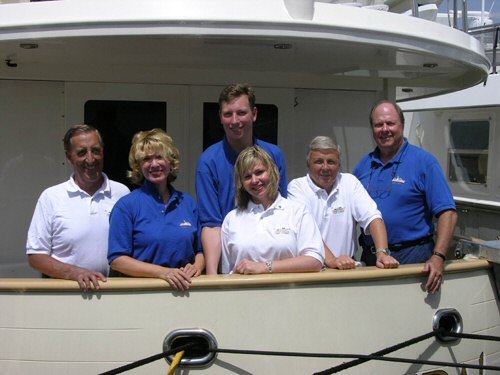
Que Linda
Hal Wyman, Linda Wyman, Chris Wyman (leg 3), Staci Wyman (leg 3), Wayne Almquist, Bob Owens. Not pictured: David Wyman (leg 1)
Que Linda
8/05/04
We left Que Linda in Estepona while our dingy is being repaired — purportedly a 3 week job. We are back in Seattle and will fly to Estepona via Madrid on Monday 8/23. We plan on going direct to the Balearic Islands where friends are flying in to meet us around the first of September. Then six weeks or so cruising in the Balearics and then we will put the boat away in Barcelona or somewhere nearby for the winter.
Next spring the tentative plan is to go to Croatia via Sardinia and Sicily and spend the summer in the eastern Med.
Plans are quite loose past then but perhaps a winter in London, a summer in the North Sea or Baltic Sea, and back to the Med for the summer of 2007 and the America’s Cup yacht races in Valencia, Spain.
Hal Wyman
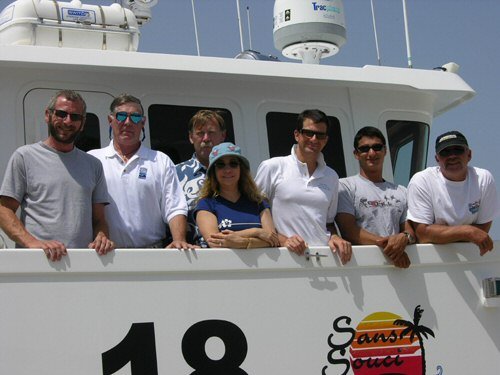
Sans Souci
Phil Strable, Rip Knot, Ken Williams, Roberta Williams, St. John O’Neil-Dunne (legs 1-2), Mike Ronquillo (leg 3) & Kirk White (legs 2-3). Not pictured: Dan Streech & Christian Fittipaldi (leg 1), Garrett Severen (legs 1-2), John Heuer & Nova Heuer (leg 3)
Sans Souci
8/05/04
We are back in Seattle now. We had only 10 days to cruise, and spent it mostly in Ibiza, Formentera and Mallorca.
We have plans to bring back Sans Souci in November (to Seattle), but are suddenly re-evaluating this. Momentum is building for us to stay one more year in the Med, to cruise Corsica, Sardinia and Croatia next July/August. We still aren’t firm, but this is looking more likely by the day.
Ed note: Having spent numerous years cruising the Med already, Ken Williams offers his view on his favorite anchorages:
France
- We like to anchor on the east shore of the island Port Cros (43.00.655 N, 006.21.930 E) .. anchor on the side away from town when you can, and closer to town when the wind demands it. It’s not great anchorage, but we like having the town to tender into.
- To either side of Cap Taillat (approx 15 miles west of St Tropez) – (43.09.907 N, 006.38.894 E)
- In front of the beach at St Tropez – (43.13.463N, 006.40.387E) If it’s a nice day, you will see hundreds of boats at anchor here, including megayachts. This is THE place to be, although it’s not good overnight anchorage. Come here to people-watch, and wander the beach – then go somewhere safer. There are miles of great restaurants. Our favorites are 55 and Voile Rouge.
- Between Isle St Marguerite and Isle St Honore (just off Cannes) — You can hike around either island. The castle where “the man in the iron mask” was held is fun to see on St Honore (43.30.704 N, 007.02.791 E)
- The bay of Villefranche (43.41.741 N, 007.19.257 E) Very protected anchorage – good to hide in when the wind comes (except from the south) – good beach, good restaurants – fun exploring. We hike around Cap Ferrat in about 2 hours.
Spain – Formentera
Here’s some good places to anchor on Formentera You will see a lot of boats anchored just slightly north in a bay called Puerto El Espalmador. It’s allegedly great — but too tight for my liking. We watched several boats wash up here on shore in 75 knot winds one night.
- With a east wind, go to: 36’46N, 1’25E
- With a west wind, go to: 38’44N, 1’27E
I may have the coordinates slightly off on the second anchorage. We spent a couple of nights at each. You’ll know you are in the right spot when you see all the other boats anchored.
Spain – Ibiza
Here’s a fun beach on the southern tip of Ibiza: 38’50.347 N, 1’23.327 E. The food at Malibu (one of the four restaurants in front of us, is good). The east end of the beach is hippy-ish, and kind of fun.

Satchmo
Steve Soltysik, Ellen Bane, Bill Bane, Calvin Kendig
Nordhavn 46 Satchmo
June 2006
This is the long-overdue update on what Bill and I been up to over the past few months. Thanks for being so patient with me. This is lengthy—too lengthy—so you may want to brush off your speed-reading skills.
I. MARCH, IN ROME
This was our last month in Rome, with long to-do lists getting ready for the departure to Tunisia. Also—one last visit to the Pantheon; finishing my ballroom dancing lessons (absolutely the highlight of my winter); exchanging cruising info with other boaters about the Ionian and Aegean islands; and MOST of all, some intensive farewell partying! Eventually, Bill and I realized that we needed to put out to sea so we could get some rest. Best and worst about our winter in Rome? The best, of course, was Rome itself—endlessly beautiful, friendly, fascinating—and still there’s so much left to see and do. A close second was the other cruisers in the marina—wonderful, diverse, fun-loving, talented people—British, Dutch, Australian, South African, Swedish, German, French, and a few other Americans, coming from every job/profession/background you can imagine. Most of them are headed to Sicily and Greece, like us, so we’re hoping to cross paths throughout the summer. Other good things about our winter in Rome? Traveling to small towns all over central Italy; the amazingly friendly and delightful Italians we met everywhere we went; how cozy and warm our boat was; the fact that Bill and I were able to live in such small enclosed quarters without killing each other; the food and wine, of course; the marina bill for 6 months, including water and electricity, of 2200 Euros total (about $2700). [Read that again—that’s the TOTAL for 6 months—not bad for waterfront property!] The worst about our winter in Rome? Hands down, the lousy, awful weather—RAIN, RAIN, AND MORE RAIN. Even when it wasn’t raining, it looked like it would start raining in a few minutes. Second worst was Italy’s national disease: graffiti. Everywhere, unrelenting. Third . . . I’ve been sitting here, staring at the computer screen, for a couple of minutes trying to think of something else in the “worst” category—and I can’t. Says a lot, huh? VIVA ITALIA!! Bill already wrote about our trip from Rome to Tunisia—fine and uneventful. Just what I like. Look at a map—you’ll be surprised that it’s only 300 nautical miles from Rome to northern Tunisia—roughly a 48 hour trip for us. Another surprise: northern Tunisia is further north than southern Sicily.
II. APRIL, IN TUNISIA
OK, Tunisia. . . We spent almost a month there, and to tell the truth, I’m still trying to decide what I think about it. Maybe it’s one of those places you need to sort of mull over in your mind for awhile. Also, I’m not sure how much “real” Tunisia we saw; mostly we were in the coastal areas which, by definition, are tourist areas—Europe’s Florida, almost. Compared to Morocco (the only other North African country we’ve been to, and which we LOVED), Tunisia is much more modern, much more Westernized, and much less exotic. Essentially, I think the country is showing growing pains. Anyway, some basics:
1. All month the weather was glorious springtime—constantly sunny (hallelujah, after our rainy winter!), 70’s in the day, 60’s at night, perfect. Wonderful and unexpected countryside in the north—green fields, red poppies, trees in blossom—a real Garden of Eden. The central and southern landscapes are more as you’d expect—harsh and dry but still beautiful, too.
2. We arrived in Tunisia at a northwest fishing town called Kelibia. That’s where the port police thought we were the sailing vessel “Satchmo” that matched a 1993 Order of Confiscation. (Excedrin Headache # 41.) 3. Over the next few days, we worked our way south, via Hammamet, to Port el Kantaoui, near Sousse. In Hammamet, we met a lovely local couple who showed us around, helped us get cell phone service, took us to their house for drinks, then out to dinner. The wife Monique is Tunisian born and bred (also part Sicilian and part French); the husband Didier is French, Tunisian, German, and Maltese. We communicated in French, Italian, German, English, and hand gestures. God knows what anyone said! 4. Hammamet, by the way, is just one of the many places in the Mediterranean that had the misfortune to be “visited” by the Knights of St. John from Malta. When they attacked Hammamet in the early 1600’s, the Knights killed all the “infidel” men, and then took 700 women and children back to Malta to be auctioned off as slaves. Great guys. [It’s always interesting to hear history told from the other side’s perspective.] 5. April 7 to 17, we were joined by long-time, dear friends from Munich. Together we made day trips to Sousse (ancient medina and kasbah), to Kairouan (its main mosque is the #4 holiest in all of Islam, built in the late 600’s—imagine!); and to the VERY well-preserved coliseum in El Jem (third largest coliseum in the entire Roman Empire, after Rome and Capua). We also went overnight to Tunis (beautiful, vibrant medina, world-class mosaics museum) and to the ruins of ancient Carthage. I had expected Carthage to be another ho-hum pile of rocks and columns—after a winter in Italy you get choosey about your ruins. But THIS—this was breathtaking and unforgettable! Its acropolis commands a panoramic 360-degree view of land and sea—the apex of a very advanced empire. Horrible stories, though, about Rome’s siege and destruction of Carthage (the Punic Wars, remember?). 6. After our friends left, we headed further south to Monastir where we hauled “Satchmo” out for annual maintenance—bottom painting, scraping, hull polishing, various odds and ends. Thankfully, the work was mainly done by an eager young entrepreneur Ali, his brother Fahrit, and 4 of their good buddies. Daily wages were about equal to hourly wages in the US or Italy. They were happy, we were happy, so win-win! 7. Last task in Tunisia: we took on about 850 gallons of diesel (enough to last us through the summer) at $2.10 a gallon, as opposed to around $6.00 in the EU. This alone made the trip to Tunisia worthwhile!
Some observations:
1. Tunisian men: OK, this is where I had problems warming up to Tunisia. Middle-age and older men weren’t a problem; they were either polite and courteous, or they looked through me as if I were invisible. Either was fine with me. Young Tunisian men were a different story, at least a fair number of them. If I wasn’t with Bill, they ogled, hassled, made comments, called out, etc. It was blatant, sexist, disrespectful, stupid and annoying. They didn’t do this to Tunisian women, only “European” women. Also, this was the first place I’d run into anti-American comments (as opposed to anti-Bush comments, which are ubiquitous in Europe)—taunting and unpleasant, not good-natured—and the speaker was usually a young Tunisian guy. This wasn’t every day, but it did happen. I don’t think the “hearts and minds” campaign is going well here. 2. Another thing about Tunisian men: they seem content to have the women do the work. Driving along in the countryside, women are out in the fields doing the farm work, and they’re usually the ones herding the sheep, etc. Where are the men? Sitting in the MANY cafes and tea bars in every town, talking with each other—and this at any and all hours of the day and evening. The women do their food shopping in the morning and otherwise seem to be at home cooking, cleaning, and taking care of the kids. Women NEVER BUT NEVER go to cafes—100% exclusively male domains. 3. Tunisian women were wonderfully nice and friendly. Their literacy rate in 1960 (newly independent from France) was only 12%; now it’s 66%. About 25% now work outside the home or farm. Good progress, but a long way to go. In Tunis (modern capital), as many as half of the women do not cover their heads (typically, with a scarf). Elsewhere, virtually every female head is covered. What you almost NEVER see, even in Tunis, is a women in a skirt (certainly never above the knee) or a woman in short sleeves or sleeveless (the arm must be covered to the wrist, it seems). (I dressed the same out of respect—only long pants and long-sleeve shirts.) 4. Almost everyone can speak some French, although Tunisians generally speak Arabic to each other. The biggest group of tourists is Germans, next French, then British, then Italians. We met almost no other Americans. 5. The entire country is plastered with billboards, signs, posters, banners, etc of the President, Ben Ali (“elected” in 1987 in a bloodless coup, re-elected without opposition every 5 years since then). The guy looks creepy, like an undertaker with a bad hair dye job (jet black). I’ve read that Tunisians find it unwise to criticize him openly, but in general he seems to run a decent government. He’s done well for himself—everywhere you go you see another HUGE presidential palace, usually seaside. 6. Tunisia has lots and lots of police, almost literally on every street corner. Maybe that’s a government full-employment program? (Haven’t yet seen a woman police officer, come to think of it.) 7. Money: the average income is very low—monthly between $200 for unskilled and $1800 for a doctor or other professional. So, prices are also very low. Examples (at the local supermarket): baguette of French bread is 15 cents, regular size spaghetti package is 45 cents, 5 bananas is 50 cents, 6 oranges 60 cents, a liter Coke 45 cents, etc. On the other hand, remember Bill’s observation that gin works out to $400 a gallon. 8. I was longing to venture into the Sahara. Desert scenes from “The English Patient”, “Star Wars”, and a bunch of other movies were filmed in Tunisia—and the photographs in our travel books are spectacular. Two problems: Bill had no interest (or minimal interest) in this adventure, and it would have taken several days and some pre-planning to do it right (travel to the far south, go out into the real desert, sleep in tents, maybe travel by camel). Anyway, this looks like another trip, or maybe even another country. Saudi Arabia? Egypt? Libya?
Highlights, “boating moments”, etc: 1. We visited a Berber mosque in the city of Kairouan on the day before Mohammed’s birthday (big celebration time, like Christmas is for us). It was “exam day” for young men finishing the madressa (Koran school). They had to sit on the main floor of the mosque before a panel of elders and “sing” selections from the Koran—you know, “singing” like the sound of the call to prayer. The mosque was packed with proud parents, grandparents, siblings, everyone glued to the exam performances. The faces of these Berber families, young and old, were a study, memorable. 2. The same day, in the Kairouan medina, a group of women taught me to “ululate“—that tongue-flapping, yodeling sound Arab women make. Definitely a first for me! What happened is that I’d stumbled onto the group as they were coming out of the office where marriage contracts are recorded. The bride and groom were dressed in traditional clothing, and all these women relatives were celebrating the event with ululating. I asked (in awful French) what was going on. The next thing I knew, the women had linked arms with me and started teaching me how to yodel, too. Funny, fun, and unforgettable.
3. As required, we fly a big American flag on the stern of the boat, and on the starboard side a smaller “courtesy” flag of the country we’re visiting—in this case, Tunisia’s red flag with a white crescent moon. A couple of nights after we arrived in Port el Kantaoui, a young Arab couple stopped next to the boat and studied the two flags. Then, in halting English, the young woman said in a friendly way, “My fiancé wishes to say that he did never expect to see the American flag next to a crescent flag.” I laughed, and said (in my terrible French, which I thought would be easier for her) something about America wants to be friends, needs friends. I asked where they were from; she was Tunisian but he was Palestinian. They met while working in Germany, and got engaged. Aha—now I switched to German so that I could talk with him as well as her. Bill came to the stern and joined in—all kinds of language fragments flying all over the place, very friendly conversation. After they left it hit me—American couple in Tunisia, talking with a Tunisian woman and her Palestinian fiancé about world politics and world peace in first English, then French, and then German. Wow—one of those really special “boating moments”—this is what it’s all about. 4. Another “boating moment”: a few days later I was giving the boat a quick wash (it was covered with Sahara sand). At some point I noticed a weird clump in the toe of my left tennis shoe, but the shoes were wet, I was wet, and I just wanted to finish. At the end, after I put away the hose, I untied my shoes, removed my foot, and saw some strange black bits on my toes. Oooooooo, gross, it was a smashed up roach. See? Boating is not ALL fruity drinks with little umbrellas.
III. MAY, IN SICILY
[Is anyone still reading? Hang on, I’m almost done.] Arriving back in Sicily was like coming home. We’d spent six weeks here last summer, and couldn’t get enough of it. It’s obvious that we like Italians; well, Sicilians are the best of the best—if they’ll admit to being Italians at all. We arrived from Tunisia on Sicily’s west coast at Marsala. Yes, the wine place. Spent a lazy week resting, restocking, touring the area (the Greek temples at Selinunte are older than the Parthenon in Athens), just grinning to be back among Italians. The middle week of May we met close friends from South Carolina in eastern Sicily, starting in Catania, then on to Siracusa (our favorite Sicilian town), Caltagirone (ceramics heaven), and Agrigento ( a seaside plain of Greek temples). Wonderful week with wonderful people!
IV. JUNE, IN GREECE
At the end of May, we pointed Satchmo east . . .again. [She hasn’t gone west in a long, long time.] Leaving Siracusa I actually had tears in my eyes, until just offshore we spotted another Nordhavn 46 (our make of boat)! It was World Odd@Sea, one of the boats that crossed the Atlantic with us in 2004! Incredible! By VHF we learned that John and Dulcie were headed to Gibraltar, then on to London for the winter. Italy gave us a wonderful farewell—a 45 hour passage from Sicily to Corfu with absolutely flat, mirrored seas, dolphins dancing across our bow, and the “water flattering the moon” (a line I read somewhere). Approaching Corfu at dawn was a bit of a shock. Look at a map. The mainland directly across from Corfu, hardly a mile or so distant, is . . . yikes . . . scary Albania! They’re reputed still to have pirates there. I was on watch, and hugged Corfu’s coast for all I was worth. We’ve been in the Ionian islands about 12 days now—first Corfu, then Paxos, and now Lefkas (anchored nextdoor to Onassis’ island of Skorpios, where he wed Jackie Kennedy). It’s all exactly as advertised—lush green mountains, dramatic cliffs, countless coves for anchoring, and lots of retsina wine. [Never mind, we stocked up in Italy!] Our next stop is the southern Peloponnese, then Crete, and then on to Athens by early July to pick up our son Thomas and his girlfriend Sally for a visit. After that? We head east again, and see where life takes us!
Ellen (and Bill) Bane
M/V Satchmo
Currently anchored off Lefkas Island, Ionians, Greece
Mid-August 2005
Dear All,
It’s been a long time and a lot of miles covered since Bill or I send out one of these travelogue letters. I guess none of our 2005 travels can compare with the adventure of last year’s Atlantic crossing, but if you’re still interested, here goes—
We finished the 2004 cruising season with a long wonderful trip around Corsica (last year’s #1 favorite), then short hops along France’s coast between Villefranche and Marseilles, and ended in late September just south of Barcelona where we had the boat hauled for the winter. After an exotic one week trip (by air) to Marrakesh, Morocco, we flew back home to Great Falls, Virginia and—gasp!—took the plunge. We sold our house. Oh, my, God—WE SOLD OUR HOUSE. By late March all our stuff was in deep storage, and “home” became M/V Satchmo. In some ways (no, in a lot of ways) it’s like living in a walk-in closet, but the view really is spectacular.
We got a late start on the cruising season this year—two nieces’ weddings and two sons’ graduations in May, followed by a cascade of mechanical problems (many self-inflected–please do not ask) in early June. Finally, by mid-June, we left Spain and were back at sea! We’ve spent most of the summer in Italy: Elba, the Argentario peninsula, Ponza, Ischia, Procida, Bay of Naples, Capri, Amalfi Coast, Gaeta, Aeolian Islands, and the east coast of Sicily. We detoured to Malta last week for duty-free diesel ($2.40 per gallon compared to roughly $6.00 in the EU); interesting place, but not somewhere we’d want to linger. Yesterday we arrived in Croatia (Sibenik), ready for a leisurely cruise down to Dubrovnik with our daughter, her beau, and our longtime friends from Munich. Sometime in September we’ll head back to Italy, with stops probably in Montenegro, Sicily, and Sardinia before reaching our winter port outside of Rome.
Can we all say it together? Italia is bellisima, the best, fantastico! We LOVE Italia!! We love the people—warm, expansive, full of life. We love how they promenade every evening, arm in arm, elegantly dressed to impress, in the “passeggiata” ritual. [Bill and I need to work on this—especially the elegant part.] We love how they wave their arms, shout at each other, hug each other, laugh. We love the food—all that wiggly fresh seafood, the juicy tomatoes, the cool melons, the cured hams, the cheeses of 1000 nights, the gelato, the granite, and the vino, the vino, the vino. We love the language—it just makes you happy to say a word like “stuzzicadente”–never mind that it means “toothpick”, it just sounds good. And the scenery—unbeatable–mountains crashing into blue seas, hillsides of vineyards, and towns painted those dusky gorgeous pastels.
It would be hard to pick a favorite place this summer. Elba was a complete surprise—lush, very upmarket, with a dramatic coastline; Napoleon made a huge mistake escaping from this paradise to go fight Waterloo. The whole Bay of Naples/Capri/Amalfi Coast area is spectacular—it deserves all the superlatives people have used to describe it. We toured a villa on Capri where, I feel sure, I was meant to live—marble balconies high above the sea, a shady garden, cool whitewashed bedrooms—my kind of place. I think my favorite, though, is Sicily. We visited there in early August when Sicily is probably at its worst—broiling sun, very little breeze, brown stubble fields—and still it was great! Warm and friendly people, towns that haven’t changed in 50 years, rolling hills—we can’t wait to get back there in late September.
Some random thoughts and observations—
- All summer long we’ve had only 40 minutes of rain, and that was TODAY in Croatia. Ditto last summer. I’ve almost forgotten what clouds look like. How come there’s no (apparent) water shortage?
- The scariest thing I’ve experienced over here is being on watch from around 3 AM until 5 AM trying to thread my way through fleets of fishing boats. They trail long nets behind their boats, and their paths zig and zag back and forth—completely unpredictable. One night, somewhere between Rome and Gaeta, I counted 35 blips (fishing boats) on my 6-mile radar screen!
- Bill has become quite the mechanic. The man who, a few short years ago, could hardly hang a picture can now fix our generator, change a toilet pump, install a 50 hertz battery charger, rebuild a bilge pump, and all kinds of other he-man stuff.
- Last summer, especially in Corsica and the south of France, an enterprising dinghy would swing by our anchored boat in the afternoon, take our order for fresh croissants or pastries, and then deliver them in the morning. No sign of these folks in Italy. Perche/pourquoi/why?
- Expensive things over here—car rental, big shrimp or whole fish, gasoline, diesel, espresso served at a table in a sidewalk cafe, beef, tonic water, zip-loc bags.
- Cheap things over here— vegetables and fruit (superb quality, too), wine, bread (under $1 a loaf), muscles/squid/octopus, shoes and clothes on summer sale, good olive oil, fresh pasta, espresso served at the stand-up bar.
- Priceless—gelato on a hot evening.
- We had expected overcrowding everywhere we went in Italy—marinas, anchorages, top tourist sites, restaurants, etc. So far, not so.
- Our Nordhavn 46 is still a great curiosity to Europeans, and a great way to meet people. If we’re tied up to a boardwalk area, it’s hard to get anything done for all the people who want to ask questions. Everyone seems to recognize it as a “serious”, tough little boat.
- Italian is oh-so-fun to try to speak, and everyone puts up with our mangled attempts. Two problem areas, though—cell phone “menus” in Italian (being able to retrieve voicemails is a “sometimes thing”) and highway signs that announce in huge letters “Pericolo [danger]—gldivnwol onm kldjhsfjl” (or that’s the way it feels!).
- From time to time, we’ve crossed paths with some of our Nordhavn buddies from the Atlantic crossing—Envoy, Egret, Uno Mas, Strickly For Fun, Grey Pearl, Emeritus, and Autumn Wind. We’re still a tight-knit group; we’d do anything for each other. Almost all of these boats are headed to Turkey, to winter in Marmaris. Most are planning to do the Eastern Mediterranean Rally next spring, from Turkey to Egypt.
- Thanks to Bill’s gathering loads of weather forecasts and choosing good weather windows, we’ve had mostly gentle seas and following winds all summer. More and more I realize that wave direction is EVERYTHING. Wind strength and wave height matter, of course, but following waves are my best friend. [Yes, seasickness is still a problem for me.]
- I think you can put on a blindfold and point to any spot on a map of Italy, and you’ll find a place of rare beauty and fabulous people.
- We’re beginning to realize how irreplaceable—literally—our American appliances are. Our boat runs on 110v; all outlets are for 110v. If the coffee maker, or hair dryer, or toaster dies, we can’t replace it with a 240 v European appliance.
- In July and August, most of the coastal towns have festivals of one kind or another. Somehow, we’ve always managed to arrive either one day too late, or six days too early. I think I remember hearing of a book that lists the dates of all such festivals, either in Europe or maybe worldwide. Anyone know the name of the book? It might be worth planning our destinations by what festival is happening where.
- Prosecci, a sparkling Italian wine, makes every afternoon a good afternoon.
- Italian workers (bus, train, water, and electricity, so far) seem to schedule their one-day strikes for either Friday or Monday, the better to enjoy a long weekend.
- I think I really deserve a day of Italian shoe shopping.
- Can’t really say much yet about Croatia, as we’ve just arrived. Lovely , undeveloped coastline, though.
Our plans for the future? We really don’t have any beyond the next year. We’ll winter in Rome. We’ll visit the U.S. for a few weeks in November. Our children (all out of school and gainfully employed) will fly to Rome for Christmas—we’ve already rented an apartment. [Remember? Their parents SOLD their home.] [AND gave away the family pets.] Come April or May, we’ll head east again, through Greece to Turkey and then maybe the Black Sea or Lebanon, Israel, Egypt. After that, who knows?
Please keep in touch—we’d love to hear from you!!
Ellen and Bill Bane
M/V Satchmo
July 2004
Ed.note: Steve Soltysik, a crewmember on board Satchmo, is a teacher from Honolulu, Hawaii. He used his experience on the Rally in a unique way: by spending his time visiting elementary schools in the three ports and integrating lessons in geography, oceanography, and writing via his “Message In a Bottle” course. After collecting dozens of empty wine bottles, Steve and the children wrote notes with their name, date, location, and a school e-mail address. They each explained how they hoped the person who eventually retrieved the bottle would contact them as to the date and location the bottle was found so they could study the wave patterns, hopefully learn about a new place, and determine how long the bottle survived out at sea. Steve took all their bottles and dropped them in the water at various points during the legs. After three successful missions with the schoolchildren, Steve dropped some more of his own bottles in the northern Atlantic when he crewed on board Atlantic Escort to help bring the Nordhavn 57 to its new home in Southampton, England. After arriving, he made the short trek down to Belgium to visit some family.
I am completing my last week in Belgium, with many many great memories of travel on the ocean but most important for me, the renewed connection here in Namur, Belgium!!
I have attached a copy of the email sent to me from, a fellow in the Azores who found one of the bottle messages!! I think it is the toss I made when we were just clear of the island of Pico..
I also got back a message from a second bottle close to the shore of England that was found a few days after we arrived on the Nordhavn 57.
So already I have sucess!
I am staying at a hostel in Namur, Belgium with my own bay window just 40 paces away from, the Meuse River – the parade of boats, barges, ducks and swans I see every day from my bed is the BEST!! Like a dream!!!
I will return home on August 5 in great health and spirits!
Ellen (Bane)’s container of cookies were eaten so quickly on a very sucessful delivery. With Kirk on the bridge, we drove the hell out of the boat, cut through the heavy headseas and delivered the tank as a delivery should be.. The crew got along really well. Cecil (Newsome – crew from Egret) and I cooked most of the time in spite of the pounding!!!
Aloha from Belgue!
Steve
Here is a copy of an email Steve received from a recipient of one of his messages in a bottle:
Hello Mr. Steve Soltysik and family,
My name is Ivo Batista (I’m 26 years old); I’m a Lifeguard that works during the summer in São Lourenço Bay beach at the island of Santa Maria, Azores. And I’m also the one that opened one of your bottles with messages in them (code: G-75). The bottle was found by a friend, (the lady in charge of cleaning the beach that I watch), her name is Mariana, she’s 48 years of age. She immediately called me and asked me to open the bottle. It was the first time that any of us, and it made our day more exciting. Now that I have a change to send an email, I’m sending you the reply to your letter.The bottle was found on the 15th of July, 2004, at 11 am. I was impressed to read that you live at Kauai, Hawaii. It most be great to live in such a place.
The Açores are not to shabby either:), hope you’ll have the opportunity to see personally someday. We also have many natural beauties that can be enjoyed.
I’ll send a picture of São Lourenço bay to prove my point. That’s all for now! Best regards to you, your wife and daughters. Have nice ocean crossings.
Ivo Batista

Sea Fox
Dennis Sturdivan, Tom Selman, Dennis Fox, Rod Semrad (legs 2 & 3). Not pictured (leg 1): Julie Fox, Kurt Krogen, David Fox

Stargazer
Bill Carpenter, Will Perras, Michael Perfit, Kevin Keith
Nordhavn 46 Stargazer
July/August 2004
We will be cruising the Baleric Islands during the end of July and August. Our plan is to be anchored offshore in the many coves all throughout the various islands. We currently have no reservations at any marina’s and expect that they are hard to obtain during high season (to say nothing of the cost).
Michael Perfitt and Kevin Keith

Strictly For Fun
Bill Parlatore (leg 3), Teri Strickland, Scott Strickland, Frank Sain (leg 3). Not pictured: Jon Ehly (legs 1 & 2), Christine Ehly & Sean Ehly (leg 1), Georgs Kolesnikovs (leg 2)
Strickly For Fun
April 20th
Barcelona
Leaving Early May
Spain to Menorca
Menorca to Sardegna
Sardegna to Corse
June to Mid July
Corse to France
France to Rome
Rome to Naples
Last July
Sicilia
August
Italy to Turkey
Sept
Cruise Turkey
Locations with crew joining us, so these dates are pretty solid.
Country | City | Lat | Long | Date |
Spain | Barcelona | 41 21.5N | 02 11.1E | 20-Apr-05 |
Italy | Livorno | 43 33.4N | 10 17.4E | 07-Jun-05 |
Italy | Fiumicino | 41 46.3N | 12 12.9E | 17-Jun-05 |
Italy | Crotone | 39 04.5N | 17 08.5E | 15-Aug-05 |
Turkey | Marmaris | 36 51.0N | 28 16.7E | 28-Aug-05 |

Sun Dog
Lee Roman, Dave Hill, Robert Greenbaum (back), Robert Schaper (front). Not pictured: Adam Greenbaum (leg 1)

Uno Mas
Sue Spencer, John Spencer, Roy Rouse. Not pictured: Clint Spencer (leg 1), Chris Mather (leg 2)
Nordhavn 40 Uno Mas
July 2005
Buon Giorno from Scario about 65 nm south of Salerno. We have been at anchor since we left Porto de Roma 2 weeks ago. We visted several beautiful islands along the way and are back on the mainland visiting really quaint little towns that aren’t as crowded with tourists. July 15th thru the end of Aug. is offical high season, so crowds increase, prices increase and it is getting hotter. If the breeze is blowing it is tolerable to walk the mile or 2 to the supermarcado, but once off the water it is really miserable with no wind. We are headed to Sicily for a month and to Malta for fuel. It is about 31 euro cents a liter and 3.78 liters to a gallon, so about $1.20 us plus 20% for the exchange rate. In Italy it is over $6.00 US a gallon. Then to Athens by Sept. 11th to pick up friends and on to the Greek Islands and Turkey by Oct. 1st to get the boat ready for winter. This summer has been much more enjoyable with less crowds and cooler weather, but now is about the time we just started cruising the MED last year. The further south we go the fewer tourists we should encounter, and the hotter it will be. We have slipped into the “afternoon get out of the sun and stay in the shade” that the Italians enjoy like the Spaniards. All shops close at 1:00 to 1:30 and re-open at 4:30 to 5:00. Restaurants open at 12:30 to 1:00 and close at 3:00. So if we are in town, not much to do after lunch until 4:30 and then it is time for happy hour on the boat at 5:00. We met 3 different boats with really friendly Italians in Porto de Roma. We had them for happy hour and dinner or lunch on UNO MAS and they had us for a traditional Italian meal. 2 of the 3 presented gifts. 2 bottles of vino made by his father from his vineyard at his home, and the other a bottle of Kahlua, which is hard to find here. Yes, of course I introduced them to Colorado Bulldogs. Sue received a pomadoro (tomato) spinner, to make homemade spaghetti sauce. It separates the skin from the rest of the tomato. A British couple that we made Bulldogs for in Barcelona are hooked and tried to make them, but emails us that they haven’t quite gotten the Colorado Bulldogs mixed like mine.
Capt. John and Admiral Sue

World Odd@Sea
John Harris, Dulcie Harris, John Chatting, Pam Chatting, Steve Lawrence
World Odd@Sea
We plan to arrive in southern Spain to pickup the boat on April 5th
Spend April in Spain Visiting as far north as Barcelona, and the islands.
Spend May in Italy and the French and Italian Island.
Spend June in Greece and Turkey and probably leave the boat in Marmaris Marina for the winter.
John Harris
World Odd @ Sea

Support Staff
Bruce Kessler, Joan Kessler, Amy Zahra, Jenny McCauley Stern, Judy Baker, Milt Baker